Source Classic Island Style Modern Wardrobe for homes, hotels, and offices
Compare 30 listings for the Classic Island Style Modern Wardrobe featuring customizable sizes, layouts, and hardware. Buyers can evaluate options for residential apartments, hotels, and commercial spaces with free design services and various material choices.
Key considerations
Products List
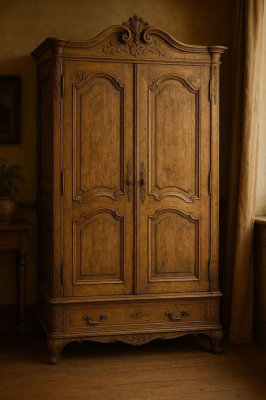


Clothes Storage Wardrobe Wooden Armoire Classic Bedroom Closet Wardrobe
$55.00 - $199.00
MOQ: 5 Square Meters

Wooden Wardrobe Cabinet Clothes Customized Modern Style Wardrobe
$55.00 - $199.00
MOQ: 5 Square Meters


Whole House Custom Furniture Wardrobe with Island Custom Wardrobe
$55.00 - $199.00
MOQ: 5 Square Meters


Modern Closet Wardrobe with High Gloss Finish and Storage Design
$85.00 - $220.00
MOQ: 1 Square Meters


American Style Classic Antique Traditional U Shape Wooden Wardrobe with Island
$658.00 - $1558.00
MOQ: 1 Pieces

Big Size Custom Made Modern Design Wardrobe Walk in Closet with Island
$658.00 - $1558.00
MOQ: 1 Pieces


Classic Design High Quality Walk-in Wardrobes Closet with Dress Island
$24.00 - $28.00
MOQ: 20 Square Feet

Good Price High Quality Wooden Walk-in Wardrobe Closet with Dress Island
$13.00 - $19.00
MOQ: 20 Square Feet


Cbmmart Custom Modern Wardrobe with Island Design in Master Bedroom
$1699.00 - $1999.00
MOQ: 2 square meters


$72.00 - $75.95
MOQ: 1 Square Meters
Comprehensive Sourcing Guide
Strategic Sourcing Guide for Classic Island Style Modern Wardrobes
Defining the Product Category and Core Specifications
The term "Classic Island Style Modern Wardrobe" describes a sophisticated storage solution that merges the spatial prominence of a central island unit with the streamlined aesthetics of contemporary cabinetry. In the context of B2B procurement, this product is not merely a piece of furniture but a modular, panel-based cabinet system designed for high-end residential, commercial, and hospitality environments. The core structural definition relies on a floor-to-ceiling or built-in configuration that often features an "island" layout, providing 360-degree access or a central focal point within a bedroom or walk-in closet.
Technical specifications for these units are highly variable, driven by the "Customized Specification" standard observed in the market. While standard dimensions often reference a base footprint of 1200*2400 mm, the procurement reality is that these units are built to "Customizable Based on Site Requirements." The structural integrity depends on the selection of carcass materials, which typically include 18mm or 22mm Particle Board (MFC), Plywood, or MDF. The choice of material directly influences the weight capacity and the environmental rating, with E0 or F4star levels being the primary benchmarks for formaldehyde emission compliance.
The surface finish is a critical differentiator for the "Modern" style designation. Buyers should expect options ranging from Matte and Wood Grain to Glossy finishes, utilizing technologies such as Skin-Feeling Melamine, PET, or Wood Veneer. The door panel craftsmanship further defines the aesthetic, offering Double Veneer, Painted Board, or Vacuum Formed Board options. The opening method is equally versatile, supporting both Swing Door and Sliding Door mechanisms, which allows the design to adapt to varying room geometries and clearance constraints.
Material Composition and Environmental Compliance
Material selection is the primary driver of both cost and longevity in the wardrobe sector. The supply chain for these units typically offers a triad of core materials: Particle Board, HMR (High Moisture Resistance) Board, and Plywood. Each material serves a specific application context. Particle Board, often referred to as MFC, provides a cost-effective solution for dry environments, while Plywood offers superior structural strength and moisture resistance, making it ideal for humid climates or high-traffic hotel applications.
Environmental protection is a non-negotiable aspect of modern procurement. The observed market data highlights the "E0/F4star" environmental protection level as a standard expectation. Buyers must verify that the supplied particle board and MDF panels meet these specific emission thresholds. While background knowledge suggests FSC certification, the provided facts do not confirm universal certification status. Therefore, procurement teams should explicitly request test reports or certificates of compliance for the specific batch being ordered rather than assuming certification based on general market trends.
The back board thickness is another technical specification that requires verification. Available options include 12mm and 18mm boards. For a "Classic Island" unit, which often requires structural rigidity from all sides, the 18mm back board is generally preferred to prevent sagging and ensure the unit maintains its shape over decades of use. The finish process, whether it be PET or Melamine, must be applied uniformly to ensure the "Skin-Feeling" texture or glossy reflection is consistent across all visible surfaces, including the internal layout components.
Hardware Configuration and Functional Layout
The hardware configuration is the engine of the wardrobe's functionality. The market data indicates a strong preference for high-end hardware brands such as Han Gao, Dtc, Blum, and Hettich. These brands are synonymous with smooth operation, durability, and safety. The internal layout is equally critical, featuring a combination of Hanging Area, Folding Area, and Drawers. The hardware configuration must support these layouts with specific components like Pant Racks, Mirrors, and Light Strips.
The "Classic Island" style often implies a need for sophisticated internal organization. A standard configuration might include checkered drawers for smaller items and specialized hanging racks for suits and dresses. The integration of light strips is a modern feature that enhances usability and aesthetic appeal, requiring careful planning for electrical connections if the unit is to be powered. The door hardware, whether for swing or sliding mechanisms, must be rated for the weight of the door panels, which can vary significantly depending on the thickness of the carcass and the type of surface finish applied.
When evaluating hardware, buyers should look for "Full OEM/ODM" capabilities, which allow for the customization of hardware placement and type. This flexibility ensures that the internal layout can be tailored to the specific storage needs of the end-user, whether it is a residential client requiring extensive shoe storage or a hotel requiring efficient uniform hanging systems. The hardware must also be compatible with the "Flat Packing" or "Assembled" shipping methods, ensuring that the components can be transported efficiently without damage.
Cost Drivers and Pricing Dynamics
Understanding the cost structure of a Classic Island Style Modern Wardrobe is essential for accurate budgeting. The observed price range in the market spans from $13 to $2000 USD, a variance that reflects the extreme differences in material quality, customization depth, and hardware selection. A unit priced at the lower end of this spectrum likely utilizes standard particle board, basic hardware, and minimal customization. Conversely, a unit at the higher end will feature premium plywood carcasses, top-tier Blum or Hettich hardware, complex internal layouts, and bespoke finishes.
The Minimum Order Quantity (MOQ) is another significant cost factor. The observed MOQ range is 1 to 100 sets, with many suppliers offering an MOQ of just 1 set for custom projects. This flexibility is beneficial for small-scale renovations or single-unit installations but may impact the per-unit cost due to the lack of economies of scale. For larger commercial projects, buyers should negotiate volume discounts to bring the per-unit cost closer to the lower end of the observed range.
Lead times and shipping methods also influence the total cost of ownership. The product origin is listed as Chongqing, China, which is a major manufacturing hub for furniture. The packing method is typically "Paper Shell and Wooden Box" or "Flat Packing," with export standards ensuring protection during transit. Buyers must factor in the logistics costs associated with shipping large, flat-packed items from China to their destination, as well as the labor costs for on-site assembly. The "Free Design" project solution capability offered by many suppliers can reduce upfront design costs, but the complexity of the design will ultimately dictate the manufacturing time and final price.
Supplier Evaluation and Quality Assurance
Evaluating suppliers for this specific product category requires a focus on technical capability and consistency. The "Product Type" is defined as Wardrobe / Closet, with variations including L-Shaped, U-Shaped, Linear, and Island Wardrobes. Suppliers must demonstrate proficiency in "Panel-Based Cabinet System" construction and the ability to execute "Built-in, Modular, or on-Site Assembly" installations. The "Condition" of the product is expected to be "New," and the "Customization" level should be high, allowing for changes in size, color, layout, and hardware.
Quality assurance protocols should be rigorous. Buyers must verify that the "Standard" of the product matches the "Customized Specification" agreed upon in the contract. This includes checking the dimensions, material thickness, and finish quality against the provided CAD/3D design drawings. The "Maintenance" requirement is noted as "Easy Cleaning with Mild Detergent," which should be validated through sample testing to ensure the surface finish does not degrade easily.
When assessing suppliers, look for those who offer "Design Drawings" in CAD/3D formats, as this indicates a higher level of technical integration and the ability to visualize the final product before manufacturing. The "Project Solution Capability" of providing "Free Design" is a valuable service, but buyers should ensure that the design team has the expertise to optimize the layout for the specific "Application" environment, whether it is a residence, apartment, or hotel. The "Hardware" selection should be verified to ensure it matches the specified brands, as counterfeit or lower-grade hardware can compromise the longevity of the unit.
Long-Term Procurement and Installation Considerations
Long-term procurement success depends on the durability of the installation and the adaptability of the design. The "Installation Type" is typically "Built-in, Modular, or on-Site Assembly," which requires careful coordination with the construction team. For "Classic Island" units, the structural stability is paramount, especially if the unit is freestanding or acts as a room divider. The "Folded" state of the product during shipping must be carefully managed to ensure that the "Unfolded" state upon assembly is precise and gap-free.
Maintenance is a key consideration for long-term value. The "Easy Cleaning with Mild Detergent" attribute suggests that the surface finish is designed for low maintenance, but buyers should verify the specific cleaning requirements for the chosen finish, such as PET or Wood Veneer. The "Internal Layout" should be designed to accommodate future changes in storage needs, with adjustable shelves and modular drawer configurations.
The "Color" and "Style" of the wardrobe must remain relevant over time. The "Modern" style with "Customized Color" options allows for personalization, but buyers should consider timeless color palettes that will not quickly become dated. The "Structure" of the unit, whether "Floor-to-Ceiling" or "Modular," should be robust enough to withstand the wear and tear of daily use. Finally, the "Packing" method, whether "Flat Pack" or "Assembled," must be chosen based on the logistics capabilities of the destination, ensuring that the product arrives in perfect condition and can be assembled efficiently on-site.
FAQs
What customization options are available for the wardrobe?
Full customization is available for size, color, layout, and hardware. Buyers can specify details like 1200*2400 dimensions or request custom specifications to match site requirements exactly.
Which materials are used for the carcass construction?
The carcass typically uses Particle Board, Plywood, or MDF. Options include 18mm or 22mm Particle Board, HMR Board, and Plywood to ensure structural integrity and moisture resistance.
Can the wardrobe be installed as a built-in unit?
Yes, the installation type supports built-in, modular, or on-site assembly configurations. This allows the unit to fit floor-to-ceiling or serve as a freestanding island in various room layouts.
What hardware brands are included in the configuration?
High-end hardware brands such as Han Gao, Dtc, Blum, and Hettich are available. These components support internal layouts with pant racks, mirrors, and light strips for smooth operation.
How is the product packed for international shipping?
The product is packed using paper shells, wooden boxes, or flat packing methods. This export-standard packaging ensures protection during transit while facilitating efficient on-site assembly upon arrival.
What is the minimum order quantity for a custom unit?
The minimum order quantity can be as low as one set for custom projects. However, some suppliers may require up to 100 sets depending on the specific customization and volume negotiated.
Where are these wardrobes manufactured and shipped from?
The products originate from Chongqing, China, a major manufacturing hub. This location allows for efficient production of panel-based cabinet systems with customizable specifications for global export.