Source Classical Soaking Freestanding Bathtub for Bathrooms, Spas, and Resorts
Explore 30 options for the Classical Soaking Freestanding Bathtub, featuring acrylic construction and CE certification. Buyers can compare dimensions, drainage sizes, and customization services from verified manufacturers in Zhejiang, China.
Key considerations
Products List


Cupc Approved Bathtub, Free Standing Bath, Acrylic Freestanding Bathtub
$269.50 - $388.00
MOQ: 10 Pieces


Aquacubic Luxurious 67" Acrylic Freestanding Bathtub Contemporary Soaking Tub
$235.00 - $268.00
MOQ: 100 Pieces


European Luxury 1.5m Rectangular Soaking Freestanding Acrylic Indoor Bathtub
$227.00 - $253.00
MOQ: 5 Pieces


Freestanding Acrylic Freestanding Bathtub with Stainless Stand Support
$40.00 - $220.00
MOQ: 50 Pieces


Hot Sale Luxury Indoor Simple Soaking Bathroom Freestanding Acrylic Bathtub
$237.00 - $245.00
MOQ: 5 Pieces

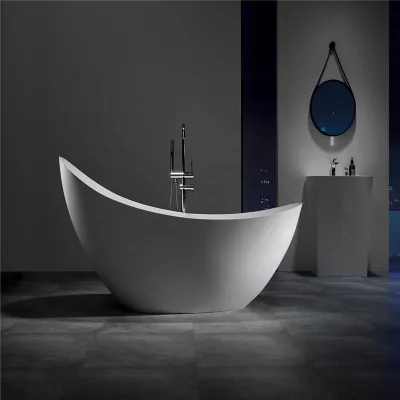


Chinese Contemporary Design Cheap Soaking Bathtub Freestanding (LT-703)
$170.00 - $180.00
MOQ: 10 Pieces


Hotel Simple Design Bathtub Deep Soaking Freestanding Bathtub Bathroom Tubs
$614.00 - $623.00
MOQ: 10 pieces

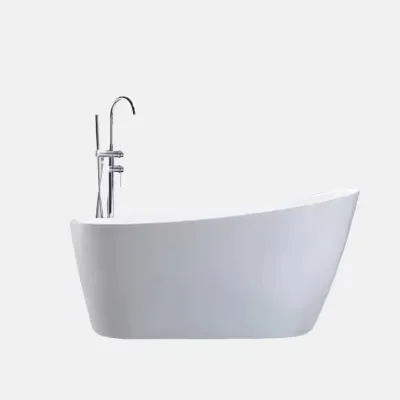


Comprehensive Sourcing Guide
Strategic Sourcing Guide for Classical Soaking Freestanding Bathtubs
Understanding Product Architecture and Technical Specifications
When sourcing a Classical Soaking Freestanding Bathtub, the primary objective is to identify units that balance aesthetic elegance with functional depth. The term "classical soaking" implies a design that encourages full-body immersion, which directly correlates with specific dimensional requirements. Based on observed market data, the structural integrity of these units is frequently defined by the "Freestanding Tub" configuration, allowing for placement independent of wall support. This design choice necessitates a robust material composition, with acrylic being the predominant material observed in high-volume listings. Acrylic offers a favorable balance of thermal retention, surface finish, and weight, making it suitable for the "Glossy" surface finish that characterizes classical designs.
Dimensional analysis is critical for verifying the "soaking" capability. Buyers must scrutinize the tub size specifications, as variations exist even within the same product category. Observed models display a range of dimensions, such as 1700800580 mm, 1730780710 mm, and 1800850510 mm. The depth is a particularly vital metric; a tub with a height of 710 mm offers a significantly deeper soaking experience compared to one at 510 mm, even if the length and width are similar. The "Tub Size" specification must be cross-referenced with the intended user's height and the available bathroom footprint. Furthermore, the "Drainage Size" is a standardized technical constraint, with 50mm being a common specification for these units. The "Drain Location" is typically observed at the "Center," which influences the plumbing rough-in requirements for the installation site.
The structural form factor also includes the "Shape," which can range from "Rectangle" to "Oval." While rectangles offer a modern interpretation of classical lines, ovals provide a softer, more traditional silhouette. The "Armrest" attribute is frequently noted as "No," indicating that the classical aesthetic often relies on the tub's own curvature rather than added structural elements. Additionally, the "Skirt" design, described as "Surrounded Sides," ensures a finished look from all angles, a necessity for freestanding units that are not tucked against a wall.
Compliance Verification and Certification Standards
In the B2B procurement of bathroom fixtures, compliance is not merely a formality but a prerequisite for market entry and liability protection. Buyers must verify that the supplier possesses valid certifications that align with the destination market's regulations. The supplied data indicates that products often carry "CE" and "ISO9001" certifications, alongside "CUPC" (Copper Development Association/Plumbing Code) or "Cupc" marks. The presence of these certifications suggests adherence to European safety standards (CE) and international quality management systems (ISO9001). However, buyers should treat these as observations of specific listings rather than universal guarantees for every unit in a catalog.
The "Standard" attribute often lists "CE" and "CUPC" explicitly, which are crucial for plumbing code compliance in North America and Europe. When evaluating a supplier, the procurement team must request current, verifiable copies of these certificates rather than relying on marketing claims. The "Quality Guarantee" is another compliance-related metric, with observed ranges spanning from "1-5 Years as Per Quality Standard" and specific mentions of a "Main Body 5 Years" warranty. This variance highlights the need for precise contract language to define the scope of the warranty, ensuring it covers the acrylic shell and not just the surface finish.
Furthermore, the "Certification" list may include "CE, ISO9001, Cupc" for certain models, while others may only list "CE, ISO9001." This inconsistency underscores the importance of verifying the specific certification status for the exact model number being ordered, such as "WTM-02707" or "AB5204." A product intended for the US market must strictly adhere to CUPC standards, while European markets require CE marking. Buyers should also check for any additional regional certifications that might be required, as the supplied data does not cover every possible regional standard.
Cost Drivers and Pricing Dynamics
The pricing structure for classical soaking freestanding bathtubs is influenced by a complex interplay of material quality, dimensions, and customization levels. The observed listed price range in the market spans from 20 to 2688 USD. This wide disparity indicates that price is not a linear function of size alone but is heavily dependent on the "Customization" status and the complexity of the manufacturing process. Units marked as "Customized" or those offering "OEM&ODM" services often command higher price points due to the additional engineering and tooling costs involved.
The "Minimum Order Quantity" (MOQ) is a significant cost driver, with observed ranges from 1 to 100 units. A lower MOQ, such as 5 units, allows for smaller procurement batches but may result in a higher unit cost due to the lack of economies of scale. Conversely, larger orders can negotiate better pricing but require higher capital outlay and storage capacity. The "Production Lead Time" also impacts cost, with observed ranges of 20-50 days for standard production and 15 days for samples. Rush orders or expedited shipping can incur premium charges that must be factored into the total landed cost.
Other cost factors include the "Product Packing," which is typically listed as "Cartons" or "Carton Box." The quality of packaging affects the risk of transit damage and potential insurance costs. Additionally, the "Accessories" are noted as "Optional," meaning that items like overflow drains, specific faucet mounts, or slip-resistant surfaces may be add-ons that increase the final price. Buyers should request a detailed breakdown of costs to distinguish between the base unit price and the cost of optional features or certifications.
Typical Applications and Installation Considerations
The application of classical soaking freestanding bathtubs is versatile, with observed data indicating suitability for both "Indoor Tub" and "Outdoor Tub" environments. This dual capability suggests that the material and construction are robust enough to withstand varying environmental conditions, provided the specific model is rated for outdoor use. The "Application" field explicitly lists "Indoor Tub" for most models, but the inclusion of "Outdoor Tub" for certain variants opens up possibilities for luxury outdoor spas or covered patio installations.
Installation is a critical phase that requires careful planning. The "Installation Type" is consistently "Freestanding," which means the unit does not require wall support but does need a stable, level floor capable of supporting the weight of the tub and water. The "Way of Control" is typically "Hand Control," implying manual operation of the drain and potentially the water flow, which influences the placement of the faucet and controls. The "Capacity" is generally listed as "1-2 People," which defines the intended user group and helps in sizing the unit for the available space.
The "Features" of these tubs often include a "Slip-resistant Surface" and an "Overflow Drain," which are essential for safety and functionality. The "Slip-resistant Surface" is particularly important for classical designs that may have smooth acrylic finishes. Buyers should verify the specific texture or coating used to ensure it meets safety standards for wet environments. The "Overflow Drain" is a standard safety feature that prevents water from spilling over the rim if the tub is overfilled, a critical consideration for deep soaking tubs.
Supplier Evaluation and Service Capabilities
Selecting the right supplier involves more than just comparing prices; it requires a deep dive into their service capabilities and production flexibility. The data indicates that many suppliers offer "Accept OEM&ODM" services, meaning they can produce custom designs or private label products. This "Collaborative Services" capability, described as "Original Equipment/Design Manufacture," is a key differentiator for buyers looking to create a unique product line. The "Customization" attribute is listed as both "Available" and "Non-Customized" for different models, highlighting the need to clarify the extent of customization before placing an order.
The "Service" attribute also includes "Accept OEM&ODM," suggesting that suppliers are willing to adapt their manufacturing processes to meet specific buyer requirements. However, buyers must verify the supplier's capacity to handle these requests without compromising quality or lead times. The "Sample Lead Time" of 15 days is a useful benchmark for evaluating the supplier's responsiveness. A supplier that can deliver a high-quality sample within this timeframe is likely to have efficient production processes.
When evaluating suppliers, buyers should also consider the "Quality Guarantee" and "Warrantly" terms. The "Main Body 5 Years" warranty is a strong indicator of confidence in the product's durability. However, the "Quality Guarantee" range of "1-5 Years as Per Quality Standard" suggests that the warranty period may vary based on the specific model or the buyer's negotiation. It is essential to have these terms clearly defined in the contract to avoid disputes later.
Quality Control and Long-Term Procurement Strategy
Ensuring consistent quality in the procurement of freestanding bathtubs requires a rigorous quality control (QC) strategy. The "Surface" finish is described as "Glossy," which is a visual and tactile attribute that must be consistent across all units. Buyers should implement a QC protocol that includes visual inspections for surface defects, such as scratches, bubbles, or uneven gloss. The "Material" is "Acrylic," which should be inspected for thickness and structural integrity to ensure it can withstand the pressure of water and the weight of users.
The "Standard" and "Certification" checks are part of the QC process. Buyers should verify that the "CE, ISO9001, Cupc" certifications are valid and applicable to the specific batch of goods. Regular audits of the supplier's production line can help ensure that the "Quality Guarantee" is being met consistently. The "Production Lead Time" of 20-50 days should be monitored to ensure that the supplier can meet delivery deadlines without rushing the production process, which could lead to quality issues.
Long-term procurement considerations include the "Minimum Order Quantity" and the potential for volume discounts. Establishing a long-term relationship with a supplier who offers "OEM&ODM" services can lead to better pricing and more flexible terms. The "Customized" nature of some products means that buyers should invest in a detailed product specification document to ensure that all future orders match the initial sample. The "Accessories" being "Optional" allows for flexibility in future orders, but buyers should ensure that the supply chain for these accessories is reliable to avoid delays.
Summary of Key Product Attributes
To facilitate quick reference and decision-making, the following table summarizes the key attributes observed in the market for classical soaking freestanding bathtubs. This data is derived from the supplied product facts and serves as a baseline for buyer verification.
| Attribute Category | Observed Values / Specifications |
|---|---|
| Installation Type | Freestanding |
| Material | Acrylic |
| Surface Finish | Glossy |
| Tub Size Range | 1680840430mm to 1800850510mm |
| Drainage Size | 50mm |
| Drain Location | Center |
| Certifications | CE, ISO9001, CUPC/Cupc |
| Warranty | Main Body 5 Years (Variable 1-5 Years) |
| Customization | Available (OEM/ODM) or Non-Customized |
| Application | Indoor Tub, Outdoor Tub |
| Shape | Rectangle, Oval |
| Armrest | No |
| Skirt | Surrounded Sides |
| Packing | Cartons / Carton Box |
| Origin | Zhejiang, China / China |
| Sample Lead Time | 15 Days |
| Production Lead Time | 20-50 Days |
| MOQ Range | 1-100 Units |
This summary provides a concise overview of the critical factors that buyers must evaluate when sourcing classical soaking freestanding bathtubs. By focusing on these verified attributes and maintaining a disciplined approach to supplier evaluation and quality control, buyers can secure high-quality products that meet their specific requirements and market demands.
FAQs
What certifications do classical soaking freestanding bathtubs typically have?
These bathtubs often carry CE, ISO9001, and CUPC certifications. Buyers must verify specific model numbers like WTM-02707 as some listings only show CE and ISO9001, requiring direct confirmation for compliance in target markets.
How long is the production lead time for these units?
Standard production lead times range from 20 to 50 days. Sample orders can be completed in 15 days, while rush orders may incur additional costs depending on the supplier's current capacity and customization requirements.
Which material is used for the main body of these bathtubs?
The main body is constructed from high-quality acrylic with a glossy surface finish. This material provides thermal retention and durability, though the specific thickness and quality may vary between different models and suppliers.
Can buyers request custom designs for these freestanding bathtubs?
Customization is available for many models, with suppliers accepting OEM and ODM services. However, some specific units are listed as non-customized, so buyers must confirm the customization status before placing an order.
What is the minimum order quantity for these bathtubs?
The minimum order quantity ranges from 1 to 100 units depending on the supplier. Some vendors offer low MOQs of 5 units, while larger orders may secure better pricing but require higher capital investment.
How deep are the classical soaking freestanding bathtubs?
Tub depths vary significantly, with observed heights ranging from 510 mm to 710 mm. Deeper models like the 710 mm variant offer a more immersive soaking experience compared to shallower designs.
Where are these bathtubs typically manufactured?
Most units originate from Zhejiang, China, with some listings simply stating China as the origin. Buyers should verify the specific production location to ensure alignment with logistics and quality expectations.
What warranty coverage is provided for the main body?
The main body often comes with a 5-year warranty, though general quality guarantees can range from 1 to 5 years. Contract terms must clearly define the scope to ensure coverage for the acrylic shell.