Source Classical Guitar for Schools, Studios, and Performers
Explore 30 verified listings for Classical Guitar instruments from Chinese manufacturers. Buyers can compare specifications like body material, string type, and customization options to find suitable models for educational, recording, or stage use; compare the available evidence and request quotations based on your requirements.
Key considerations
Products List


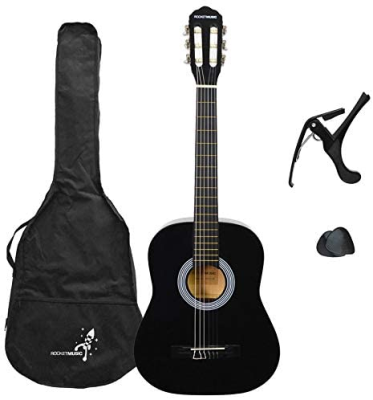
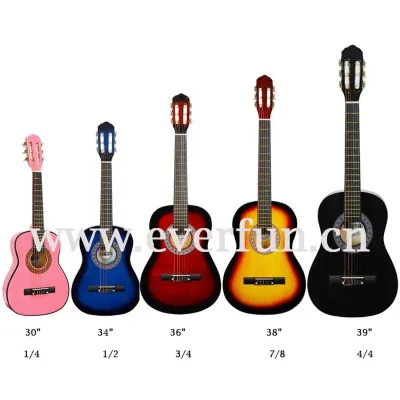


![[Hot Sale]39" Classical Guitar for Beginners Guitarra](https://image.made-in-china.com/221f0j00CzMoyOnsyEbI/-Hot-Sale-39-Classical-Guitar-for-Beginners-Guitarra.webp)


Comprehensive Sourcing Guide
Classical Guitar Sourcing Guide
Classical guitars occupy a distinct position in the stringed-instrument market: nylon strings, a wider fingerboard, and body constructions that range from entry-level laminated models to handcrafted solid-top instruments. For B2B buyers, sourcing this category means balancing tonewood specifications against volume commitments, because factories often quote very different minimum order quantities depending on whether the product is a stock model or a customized build. This guide uses observed listing data from Chinese Classical Guitar listings—models such as ACG-068, SC02SMB, SC01MMCE, SC093A, SC02SM, and QCG46SCE—as concrete reference points while explaining the checks a professional buyer should run before committing to a supplier.
The listings reviewed span a typical commercial range: sizes standardized at 39 inch, body materials including mahogany and spruce, bindings in solid rosewood or Indian rosewood, and brand origins concentrated in Guangzhou, China. Buyers should treat these attributes as observations about particular listings rather than guaranteed market norms, and should request confirmation for every specification on their own purchase orders.
Product Scope and Observed Listing Signals
The observed listings cover both acoustic classical guitars and electric classical models, such as the "Custom Brands Handmade Vintage Electric Classical" listing, indicating that the category extends beyond pure nylon-string acoustics. Model identifiers like SC02SM and SC093A suggest structured product families within a single brand, which is useful for buyers planning a tiered catalog: one solid-top flagship, one mid-range laminated option, and one entry SKU. The presence of "Aiersi Solid Top Classical Guitar" and "Handcrafted Spanish Classical Guitar" naming shows how suppliers position products at different price and quality points, and buyers should map these positioning signals against their own market segment.
Volume signals vary widely across the observed data. Some listings state an MOQ of 30 pieces (the ACG-068), while others list 1 piece or 1 PC, reflecting a mix of wholesale programs and sample-friendly terms. Production capacity is stated as 1,200 pieces per month for at least one listing, and packing is documented as 6 pieces per carton with a carton standard of 110x50x35. Buyers should confirm whether these capacity and packing figures apply to the specific SKU they intend to order, not just to the listing family.
Technical Specifications to Verify
Tonewood construction is the most consequential specification cluster. Observed listings reference laminated mahogany back and sides, spruce back and sides, solid cedar or spruce tops, single-board body material, mahogany necks, perilla wood fingerboards, and solid rosewood or Indian rosewood binding. Each of these choices changes tone, durability, and cost. Buyers should require written confirmation of whether a "solid top" claim means genuine solid tonewood or a laminated top, and should confirm the exact species used for the fingerboard and bridge, since substitute woods are common in this category.
Hardware and finish details deserve equal attention. Listings mention chrome machine heads, gold-plated machine heads, and gloss painting, and one lists Savarez 500cj strings, a premium string choice that materially affects playability out of the box. Buyers should verify whether branded strings are included in the quoted price or offered as an upgrade. Size consistency should also be confirmed: the observed listings describe 39 inch bodies and 39 inch overall sizing interchangeably, so request full dimensional drawings—body length, scale length, nut width, and depth—before approving a sample.
Compliance and Safety Documentation
Musical instruments shipped internationally must satisfy customs and product-safety rules in the destination market, and the observed listings provide two relevant anchors: a customs code of 920290 and a stated country of origin of Guangzhou, China. Buyers should confirm the correct HS classification for their specific product type, since classical guitars with built-in electronics may be classified differently from purely acoustic models, and misclassification creates clearance delays and duty exposure.
Documentation requests should be made in writing before deposit. Ask the supplier for the material composition of every component—particularly lacquers, glues, and finishes that may fall under chemical-safety regulations in the EU or North America—and ask whether rosewood components trigger any protected-species documentation requirements under the buyer's import rules. Do not assume certification status: the observed listings state no certifications, so any compliance claims must be independently verified through test reports from the supplier or third-party inspection, with the buyer specifying which test scope is required for their market.
Cost Drivers and Commercial Terms
Observed pricing across the category spans roughly USD 9 to USD 1,480, an enormous range that reflects the difference between accessory-priced items and high-end handcrafted instruments. The principal cost drivers visible in the listing data are tonewood grade (solid versus laminated tops), binding material (solid rosewood and Indian rosewood command premiums), hardware plating, branded string sets, and whether the unit is electric or purely acoustic. Buyers should break each quotation into these components so that price differences between suppliers can be traced to real specification differences rather than marketing labels.
Commercial terms in the observed data include MOQs of 1 to 30 pieces, lead times of 20 days or in-stock availability for some models and 2 months or stock for others, and OEM/ODM customization availability. These figures vary by SKU, so never transfer a lead time quoted for one model to a customized order. Request a written costed breakdown covering unit price by quantity tier, tooling or setup fees for customized color and branding, carton dimensions (the observed 110x50x35, 6-piece packing is one reference point), freight terms, and payment schedule before signing.
Supplier Qualification and Quality Control
A stated production capacity of 1,200 pieces per month signals a workshop-scale manufacturer rather than a mass-volume factory, which suits buyers who need craftsmanship but requires realistic planning around volume ceilings. Qualification should begin with a review of the supplier's product families—the observed SC-series and QCG-series model structures suggest an established catalog—and proceed to sample evaluation: check fret dressing, neck relief, action height, intonation at the twelfth fret, and finish quality under raking light before any volume commitment.
Once a sample is approved, define inspection criteria in a written specification sheet covering tonewood verification, machine-head function, string gauge, binding gaps, and cosmetic tolerances for the gloss finish. For customized orders, the listings confirm that customization and custom colors are available, which makes first-article inspection essential: approve a signed-off golden sample and require photo or video documentation of production batches against that reference. Third-party pre-shipment inspection is advisable for any order above sample quantity, with defect classifications agreed in advance.
Long-Term Procurement Checks
Sustained supply depends on whether the supplier can hold specifications across production runs. Solid cedar and spruce tops vary by tonewood batch, so ask how the factory grades incoming wood and whether top-grade materials are reserved for specific model tiers. Reconfirm the string specification periodically: if an order was originally quoted with Savarez 500cj strings, verify that the same string set ships with every repeat order, because unbranded substitutions are a common cost-saving drift in this category.
Finally, plan around the lead-time realities in the observed data: 20-day or in-stock fulfillment for stock models versus 2-month delivery for others means buyers should maintain safety stock on fast-moving SKUs while scheduling custom orders well ahead of seasonal demand. Track packaging integrity across shipments using the stated carton standard as a baseline, monitor any customs-code or origin changes, and revalidate the supplier's capacity (the observed 1,200 pieces per month) annually. Long-term buyers should also maintain an approved alternate model within the same product family as a contingency if a specific SKU is discontinued.
FAQs
What is the minimum order quantity for classical guitars?
The minimum order quantity varies by model. Some classical guitars, such as the Aiersi solid top models, list an MOQ of 1PC, making them accessible for sampling or small trial orders. Other handcrafted models, like the ACG-068, specify an MOQ of 30PCS. Buyers should confirm the MOQ for the specific model and any customization requirements before placing an order, since customized specifications may affect the quantity accepted.
Can classical guitars be customized to my specifications?
Yes, customization is available on listed Classical Guitar models, and OEM/ODM service is offered. Buyers can typically adjust color, which is listed as customized on several models, as well as other product attributes agreed with the supplier. Customized orders may require a larger MOQ and longer lead time than stock items, so confirm your exact requirements, including materials and finishes, before confirming the order.
What is the typical lead time for a Classical Guitar order?
Lead times on listed models range from 20 days for some products to 2 months for others, and in-stock items can ship sooner. For example, one model lists 20 days or in-stock availability, while another lists 2 months or stock. The actual lead time depends on the model, order quantity, and whether customization is requested, so confirm timing with the supplier for your specific order.
What materials are used in these classical guitars?
Listed models use a range of tonewood combinations. Tops may be solid cedar or spruce, while back and side materials include laminated mahogany and spruce. Necks are mahogany, bindings include solid rosewood and Indian rosewood, and fingerboards may use perilla wood. Strings are nylon, with some models fitted with Savarez 500cj strings. Finishes include gloss painting, and body sizes follow the 39 inch classical standard.
How are classical guitars packed for shipping?
Packing details vary by model. One handcrafted model specifies 6PCS per carton, while other models list carton packing generally. Buyers ordering multiple units should confirm carton dimensions, such as the listed 110x50x35 standard, along with protective packaging inside each carton. For sample orders of a single piece, request individual protective packing to reduce transit damage risk, and confirm packing details before shipment.
What is the production capacity for Classical Guitar orders?
Listed production capacity is 1200 pieces per month, which indicates the supplier can support bulk orders beyond small trial quantities. Capacity should be evaluated against your required delivery schedule, especially for customized orders that add production steps. For large volume purchases, discuss the monthly allocation for your account and confirm how capacity affects lead time for your specific model and quantity requirements.
Where are these classical guitars produced?
The listed classical guitars originate from China, with one model specifically noting Guangzhou, China as the country of origin. Guangzhou is a recognized hub for guitar manufacturing, which supports access to materials and production capacity. When comparing options, buyers should confirm the exact origin for each model, since origin affects shipping routes, transit time, and any import documentation required in the destination market.
Which Classical Guitar models are available for small trial orders?
Models listing an MOQ of 1PC are suitable for trial orders, including entries such as the SC02SMB custom handmade vintage electric classical model and the SC093A solid top model. These allow buyers to evaluate build quality, materials, and finish before committing to bulk quantities. Note that trial orders may not include customization, and shipping a single guitar typically carries a higher per-unit freight cost than carton quantities.