Source CNC Machined Ductile Iron Flywheels for Engines Pumps Generators
Find and compare 30 listings for CNC Machined Ductile Iron Flywheels from verified manufacturers in China. Buyers can review specifications including material grades, surface treatments, and precision tolerances to identify suitable components for industrial machinery applications.
Key considerations
Products List


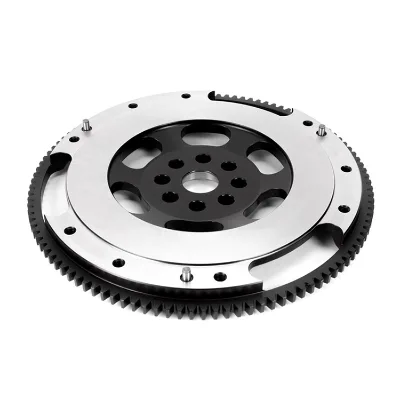
Cast Industrial Flywheel/Sand Casting Flywheel/Cast Iron Fly Wheel 2021
$2.00 - $10.00
MOQ: 200 Pieces




Comprehensive Sourcing Guide
Strategic Sourcing Guide for CNC Machined Ductile Iron Flywheels
Understanding Material Properties and Application Context
When sourcing CNC Machined Ductile Iron Flywheels, the primary distinction lies in the material selection and its specific mechanical advantages. While the supplied product data highlights extensive capabilities in aluminum alloys (grades 6061, 6063, and 7075) and various machining processes, the specific requirement for ductile iron necessitates a focused evaluation of cast iron properties. Ductile iron, often referred to as nodular iron, offers superior tensile strength and ductility compared to gray cast iron, making it ideal for high-stress applications where impact resistance is critical. The core keyword implies a component that must store rotational energy efficiently while withstanding significant torsional loads.
Buyers must verify that the supplier's casting capabilities align with the specific grade of ductile iron required. The provided data mentions "Casting Surface Quality Level" and "Die Casting Method," but ductile iron flywheels are typically produced via sand casting or precision die casting rather than the aluminum-focused CNC turning and milling processes listed for other products. It is essential to confirm whether the supplier utilizes "Sand Casting" or "Cold Chamber Die Casting Machine" technology specifically for iron alloys, as the thermal dynamics and shrinkage rates differ significantly from aluminum. The "Horizontal" pressure chamber structure noted in the data may be relevant for specific die-casting applications, but for large flywheels, sand casting is often the standard. The "Tolerance Grade: 6" mentioned in the context suggests a high level of precision is achievable, which is vital for flywheel balance and dynamic stability.
Technical Specifications and Machining Precision
The technical integrity of a CNC machined flywheel depends heavily on the precision of the final machining operations. The supplied facts indicate a tolerance range of "±0.005mm - ±0.02mm (High Precision)" for aluminum components. For ductile iron flywheels, buyers should demand similar or equivalent tolerance standards, as even minor deviations can lead to vibration issues and premature bearing failure in rotating machinery. The "Machining" process listed as "CNC Machining" combined with "CNC Milling / CNC Turning / 5-Axis Machining" suggests that the supplier possesses the multi-axis capabilities necessary to machine complex geometries, such as keyways, bolt holes, and precise hub diameters.
Surface finish is another critical technical parameter. The data references "Surface Treatment" options like "Anodizing / Sandblasting / Polishing / Passivation." While anodizing is specific to aluminum, the concepts of "Polishing," "Sandblasting," and "Surface Preparation" involving "Deburring" are universally applicable to iron. A flywheel requires a smooth, deburred surface to prevent stress concentration points that could initiate cracks under cyclic loading. The "Casting Surface Quality Level" should be verified to ensure that the raw casting is free from porosity and inclusions before the CNC machining begins. The "Software Assistance" capabilities, including "PRO-E/Solid Work/Ug/Auto CAD/Catia," indicate that the supplier can handle complex 3D modeling and CAM programming, which is essential for optimizing tool paths and ensuring the final dimensions match the customer's drawing exactly.
Compliance, Certification, and Standard Verification
Navigating the compliance landscape for industrial components requires rigorous verification of certifications and adherence to international standards. The provided product attributes list "ISOCE" as a certification and reference standards such as "ANSI, GB, ASTM, DIN." For ductile iron flywheels, the buyer must ensure that the supplier's quality management system is certified to "ISO 9001," which is explicitly mentioned in the "Casting Surface Quality Level" section alongside "RoHS" and "CE." These certifications are not merely administrative; they indicate a structured approach to quality control that is essential for safety-critical rotating parts.
When evaluating suppliers, the "Standard" field should be cross-referenced with the specific application industry. For instance, if the flywheel is intended for automotive or heavy machinery, compliance with "ASTM" or "DIN" standards for ductile iron (such as ASTM A536) is mandatory. The "Customized Size as per Customer Drawing / ISO Stan" attribute confirms that the supplier can adapt to specific standard requirements, but the buyer must explicitly state which standard governs the material composition and mechanical properties. The "RoHS" compliance mentioned in the data is relevant for environmental regulations regarding hazardous substances, ensuring the casting and machining processes do not introduce prohibited materials. Buyers should request current certificates for "ISO 9001," "CE," and "RoHS" before finalizing a contract, rather than assuming these apply to all ductile iron products based on general company capabilities.
Cost Drivers and Procurement Economics
The cost of CNC Machined Ductile Iron Flywheels is influenced by several variables, including material weight, machining complexity, and finishing requirements. The observed "MOQ range" of "1-1000" suggests that suppliers may accommodate small batch orders, which is beneficial for prototyping or low-volume production runs. However, the "MOQ: 10PC" noted in the specific product data indicates that some suppliers may have a minimum order threshold for custom casting jobs. Buyers should be aware that ductile iron is heavier than aluminum, which impacts shipping costs; the "Weight: 10kg" example provided is a baseline, but actual flywheel weights will vary based on the design and energy storage requirements.
Lead time is a significant cost driver in procurement. The data cites a "Delivery: 15 Days" timeframe, which likely applies to standard items or those already in the production queue. For custom ductile iron flywheels involving new tooling or sand mold creation, the lead time may extend beyond this baseline. The "Payment" terms listed as "T/T, L/C, Western Union, Paypal" offer flexibility, but for large orders, "L/C" (Letter of Credit) is often preferred to mitigate financial risk. Additionally, the "Packaging" options, ranging from "Netural Carton Box" to "Standard Export Wooden Case / Carton with Foam PRO," affect the final landed cost. Wooden cases are typically required for heavy, high-value items like flywheels to prevent damage during "Sea, Air, Train" freight, and this should be factored into the total cost of ownership.
Supplier Evaluation and Capability Assessment
Selecting the right supplier requires a deep dive into their manufacturing capabilities and historical performance. The "Location" data points to "Dongguan, Guangdong, China (Mainland)" and "China," indicating a concentration of manufacturing expertise in this region. Buyers should verify if the supplier has dedicated facilities for "Metal Casting Machinery" and "Metal Processing Machinery Parts," as these are listed under the "Application" field. A supplier that specializes in metal casting is more likely to have the expertise to handle the shrinkage and cooling rates specific to ductile iron.
The "OEM Service: Acceptable" and "Customization: Available" attributes suggest that the supplier is willing to work with original equipment manufacturers to produce bespoke components. However, buyers must assess the depth of this customization. Does the supplier offer full design support using "PRO-E/Solid Work/Ug/Auto CAD/Catia," or do they simply machine to provided drawings? The "Advantage: Durable" claim in the data is a positive indicator, but it must be substantiated by test results or case studies. Buyers should request references from clients who have purchased similar ductile iron components for heavy machinery or agricultural applications, as the "Application" list includes "Agricultural Machinery Parts" and "Metal Forging Machinery."
Quality Control and Inspection Protocols
Quality control is paramount for flywheels, as failure can result in catastrophic equipment damage. The "Surface Preparation" process of "Deburring" is a critical step to remove sharp edges and casting flash. The "Surface" treatment options of "Trimming, Deburring, Polishing" should be strictly enforced. Buyers must establish a clear inspection protocol that includes dimensional verification against the "±0.005mm - ±0.02mm" tolerance standards. While the data mentions "High Precision," the actual tolerance for a specific flywheel should be defined in the purchase order based on the rotational speed and load requirements.
Non-destructive testing (NDT) should be a mandatory part of the quality assurance process. Although not explicitly detailed in the provided facts, standard industry practice for ductile iron involves ultrasonic testing or magnetic particle inspection to detect internal defects. The "Casting Surface Quality Level" certification implies a baseline of quality, but buyers should specify acceptance criteria for surface roughness and geometric tolerances. The "Package" section mentions "Cartons, Wooden Cases, Pallets," and the packaging process itself is a quality control step; the "Standard Export Wooden Case / Carton with Foam PRO" ensures that the finished part is protected from moisture and physical impact during transit.
Long-Term Procurement and Supply Chain Resilience
Sourcing ductile iron flywheels is not just a one-time transaction but a long-term partnership that requires supply chain resilience. The "Shipment" options of "Air, Sea, Train" provide flexibility, but buyers should consider the reliability of these logistics channels, especially given the heavy nature of the product. The "Delivery: 15 Days" lead time is a target, but supply chain disruptions can impact this. Establishing a relationship with a supplier that offers "OEM Service" and "Customization" ensures that the buyer can adapt to design changes or volume fluctuations without needing to source from a new vendor.
The "Payment" flexibility and "Customized" nature of the products suggest a collaborative approach. Buyers should maintain open communication regarding the "Standard" requirements and ensure that any changes in material grade or machining process are documented. The "Advantage: Durable" attribute points to the longevity of the product, which reduces the frequency of replacement and maintenance costs. By focusing on suppliers with verified "ISO 9001" certification and a track record in "Metal Casting Machinery," buyers can secure a reliable supply of high-quality flywheels that meet the rigorous demands of industrial applications.
FAQs
What certifications apply to CNC Machined Ductile Iron Flywheels?
Suppliers often hold ISO 9001, RoHS, and CE certifications for quality and safety. These standards ensure the casting and machining processes meet international requirements for industrial components like flywheels.
How precise are the tolerances for CNC machined flywheels?
High-precision machining typically achieves tolerances between ±0.005mm and ±0.02mm. This level of accuracy is critical for ensuring the dynamic balance and stability of rotating machinery parts.
Can suppliers customize flywheel dimensions and specifications?
Yes, customization is available with sizes tailored to customer drawings. Suppliers can adapt materials and processes to meet specific design requirements for unique industrial applications.
What is the typical lead time for delivery of these parts?
Standard delivery times are often around 15 days for completed orders. Custom orders involving new tooling or specific casting methods may require additional time beyond this baseline.
Which surface treatments are available for finished flywheels?
Available treatments include polishing, sandblasting, trimming, and deburring to ensure smooth surfaces. These processes remove imperfections and prepare the part for long-term durability in heavy machinery.
What payment methods are accepted for large orders?
Accepted payment methods include T/T, L/C, Western Union, and PayPal. These options provide flexibility for different transaction sizes and international trade requirements.
How are heavy flywheels packaged for international shipping?
Products are typically packed in standard export wooden cases or cartons with foam protection. This packaging ensures safety during sea, air, or train freight to prevent damage.