Source CNC Machined Countersunk Washer for Machinery Parts
Find and compare 30 listings for CNC Machined Countersunk Washer options made from aluminum, stainless steel, and carbon steel. Evaluate customization services, ISO certifications, and packaging details to select the right fasteners for metal processing and casting machinery applications.
Key considerations
Products List


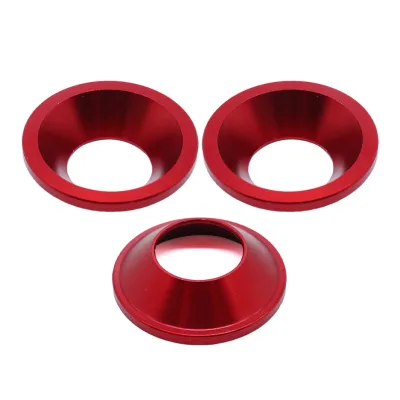


Vodafast Stainless Steel Countersunk Washer Concave Convex Conical Washer
$0.01 - $0.01
MOQ: 5000 Pieces


Comprehensive Sourcing Guide
CNC Machined Countersunk Washer Sourcing Guide
Sourcing CNC machined countersunk washers requires a precise understanding of how these components bridge the gap between standard fasteners and custom-engineered solutions. Unlike stamped washers, which are mass-produced from sheet metal, CNC machined variants are subtractively manufactured from solid billets or bars, allowing for tighter tolerances, superior surface finishes, and complex geometries that stamped parts cannot achieve. This manufacturing method is particularly critical in applications where load distribution must be exact, or where the washer must interface with irregular surfaces or high-stress mounting points. Buyers must recognize that the "countersunk" profile is not merely aesthetic; it is a functional design feature intended to allow bolt or screw heads to sit flush with or below the surface of the mating material, reducing aerodynamic drag, preventing snag hazards, or ensuring a smooth aesthetic finish in visible assemblies.
The procurement landscape for these components is characterized by a high degree of customization and material variability. While standard off-the-shelf options exist for common sizes, the majority of industrial demand leans toward bespoke specifications driven by specific mechanical requirements. Sourcing decisions should be guided by the intended application environment, whether it involves high-temperature exposure, corrosive chemicals, or heavy mechanical vibration. The decision to specify CNC machining over stamping or turning should be justified by the need for precise dimensional control, specific material grades, or low-to-medium volume production runs where the cost of hard tooling for stamping would be prohibitive. Understanding these foundational distinctions ensures that procurement teams align their technical requirements with the correct manufacturing capabilities, avoiding costly mismatches between design intent and supplier capability.
Product Scope and Observed Listing Signals
The current market for CNC machined washers exhibits a broad spectrum of material options, with aluminum, stainless steel, and carbon steel being the most prevalent choices observed in supplier listings. Aluminum is frequently selected for its lightweight properties and natural corrosion resistance, making it suitable for aerospace, automotive, and consumer electronics applications where weight savings are critical. Stainless steel variants are prioritized in environments requiring high strength and resistance to rust or chemical degradation, such as marine, medical, or food processing machinery. Carbon steel washers, often treated or plated, offer a cost-effective solution for general industrial machinery where high tensile strength is required and environmental exposure is controlled. Buyers must verify the specific alloy grade and temper for each material, as these factors directly influence machinability, final hardness, and long-term durability.
Listing signals indicate a strong emphasis on customization services, with many suppliers offering OEM and ODM capabilities alongside standard product lines. The presence of terms such as "Customized," "OEM," and "ODM" suggests that suppliers are equipped to handle non-standard geometries, unique hole patterns, or specialized surface treatments. Additionally, the availability of various head types, including square, T-type, wing, U-type, and round types, alongside the standard countersunk profile, highlights the versatility of modern CNC machining centers. Buyers should note that while some listings mention "Flat Gasket" types, the specific countersunk geometry requires careful verification of the included angle, typically 82 or 90 degrees, to ensure compatibility with the fastener head. The packaging methods observed, ranging from inner polybags to wooden cases and palletized cartons, reflect the need for protection against damage during transit, particularly for precision-machined surfaces that must remain free of scratches or burrs.
Technical Specifications to Verify
Dimensional accuracy is the primary technical differentiator for CNC machined washers, requiring verification of inner diameter, outer diameter, thickness, and the countersunk angle. Buyers must provide or verify detailed engineering drawings in formats such as 3D, CAD, DWG, STEP, or PDF to ensure that the supplier interprets the geometry correctly. The tolerance class specified on the drawing is critical; while standard washers may adhere to loose tolerances, CNC machined parts often require tighter controls, especially when used in precision assemblies or high-speed rotating equipment. The surface finish, often measured in Ra values, must be defined to prevent stress concentrations or interference with sealing surfaces. Additionally, the thread engagement area, if the washer is part of a threaded assembly, must be checked for compatibility with the specified fastener standard, whether ANSI, GB, ASTM, or DIN.
Material properties and heat treatment requirements are equally vital to the functional performance of the washer. Buyers should confirm the specific material grade, such as 6061 or 7075 for aluminum, or 304 or 316 for stainless steel, as these grades exhibit different mechanical behaviors under load. For carbon steel components, the presence of any plating or coating must be specified to ensure corrosion resistance without compromising dimensional tolerances. The hardness of the washer should be verified against the mating bolt and nut to prevent galling or deformation during tightening. Furthermore, the structural type of the washer, whether it is a simple flat washer or a combination washer with integrated locking features, must be clearly defined. Suppliers may offer "A Type" or "B Type" structures, which refer to specific configurations of the washer body and any integrated locking elements, requiring precise communication to avoid receiving the wrong variant.
Compliance and Safety Documentation
Regulatory compliance and certification status are essential for ensuring that sourced washers meet industry-specific safety and quality standards. Many suppliers in the market hold ISO 9001 certification, indicating a standardized quality management system that supports consistent manufacturing processes and traceability. This certification is particularly important for buyers in regulated industries such as automotive, aerospace, and medical devices, where documentation of the supply chain is mandatory. Additionally, RoHS compliance is a critical requirement for electronic and consumer goods, ensuring that the materials used in the washers do not contain restricted hazardous substances. Buyers must request current certificates of conformity and material test reports to verify that the supplied parts meet these regulatory thresholds, as non-compliance can lead to product recalls or legal liabilities.
Beyond certifications, the documentation provided by the supplier should include detailed material certificates and inspection reports. These documents should verify the chemical composition and mechanical properties of the raw material used, ensuring that the supplier has not substituted the specified grade with a lower-quality alternative. For applications involving high stress or dynamic loads, proof load testing or hardness testing reports may be required to validate the structural integrity of the washers. Buyers should also inquire about the supplier’s process for handling non-conforming products, including their policy on rework and scrap disposal. Clear documentation of these quality control measures provides assurance that the washers will perform reliably in their intended application, reducing the risk of field failures and associated warranty costs.
Cost Drivers and Commercial Terms
The cost of CNC machined washers is influenced by several key factors, including material cost, machining time, tooling complexity, and order volume. Aluminum and stainless steel materials are generally more expensive than carbon steel, and the machining time required to produce a countersunk profile with tight tolerances can significantly impact the unit price. Complex geometries, such as washers with multiple holes, unique contours, or integrated locking features, require additional tool changes and programming time, further increasing costs. Buyers should consider the trade-off between unit price and total cost of ownership, as higher-quality washers may reduce assembly time and improve product reliability, offsetting the initial material expense. Volume discounts are often available, but the setup costs for CNC programming remain relatively fixed, making smaller batches more expensive per unit.
Commercial terms and lead times are critical components of the procurement strategy, affecting inventory management and production scheduling. Typical lead times for custom CNC machined washers range from 7 to 15 working days, depending on the complexity of the part and the current workload of the supplier. Buyers should negotiate clear delivery schedules and penalties for delays to mitigate supply chain disruptions. Minimum order quantities (MOQs) can vary widely, from as low as one piece for prototyping to thousands for mass production, and should be aligned with the buyer’s demand forecast. Packaging costs, which may include custom cartons, pallets, or wooden cases, should be included in the total landed cost calculation. Additionally, payment terms, such as deposits or letters of credit, should be structured to balance risk between the buyer and the supplier, ensuring that both parties are protected throughout the transaction process.
Supplier Qualification and Quality Control
Evaluating supplier qualifications requires a thorough assessment of their manufacturing capabilities, quality control processes, and customer service responsiveness. Buyers should verify that the supplier has the necessary CNC equipment, such as multi-axis milling centers, to produce the required geometries with the specified tolerances. The supplier’s experience in producing similar components for the buyer’s industry is a strong indicator of their ability to meet technical requirements. Additionally, the availability of in-house quality control laboratories or partnerships with third-party inspection agencies can provide an extra layer of assurance regarding product consistency. Buyers should request samples for initial evaluation, checking for dimensional accuracy, surface finish, and material properties before committing to larger orders.
Quality control procedures should be clearly defined and agreed upon before production begins. This includes specifying the inspection methods, such as coordinate measuring machine (CMM) testing or visual inspection, and the acceptance criteria for defects. Suppliers should provide a detailed quality plan that outlines the stages of inspection, from raw material receipt to final packaging. Buyers should also assess the supplier’s ability to handle engineering changes and their responsiveness to technical queries. A supplier with a robust quality management system and a proactive approach to problem-solving is more likely to deliver consistent, high-quality washers. Regular audits and performance reviews can help maintain high standards and ensure that the supplier continues to meet the buyer’s evolving requirements.
Long-Term Procurement Checks
Establishing long-term procurement relationships with CNC washer suppliers requires ongoing monitoring of performance metrics and continuous improvement initiatives. Buyers should track key performance indicators such as on-time delivery rates, defect rates, and responsiveness to issues. Regular communication with the supplier can help identify potential problems early and foster a collaborative environment for solving technical challenges. Buyers should also stay informed about advancements in CNC machining technology and material science, which may offer opportunities for cost reduction or performance enhancement. Periodic reviews of the supply chain can help identify alternative suppliers or materials that may better suit changing market conditions or product designs.
Sustainability and ethical sourcing practices are increasingly important considerations for long-term procurement strategies. Buyers should inquire about the supplier’s environmental policies, including waste management, energy consumption, and recycling practices. Ensuring that the supplier adheres to ethical labor standards and provides a safe working environment is also crucial for maintaining a responsible supply chain. By integrating these considerations into their procurement strategy, buyers can build resilient, sustainable, and high-performing supplier relationships that support their long-term business goals. Continuous evaluation and adaptation of the sourcing strategy will help mitigate risks and capitalize on new opportunities in the dynamic market for CNC machined components.
FAQs
What certifications do the washers have?
The washers hold ISO and RoHS certifications as documented in the product specifications. Some listings also reference ISO 9001 standards to ensure quality management compliance for industrial applications.
Which materials are available for these washers?
Available materials include aluminum, stainless steel, and carbon steel depending on the specific model. Buyers can select the material that best suits their corrosion resistance and strength requirements.
Can I request custom dimensions for the washers?
Yes, customization is available for specifications ranging from M3 to M16 or up to 100mm. The supplier accepts 3D, CAD, and PDF drawings to produce parts tailored to your exact engineering needs.
What is the typical delivery time for orders?
The standard delivery time is 7 to 15 workdays after order confirmation. This lead time applies to standard orders and may vary based on the specific customization level and quantity requested.
How are the washers packaged for shipment?
Packaging options include cartons, inner polybags with outer boxes, or wooden cases for larger shipments. Some items are palletized with weights around 25 to 30 kilograms per carton for efficient logistics.
Do you offer OEM or ODM services?
Yes, the supplier provides both OEM and ODM services for custom manufacturing. Buyers can utilize their drawing formats and customization capabilities to develop unique products under their own brand.