Source CNC Milling Iron Manifold Blocks for Hydraulic, Valve, and Machinery Uses
Compare 30 listings for CNC Milling Iron Manifold Blocks from verified Ningbo suppliers. Buyers can evaluate specifications like tolerance, material, and delivery times to find suitable hydraulic and valve components for industrial machinery applications.
Key considerations
Products List


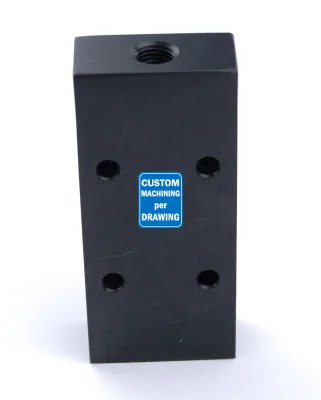


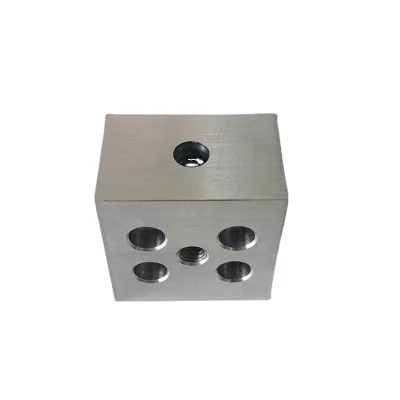

Comprehensive Sourcing Guide
Strategic Sourcing Guide for CNC Milling Iron Manifold Blocks
Understanding Technical Specifications and Material Variability
When sourcing CNC Milling Iron Manifold Blocks, buyers must first navigate the complex landscape of material definitions and dimensional tolerances. The core keyword suggests a specific focus on iron-based components, yet market observations reveal a diverse array of materials including stainless steel, aluminum, and general metal alloys. A critical initial step is to verify the exact material composition, as the properties of cast iron differ significantly from stainless steel or aluminum in terms of machinability, weight, and corrosion resistance. The supplied data indicates that products are available in materials such as stainless steel and aluminum, with some listings explicitly mentioning metal as a general category. Buyers should not assume that all "iron" manifold blocks are identical; rather, they must confirm whether the specific application requires the high strength of steel, the lightweight properties of aluminum, or the specific damping characteristics of iron.
Dimensional precision is another paramount technical factor. The observed data highlights a range of tolerance levels, with specific listings citing tolerances of +/-0.005mm and others at +/-0.05mm. This variance is substantial in the context of hydraulic systems where leakage and pressure integrity are critical. A block designed for high-pressure applications requiring tight tolerances will demand different machining capabilities than a block for lower-pressure general processing. Furthermore, the size of these components is frequently customized to fit specific machinery requirements. The "Customized" attribute appears repeatedly in the product data, indicating that off-the-shelf solutions may not meet the unique geometric needs of a buyer's hydraulic system. Buyers must provide detailed CAD drawings or specifications to ensure the manufacturer can deliver a part that aligns with their system's flow dynamics and mounting requirements.
Compliance, Certification, and Regulatory Standards
Navigating the compliance landscape is essential for international procurement, particularly when dealing with industrial machinery parts that may be subject to strict environmental and safety regulations. The observed product data confirms the presence of several key certifications and standards. RoHS (Restriction of Hazardous Substances) and CE (Conformité Européenne) are explicitly mentioned as certifications, indicating that many suppliers adhere to European environmental directives regarding hazardous materials. Additionally, the data references ISO conditions and various industry standards such as ASTM, ANSI, and DIN.
It is crucial for buyers to understand that while these certifications are observed in the market, they are not universally guaranteed for every single SKU. The presence of "RoHS" and "CE" in the data suggests a high likelihood of compliance among suppliers, but verification is necessary for each specific order. The "prod_standard" field lists values like "RoHs" and "Ce, RoHS," reinforcing the importance of checking the specific certificate of conformity for the batch being purchased. For applications in North America, the ASTM and ANSI standards are particularly relevant, while DIN standards are critical for European markets. Buyers should request valid, up-to-date certification documents rather than relying on general claims. The absence of a specific ISO 9001 certification in the high-confidence facts, despite its mention in low-confidence background, suggests that while quality management systems are likely in place, they should be explicitly confirmed during the supplier vetting process.
Cost Drivers and Pricing Dynamics
The pricing structure for CNC milling manifold blocks is influenced by a combination of material costs, machining complexity, and order volume. The observed price range in the market spans from $0.01 to $30 USD, a wide spectrum that reflects the diversity of product sizes, materials, and customization levels. A component priced at the lower end of this range is likely a simple, small-scale part with minimal machining time, whereas a high-precision, large-block manifold with complex internal channels will command a higher price.
Material selection is a primary cost driver. Stainless steel and aluminum generally carry different price points compared to standard iron or other metal alloys. The weight of the component, with some listings noting a weight of 5.76kgs, directly impacts material costs and shipping fees. Furthermore, the level of customization significantly affects the final price. The "Customized" attribute is prevalent, meaning that unique designs require dedicated programming and setup time, which adds to the cost compared to standard off-the-shelf items.
Order volume also plays a decisive role. The Minimum Order Quantity (MOQ) observed ranges from 1 piece to 5000 pieces. Suppliers offering an MOQ of 1 piece, such as those with "1PC" listed, are likely catering to prototyping or low-volume needs, which often carries a higher per-unit cost due to the lack of economies of scale. Conversely, bulk orders of 5000 pieces can drastically reduce the unit price. Buyers should balance their immediate inventory needs against the potential savings from larger orders. It is important to note that the "Safe Export Carton" and "Safety Export Package" mentioned in the data are standard practices that may add a marginal cost but are essential for protecting the precision-machined surfaces during transit.
Typical Applications and Functional Requirements
CNC milling manifold blocks serve as critical components in various industrial sectors, primarily functioning to consolidate hydraulic circuits and reduce the number of connections required in a system. The data explicitly identifies "Metal Processing Machinery Parts" as a primary application area. In these environments, manifold blocks are used to control the flow of hydraulic fluid to actuators, valves, and motors, ensuring precise and synchronized movement of heavy machinery.
The specific attributes of the products, such as a "Max Pressure" of 230bar and a "Section" count of 8, indicate suitability for heavy-duty hydraulic systems. These blocks are designed to handle significant pressure loads, making them indispensable in sectors like construction equipment, automotive manufacturing, and aerospace. The inclusion of "Relief Valve" fittings in the product attributes suggests that these manifolds are often integrated into safety-critical systems where pressure regulation is vital to prevent equipment failure.
Additionally, the "Work" attributes of "CNC Machining" and "CNC Lathing" highlight the manufacturing processes used to create these parts. The ability to machine complex internal passages and external geometries allows for the integration of multiple functions into a single compact block. This consolidation reduces the risk of leaks at connection points and simplifies the overall system design. Whether for a "Hydraulic" system or a general "Valve Block" application, the manifold must maintain structural integrity under operational stress. The "Surface Finish" described as "Burr Cleaned" is particularly important for applications where fluid cleanliness is paramount, as burrs can disrupt flow or cause premature wear in sensitive hydraulic components.
Supplier Evaluation and Quality Control Protocols
Selecting a reliable supplier for CNC manifold blocks requires a rigorous evaluation of their quality control (QC) capabilities and manufacturing infrastructure. The observed data provides several indicators of supplier competence, such as the use of CMM (Coordinate Measuring Machine) for quality control and the provision of "Full Size Inspection Reports." These are strong indicators that the supplier invests in precision measurement technology to ensure parts meet the specified tolerances.
Buyers should prioritize suppliers who can demonstrate a robust QC process. The presence of a "CMM" suggests that the supplier can verify critical dimensions with high accuracy, which is essential for maintaining the +/-0.005mm tolerance levels observed in some listings. Furthermore, the "Full Size Inspection Report" implies a comprehensive verification process where every dimension of the part is measured and documented, providing the buyer with tangible proof of compliance.
The location of the supplier is another factor to consider. The data points to "Ningbo, Zhejiang" and "China" as common origins. Ningbo is a major manufacturing hub known for its expertise in metalworking and export logistics. However, buyers should verify the specific factory location and its proximity to shipping ports to ensure efficient logistics. The "Delivery Time" of 30 days is a standard lead time observed, but this can vary based on the complexity of the order and the current production schedule. For urgent needs, buyers should inquire about expedited options, though the "Sample Time" of 7-10 days suggests that prototyping can be relatively quick.
Long-Term Procurement Considerations and Relationship Management
Establishing a long-term procurement strategy for CNC manifold blocks involves more than just securing a single transaction. It requires building a relationship with a supplier who can scale with the buyer's needs and maintain consistent quality over time. The "OEM Service" and "Customized" attributes indicate that suppliers are willing to collaborate on design and branding, which is beneficial for buyers looking to integrate these parts into their own product lines.
Sustainability and supply chain resilience are also critical considerations. The "Safe Export Carton" and "Safety Export Package" mentioned in the data reflect a commitment to protecting goods during transit, which minimizes the risk of damage and returns. However, buyers should also consider the environmental impact of their sourcing decisions. The presence of RoHS certification suggests that suppliers are mindful of environmental regulations, which is increasingly important for global supply chains.
Future-proofing the procurement process involves maintaining open communication with suppliers regarding design changes and material availability. As technology evolves, the specifications for manifold blocks may need to adapt to new hydraulic standards or pressure requirements. A supplier with strong "CNC Machining" capabilities and a flexible "Customization" offering will be better positioned to support these changes. Additionally, buyers should establish clear protocols for handling defects or non-conforming parts, ensuring that the "Quality Control" measures are consistently applied to every batch received. By focusing on these long-term factors, buyers can secure a reliable supply of high-quality CNC milling manifold blocks that support their operational efficiency and product integrity.
Comparative Analysis of Product Attributes
To facilitate informed decision-making, the following table summarizes key attributes observed in the market for CNC milling manifold blocks. This comparison highlights the variability in specifications that buyers must account for when selecting a supplier.
| Attribute Category | Observed Variations | Implications for Buyer |
|---|---|---|
| Material | Stainless Steel, Aluminum, Metal, Iron | Verify material suitability for pressure and corrosion resistance. |
| Tolerance | +/-0.005mm, +/-0.05mm | Tighter tolerances require higher precision machining and cost. |
| Certification | RoHS, CE, ISO (Condition), ASTM, ANSI, DIN | Request specific certificates for the target market and application. |
| MOQ | 1PC to 5000 | Lower MOQs suit prototyping; higher volumes reduce unit cost. |
| Lead Time | 30 Days (Standard), 7-10 Days (Sample) | Plan production schedules around standard delivery windows. |
| Surface Finish | Burr Cleaned, Oxidation | Ensure finish meets fluid cleanliness and aesthetic requirements. |
| Packaging | Safe Export Carton, OPP Bag, Inner Box | Confirm packaging prevents damage during international shipping. |
| Application | Metal Processing Machinery, Hydraulic Systems | Match part specifications to specific machinery pressure needs. |
This table underscores the necessity of a detailed specification sheet before engaging with suppliers. The wide range of options allows for customization but requires careful vetting to ensure the selected product aligns with the buyer's technical and operational requirements. By systematically evaluating these attributes, buyers can mitigate risks and secure high-quality components for their industrial applications.
FAQs
What certifications do these manifold blocks typically have?
Many products carry RoHS and CE certifications to meet environmental and safety standards. Some listings also reference ASTM, ANSI, and DIN standards. Buyers should verify specific certificates for each batch rather than assuming universal compliance.
How precise are the tolerances for CNC machined blocks?
Tolerances vary by product, with observed ranges from +/-0.005mm to +/-0.05mm. High-precision models often utilize CMM for quality control. The specific tolerance depends on the customized design and intended pressure application.
Which materials are used for these hydraulic manifold blocks?
Products are available in stainless steel, aluminum, and general metal alloys. The specific material affects weight and corrosion resistance. Buyers must confirm the exact composition as iron is not the only option listed.
Can I get custom sizes and designs for these parts?
Yes, customization is available for size, model, and specific machining requirements. Many listings explicitly state customized options for CNC lathing and milling. Buyers typically need to provide CAD drawings for unique specifications.
What is the typical delivery time for these orders?
The standard delivery time observed is 30 days for production and shipping. Sample times are shorter, typically ranging from 7 to 10 days. Lead times may vary based on order volume and customization complexity.
How is the surface finish treated on these machined parts?
Common surface treatments include burr cleaning and oxidation processes. These finishes ensure fluid cleanliness and prevent premature wear in hydraulic systems. The specific treatment depends on the material and application requirements.
What is the minimum order quantity for these components?
Minimum order quantities range from 1 piece to 5000 pieces depending on the supplier. Low MOQ options support prototyping, while bulk orders reduce unit costs. Buyers should check specific listings for their required volume.
Where are these manufacturers located?
Most suppliers are located in Ningbo, Zhejiang, China. This region is a known hub for metalworking and export logistics. Buyers should verify the specific factory location for accurate shipping estimates.