Source Compact 3-Blade Surface Jointer Planer for Woodworking
Compare 30 Compact 3-Blade Surface Jointer Planer models from China. Options include flat and fine surface planers with CE and ISO certifications, varying spindle speeds, and motor powers under 10kW for efficient wood processing; compare the available evidence and request quotations based on your requirements.
Key considerations
Products List


High Precision Multi Function Combination Solid Wood Combined Surface Jointer Planer Thicknesser
$100.00 - $10000.00
MOQ: 1 Pieces
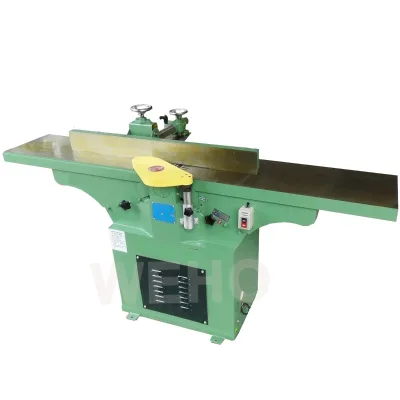
300mm Manual Wood Planer Jointer Benchtop Planing Machine with 2.2kw Motor and 3 Planes
$1072.37 - $1128.81
MOQ: 1 units

Woodworking Planer MB503 Wood Jointer Multifunction Surface Planer Machine
$800.00 - $1300.00
MOQ: 1 Sets


Great Discount High Quality Working Machine Surface Planer Wood Jointer
$1700.00 - $1900.00
MOQ: 1 Pieces

Cost Effective Factory Price Woodworking Tool Thickness Jointer Planer
$1700.00 - $1900.00
MOQ: 1 Pieces

Thickness Machine Jointer Thicknesser Wood Woodworking Surface Planer with ISO Hot Sale
$1200.00 - $2100.00
MOQ: 1 Pieces

Good Service Woodworking Machinery Thicknesser Jointer Planer for Sale
$1700.00 - $1900.00
MOQ: 1 Pieces

High Quality CE Approved China Wood Thicknesser Planer Woodworking Surface Planer
$1200.00 - $2100.00
MOQ: 1 Pieces

CE Approved China Wood Thickness Planer Woodworking Surface Planer with Cheap Price
$1200.00 - $2100.00
MOQ: 1 Pieces


Woodworking Machine Surface Planer Thickness Planer for Wood Furniture
$1200.00 - $2000.00
MOQ: 1 Sets

Comprehensive Sourcing Guide
Compact 3-Blade Surface Jointer Planer Sourcing Guide
The Compact 3-Blade Surface Jointer Planer serves as a critical tool for woodworkers requiring precise surface finishing within limited workshop footprints. These machines typically integrate a flat planer design with a fine surface planer capability, allowing for the removal of minor imperfections while maintaining a smooth finish on workpieces. Buyers should prioritize models that offer a working width between 200mm and 700mm, as this range accommodates both narrow trim pieces and wider boards without requiring excessive material handling.
When evaluating listings, procurement teams must distinguish between heavy processing units and those designed for medium-sized processing tasks. The observed product data indicates a variety of motor power ratings, ranging from under 5kW to between 5kW and 10kW, which directly influences the machine's ability to handle different wood densities. Selecting the correct power class ensures the equipment can sustain continuous operation without overheating, particularly when processing materials like PVC or hardwoods that demand higher torque stability.
Product Scope and Observed Listing Signals
Sourcing signals for these machines often highlight specific customization options and entry methods, such as pushing mechanisms that facilitate manual feed control. The available data suggests that many units feature a drivetrain configuration where the cutter shaft is linked to either the worktable elevating system or the feed drivetrain, depending on the specific model architecture. Buyers should verify if the customization availability aligns with their specific production needs, as this can determine the machine's adaptability to unique workflow requirements.
Listing observations reveal a diverse range of physical dimensions and weights, with some units measuring approximately 2482mm in length while others are more compact at 1860mm. The weight variance, spanning from 300kg to 650kg, indicates significant differences in structural rigidity and vibration dampening capabilities. Procurement teams must correlate these physical attributes with their floor space constraints and foundation requirements, ensuring that the selected unit fits the intended installation area while providing the necessary stability for high-speed spindle operations.
Technical Specifications to Verify
Verification of spindle diameter and cutting speed is paramount for ensuring the quality of the final surface finish. The observed specifications include spindle diameters ranging from 85mm to 102mm, with spindle speeds exceeding 5000rpm in certain configurations. A larger spindle diameter often correlates with better balance and reduced vibration, which is essential for achieving the fine surface planer results required in high-end cabinetry. Buyers must confirm that the specific model's spindle diameter matches the intended cutting depth and width to prevent chatter marks on the wood surface.
Max planing depth and working width are equally critical parameters that define the machine's operational limits. Data indicates maximum planing depths varying between 3mm and 5mm, with working widths spanning from 200mm up to 700mm. These figures dictate the volume of material that can be removed in a single pass, directly impacting production efficiency. Procurement teams should ensure that the selected machine's depth capacity aligns with the roughness of the incoming material to avoid overloading the motor or compromising the surface quality.
Compliance and Safety Documentation
Certification status is a non-negotiable aspect of sourcing industrial woodworking machinery, as it validates adherence to international safety and quality standards. The available product data explicitly lists CE and ISO certifications, which are essential for ensuring that the equipment meets European safety directives and international management system requirements. Buyers must request current certification documents for the specific serial number of the unit being purchased, as these documents serve as proof that the machine has undergone rigorous testing for electrical safety and mechanical integrity.
Safety documentation also includes detailed operational manuals and risk assessment guides that outline the proper use of the feed mode and cutter shaft mechanisms. Since the observed feed modes include manual operation, the documentation must clearly explain the safety protocols for the pushing entry method to prevent operator injury. Procurement teams should verify that the supplier provides comprehensive safety literature in the buyer's native language, ensuring that all operators are fully informed about the hazards associated with high-speed rotating cutters and heavy moving parts.
Cost Drivers and Commercial Terms
The pricing structure for these machines is influenced by a combination of motor power, processing type, and overall dimensions. Observed price ranges span from 100 to 14,000 USD, reflecting the significant variance between basic manual feed units and more complex heavy processing models. Buyers should analyze the cost per unit of processing capacity, considering that higher motor power and larger working widths typically command a premium price. Understanding these cost drivers helps in budgeting for the total cost of ownership, including potential upgrades or additional accessories required for specific applications.
Commercial terms such as minimum order quantity and packaging standards also play a vital role in the procurement process. The data indicates a minimum order quantity of 1 unit, offering flexibility for small workshops or pilot projects. Packaging is typically done in plywood cases, which provides robust protection during international shipping from origins like Shandong, China. Buyers must negotiate clear terms regarding shipping insurance and delivery timelines to mitigate the risks associated with transporting heavy machinery across long distances.
Supplier Qualification and Quality Control
Supplier qualification requires a thorough assessment of the manufacturing origin and the consistency of their production processes. The observed data points to Shandong, China, as a primary origin for these machines, a region known for its concentration of woodworking equipment manufacturers. Buyers should verify the supplier's track record in producing medium-sized and heavy processing units, ensuring they have the infrastructure to maintain consistent quality control across different model lines like the KSP503 and KSP526M series.
Quality control protocols must extend beyond the final inspection to include checks on critical components such as the cutter shaft and motor assembly. The presence of specific process types, such as heavy processing or medium-sized processing, suggests that the supplier employs distinct manufacturing lines for different machine classes. Procurement teams should request evidence of in-process quality checks, including spindle balance testing and motor performance validation, to ensure that every unit leaving the factory meets the specified technical standards and operational reliability.
Long-Term Procurement Checks
Long-term procurement success depends on the availability of spare parts and the durability of the machine's core components. The observed specifications highlight various spindle diameters and motor power ratings, which necessitate a clear understanding of the compatibility of replacement parts. Buyers should establish a relationship with the supplier to ensure a steady supply of cutter shafts, motors, and other wear items, preventing production downtime caused by component failure or obsolescence.
Maintenance schedules and performance monitoring are essential for extending the lifespan of the Compact 3-Blade Surface Jointer Planer. The data indicates that these machines are designed for specific standard widths and dimensions, which should be regularly checked against actual performance to detect any deviations. Procurement teams should implement a preventive maintenance program that includes regular lubrication of the feed drivetrain and inspection of the worktable elevating system, ensuring the machine continues to deliver precise results over years of operation.
FAQs
What is the working width range for these planers?
The working width ranges from 200mm to 700mm across different models. This allows selection based on specific board sizes. The KSP505 handles 500-700mm widths, while the KSP503 covers 200-400mm. Choose the model that matches your material dimensions for optimal performance and safety during operation.
Can these machines be customized for specific needs?
Yes, customization is available for these planers. Buyers can request modifications to suit unique production requirements. This flexibility ensures the equipment integrates well with existing workflows. Contact suppliers to discuss specific customization options and ensure the final product meets your exact operational standards and preferences.
What certifications do these planers hold?
These planers hold CE and ISO certifications. These marks indicate compliance with international safety and quality standards. Buyers can trust the manufacturing quality and operational safety. Always verify specific certification documents with suppliers to ensure they meet your regional regulatory requirements and import regulations.
How much does a compact planer weigh?
Weights vary by model, ranging from 160kg to 650kg. The KSP523 weighs 390kg, while the KSP526M is 450kg. Heavier models like the KSP505 reach 530kg. Consider installation space and floor load capacity when selecting a model to ensure stable operation and safe handling during setup.
What is the maximum planing depth available?
Maximum planing depths range from 3mm to 5mm depending on the model. The KSP503 offers 3mm depth, while the KSP505 provides 4mm. The KSP526M supports up to 5mm. Select the depth based on your material thickness and required finish quality to achieve efficient and precise planing results.
Where are these planers manufactured?
These planers are manufactured in Shandong, China. This region is known for robust machinery production. Buyers should verify specific factory details and logistics options with suppliers. Understanding the origin helps in assessing shipping costs, lead times, and potential import duties for your specific destination market.