Source Compactor Garbage Truck for municipal waste, recycling centers, and industrial sites
Explore 30 verified listings for Compactor Garbage Truck units with varying volumes, transmission types, and emission standards. Buyers can compare specifications from Dongfeng and FOTON brands to find suitable models for waste collection and recycling operations.
Key considerations
Products List

Compression Garbage Truck Waste Compaction Vehicle Garbage Compactor Vehicle
$20000.00 - $30000.00
MOQ: 1 Pieces


Garbage Compressor Truck Waste Collection Garbage Compactor Truck 4m3
$39000.00 - $55000.00
MOQ: 1 Pieces

Garbage Compressor Truck Waste Collection Garbage Compactor Truck 8m3
$39000.00 - $55000.00
MOQ: 1 Pieces


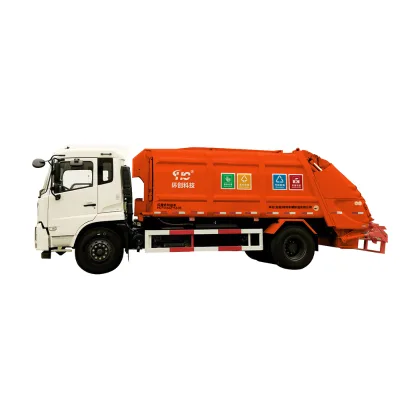


10cbm Waste Compactor Garbage Truck Rear Loader Garbage Compressed Truck
$15000.00 - $17000.00
MOQ: 1 pieces

Garbage Cleaning Compressed Garbage Truck Garbage Disposal Compressed Garbage Truck
$15000.00 - $17000.00
MOQ: 1 pieces


Comprehensive Sourcing Guide
Strategic Sourcing Guide for Compactor Garbage Trucks
Understanding Technical Specifications and Configuration
When sourcing compactor garbage trucks, buyers must navigate a diverse landscape of technical configurations that directly impact operational efficiency and regulatory compliance. The core functionality of these vehicles relies on the compaction mechanism, which is available in specific types such as Compression Type, Swing Arm Type, and Arm Type. These mechanisms determine how waste is loaded, compacted, and discharged. For instance, a Compression Type system is designed to maximize density, reducing the frequency of collection trips, while Swing Arm and Arm Type configurations often cater to specific container interfaces.
The physical dimensions and volume capacity are critical variables in the selection process. Market observations indicate a wide range of available volumes, spanning from 3,001 to 6,000 liters for smaller units, up to 6,001 to 10,000 liters for medium-sized operations, and extending to 10,001 to 15,000 liters for heavy-duty applications. Buyers should verify the specific volume requirements against their fleet's daily throughput needs. Furthermore, the overall size of the vehicle is often customizable, with standard dimensions observed in the market ranging from approximately 5,995mm in length to over 10,300mm, and widths generally around 2,370mm to 2,500mm. Height variations also exist, with some models reaching up to 3,700mm.
Chassis and drivetrain specifications vary significantly based on the intended payload and road conditions. The market features both Manual and Automatic transmission types, allowing buyers to choose based on driver preference and traffic environment. Drive wheel configurations are equally diverse, with options including 4× and 6× drive systems. The emission standards and fuel types are also key differentiators; diesel fuel is the predominant choice, with emission standards ranging from Euro classifications to specific regional requirements. Payload capacities observed in current listings range from 20 tons to 40 tons, necessitating a careful assessment of local road weight limits and the specific waste density the truck will encounter.
Compliance and Certification Verification
Navigating the regulatory landscape is a paramount concern for international procurement. Compactor garbage trucks must adhere to a rigorous set of certifications to ensure safety, environmental compliance, and market access. The documentation provided by suppliers often includes a combination of international and regional standards. Common certifications observed in the market include ISOCCC, CE, ISOTSEPA, EEC, RoHS, and TSEPA. The presence of the CE mark indicates conformity with health, safety, and environmental protection standards for products sold within the European Economic Area. Similarly, ISO certifications suggest adherence to quality management systems, while EEC and TSEPA certifications relate to environmental protection and emission control.
Buyers must treat these certifications as observations rather than universal guarantees for every listed unit. It is essential to verify that the specific model number, such as HYS5137GYYZ3, HYS5139GYYZ3, or KLF5140ZBSK6, carries the necessary documentation for the destination market. For example, a truck intended for export to Europe must possess valid EEC and CE certifications, while units destined for other regions may require different combinations of ISO and local environmental approvals. The absence of a specific certification in a product listing does not necessarily mean the vehicle is non-compliant, but it requires direct confirmation from the manufacturer before proceeding with a purchase.
In addition to vehicle certifications, the manufacturing origin plays a role in compliance. Many units originate from Hubei Province, China, a region known for its automotive manufacturing capabilities. Buyers should ensure that the production facilities adhere to the standards required by the importing country. The "Nude Packing" or "Sea Transportation" options often imply that the vehicle is shipped without a protective crate, which can affect the inspection process upon arrival. Verifying that the vehicle meets the specific "prod_standard" dimensions and structural requirements is crucial for passing local vehicle registration and inspection protocols.
Cost Drivers and Pricing Structure
The pricing of compactor garbage trucks is influenced by a complex interplay of factors, including volume capacity, brand reputation, transmission type, and certification levels. Observed price ranges in the current market span from 5,000 to 85,000 USD. This wide variance reflects the difference between smaller, single-bridge models and large, heavy-duty units with advanced automation and higher payload capacities. A truck with a 40-ton payload and automatic transmission will naturally command a higher price than a 20-ton model with a manual transmission.
Brand is another significant cost driver. Listings frequently mention major manufacturers such as Dongfeng and FOTON. These established brands often carry a premium due to their reputation for reliability, parts availability, and after-sales support. However, the brand name alone does not dictate the final price; the specific configuration and optional features also play a role. For instance, the "Optional" color and size attributes allow for customization, which can add to the base cost. Buyers should be aware that customization availability is a standard feature in this category, but the specific cost implications of these customizations must be clarified during the negotiation phase.
Minimum Order Quantity (MOQ) is another factor that affects the total cost of acquisition. The observed MOQ range is typically between 1 and 2 units, making these vehicles accessible for both individual municipalities and small fleets. However, buyers should verify if bulk purchasing offers any volume discounts, as this is not explicitly detailed in standard listings. Additionally, the packing method, whether "Nude," "CBU" (Completely Built Unit), or "Bulk/RO-RO/Frame/Container," can influence shipping costs and insurance premiums, which are often separate from the vehicle's purchase price.
Typical Applications and Operational Use Cases
Compactor garbage trucks are designed for a variety of waste management scenarios, ranging from residential collection to industrial waste handling. The "Feature" of efficient collection of any types of wastes highlights the versatility of these vehicles. They are particularly effective in urban environments where space is limited and waste density needs to be maximized to reduce the number of trips to disposal sites. The "Recycling" type designation suggests that some models are optimized for separating and compacting recyclable materials, which is increasingly important in modern waste management strategies.
The usage type, whether "Dump," "Sealed," or "Compression Type," dictates the specific application. Sealed systems are ideal for preventing odor and leakage, making them suitable for residential areas and sensitive environments. Compression type trucks are best for high-volume collection routes where maximizing load capacity is essential. The "Rear Loader" configuration is a common design for these applications, allowing for automated or semi-automated loading from the rear of the vehicle.
Buyers should consider the specific needs of their service area when selecting a model. For example, a municipality with narrow streets might require a "Small" model with a "Single Bridge" configuration, while a large city with heavy industrial waste might need a "Medium" or "Large" model with a higher payload capacity. The "Online Service: After Service" attribute indicates that many suppliers offer remote support, which can be crucial for troubleshooting operational issues and ensuring minimal downtime.
Supplier Evaluation and Origin Considerations
Evaluating suppliers requires a focus on their origin, production capabilities, and service infrastructure. The majority of the observed listings originate from Hubei Province, China, a hub for automotive manufacturing. This concentration of suppliers can offer buyers a wide selection of models and competitive pricing. However, buyers must conduct due diligence to ensure that the supplier has the capacity to meet their specific requirements, including customization and delivery timelines.
The "prod_packing" options, such as "Nude Packing," "Sea Transportation," or "Without" additional packaging, provide insight into the supplier's logistics capabilities. Suppliers offering "CBU" or "Container" shipping options demonstrate experience in international logistics, which is essential for cross-border procurement. Buyers should also verify the "After Service" capabilities, as the availability of spare parts and technical support is critical for the long-term operation of the fleet.
When evaluating a supplier, buyers should look for transparency in their product specifications. The presence of detailed model numbers, such as JSIEW5250ZYSQ1, suggests a level of standardization and traceability. However, buyers must not assume that all listed attributes apply to every unit; instead, they should request specific documentation for the exact model they intend to purchase. The "Optional" nature of certain attributes, such as color and size, means that the final product may differ from the initial listing, requiring clear communication to avoid misunderstandings.
Quality Control and Long-Term Procurement Considerations
Ensuring the quality of compactor garbage trucks involves a multi-step verification process that begins before the order is placed and continues through the delivery and operational phases. Buyers should prioritize vehicles that have undergone rigorous testing and meet the relevant "prod_standard" dimensions. The "Condition: New" attribute is a baseline requirement, but buyers should also request inspection reports or third-party verification to confirm the vehicle's structural integrity and mechanical performance.
Long-term procurement considerations extend beyond the initial purchase price. The "After Service" support, including online assistance and potential on-site maintenance, is a key factor in the total cost of ownership. Buyers should negotiate service level agreements (SLAs) that cover response times, parts availability, and training for operators. The "Efficient Collection of Any Types of Wastes" feature should be validated through real-world testing or case studies provided by the supplier to ensure it meets the specific operational demands of the buyer.
Furthermore, the environmental impact of the vehicle should be a priority. Buyers should verify the emission standards and fuel efficiency of the truck, especially if they are operating in regions with strict environmental regulations. The "Euro" emission standard and "Diesel" fuel type are common, but the specific compliance level must be confirmed. Finally, the "Customization: Available" attribute offers an opportunity to tailor the vehicle to specific needs, but buyers must ensure that any modifications do not compromise the vehicle's safety or regulatory compliance. By focusing on these quality control and long-term factors, buyers can secure a reliable and efficient fleet of compactor garbage trucks that meets their operational and environmental goals.
FAQs
What certifications do compactor garbage trucks typically have?
Many units carry ISOCCC, CE, EEC, RoHS, and TSEPA certifications. Buyers must verify specific model numbers like HYS5137GYYZ3 to confirm compliance for their destination market before purchase.
How much volume capacity is available for these trucks?
Available volumes range from 3,001 to 15,000 liters across different models. Smaller units suit light duties while larger 10,001 to 15,000 liter trucks handle heavy waste collection needs.
Which transmission types are offered for compactor garbage trucks?
Both Manual and Automatic transmission types are available in current listings. Buyers should select based on driver preference and specific traffic conditions in their operational area.
Can buyers customize the color and size of the truck?
Yes, customization for color and size is available for many models. However, specific costs for these customizations must be clarified during the negotiation phase with the supplier.
What is the typical price range for compactor garbage trucks?
Observed prices range from 5,000 to 85,000 USD depending on configuration. Higher payload capacities and automatic transmissions generally command higher prices than smaller manual models.
Which brands are commonly found in these product listings?
Major brands like Dongfeng and FOTON are frequently listed in the market. These established manufacturers often offer better parts availability and after-sales support compared to lesser-known options.
What is the minimum order quantity for purchasing these trucks?
The minimum order quantity typically ranges from 1 to 2 units. This allows municipalities and small fleets to purchase single vehicles without needing to buy in large bulk quantities.