Source Computerized High Precision Benchtop Bioreactor for Cell Culture, Bacteria, and Fermentation
Compare 30 Computerized High Precision Benchtop Bioreactor options featuring PLC control, intelligent PID speed regulation, and customizable volumes from 10L to 2000L. Buyers can evaluate models with stainless steel or borosilicate glass vessels for cell and bacteria applications.
Key considerations
Products List


Reliable Microbial Culture Bioreactor with Stable Performance Features
$48550.00 - $57150.00
MOQ: 1 Sets



Factory Customized differential pressure type bioreactor 1000l 2000l 5000l 10000l
$20000.00 - $200000.00
MOQ: 1 Pieces


Advanced Pharmaceutical Fermenter Bioreactor for Effective Wastewater Treatment
$2000.00 - $5000.00
MOQ: 1 Pieces


Advanced Lab-Scale Bioreactor Solutions for Small-Scale and Laboratory Research
$25000.00 - $50000.00
MOQ: 1 Pieces

Durable Stainless Steel Bioreactor: High Efficiency for Industrial Use
$15000.00 - $20000.00
MOQ: 1 Pieces


Customizable Stainless Steel Fermenter Bioreactor for Industrial Use
$15000.00 - $16000.00
MOQ: 1 Sets


Comprehensive Sourcing Guide
Strategic Sourcing Guide for Computerized High Precision Benchtop Bioreactors
Procuring a Computerized High Precision Benchtop Bioreactor represents a critical investment for laboratories engaged in cell culture, bacterial fermentation, and advanced bioprocess development. The complexity of these systems demands a rigorous sourcing strategy that balances technical performance with regulatory compliance and total cost of ownership. Buyers must navigate a market where specifications vary significantly between models, often ranging from small-scale 10-liter units to larger benchtop configurations capable of handling volumes up to 2000 liters, though the specific "benchtop" classification usually implies smaller, modular systems designed for precision control in limited spaces. This guide outlines the essential factors for evaluating potential suppliers and selecting equipment that meets exacting research and production standards.
Technical Architecture and Control Systems
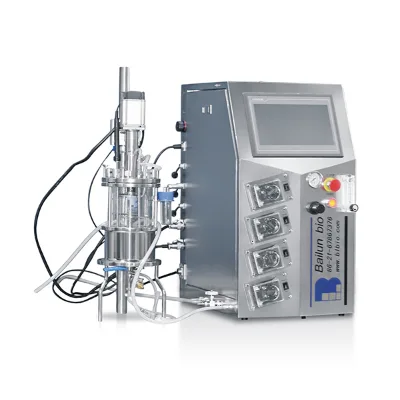
The core of any high-precision bioreactor lies in its control architecture and mechanical design. Modern systems are defined by their computerized nature, utilizing advanced Programmable Logic Controller (PLC) systems to manage process variables with minimal human intervention. In the current market, high-end units often integrate specific control brands, such as German Siemens PLCs, to ensure reliability and seamless data integration. The control interface must support intelligent PID (Proportional-Integral-Derivative) control loops, which are essential for maintaining stable environmental conditions.
Speed control is a primary differentiator among benchtop models. While some systems offer a broad range of 1 to 360 rpm, others may be optimized for lower shear environments with ranges of 1 to 25 rpm. The selection depends heavily on the specific biological application; high-speed agitation is required for oxygen transfer in bacterial cultures, whereas lower speeds are preferable for shear-sensitive mammalian cells. The agitation mechanism itself is typically mechanical, utilizing paddle agitators or similar impellers designed to ensure uniform mixing without damaging the culture.
The vessel construction is equally critical. High-precision units often feature a dual-material approach to balance durability with optical clarity and chemical resistance. The frame is frequently constructed from Stainless Steel 316L, providing robust structural integrity and corrosion resistance. The reaction vessel itself may be made of Borosilicate Glass, allowing for visual inspection of the culture and offering excellent thermal shock resistance. In some configurations, the entire vessel is stainless steel, while others utilize a jacketed heat transfer structure to facilitate precise temperature regulation. The heating method is typically electric, often implemented via an outside or inside coil heating system, ensuring rapid and uniform thermal response.
Operational Parameters and Process Capabilities
Understanding the operational envelope of a bioreactor is essential for matching equipment to specific research goals. The feeding volume capacity is a key metric, with observed ranges in the market spanning from 15% to 50% for certain models, while others may support a fixed 70% filling volume. Buyers must verify the specific working volume relative to the total vessel capacity to ensure adequate headspace for gas exchange. The ventilation rate is another critical parameter, often standardized at 1 vvm (volume of gas per volume of liquid per minute), which dictates the oxygen supply capacity for aerobic processes.
Temperature control is managed through various modes, including coil-type systems that circulate heating or cooling media. The tilt angle of the vessel is another adjustable feature, typically ranging from 1 to 10 degrees, which can be useful for specific sampling or cleaning procedures. Pressure conditions are generally maintained at atmospheric levels for standard benchtop applications, though some specialized units may offer pressure control capabilities. The sterilization method is a vital consideration for maintaining aseptic conditions; in situ sterilization is a common feature, allowing the entire vessel and associated piping to be sterilized without disassembly, thereby reducing contamination risks.
The precision of the system is often categorized as "normal precision," which implies a standard level of accuracy suitable for most research applications. However, for high-precision requirements, buyers should verify the tolerance levels of sensors and actuators. The finished dosage form is typically liquid, indicating the system's suitability for broth cultures and liquid-phase reactions. The control system must also support monitoring of multiple parameters, including pH, dissolved oxygen (DO), foam, and temperature, often managed through a unified interface that allows for real-time adjustments and data logging.
Compliance, Certification, and Regulatory Standards
In the biotechnology sector, compliance with international standards is non-negotiable. Buyers must verify that the equipment carries recognized certifications such as CE and ISO. These certifications indicate that the manufacturer adheres to specific safety, quality, and environmental standards. The presence of "CE Certified" markings is a baseline requirement for equipment intended for the European market, while ISO certification often relates to quality management systems (e.g., ISO 9001). It is crucial to distinguish between general certifications and those specific to medical devices or pharmaceutical equipment, depending on the intended application.
The product standards themselves may vary, with some models adhering to specific volume standards like 10L, 20L, or 50L, while others offer customized standards ranging from 50L to 2000L. Buyers should ensure that the supplier provides documentation confirming that the equipment meets the relevant standards for the intended region. The origin of the product is also a factor in compliance; many high-precision bioreactors are manufactured in China, where a robust supply chain exists for stainless steel and glass components. However, the manufacturing location does not inherently dictate quality, provided the supplier maintains strict quality control protocols.
Cost Drivers and Pricing Structures
The pricing of computerized bioreactors is influenced by a complex array of factors, including vessel material, control system sophistication, and customization levels. Observed price ranges in the market can be extensive, spanning from approximately $2,000 to $980,000. This wide disparity reflects the difference between basic benchtop units and fully integrated, large-scale systems with advanced automation. The minimum order quantity (MOQ) for these systems is typically low, often allowing for the purchase of a single unit, which facilitates procurement for individual laboratories or pilot-scale operations.
Cost drivers include the choice of materials, such as the use of Stainless Steel 316L versus standard steel, and the inclusion of specialized sensors for pH and DO control. The complexity of the control system, particularly the integration of PLCs and intelligent PID controllers, also significantly impacts the final price. Customization is a major cost factor; while many suppliers offer standard models, customized configurations involving specific agitator models, vessel dimensions, or control interfaces will incur additional charges. Buyers should also consider the packaging requirements, as units are often shipped in wooden cases or standard export cases to ensure safe transport, which adds to the overall logistics cost.
Supplier Evaluation and Quality Assurance
Selecting a reliable supplier requires a thorough evaluation of their technical capabilities and quality assurance processes. Buyers should look for suppliers who offer a warranty period, typically one year, which serves as an indicator of confidence in product durability. The condition of the equipment is another critical factor; new units are the standard for procurement, ensuring that all components are free from wear and tear. The supplier should provide detailed specifications regarding the agitator model, such as paddle agitators, and confirm the frame and cylinder materials.
Quality control should extend beyond the final product to the manufacturing process. Suppliers must demonstrate adherence to strict standards for material selection, such as the use of Borosilicate glass for vessels and Stainless Steel 316L for frames. The application of the equipment, whether for cell culture or bacterial fermentation, should be clearly documented to ensure the system is suitable for the intended biological processes. Buyers should also verify the supplier's ability to provide after-sales support, including technical assistance for installation, calibration, and troubleshooting.
Long-Term Procurement and Operational Considerations
Long-term success with a bioreactor depends on the availability of spare parts, service support, and the flexibility of the system for future upgrades. The computerized nature of these units means that software updates and firmware upgrades may be necessary to maintain compatibility with new laboratory information management systems (LIMS). Buyers should inquire about the availability of replacement parts for critical components such as sensors, agitators, and control modules.
The standard export case or wooden case packaging is designed to protect the equipment during transit, but buyers should also consider the long-term storage requirements. The equipment should be stored in a controlled environment to prevent corrosion or degradation of electronic components. Additionally, the system's ability to handle different fermentation volumes, from 10L to 50L or even up to 2000L, offers scalability for growing research programs. The tilt angle and ventilation capabilities should be evaluated for their long-term utility in various experimental setups.
Comparative Analysis of Key Specifications
To facilitate decision-making, the following table summarizes key technical specifications observed in the market for computerized benchtop bioreactors. This comparison highlights the variability in performance metrics and helps buyers identify the features most relevant to their specific applications.
| Specification Category | Typical Range / Value | Application Relevance |
|---|---|---|
| Control System | PLC Control (e.g., Siemens) | Ensures automated, precise process management. |
| Speed Control | 1-25 rpm or 1-360 rpm | Low speed for shear-sensitive cells; high speed for bacteria. |
| Feeding Volume | 15%~50% or 70% | Determines working capacity and gas exchange efficiency. |
| Vessel Material | Borosilicate Glass or Stainless Steel | Glass for visibility; Steel for durability and pressure. |
| Frame Material | Stainless Steel 316L | Corrosion resistance and structural integrity. |
| Heating Method | Electric Heating (Jacketed/Coil) | Rapid and uniform temperature control. |
| Certifications | CE, ISO | Compliance with international safety and quality standards. |
| Sterilization | In Situ Sterilization | Maintains aseptic conditions without disassembly. |
| Warranty | 1 Year | Standard protection against manufacturing defects. |
| Origin | China | Indicates manufacturing hub with established supply chains. |
This comparative overview underscores the importance of aligning specific technical requirements with the capabilities of the available equipment. Buyers must carefully assess the trade-offs between speed, volume, and material composition to ensure the selected bioreactor meets the rigorous demands of their research or production environment. By focusing on these core attributes, organizations can make informed procurement decisions that support long-term scientific and operational success.
FAQs
What control systems are used in these bioreactors?
These units utilize PLC control systems, often featuring German Siemens components for reliability. Intelligent PID control loops manage speed and process variables precisely. This architecture ensures stable environmental conditions for cell and bacteria applications without manual intervention.
Which vessel materials are available for the reactor?
The reaction vessel is typically constructed from Borosilicate Glass to allow visual inspection. The frame material is Stainless Steel 316L for structural integrity and corrosion resistance. Some configurations may use Stainless Steel for the entire vessel depending on the specific model requirements.
Can the system operate at different agitation speeds?
Yes, speed control ranges vary between 1 to 25 rpm and 1 to 360 rpm depending on the model. Mechanical agitation uses paddle agitators to ensure uniform mixing. Lower speeds suit shear-sensitive cells while higher speeds support bacterial fermentation oxygen transfer.
What certifications do these bioreactors hold?
The equipment carries CE and ISO certifications to ensure compliance with safety and quality standards. CE Certified status is required for European market entry. These certifications indicate adherence to specific regulatory frameworks for medical and pharmaceutical equipment manufacturing.
How is temperature controlled in the reactor?
Temperature control is managed via electric heating using jacketed or coil-type structures. The system supports in situ sterilization to maintain aseptic conditions. Heating methods ensure rapid and uniform thermal response for precise process regulation during fermentation.
What is the minimum order quantity for purchase?
The minimum order quantity is typically one unit, allowing procurement for individual laboratories. This low MOQ facilitates pilot-scale operations and research projects without bulk commitment. Buyers can purchase single units directly from suppliers for immediate deployment.
Is customization available for these bioreactor models?
Customization is available to meet specific research or production requirements. Buyers can request tailored specifications such as vessel dimensions or control interfaces. Standard models range from 10L to 2000L, with customized options extending the standard volume capabilities.