Source Anti-Counterfeit Hologram Security Sticker for Beverage, Shipping, and Medicine
Find 30 verified options for the anti-counterfeit hologram security sticker tailored for bottled beverage, shipping labels, and medicine packaging. Compare customization features, printing types, and material specifications from suppliers in Guangdong.
Key considerations
Products List


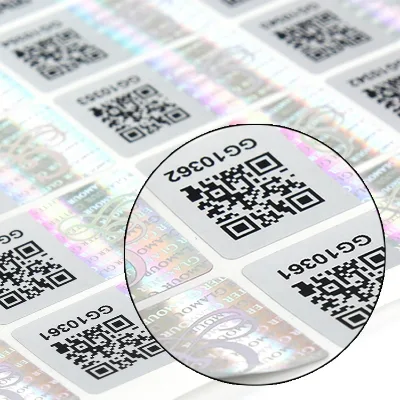
Custom Rainbow Color Anti Counterfeiting Hologram Security Label Sticker
$0.08 - $0.20
MOQ: 1000 Pieces




Comprehensive Sourcing Guide
Strategic Sourcing Guide for Anti-Counterfeit Hologram Security Stickers
The global market for anti-counterfeit hologram security stickers has evolved into a critical component of supply chain integrity, brand protection, and consumer trust. For procurement professionals, sourcing these specialized adhesive labels requires a nuanced understanding of material science, printing technologies, and regulatory compliance. The core objective is to secure a solution that balances high-level security features with cost-efficiency and operational scalability. This guide synthesizes available market data and technical specifications to provide a structured approach for evaluating and acquiring high-quality security stickers.
Understanding Material Composition and Printing Technologies
The foundation of any effective security sticker lies in its substrate material and the printing method employed. The market offers a diverse range of materials, each suited to specific environmental and security requirements. Observed product specifications indicate that Paper remains a primary material choice, particularly for applications requiring a natural aesthetic or where cost is a significant driver. However, for environments demanding durability, resistance to moisture, or tamper-evidence, materials such as PET (Polyethylene Terephthalate) and PVC (Polyvinyl Chloride) are frequently utilized. The selection between these materials often dictates the sticker's longevity and its ability to withstand harsh conditions during shipping or storage.
Printing technology is equally critical in defining the visual and security characteristics of the sticker. The sourcing landscape includes several distinct methods, each offering unique advantages. Transfer Printing and Silk Screen Printing are noted for their ability to produce vibrant, opaque colors, while Off Set Printing is often preferred for high-volume runs requiring consistent color fidelity. For advanced security features, Laser Printing and Flexographic Printing are standard, with the latter being particularly effective for large-scale production of flexible packaging. A specific high-security variant, the Hologram print, is essential for creating the optical diffraction patterns that make counterfeiting difficult. Buyers must verify that the supplier possesses the specific machinery required for the chosen printing type, as the transition between these technologies often requires specialized equipment and expertise.
Technical Specifications and Customization Capabilities
When evaluating potential suppliers, technical specifications serve as the primary filter for product suitability. The market data reveals a high degree of customization available across the sector. The shape of the sticker is rarely limited to standard geometries; options typically include Round, Square, and Rectangle, with full customization capabilities to match unique branding or packaging requirements. Similarly, size specifications are highly flexible, often ranging from small product labels to large shipping identifiers, with the specific dimensions determined by the buyer's needs.
Color customization is another pivotal specification. While standard offerings may include Silver or Gold finishes to enhance the holographic effect, the ability to customize color palettes allows brands to align security labels with their corporate identity. The surface finish is another technical consideration; a "Shinny" surface is commonly observed, which enhances the visibility of holographic elements under light. Furthermore, the inclusion of a custom logo is a standard feature, enabling brands to integrate their visual identity directly into the security layer.
The product models available in the current market, such as DC-S, DC-585, DC-12, and DC-888, suggest a modular approach to manufacturing. These model numbers often correspond to specific material combinations, printing techniques, or security levels. Buyers should not assume that a single model fits all use cases; instead, they must match the model specifications to the specific application, whether it is for bottled beverages, pharmaceutical packaging, or general shipping labels. The "Unit of Measurement" being listed as "One Sheet" indicates that procurement can be flexible, allowing for small-batch testing or large-scale deployment without being locked into rigid packaging units.
Compliance, Certification, and Regulatory Standards
In the realm of security labeling, compliance is not merely a formality but a necessity for market access and legal protection. While specific certification statuses vary by supplier and region, buyers must rigorously verify the standards adhered to by their potential partners. The market data indicates that some products comply with ROHS (Restriction of Hazardous Substances) standards, which is crucial for electronics and consumer goods where chemical safety is paramount. Other products may adhere to standards "According to the batch," suggesting a dynamic approach to quality control that aligns with specific regulatory requirements for different product categories.
For food and medicine applications, the material safety is of utmost importance. The usage of these stickers in "Food" and "Medicine" sectors implies that the adhesives and inks must be non-toxic and compliant with relevant food safety regulations. Buyers should explicitly request documentation proving that the materials used in the sticker do not leach harmful substances into the product, especially for items that are consumed or applied directly to medical devices. Additionally, the "Standard Package" and "Carton" packing methods mentioned in the specifications suggest that the supplier must also adhere to logistics standards that prevent damage during transit, ensuring the security features remain intact until the point of application.
Cost Drivers and Economic Considerations
The pricing structure for anti-counterfeit hologram stickers is influenced by a complex interplay of factors, including material costs, printing complexity, and order volume. The observed price range in the market is notably low, spanning from 0 to 0.5 USD, which suggests that these items are often produced at a high volume with thin margins. However, this low unit price should not be the sole determinant of value. The Minimum Order Quantity (MOQ) is a significant cost driver, with observed ranges extending from 100 to 50,000 units.
For startups or companies testing a new security protocol, an MOQ of 100 units offers a low barrier to entry. Conversely, established brands with high-volume distribution networks may find the 50,000-unit threshold more economical, leveraging economies of scale to reduce the per-unit cost further. The "Classification" of these items as "Spot Goods" indicates that some suppliers may offer immediate availability, which can reduce lead time costs but might come at a premium compared to custom-manufactured runs. Buyers must balance the trade-off between the flexibility of spot goods and the cost efficiency of bulk production. Additionally, the "Customization" feature, while adding value, inevitably increases the cost due to the setup time and specialized tooling required for custom shapes, logos, and holographic patterns.
Typical Applications and Usage Scenarios
The versatility of anti-counterfeit hologram stickers is evident in their wide range of applications. The market data highlights usage in "Bottled Beverage," "Shipping Labels," "Food," "Price Tags," and "Medicine." In the beverage industry, these stickers serve as a primary defense against product diversion and tampering, often applied to the cap or the bottle body. For shipping and logistics, they provide a tamper-evident seal that alerts handlers if a package has been opened or altered, ensuring the integrity of the supply chain.
The pharmaceutical sector demands the highest level of security, where these stickers are used to verify the authenticity of medications, preventing the circulation of counterfeit drugs that could endanger lives. In retail, "Price Tags" and "Packaging Film" applications utilize these stickers to protect brand value and prevent price tag switching. The "Anti-Counterfeit" feature is central to all these applications, but the specific implementation varies. For instance, a sticker used on a medicine bottle might require a more complex holographic pattern than one used on a price tag. Buyers must ensure that the selected sticker's security features are robust enough to deter the specific type of counterfeiting threats prevalent in their industry.
Supplier Evaluation and Quality Control Protocols
Selecting the right supplier is a critical step that goes beyond comparing prices. The origin of the products, often listed as "Guangdong China" or "Dongguan, Guangdong, China," indicates a concentration of manufacturing expertise in this region. However, geographical proximity does not guarantee quality. Buyers should evaluate suppliers based on their ability to provide consistent quality control and their adherence to the specified standards. The presence of "Safe and Standard Package" as a product attribute suggests that the supplier has established protocols for handling and shipping delicate security labels.
Quality control should be a continuous process, not just a final inspection. Buyers should inquire about the supplier's in-process testing methods, particularly for the holographic printing quality and the adhesive strength. The "Feature: Waterproof" attribute observed in some products indicates that the supplier must have tested the stickers under various environmental conditions. It is essential to request samples that have undergone rigorous testing to ensure they meet the specific performance claims. Furthermore, the "Customization" aspect requires a supplier with a flexible production line capable of handling small changes without compromising the security integrity of the hologram.
Long-Term Procurement and Strategic Sourcing
Sourcing anti-counterfeit hologram stickers is a long-term strategic decision that impacts brand reputation and consumer safety. The "Classification: Spot Goods" status suggests that some suppliers can offer immediate fulfillment, which is beneficial for urgent needs. However, for sustained operations, buyers should establish a partnership with a supplier who can scale production as demand grows. The ability to customize the "prod_model" and "Size" ensures that the security solution can evolve alongside the product line.
Buyers should also consider the "Standard: custom" or "can be customized" nature of the product standards. This flexibility allows for the integration of new security technologies as counterfeiting methods evolve. A strategic approach involves negotiating long-term contracts that lock in pricing and ensure priority production slots, mitigating the risk of supply chain disruptions. Additionally, maintaining a relationship with a supplier who understands the specific regulatory requirements of different markets (e.g., ROHS for Europe, FDA for food in the US) ensures that the procurement process remains compliant across all sales channels. By focusing on these long-term considerations, buyers can secure a reliable supply of high-quality security stickers that protect their brand and their customers.
FAQs
What materials are used for anti-counterfeit hologram security stickers?
These stickers are commonly made from Paper, PET, or PVC substrates depending on durability needs. Paper offers a natural aesthetic, while PET and PVC provide waterproof resistance suitable for harsh environments like shipping or beverage packaging.
Which printing types are available for custom hologram labels?
Available printing methods include Silk Screen, Off Set, Laser, Flexographic, and Transfer Printing. Laser and Flexographic printing are particularly effective for large-scale production, while Transfer Printing ensures vibrant, opaque colors for security features.
Can I customize the shape and size of these security stickers?
Yes, the shape and size can be fully customized to meet specific branding requirements. Options include Round, Square, and Rectangle shapes, with dimensions adjusted to fit applications ranging from small medicine bottles to large shipping labels.
What certifications do anti-counterfeit stickers typically meet?
Some products comply with ROHS standards to restrict hazardous substances, while others follow batch-specific standards. This ensures safety for sensitive applications like food and medicine packaging where non-toxic materials are critical for consumer protection.
How does the MOQ affect the cost of ordering these stickers?
Minimum Order Quantities range from 100 to 50,000 units, significantly influencing the per-unit price. Lower MOQs allow for testing with minimal investment, while higher volumes leverage economies of scale to reduce costs for established brands.
Where are these security stickers manufactured?
Manufacturing is concentrated in Guangdong, China, including specific locations like Dongguan. This region offers a high density of suppliers capable of producing custom hologram labels with varying levels of security and customization.
What features make these stickers anti-counterfeit?
Key features include hologram printing, tamper-evident designs, and waterproof properties. These elements create optical diffraction patterns and physical barriers that make replication difficult, ensuring the integrity of the product during shipping and retail.