Source Concrete Floor Polishing Pads for Marble, Granite, and Quartz
Find 30 Concrete Floor Polishing Pad options from Jiangxi suppliers. Compare resin-bonded diamond pads in grits from 50 to 3000, available in 3-inch and 4-inch sizes for wet polishing applications on stone and concrete surfaces.
Key considerations
Products List


Comprehensive Sourcing Guide
Concrete Floor Polishing Pad Sourcing Guide
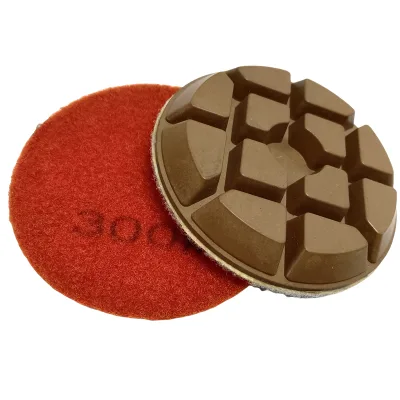
Selecting the right Concrete Floor Polishing Pad requires a clear understanding of the specific abrasive materials and bond types that define performance in industrial settings. The available market data indicates a strong presence of resin-bonded pads utilizing diamond abrasives, which are engineered for high-sharpness and extended service life on hard surfaces. Buyers must distinguish between these high-performance options and conventional abrasive tools, as the bond type directly influences the cutting rate and the final surface finish quality. The observed product attributes highlight a focus on resin and diamond combinations, which are essential for achieving the desired surface finish on concrete, granite, and marble substrates.
Procurement decisions should also account for the versatility of the tooling across different stone types, including quartz and ceramic tiles, as noted in the observed application lists. The supply chain features a range of grit sizes from coarse 50 to ultra-fine 3000, allowing for a complete polishing sequence from initial grinding to final honing. It is critical to verify that the selected pad matches the specific hardness of the concrete or stone being processed, as the "conventional abrasive" classification suggests a standard approach that may not suit all specialized aggregate mixes. Understanding these material distinctions ensures the procurement strategy aligns with the physical demands of the job site.
Product Scope and Observed Listing Signals
The product scope for concrete floor polishing pads in the current market is defined by a wide array of diameters and thicknesses, with observed listings ranging from 3 inches to 4 inches and thicknesses around 10mm to 10.5mm. These physical dimensions are often standardized to fit specific floor grinding machines, yet the data also shows a significant trend toward customized sizing to meet unique equipment requirements. Buyers should expect to find models labeled with specific codes like JZCY-PP14 or CF2-T6, which serve as identifiers for the specific standard and configuration of the pad. The availability of single-item selling units suggests flexibility for small-scale projects or trial orders, while the presence of OEM and ODM support indicates that manufacturers are prepared to tailor products for bulk industrial needs.
Color variations observed in the listings, including grey, brown, black, and blue, often serve as visual indicators for different grit stages or bond hardness levels, though these should be verified against technical data sheets rather than assumed. The functional scope extends beyond simple polishing to include surface finishing and grinding, with the pads designed for both wet and dry usage scenarios depending on the specific model configuration. The "Long Life and High Sharpness" advantage cited in the product attributes points to a market focus on durability and efficiency, which are key metrics for reducing downtime in large-scale concrete floor projects. Procurement teams must evaluate whether the observed color coding aligns with their internal workflow for tracking grit progression.
Technical Specifications to Verify
When evaluating technical specifications, the RPM rating of the pad is a critical safety and performance parameter, with observed data indicating a maximum operating speed of 12,000 rpm. This high rotational speed capability requires that the pad's structural integrity and bonding method are verified to prevent delamination or failure under load. Buyers must ensure that the selected pad is compatible with the torque and speed settings of their existing floor grinding machinery, as exceeding the rated RPM can lead to catastrophic tool failure. The particle size is listed as "Abrasive," which necessitates a closer look at the specific grit number to determine the material removal rate and the resulting surface texture.
The bond type, specifically identified as resin in the observed data, dictates the wear characteristics and the cooling requirements during operation. Since the pads are designed for wet usage, verifying the water flow requirements and the pad's ability to dissipate heat is essential for maintaining the diamond's cutting edge. The thickness of the pad, observed at 10mm or 10.5mm, influences the lifespan and the amount of material that can be removed before the pad needs replacement. Additionally, the model numbers such as JZCY-PP10 or JZCY-PP07 correspond to specific standards like 3"10.5mm or 4 inch10.5MM, and these dimensions must be cross-referenced with the machine's mounting interface to ensure a secure fit.
Compliance and Safety Documentation
Safety documentation for concrete floor polishing pads must address the high-speed rotation and the generation of silica dust, even when wet methods are employed. While the observed data does not list specific certification bodies, buyers should request evidence that the pads meet local occupational safety standards regarding noise levels and vibration exposure. The "no warranty" attribute observed in some listings suggests that buyers must rely on the manufacturer's quality control processes and material specifications rather than post-purchase guarantees. It is imperative to verify that the resin and diamond materials used in the pad do not contain hazardous substances that could violate environmental or workplace safety regulations.
Documentation should also clarify the intended application limits, ensuring the pad is not used on surfaces for which it was not designed, such as those requiring a different bond hardness. The "Conventional Abrasive" classification implies a standard performance level, and buyers should seek technical data sheets that define the limits of this classification for specific concrete mixes. Safety protocols must include instructions on proper handling, storage, and disposal of worn pads, as the diamond particles and resin matrix can pose disposal challenges. Procurement teams should ensure that the supplier provides clear usage guidelines that align with the "Wet Using" specification to mitigate the risk of equipment damage or operator injury.
Cost Drivers and Commercial Terms
The cost of concrete floor polishing pads is driven primarily by the quantity of diamond abrasive embedded in the resin bond and the precision of the manufacturing process. The observed MOQ range of 1 to 5000 pieces indicates that pricing structures vary significantly based on order volume, with smaller orders likely carrying a premium per unit. Buyers should anticipate that customized support, including OEM and ODM services, will introduce additional costs related to tooling and design adjustments. The lead time of 7-15 days suggests that production is not always immediate, and rush orders may incur expedited shipping or manufacturing fees.
Commercial terms must also account for the packaging specifications, which are observed as either carton or white box packing, affecting the unit cost and logistics efficiency. The "Single item" selling unit allows for flexible purchasing but may result in higher per-unit costs compared to bulk packaging. Buyers should negotiate based on the total cost of ownership, considering the "Long Life" advantage which can offset a higher initial purchase price through reduced replacement frequency. It is essential to clarify whether the quoted price includes the cost of the specific grit size, as the transition from coarse to fine grits often involves different material costs.
Supplier Qualification and Quality Control
Supplier qualification should focus on the manufacturer's ability to maintain consistent bond strength and diamond distribution across large production runs. The observed origin of Jiangxi, China, highlights a specific manufacturing hub known for abrasive products, but buyers must verify the specific factory's quality control protocols rather than relying solely on regional reputation. The availability of customized support suggests that the supplier has the engineering capacity to adapt products, but this capability must be validated through sample testing and review of past performance records. Buyers should request evidence of the supplier's ability to meet the "4 inch*10.5MM" or other specific standard dimensions with tight tolerances.
Quality control checks must include verification of the pad's hardness and the uniformity of the abrasive particle size to ensure consistent performance. The "no warranty" observation underscores the need for rigorous pre-shipment inspection to catch defects before they reach the job site. Buyers should establish a clear acceptance criteria based on the observed specifications, such as the 12,000 rpm rating and the resin bond composition, to ensure the delivered goods match the technical requirements. Regular audits of the supplier's production line can help maintain the "High Sharpness" and "Long Life" advantages that are critical for successful concrete floor polishing projects.
Long-Term Procurement Checks
Long-term procurement strategies should prioritize the stability of the supply chain and the consistency of product performance over time. The observed lead time of 7-15 days requires that buyers maintain adequate inventory levels to avoid production delays, especially for specialized grit sizes or custom models. Buyers should monitor the supplier's ability to maintain the "Resin and Diamond" material quality, as fluctuations in raw material costs or supply can impact the final product's durability. Establishing a long-term partnership with a supplier who offers OEM and ODM services can provide greater flexibility in adapting to changing project requirements.
Continuous performance monitoring is essential to validate the "Long Life and High Sharpness" claims against actual field usage data. Buyers should track the number of hours each pad lasts on different concrete mixes to refine future purchasing decisions and optimize the grit progression sequence. The availability of various colors and sizes suggests a need for a robust inventory management system to ensure the correct pad is available for each stage of the polishing process. Regular reviews of the supplier's compliance with safety and quality standards will help mitigate risks and ensure that the procurement strategy remains aligned with the evolving needs of the concrete floor polishing industry.
FAQs
What materials are used for these polishing pads?
The pads are constructed from resin and diamond materials. This combination ensures high sharpness and long life for effective surface finishing on various stone types.
Which grit sizes are available for concrete polishing?
Available grit sizes include 50, 80, 100, 150, 200, 220, 300, 400, 800, 1000, 1500, 2000, and 3000. These options allow for progressive refinement from coarse grinding to high-gloss finishing.
Can I order customized sizes for my project?
Yes, customized sizes are available for these polishing pads. Buyers can request specific dimensions to match their equipment requirements while maintaining the standard 10mm thickness.
What is the lead time for bulk orders?
The standard lead time for orders is between 7 to 15 days. This duration applies to production and preparation before shipment from the Jiangxi origin location.
How do I find suppliers offering OEM services?
Suppliers offering OEM and ODM services are available for this product line. Buyers can request custom branding or specific manufacturing adjustments to meet their business needs.
What is the minimum order quantity for these pads?
The minimum order quantity is 1 piece per item. This low threshold allows buyers to test product quality before committing to larger bulk purchases.
Which stone types can these pads polish effectively?
These pads are designed for polishing granite, marble, quartz, ceramic tile, and concrete. They provide surface finish capabilities suitable for multiple hard material applications.