Source Construction Acrylic Mastic for Woodworking, Construction, and Footwear
Find 30 verified options for Construction Acrylic Mastic suitable for woodworking, packing, and construction applications. Buyers can compare structural adhesive properties, solvent-based compositions, and packaging sizes ranging from cartridges to drums.
Key considerations
Products List


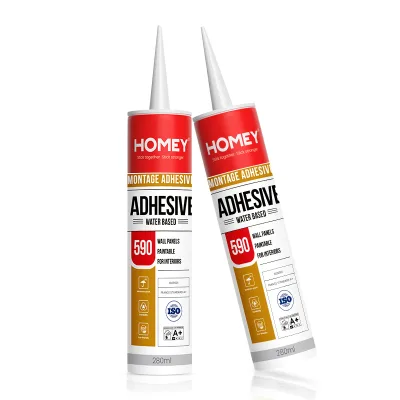


Long-Lasting Durability Acrylic Sealant Acrylic Mastic Silicone Sealant
$0.50 - $0.80
MOQ: 2400 Pieces


Mastic Fire Resistant Acrylic Adhesive Sealant General Purpose Outdoor Use
$1.40 - $1.50
MOQ: 2000 Pieces


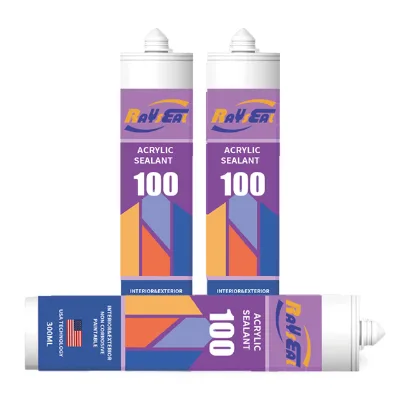

Quality Acrylic Sealant From China with Very Good Sealing Effect Mastic Gum
$1.00 - $1.20
MOQ: 1000 pieces


Comprehensive Sourcing Guide
Strategic Sourcing Guide for Construction Acrylic Mastic
The global construction sector relies heavily on high-performance sealing and bonding solutions to ensure structural integrity and weather resistance. Among the most versatile materials available is the Construction Acrylic Mastic, a product that bridges the gap between traditional sealants and modern adhesive technologies. For procurement professionals, understanding the specific attributes, technical constraints, and compliance requirements of this material is essential for successful sourcing. This guide provides a disciplined approach to evaluating suppliers and selecting the right acrylic mastic for industrial and household applications, grounded in verified product data and industry standards.
Technical Specifications and Material Composition
When evaluating Construction Acrylic Mastic, the primary focus must be on the material composition and physical properties that dictate performance. The supplied product data indicates a diverse range of formulations, including both organic and inorganic materials. A significant portion of the market features organic silicone and acrylic water-based compositions, which are critical for determining the mastic's compatibility with various substrates. Buyers must verify whether the specific product is an organic material or an inorganic mixture, as this influences its chemical resistance and curing mechanism.
The morphology of the product is another critical specification. Data suggests that these mastics can exist in solvent-based forms, aqueous emulsions, or solid-state configurations. For construction applications, the aqueous emulsion form is often preferred for its ease of application and lower volatile organic compound (VOC) content, while solvent-based variants may offer faster drying times in specific industrial contexts. The viscosity is described as "strong," indicating a high-thickness consistency suitable for gap filling and structural bonding rather than thin film sealing.
Physical properties such as density and Shore hardness provide measurable benchmarks for quality control. Observed density values range from approximately 1.40 to 1.57 g/cm³, with specific tolerances noted as ±0.01 or ±0.05 g/cm³. The Shore A hardness is recorded at 49, suggesting a balance between flexibility and structural rigidity. Furthermore, the elongation at break is a vital metric for expansion joints; observed values reach up to 600%, allowing the mastic to accommodate significant thermal movement without cracking. The tack-free time, observed at 45 minutes, is a key operational parameter for scheduling construction workflows, ensuring that the surface is ready for subsequent trades without premature contamination.
Compliance, Certification, and Safety Standards
Navigating the regulatory landscape is a non-negotiable aspect of B2B procurement in the construction industry. The supplied data highlights ISO certification as a verified attribute for several product listings, serving as a baseline indicator of quality management systems. However, buyers should not assume that all listed products possess this certification without explicit verification. The presence of ISO certification implies adherence to international standards for consistency and safety, but it does not automatically guarantee compliance with local building codes or specific environmental regulations.
Safety and chemical composition require rigorous scrutiny. The CAS number 2768-02-7 is listed for certain formulations, which buyers must cross-reference with Safety Data Sheets (SDS) to ensure compliance with local hazardous material regulations. Additionally, the presence of anti-fungicide properties is a specific feature noted in the data, which is particularly relevant for applications in humid environments or areas prone to mold growth. Buyers should request documentation confirming the efficacy of these anti-fungal agents, as this is not a universal standard for all acrylic mastics.
Environmental and fire safety standards are equally critical. One data point mentions the application for "Building Fire Seam Sealed," suggesting that certain formulations may meet fire resistance requirements. However, without specific fire rating test results (such as ASTM E84 or EN 13501), buyers must treat this as a potential feature rather than a guaranteed specification. Procurement teams should demand third-party test reports for fire performance, smoke generation, and toxicity before approving these materials for high-risk construction zones.
Cost Drivers and Pricing Dynamics
The pricing structure for Construction Acrylic Mastic is influenced by a complex interplay of factors, including raw material costs, packaging formats, and order volumes. The observed price range in the market spans from $0.20 to $6,500 USD, a vast disparity that reflects the difference between small-scale retail units and bulk industrial drums. The lower end of the spectrum likely corresponds to single cartridges or small cartons intended for household or minor repair projects, while the higher end represents bulk purchases of 200-liter drums or specialized industrial formulations.
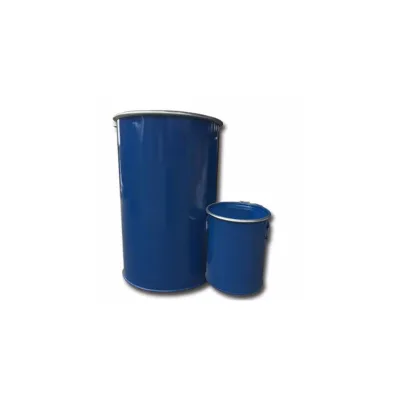
Packaging plays a significant role in cost determination. The data lists various packaging configurations, including 24 pieces per carton, drums, and cartridges or sausages. The single gross weight is noted as 0.600 kg for individual units, with package dimensions of 35x21x25 cm. Bulk packaging, such as the 200-liter drum, offers economies of scale but requires significant storage capacity and handling equipment. Buyers must calculate the total landed cost, including shipping and storage, rather than focusing solely on the unit price.
Minimum Order Quantities (MOQ) also impact the financial strategy of procurement. The observed MOQ range extends from 1 to 5,000 units. Suppliers offering an MOQ of 1 are ideal for prototyping or small-scale projects, whereas those requiring 5,000 units are better suited for large-scale infrastructure contracts. The "Free Sample" attribute mentioned in the data allows buyers to mitigate risk by testing product quality before committing to larger orders, effectively reducing the financial barrier to entry for new suppliers.
Typical Applications and Performance Expectations
The versatility of Construction Acrylic Mastic is evident in its wide array of applications. The data explicitly lists uses in woodworking, packing, footwear and leather, fiber and garment, construction, and automobile industries. Within the construction sector, the material is particularly valued for gap filling in windows and doors, as well as sealing building fire seams. The "Weatherability" attribute confirms its suitability for exterior applications where exposure to UV radiation, rain, and temperature fluctuations is constant.
For industrial and household use, the mastic serves as a structural adhesive, providing excellent strong adhesion to various substrates. The ability to fill gaps effectively makes it ideal for sealing joints in concrete, masonry, and metal frameworks. The color options, which include clear, black, white, gray, and others, allow for aesthetic integration into finished surfaces, a crucial consideration for architectural projects where the sealant's appearance is as important as its function.
However, performance expectations must be managed based on the specific formulation. While the material offers high elongation at break (600%), it is essential to match the product's specific properties to the joint movement requirements of the project. For instance, a joint with high thermal expansion may require the maximum elongation capability, whereas a static joint might prioritize the Shore A hardness and density for long-term stability. The "Neutral" type classification suggests a pH-neutral curing process, which is generally safer for sensitive substrates like glass or metal that might corrode with acidic or alkaline sealants.
Supplier Evaluation and Quality Control
Selecting a reliable supplier requires a systematic evaluation process that goes beyond price comparisons. The origin of the products is a key factor, with the data indicating production in Shandong, China, and other unspecified Chinese locations. Buyers should verify the manufacturing capabilities of suppliers in these regions, ensuring they have the infrastructure to maintain consistent quality across large batches. The "High Quality Redundant Silicone Sealant" feature mentioned in some listings suggests that some suppliers may offer dual-cure or multi-functional products, but this terminology should be validated against technical datasheets.
Quality control protocols are essential to ensure that the delivered product matches the specifications. Buyers should request batch-specific test reports for density, viscosity, and Shore A hardness to verify that the product falls within the observed ranges of 1.40-1.57 g/cm³ and 49 Shore A. The shelf life of 12 months is a standard benchmark, but buyers must check the production date on the packaging to ensure the product has not degraded. The "Anti-Fungicide" feature should be verified through independent testing to confirm its longevity and effectiveness over the product's lifespan.
Furthermore, the "Single Item" selling unit and "Cartridge/Sausage" packaging formats indicate that suppliers may offer flexible purchasing options. Buyers should assess the supplier's ability to provide consistent packaging and labeling, as inconsistent branding or packaging can lead to confusion on the construction site. The availability of free samples is a positive indicator of supplier confidence, allowing for on-site testing of adhesion, curing time, and weather resistance before full-scale deployment.
Long-Term Procurement Considerations
Sourcing Construction Acrylic Mastic is not merely a transactional activity but a strategic decision that impacts the longevity and safety of construction projects. The 12-month shelf life necessitates careful inventory management to prevent product expiration. Buyers should implement a "first-in, first-out" (FIFO) system to ensure that older stock is used before newer shipments. Additionally, the varying MOQs require a flexible procurement strategy that can adapt to project scales, from small repairs to large infrastructure developments.
The environmental impact of the product is another long-term consideration. While the data mentions "Organic Silicone" and "Acrylic Water-Based" compositions, which are generally more environmentally friendly than solvent-based alternatives, buyers should verify the VOC content and disposal requirements. The "Weatherability" and "Anti-Fungicide" features contribute to the long-term durability of the sealant, reducing the need for frequent maintenance and repairs.
Finally, the relationship with the supplier should be built on transparency and trust. Buyers should maintain open communication regarding product specifications, lead times, and any changes in raw material availability. The "Mixture" composition noted in the data suggests that formulations may vary, and suppliers should be prepared to provide detailed technical support to address any performance issues that arise during the project lifecycle. By focusing on these long-term factors, procurement professionals can secure a reliable supply chain that supports the successful completion of construction projects.
FAQs
What is the shelf life of Construction Acrylic Mastic?
The shelf life is 12 months for most listed products. Buyers must check the production date on packaging to ensure the material has not degraded before use in construction projects.
Which certifications are available for these sealants?
ISO certification is a verified attribute for several product listings in the market. Buyers should request documentation to confirm adherence to international quality management systems for specific batches.
How does the density of the mastic affect performance?
Observed density values range from 1.40 to 1.57 g/cm³ with specific tolerances. This physical property helps verify quality control and ensures the material meets structural bonding requirements.
Can I get free samples before placing a large order?
Free samples are available for many suppliers to mitigate procurement risk. This allows buyers to test adhesion, curing time, and weather resistance before committing to larger purchase volumes.
What is the minimum order quantity for bulk purchases?
The minimum order quantity ranges from 1 to 5000 units depending on the supplier. Small MOQs suit prototyping, while larger quantities are required for bulk industrial drum purchases.
Where are these construction acrylic mastics manufactured?
Products originate from Shandong, China, and other unspecified Chinese locations. Buyers should verify manufacturing capabilities in these regions to ensure consistent quality across large production batches.
What packaging formats are available for this adhesive?
Packaging includes 24 pieces per carton, drums, and cartridges or sausages. The single gross weight is 0.600 kg for individual units, with bulk options like 200-liter drums available.