Source Cooking Robot for Restaurants, Kitchens, and Catering
Explore 30 verified Cooking Robot options tailored for commercial food preparation. Buyers can compare electric power ratings, stainless steel materials, and automatic features to find the right solution for their kitchen needs.
Key considerations
Products List


Chinese Food Automatic Cooking Wok Restaurant Kitchen Use Cooker Robot
$1500.00 - $1900.00
MOQ: 1 Pieces


Rolling Automatic Cooking Machine Cooking Robot Drum Cooker Cooking Roller
$3600.00 - $5500.00
MOQ: 1 set
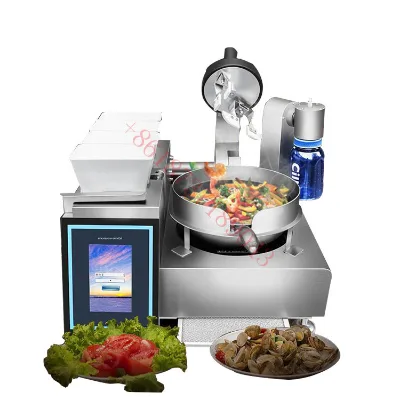

Electric Gas Cooking Wok Pot Robot Cooking Mixing Machine Automatic Food Fried Rice Robot Cooker
$1350.00 - $1380.00
MOQ: 1 Pieces


Comprehensive Sourcing Guide
Strategic Sourcing Guide for Industrial Cooking Automation
The global demand for automated culinary solutions has driven the emergence of sophisticated cooking robots designed to standardize output, reduce labor dependency, and enhance operational efficiency in commercial kitchens. For procurement professionals, navigating this market requires a disciplined approach that distinguishes between marketing narratives and verifiable technical realities. This guide synthesizes observed market data and technical attributes to provide a framework for evaluating cooking robots, focusing on specifications, compliance, cost structures, and supplier capabilities without relying on unverified claims.
Technical Specifications and Operational Parameters
When evaluating a Cooking Robot, the primary focus must be on the core technical specifications that dictate performance and integration. The observed market data reveals a diverse range of power requirements and physical dimensions, indicating that there is no single "standard" unit suitable for all applications. Buyers must verify the rated voltage and phase configuration, as these are critical for electrical compatibility. For instance, specific units in the current market are rated for 380V, 3 Phase, 50Hz systems, which are typical for heavy-duty industrial environments, while other models operate on 220V, Single Phase, 50Hz, suitable for smaller or retrofit installations.
The power rating is another decisive factor. Units have been observed with rated powers ranging from 5kW to 12kW, directly influencing heating speed and capacity. The physical footprint is equally important for kitchen layout planning. Observed product sizes vary significantly, from compact units measuring approximately 630500550mm to larger industrial models with dimensions extending to 1460mm in length. The construction material is predominantly Stainless Steel #304, a standard choice for food-grade equipment due to its corrosion resistance and ease of sanitation.
The automation level also varies. While some units are classified as "Semi-Automatic," others feature advanced "Automatic Intelligent Cooking" capabilities. Key functional attributes to inspect include the presence of timing devices, which may be standard or absent depending on the model, and the type of heating element. Common configurations include coil-based heating elements and induction burners, with some units offering digital displays for multi-function control. The pot capacity is a crucial metric for throughput, with observed ranges spanning from 6L to 12L, and maximum capacity limits for specific roasting machines noted between 0.5kg and 3kg.
Compliance and Certification Verification
In the food processing and commercial kitchen sectors, compliance is not merely a formality but a prerequisite for market entry and operational safety. The most frequently observed certification in the current product landscape is the CE mark, which indicates conformity with health, safety, and environmental protection standards for products sold within the European Economic Area. Some advanced units also carry ISO certifications, suggesting adherence to international quality management standards.
Buyers must treat these certifications as observations of specific listed products rather than universal guarantees for the entire category. When sourcing, it is essential to request valid certification documents that correspond to the specific model number, such as the Lt-Gq60 or LT-TGS30. The presence of a CE mark on a product listing does not automatically imply that every variant of that product line is certified. Procurement teams should verify that the certification covers the specific voltage and power configurations being purchased, as electrical standards can vary by region. Additionally, the "Automatic Grade" of the machine, often listed as Semi-Automatic, should be cross-referenced with local labor and safety regulations to ensure the automation level meets legal requirements for the intended facility.
Cost Drivers and Pricing Dynamics
The pricing for cooking robots is highly variable, reflecting the complexity of the machinery, the materials used, and the level of customization. The observed price range in the market spans from approximately $65 to $40,000 USD. This wide disparity is driven by several key factors. First, the power rating and voltage configuration significantly impact cost; high-voltage, high-power industrial units command a premium over standard single-phase models. Second, the material composition, specifically the use of Stainless Steel #304 versus other alloys, influences the base price.
The degree of customization is another major cost driver. Products listed with "Customization: Available" or "Customized" attributes often carry higher price points due to the engineering and manufacturing effort required to tailor the unit to specific operational needs. Furthermore, the inclusion of advanced features such as digital displays, reservation functions, and intelligent control systems adds to the overall cost. Buyers should also consider the Minimum Order Quantity (MOQ), which ranges from 1 to 500 units. Purchasing a single unit may result in a higher per-unit cost compared to bulk orders, but the MOQ flexibility allows smaller businesses to enter the market without excessive capital commitment.
Typical Applications and Functional Versatility
Cooking robots are designed to serve a variety of commercial applications, from high-volume catering to specialized food processing. The observed "Process" attributes, such as Thermal Processing and Roasting, indicate that these machines are versatile tools capable of handling different cooking methods. The specific model attributes, such as the "Stir-Fry Wok Size" of φ300mm, suggest applications in Asian cuisine preparation, while "Roasting Machine" classifications point to bakery or meat processing uses.
The "Product Name" of "Automatic Intelligent Cooking" implies a shift towards hands-off operation, suitable for environments where consistent output is required regardless of operator skill level. The "Multi-Function" capability, often facilitated by digital displays, allows a single unit to perform multiple tasks, reducing the need for specialized equipment. The "Pot Capacity" of 12L or 6L makes these units suitable for batch cooking in restaurants, while the "Max Capacity" of 0.5-3kg suggests utility in smaller, precision-focused applications. The "Services" attribute of "Customized OEM/ODM" further expands the application scope, allowing manufacturers to adapt the robots for specific industrial food processing lines.
Supplier Evaluation and Business Model Analysis
Selecting the right supplier is as critical as selecting the right machine. The market data indicates a mix of business types, with "Factory/Manufacturer" being a prominent category. This suggests that many suppliers have direct control over the production process, which can lead to better quality control and more flexible customization options. The "OEM/ODM Capacity" is explicitly noted as "Yes, Acceptable" for several products, indicating that suppliers are willing to engage in original equipment manufacturing or design.
The "Business Type" and "OEM/ODM Capacity" should be verified through direct communication. A supplier claiming to be a manufacturer should be able to provide details about their production facilities, such as the location in Guangdong or Dongguan, China. Buyers should also assess the "Leadtime," which is observed to be around 5-7 working days for certain models. This information is vital for supply chain planning. However, lead times can vary based on order volume and customization requirements. It is advisable to confirm the lead time for the specific order before finalizing the purchase, as this can impact inventory management and project timelines.
Quality Control and Packaging Standards
Quality assurance in the procurement of cooking robots involves verifying both the build quality and the packaging integrity. The "Product Material" is consistently listed as Stainless Steel #304, which is a high standard for food contact surfaces. The "Housing" material is also noted as Stainless Steel, ensuring durability and resistance to the harsh conditions of a commercial kitchen. The "Drum Pot Material" may vary, with options including #304 stainless steel or cast iron, each offering different thermal properties.
Packaging is a critical component of quality control during transit. The observed "prod_packing" standard is the "Wooden Box," which provides robust protection against physical damage. For some models, the packaging is specified as a "Wooden Box Package," reinforcing the emphasis on secure transport. Buyers should ensure that the packaging standards meet the requirements of their logistics partners to prevent damage during shipping. Additionally, the "Standard" dimensions provided for the products, such as 800800+2001350 / 1460mm, should be used to verify that the packaging dimensions align with the product specifications, ensuring a proper fit and minimizing void space that could lead to movement during transit.
Long-Term Procurement Considerations
Sourcing cooking robots is a long-term investment that requires consideration of maintenance, scalability, and future-proofing. The "Customization" attribute being "Available" suggests that buyers can future-proof their operations by selecting units that can be adapted to new cooking processes or menu changes. The "Services" offered, including "Customized OEM/ODM," indicate that suppliers are positioned to support long-term partnerships and evolving needs.
Buyers should also consider the "Electrical Requirement" and "Voltage" compatibility for future expansion. If a facility plans to upgrade its electrical infrastructure, selecting a machine with a flexible voltage rating or a standard configuration that aligns with future plans can prevent costly replacements. The "Timing Device" and "Reservation Function" features add value by improving operational efficiency, but their long-term reliability should be assessed. Finally, the "Leadtime" of 5-7 working days is a baseline that should be monitored; any significant deviation could indicate supply chain issues that might affect long-term procurement stability. By focusing on these factors, buyers can ensure a sustainable and efficient procurement strategy for their cooking automation needs.
FAQs
What certifications do these cooking robots have?
The observed units carry CE certification, with some models also featuring ISO certification. Buyers must verify that the specific model number, such as Lt-Gq60, holds valid documents corresponding to its voltage and power configuration before purchase.
Can I customize the Cooking Robot specifications?
Customization is available for these units, allowing for tailored engineering to meet specific operational needs. Buyers should confirm the extent of OEM or ODM services offered by the factory, as this affects the final price and lead time.
What is the power source and voltage requirement?
These electric machines operate on either 380V three-phase or 220V single-phase power depending on the model. The rated power ranges from 5kW to 12kW, so buyers must match the unit to their facility's electrical infrastructure.
How long is the lead time for these units?
The typical lead time is 5 to 7 working days for standard models. This duration may vary based on order volume and the level of customization required, so buyers should confirm the specific timeline before finalizing the order.
What material is used for the product construction?
The main housing and product material are predominantly Stainless Steel #304, ensuring corrosion resistance and food-grade safety. Some components like drum pots may also use cast iron, so buyers should check the specific model's material list.
What is the minimum order quantity for these robots?
The minimum order quantity ranges from 1 to 500 units depending on the supplier and model. Smaller businesses can purchase single units, while bulk orders may offer better per-unit pricing and customized production slots.
Where are these cooking robots manufactured?
The products originate from factories located in Guangdong and Dongguan, China. Buyers should verify the specific factory location to ensure it aligns with their logistics preferences and to assess the supplier's manufacturing capabilities directly.