Source Copper Aluminum Transformer Terminal Clamp for Substation Fittings, Line Fittings, Pole Installation
Find 30 verified options for the Copper Aluminum Transformer Terminal Clamp designed for substation fittings, line fittings, and pole installation. Buyers can compare specifications like material, technics, and standard codes to select the right heavy-duty or tension clamp for their projects.
Key considerations
Products List


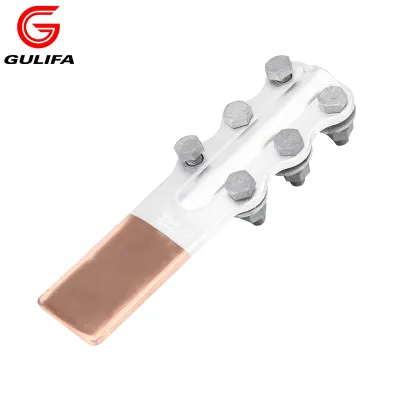


Efficient Copper Aluminium Transformer Clamp with Low Contact Resistance
$0.80 - $10.00
MOQ: 100 Pieces


Comprehensive Sourcing Guide
Strategic Sourcing Guide for Copper Aluminum Transformer Terminal Clamps
The global infrastructure sector relies heavily on reliable electrical connections, with copper aluminum transformer terminal clamps serving as a critical component in power distribution networks. These fittings bridge the gap between dissimilar conductors, ensuring efficient energy transfer while mitigating the risks of corrosion and thermal expansion. For procurement professionals, sourcing these components requires a disciplined approach that balances technical specifications, material integrity, and supply chain reliability. This guide outlines the essential factors buyers must evaluate when sourcing copper aluminum transformer terminal clamps, drawing upon observed market data and established industry practices to inform decision-making.
Technical Specifications and Material Composition
The primary function of a transformer terminal clamp is to provide a secure, low-resistance connection between conductors. In the current market, the material composition is a defining characteristic. Observed product listings frequently specify materials such as copper, aluminum, stainless steel, and various alloys. The most common configuration for these clamps involves a bimetallic design, utilizing copper and aluminum to accommodate the transition between different conductor types. Some suppliers list specific material grades, such as "Copper/SUS" or "Cu," indicating the use of pure copper or stainless steel variants depending on the application's environmental demands.
The physical dimensions of these clamps are equally critical. Market observations reveal a range of specifications, including diameter measurements such as D:22 and D:32, which correspond to the conductor sizes the clamp is designed to accommodate. Thickness is often cited as a variable parameter, with many suppliers noting "Customer Demands" as the standard, suggesting that these components are frequently customized to fit specific project requirements. The structural design also varies; listings indicate the presence of tension clamps, pull-line fittings, and link fittings. The manufacturing techniques observed include welding and cold pressing, each offering distinct advantages in terms of structural integrity and production speed. Buyers must verify that the selected product's diameter and thickness align precisely with the conductor specifications of their specific transformer installation to ensure a mechanical fit that prevents slippage or excessive stress.
Compliance, Standards, and Certification Verification
Navigating the regulatory landscape for electrical fittings requires rigorous verification of standards. While specific international standards like EN 50386 and IEC 60228 are often referenced in general industry knowledge, the actual product listings provided show a mix of compliance claims. Some entries list "Standard" as the compliance level, while others specify "GB" (Guobiao, the Chinese national standard) or "Customized" standards. A notable observation is the listing of "Ny" as a standard, which may refer to a specific internal or regional classification, and the mention of HS code 85469000, which classifies these products under electrical insulators and fittings.
Buyers should not assume that all listed products automatically meet international safety or performance benchmarks without explicit documentation. The observed data indicates that some suppliers offer "Standard Export Package" or "Customized" packing, which may imply different levels of quality assurance. When evaluating a potential supplier, it is essential to request the specific test reports and certification documents that correspond to the project's location. For instance, if a project is in Europe, the buyer must verify compliance with relevant IEC or EN standards, whereas a project in China may prioritize GB standards. The absence of a universally applied standard in the observed data underscores the need for buyers to explicitly define their required compliance framework before initiating a purchase order.
Cost Drivers and Pricing Dynamics
Understanding the cost structure of copper aluminum transformer terminal clamps is vital for budget management. The observed price range in the market spans from $0.01 to $20 USD per unit. This wide variance is not indicative of a single product type but rather reflects differences in material weight, manufacturing complexity, and customization levels. A basic, standard-sized clamp may fall at the lower end of this spectrum, while a heavy-duty, custom-sized, or high-conductivity variant will command a higher price.
Several factors drive these costs. First, the raw material price of copper and aluminum fluctuates based on global commodity markets, directly impacting the unit cost of the clamps. Second, the manufacturing process plays a significant role; cold-pressed clamps may offer different cost efficiencies compared to welded variants. Third, customization is a major cost driver. The observed data confirms that customization is "Available" for these products, including custom packing and specific standard requirements. Customization typically incurs additional tooling or setup fees, which can elevate the unit price. Additionally, the Minimum Order Quantity (MOQ) observed ranges from 1 to 5,000 units. Suppliers often offer tiered pricing, where larger volumes reduce the per-unit cost. Buyers must balance the need for immediate stock against the potential savings of bulk purchasing, keeping in mind that an MOQ of 100 units is a common threshold for standard orders.
Typical Applications and Installation Contexts
Copper aluminum transformer terminal clamps are designed for specific high-voltage and power distribution environments. The observed usage data highlights applications in "Substation Fittings" and "Line Fittings." These components are essential for connecting transformers to the grid, ensuring that the electrical current flows smoothly without significant energy loss. The "Heavy Duty Clamp" designation suggests that certain models are built to withstand the mechanical stresses of outdoor environments, including wind loads and thermal cycling.
Installation methods also vary based on the product design. Some listings indicate "Manually Installed" applications, while others specify "Pole Installation," implying that the clamp is designed for mounting on utility poles or similar structures. The "Low contact resistance, stable conductivity" feature is a critical performance attribute for these applications, as it minimizes heat generation at the connection point, which is a common failure mode in electrical systems. Buyers should match the product's intended application—whether it is for a substation, a transmission line, or a pole installation—with the specific mechanical and electrical requirements of their project. The "Condition: New" status observed in listings confirms that these are typically fresh manufacturing outputs, but buyers should still verify the age of the inventory to ensure material integrity has not degraded during storage.
Supplier Evaluation and Geographic Considerations
The geographic origin of the supplier is a significant factor in the procurement process. The observed data lists origins primarily in China, with specific mentions of Hebei, Wenzhou (Zhejiang Province), and Yueqing (Zhejiang). These regions are known hubs for electrical component manufacturing, offering a concentration of specialized suppliers. However, the diversity in origins suggests that buyers should not rely on a single location for their supply chain. Evaluating suppliers from different regions can provide insights into varying manufacturing capabilities and logistical advantages.
When evaluating a supplier, buyers should look beyond the origin and assess their technical capabilities. The observed "Technics" include welding and cold pressing, indicating that suppliers may have different equipment setups. A supplier specializing in cold pressing might offer better consistency for certain aluminum alloys, while a welding-focused supplier might be better suited for heavy-duty copper connections. Furthermore, the "Customized" nature of the product packing and standards suggests that suppliers should have the flexibility to adapt to specific buyer requirements. Buyers should request evidence of the supplier's ability to handle customization, such as sample production capabilities or previous project case studies. It is also crucial to verify the supplier's capacity to meet the observed MOQ ranges, ensuring they can scale production to meet project timelines without compromising quality.
Quality Control and Long-Term Procurement Strategy
Ensuring the long-term reliability of copper aluminum transformer terminal clamps requires a robust quality control (QC) strategy. The observed "Surface" treatments include "Bare" and "Galvanized" finishes. The choice of surface treatment is critical for corrosion resistance, particularly in outdoor substation environments. A galvanized finish may offer superior protection against rust compared to a bare finish, but the buyer must verify the thickness and quality of the galvanization to ensure it meets the project's environmental specifications.
Long-term procurement considerations also involve the stability of the supply chain. Given the observed lead times and production capabilities, buyers should establish relationships with suppliers who can provide consistent quality over time. The "Customized" standard and packing options indicate that suppliers are willing to adapt, but this flexibility must be managed carefully to avoid quality drift. Buyers should implement a QC protocol that includes incoming material inspections, random sampling of finished goods, and verification of the HS code classification to ensure accurate customs clearance. Additionally, the "Feature" of low contact resistance and stable conductivity should be validated through independent testing, especially for high-voltage applications where failure could have severe consequences. By focusing on these quality metrics and maintaining a proactive approach to supplier management, buyers can secure a reliable supply of copper aluminum transformer terminal clamps that meet both immediate and long-term operational needs.
Comparative Analysis of Product Attributes
To facilitate a clearer understanding of the market landscape, the following table summarizes the key attributes observed in the current product listings. This comparison highlights the diversity in specifications, materials, and origins that buyers must navigate.
| Attribute Category | Observed Variations | Implication for Buyer |
|---|---|---|
| Material | Copper/SUS, Copper Aluminum, Cu, Stainless Steel, Aluminum Alloy | Verify compatibility with existing conductors to prevent galvanic corrosion. |
| Standard | GB, Standard, Customized, Ny, D:22, D:32 | Do not assume compliance; request specific certification documents for the target market. |
| Origin | Hebei, Wenzhou (Zhejiang), Yueqing (Zhejiang), General China | Assess logistics costs and lead times based on specific regional suppliers. |
| Technics | Welding, Cold Pressing | Match manufacturing method to the required mechanical strength and production volume. |
| Surface | Bare, Galvanized | Select based on environmental exposure; galvanized is preferred for outdoor durability. |
| MOQ | 1 to 5,000 (Commonly 100) | Plan inventory levels to meet MOQ thresholds while minimizing capital tie-up. |
| Packing | Customized, Carton/Pallet, Standard Export Package, St | Ensure packaging protects the product during transit and meets storage requirements. |
| Application | Substation Fitting, Line Fitting, Heavy Duty, Pole Installation | Align product selection with the specific installation environment and load requirements. |
This table serves as a reference point for buyers to systematically evaluate potential suppliers. By cross-referencing these attributes against project requirements, procurement teams can make informed decisions that mitigate risk and ensure the successful deployment of transformer terminal clamps. The diversity in the market offers flexibility, but it also demands a rigorous selection process to identify the most suitable partner for the specific needs of the electrical infrastructure project.
FAQs
What materials are used for copper aluminum transformer terminal clamps?
These clamps are typically made from copper, aluminum, stainless steel, or bimetallic combinations like copper and aluminum. Specific listings also mention Copper/SUS or pure Cu variants depending on the required conductivity and corrosion resistance for the application.
Which standards do these transformer clamps comply with?
Compliance varies by supplier, with options including GB standards, generic Standard classifications, or fully Customized specifications. Some listings reference specific internal codes like Ny, so buyers must request explicit certification documents matching their project location.
How can I find clamps with a minimum order quantity of 100?
You can source products with an MOQ of 100 units, as this is a common threshold observed in the market. While some suppliers offer lower MOQs starting at 1, the 100-unit level is frequently available for standard orders.
Can I get custom packing for these electrical fittings?
Yes, customization is available for product packing, with options ranging from Carton/Pallet to Standard Export Package. Buyers can also request fully customized packing solutions to meet specific logistical or branding requirements.
What are the typical manufacturing techniques for these clamps?
The observed manufacturing techniques include welding and cold pressing, each offering distinct structural benefits. Welding is used for certain heavy-duty applications, while cold pressing is common for maintaining material integrity in bimetallic connections.
Where are these transformer clamps manufactured?
Products originate from various regions in China, including Hebei, Wenzhou in Zhejiang Province, and Yueqing in Zhejiang. These locations are known hubs for electrical component manufacturing, offering a concentration of specialized suppliers.