Source Cordless Window Squeegee for Home, Office, and Car
Find 30 Cordless Window Squeegee options from Chinese manufacturers. Compare features like eco-friendly materials, rubber squeegee heads, and plastic or wood handles. View pricing, MOQs, and customization availability for bulk sourcing needs; compare the available evidence and request quotations based on your requirements.
Key considerations
Products List


Comprehensive Sourcing Guide
Cordless Window Squeegee Sourcing Guide
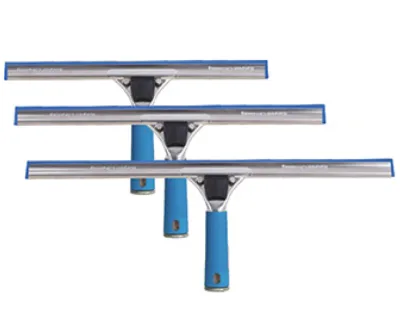
The market for cordless window squeegees presents a distinct category where manual operation often supersedes battery-powered mechanisms in specific industrial contexts. While the core keyword suggests electric functionality, observed listings frequently describe manual tools with ergonomic handles made from plastic, wood, or combinations like plastic and alnico. Buyers must carefully distinguish between true cordless electric units and high-performance manual squeegees designed for heavy-duty window and floor cleaning tasks. The observed product range includes models with rubber squeegee blades and handles constructed from durable materials, indicating a focus on mechanical efficiency rather than electrical power systems.
Procurement strategies should prioritize verifying the actual power source and intended application before finalizing orders. Many available items are explicitly labeled as manual style tools suitable for windows, floors, toilets, kitchens, and vehicles, rather than battery-operated devices. This distinction is critical for buyers seeking tools that do not require charging cycles or battery replacements. The observed data indicates a diverse range of handle materials and squeegee compositions, suggesting that the "cordless" descriptor in some listings may refer to the absence of a tethered power cord rather than an internal battery, necessitating a rigorous review of technical specifications to align with operational needs.
Product Scope and Observed Listing Signals
Buyers should analyze the observed product attributes to understand the breadth of available manual cleaning solutions. The market features items with specific model numbers such as AF04114B and HL-003, alongside others identified by codes like JA3098 and JA3133. These products often utilize rubber squeegee materials and handles made from plastic or wood, catering to various cleaning environments including windows, floors, and automotive surfaces. The presence of customization options and eco-friendly attributes suggests that suppliers are adapting to specific client branding and sustainability requirements, offering flexibility in handle design and packaging configurations.
Commercial signals indicate a wide variance in minimum order quantities and packaging standards that directly impact procurement logistics. Observed MOQs range significantly from 50 to 5000 pieces, with some specific listings requiring 300 or 3000 units, which dictates the scale of initial investment. Packaging varies from individual OPP bags to bulk cartons containing 24 pieces, with dimensions ranging from compact 11.5x19cm units to larger 35x20x10cm cartons. Buyers must align their order volume with these thresholds to secure competitive pricing and ensure that the physical dimensions of the shipment match their storage and distribution capabilities.
Technical Specifications to Verify
Verification of handle material and construction is paramount for ensuring durability and user comfort during extended cleaning sessions. The observed data highlights handles made from plastic, wood, and combinations of plastic with alnico, each offering different tactile properties and structural integrity. Buyers must confirm the specific material composition for their target market, as wooden handles may offer a premium feel while plastic variants provide cost-effective durability. Additionally, the squeegee material is consistently noted as rubber, but the specific grade and hardness should be validated to ensure effective water removal on glass and other smooth surfaces without leaving streaks.
Dimensional consistency and model-specific features require strict attention to avoid receiving mismatched inventory. Listings specify various standard sizes, including 18-inch, 22-inch, and 51cm handle lengths, alongside compact dimensions like 11.5x19cm. The model numbers AF04114B, AF04116B, and JA3134 correspond to distinct physical profiles that must be matched to the intended application, whether for high windows or floor cleaning. Buyers should request physical samples to verify that the stated dimensions and handle ergonomics align with the product descriptions, ensuring that the tool performs effectively in the specific environments where it will be deployed.
Compliance and Safety Documentation
Safety documentation for manual cleaning tools often focuses on material safety and ergonomic design rather than electrical compliance. Since many observed products are manual in style, buyers should verify that the plastic, wood, and rubber components meet relevant chemical safety standards for consumer goods. The absence of electrical components simplifies the compliance landscape, yet the materials used must still be free from harmful substances, particularly if the tools are intended for use in food service areas or residential settings. Buyers should request material safety data sheets to confirm that the rubber and handle materials do not leach toxins during normal use.
Environmental compliance is increasingly relevant given the observed "Eco-Friendly" attributes associated with several listings. Suppliers claiming eco-friendly status should provide evidence of sustainable sourcing or manufacturing practices, such as the use of recyclable packaging or non-toxic materials. The observed packaging options, including OPP bags and cartons, should be evaluated for their environmental impact, with a preference for recyclable or biodegradable materials where possible. Buyers must ensure that any sustainability claims are substantiated by the supplier to avoid greenwashing and to meet the growing demand for environmentally responsible procurement in the cleaning equipment sector.
Cost Drivers and Commercial Terms
Pricing and minimum order quantities are the primary drivers of total cost of ownership for this category of cleaning tools. The observed price range of 0.29 to 3.2 USD per unit reflects significant variation based on material quality, handle construction, and order volume. Buyers must balance the lower unit cost of high-volume orders against the capital tied up in inventory, as MOQs can range from 50 to 5000 pieces. Understanding the tiered pricing structure is essential for negotiating favorable terms, especially when dealing with suppliers who offer customization services that may incur additional setup fees.
Lead times and sample policies significantly influence the procurement timeline and risk management strategy. Observed delivery times span 30 to 50 days, with sample availability often requiring the buyer to cover freight costs. The sample lead time of 5 to 7 days allows for rapid quality assessment, but the freight-on-your-side policy adds a variable cost that must be factored into the budget. Buyers should negotiate clear terms regarding sample costs and delivery schedules to ensure that the production timeline aligns with their market launch dates, minimizing the risk of stockouts or delayed shipments.
Supplier Qualification and Quality Control
Supplier qualification should focus on verifying the origin and manufacturing capabilities of the providers. The observed data indicates that products originate from key manufacturing hubs in Guangdong and Zhejiang, China, regions known for their expertise in plastic and rubber processing. Buyers should assess the supplier's capacity to maintain consistent quality across different model numbers and handle materials, ensuring that the transition from sample to bulk production does not result in quality degradation. Requesting a factory audit or video tour can provide insight into the production processes and quality control measures in place.
Quality control protocols must be established to verify that the final products meet the specified standards for handle material and squeegee performance. Given the variation in handle materials like plastic, wood, and alnico, buyers should define clear acceptance criteria for structural integrity and finish. The observed standard dimensions and packing requirements, such as 1PC/OPP Bag or Carton configurations, should be strictly enforced to prevent shipping errors. Implementing a pre-shipment inspection process ensures that the delivered goods match the agreed-upon specifications, reducing the likelihood of returns or customer dissatisfaction.
Long-Term Procurement Checks
Sustaining a reliable supply chain requires regular performance reviews and continuous monitoring of supplier capabilities. Buyers should establish a schedule for periodic quality audits to ensure that the materials and construction methods remain consistent over time. The observed customization options and varying model numbers suggest that suppliers may frequently update their product lines, necessitating a proactive approach to managing these changes. Maintaining open communication channels with suppliers allows for early detection of potential issues and facilitates collaborative problem-solving when adjustments are needed.
Strategic planning for future procurement should account for market trends and evolving customer preferences regarding eco-friendly and customizable products. The observed availability of customization and eco-friendly attributes indicates a shift towards more personalized and sustainable cleaning solutions. Buyers should monitor these trends to anticipate changes in demand and adjust their inventory strategies accordingly. By staying informed about the latest developments in the cleaning equipment sector, buyers can ensure that their procurement decisions remain aligned with market expectations and support long-term business growth.
FAQs
What materials are used for the squeegee handle?
The squeegee handle is constructed from plastic and alnico materials. Some variants also utilize wood for the handle component. These durable materials ensure a comfortable grip and long-lasting performance during window cleaning tasks. The combination provides structural integrity while maintaining a lightweight design for easy maneuverability.
Can I customize the packaging for bulk orders?
Yes, customization is available for packaging requirements. Options include individual OPP bags, cartons, or specific requests from the buyer. Standard packing sizes vary, such as 11.5x19cm or 35x20x10 cm dimensions. Buyers can specify their preferred packaging style to meet logistical needs or branding requirements for the final product.
What is the minimum order quantity for these items?
The minimum order quantity ranges from 50 to 5000 pieces depending on the specific model. Some items require a MOQ of 300 pieces, while others may need 3000 pieces. This flexibility allows buyers to place smaller trial orders or larger bulk purchases based on their inventory needs and distribution plans.
How long does delivery take for production?
The delivery time typically spans 30 to 50 days for production completion. This timeframe accounts for manufacturing processes and quality checks. Buyers should plan their procurement schedules accordingly to ensure timely receipt of goods. Sample times are shorter, usually taking 5 to 7 days for preparation.
Are free samples available for quality testing?
Free samples are available for quality assessment purposes. However, the freight cost must be covered by the buyer. This allows potential clients to evaluate the product quality, material durability, and cleaning performance before committing to a larger order. The sample preparation time is generally 5 to 7 days.
What are the standard specifications for the squeegee size?
Standard specifications include sizes such as 18 inches, 22 inches, and 51 cm handles. Model numbers like AF04114B and JA3098 correspond to specific dimensions. These sizes are designed for various window cleaning applications, ensuring effective coverage and ease of use for both residential and commercial cleaning tasks.