Source Corrosion Resistant Dairy Cattle Stall for Barns
Find 30 corrosion resistant dairy cattle stall options from Qingdao suppliers. Compare galvanized steel free stalls, loops, and barriers designed for ranch dairy equipment and cattle comfort. Verify CE and ISO certifications for reliable farm fence applications; compare the available evidence and request quotations based on your requirements.
Key considerations
Products List


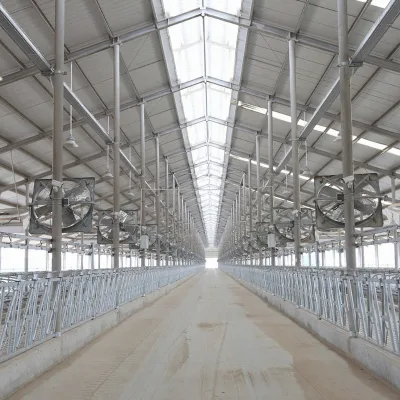


Comprehensive Sourcing Guide
Corrosion Resistant Dairy Cattle Stall Sourcing Guide
Procuring durable housing for dairy operations requires a strategic focus on material integrity and structural design. Buyers must prioritize equipment that withstands constant exposure to moisture, ammonia, and physical wear. The selection process begins with identifying suppliers who offer galvanized steel solutions, as this surface treatment provides essential protection against rust and corrosion. Observing product listings reveals that materials such as Q235 steel and steel pipes are commonly used, often treated with hot-dip galvanizing to ensure longevity. This foundational choice directly impacts the total cost of ownership by reducing maintenance frequency and extending the operational lifespan of the stalls.
Beyond material selection, the customization capabilities of the manufacturer play a critical role in operational efficiency. Many suppliers offer designs tailored to specific farm layouts, with options ranging from diagonal barriers to free stalls and loops. Buyers should verify if the provider supports custom dimensions, as standard sizes may not fit every facility. The availability of computerized design services or bespoke engineering allows for precise integration into existing barn structures. This flexibility ensures that the purchased equipment not only meets hygiene standards but also enhances cow comfort and facilitates efficient herd management practices.
Product Scope and Observed Listing Signals
Market analysis indicates a diverse range of products labeled under this category, including cow free stalls, diagonal barriers, and loops. Listings frequently highlight features such as waterproof construction and easy assembly, which are vital for rapid deployment and long-term durability. The observed product spectrum includes items marketed as ranch dairy equipment, emphasizing their suitability for large-scale commercial operations. Buyers should note that while many products claim to be new, the condition and manufacturing origin vary, with Qingdao and Shandong regions in China being prominent sources. Understanding these signals helps in filtering suppliers who specialize in high-volume production versus those offering niche, custom-engineered solutions.
The presence of specific product codes and model numbers, such as Xbf-C0001 or HLT-S003, suggests a standardized inventory system among some manufacturers. These identifiers can aid in tracking specific design iterations or material specifications. Additionally, the mention of features like "comfortable" design points to ergonomic considerations for the animals, which is a key selling point for modern dairy farming. Buyers must distinguish between generic fencing products and specialized cattle stalls, as the latter require precise engineering to support animal weight and movement. Verifying the exact commodity type ensures that the procurement aligns with the specific functional needs of the dairy operation, whether for feeding, resting, or movement control.
Technical Specifications to Verify
Material composition is the primary technical factor influencing corrosion resistance. Buyers must confirm that the steel used meets industry standards for strength and durability, typically Q235 grade or equivalent. The surface treatment process, particularly hot-dip galvanizing, should be verified to ensure adequate coating thickness for harsh barn environments. Observations indicate that metal and steel pipe constructions are common, but the quality of the galvanization varies. It is essential to request technical data sheets that specify the zinc coating weight and the uniformity of the surface treatment. This verification prevents premature rusting and structural failure, which are common issues in poorly manufactured dairy equipment.
Dimensional accuracy and design flexibility are equally critical technical considerations. While some products offer standard sizes, many suppliers provide custom production options to fit specific barn dimensions. Buyers should verify if the manufacturer can accommodate unique design requirements, such as specific loop configurations or barrier heights. The availability of computerized design services can facilitate this customization, ensuring that the final product integrates seamlessly with existing infrastructure. Additionally, the structural integrity of the assembly mechanism must be assessed, as easily assembled components reduce installation time and labor costs. Confirming these technical details ensures that the purchased stalls are both functional and adaptable to future farm expansions or modifications.
Compliance and Safety Documentation
Certification status is a key indicator of manufacturing quality and regulatory compliance. Many suppliers list CE certification, which signifies adherence to European health, safety, and environmental protection standards. Some listings also mention ISO 9001 or ISO9001:QS certifications, indicating a commitment to quality management systems. Buyers should verify the validity of these certificates and ensure they cover the specific products being purchased. The presence of SGS or other third-party inspection reports can provide additional assurance of product quality and safety. These documents are essential for demonstrating due diligence in procurement and ensuring that the equipment meets international safety benchmarks.
Safety features and operational guidelines are also part of the compliance documentation. Buyers should review any provided manuals or safety data sheets to understand the proper installation and usage procedures. The emphasis on cow comfort and ergonomic design should be supported by technical specifications that prevent injury to both animals and handlers. Additionally, the warranty terms, such as a one-year guarantee, should be clearly documented in the purchase agreement. This legal protection offers recourse in case of manufacturing defects or premature failure. Ensuring that all compliance and safety documentation is complete and verifiable reduces liability and ensures a safe working environment for farm staff.
Cost Drivers and Commercial Terms
Pricing in this market segment varies significantly based on material quality, customization level, and order volume. Observed price ranges span from low-cost basic units to higher-priced, fully customized systems. The minimum order quantity (MOQ) also varies, with some suppliers requiring bulk purchases while others accommodate smaller orders. Buyers must analyze the total cost of ownership, including shipping, installation, and maintenance, rather than focusing solely on the unit price. The use of palletized packing is common, which affects logistics costs and handling requirements. Understanding these commercial terms helps in budgeting accurately and negotiating favorable payment conditions with suppliers.
Lead times and production capacity are critical commercial factors that impact project timelines. Suppliers with established manufacturing bases, such as those in Qingdao, may offer faster turnaround times for standard items. However, custom-designed stalls may require longer production periods. Buyers should clarify lead times and production schedules before placing orders to avoid delays in farm construction or renovation. Additionally, the availability of after-sales support and spare parts should be considered, as these factors influence long-term operational costs. Negotiating clear terms regarding delivery, payment, and warranty ensures a smooth procurement process and minimizes financial risks associated with supply chain disruptions.
Supplier Qualification and Quality Control
Evaluating supplier qualifications is essential for ensuring product reliability and consistency. Buyers should verify the manufacturer's history, with some companies boasting decades of experience in dairy equipment production. This longevity often correlates with refined manufacturing processes and a deeper understanding of industry needs. Checking for established quality control protocols, such as ISO 9001 certification, provides assurance that the supplier adheres to rigorous manufacturing standards. Additionally, reviewing customer testimonials or case studies can offer insights into the supplier's reputation and reliability. This due diligence helps in selecting partners who can deliver high-quality products consistently.
Quality control measures during production and pre-shipment inspections are critical for maintaining product integrity. Buyers should inquire about the supplier's internal quality assurance processes, including material testing and surface treatment verification. Requesting pre-shipment inspection reports or third-party audit results can provide additional confidence in the product's quality. Furthermore, the supplier's ability to handle customization requests without compromising quality is a key indicator of their technical capability. Establishing a clear communication channel for addressing quality issues ensures that any defects are resolved promptly. This proactive approach to quality control minimizes the risk of receiving substandard equipment and ensures long-term satisfaction with the procurement.
Long-Term Procurement Checks
Monitoring supplier performance over time is crucial for maintaining a reliable supply chain. Buyers should establish key performance indicators (KPIs) related to delivery times, product quality, and customer service responsiveness. Regular reviews of these metrics help in identifying potential issues early and addressing them with the supplier. Additionally, staying updated on industry trends and technological advancements ensures that the procurement strategy remains aligned with best practices. This continuous evaluation process fosters a collaborative relationship with suppliers, leading to improved product offerings and better service levels over time.
Adapting to changing farm needs and regulatory requirements is another aspect of long-term procurement management. As dairy farming practices evolve, the demand for more advanced and efficient equipment may increase. Buyers should maintain a flexible procurement strategy that allows for scaling up or down based on operational needs. Regularly reassessing the condition and performance of installed equipment helps in planning for future replacements or upgrades. By maintaining a proactive approach to supplier management and product evaluation, buyers can ensure that their dairy operations remain efficient, safe, and compliant with evolving industry standards.
FAQs
What materials are used for corrosion resistant dairy cattle stalls?
These stalls are constructed from Q235 steel and steel pipes to ensure durability. The surface undergoes hot dip galvanization to provide superior corrosion resistance. This combination ensures the equipment remains robust in demanding farm environments while meeting safety standards.
Can these dairy cow free stalls be customized to specific designs?
Yes, customization is available and products can be designed according to your specific needs. Manufacturers offer various sizes and specifications tailored to different ranch requirements. This flexibility allows buyers to obtain equipment that fits their unique facility layouts perfectly.
Which certifications do these dairy equipment products typically hold?
The products commonly hold CE and ISO9001 certifications to ensure quality and safety compliance. Some listings also mention ISO9000 or SGS standards for additional verification. These certifications indicate that the manufacturing processes meet international quality management requirements for agricultural machinery.
How are these galvanized dairy stalls packaged for shipping?
The equipment is typically packed on pallets to ensure safe transport and handling. Some variations may include box packaging alongside pallets for smaller components. This secure packing method protects the galvanized surfaces from damage during international logistics and delivery to the farm site.
What is the origin location for these dairy cattle stall manufacturers?
Most manufacturers are located in Qingdao, Shandong, China, which is a major industrial hub. This region provides access to high-quality steel materials and established production facilities. Buyers can source directly from these factories to ensure competitive pricing and reliable supply chains.
Can these stalls be used for both cattle and dairy cows?
Yes, the equipment is designed for application in cattle farming and specifically for dairy cow comfort. It serves as diagonal barrier or free stall equipment suitable for ranch dairy operations. The design prioritizes animal welfare while maintaining structural integrity for various livestock types.