Source corrosion-resistant pan head phillips screws for Industry, Household, Chemical
Find corrosion-resistant pan head phillips screws from 30 verified suppliers in China. Compare specifications including material grades, surface finishes, and customization options to match your industrial, household, or chemical project needs.
Key considerations
Products List




Comprehensive Sourcing Guide
Strategic Sourcing Guide for Corrosion-Resistant Pan Head Phillips Screws
Procuring specialized fasteners such as corrosion-resistant pan head Phillips screws requires a disciplined approach that balances technical precision with supply chain reliability. In the global B2B market, buyers often encounter a wide array of options ranging from standard carbon steel variants to high-grade stainless steel solutions. The core objective is to secure components that meet specific mechanical and environmental requirements without compromising on quality or compliance. This guide outlines the essential factors for sourcing these fasteners, drawing upon observed market data and established industry standards to ensure a robust procurement strategy.
Technical Specifications and Material Selection
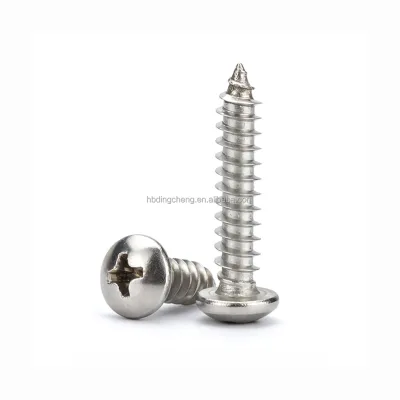
The foundation of a successful sourcing strategy lies in understanding the precise technical specifications of the product. For pan head Phillips screws, the head style is a critical identifier. Market observations confirm that "Round Head" and "Pan Head" are frequently used interchangeably in product listings, though the specific geometry of the pan head provides a larger bearing surface for the driver. The drive style is explicitly noted as "Phillips" in verified product attributes, which dictates the compatibility with standard power tools and manual drivers.
Material selection is paramount for achieving the "corrosion-resistant" designation. The supply chain data indicates a divergence in material grades, with "Carbon Steel" and "Stainless Steel" being the primary options. Carbon steel variants often require surface treatments to achieve corrosion resistance, whereas stainless steel offers inherent protection. The observed data lists specific grades such as "Grade 4" and "Grade 8," alongside groove types like "Cross" and "Special Shape." Buyers must verify that the selected material grade aligns with the intended service environment. For instance, in chemical or industrial settings, the material must withstand specific corrosive agents, which often necessitates stainless steel or specialized coatings.
Furthermore, the dimensional specifications are highly variable. The observed product standards range from "M1.6-M10" to "M2.5-M30," with specific models like "HX988," "HX33," and "HX654" appearing in the market. Lengths are observed in ranges such as "3mm-60mm," and some listings indicate "Customization" for diameter and length. This variability underscores the need for buyers to define exact dimensional requirements before engaging with suppliers, as off-the-shelf options may not fit specialized assembly needs.
Compliance, Standards, and Certification Verification
Navigating the complex landscape of international standards is essential for ensuring that fasteners meet regulatory and safety requirements. The observed product attributes list a comprehensive array of standards, including "DIN," "GB," "ANSI," "JIS," "BSW," and "GOST." These acronyms represent different national and international bodies that define fastener dimensions, tolerances, and performance criteria. A single product listing may claim compliance with multiple standards, such as "DIN, ANSI, BSW, JIS," indicating a versatile manufacturing capability.
However, the presence of a standard in a product description does not guarantee that every unit produced adheres to it. Buyers must verify that the specific batch of screws conforms to the claimed standard, particularly for critical applications. For example, the "DIN" standard is widely recognized in Europe, while "ANSI" is prevalent in North America. If the end product is destined for a specific region, the fasteners must meet the local regulatory standard to avoid legal or safety issues.
Certification plays a vital role in validating quality and environmental compliance. The data confirms that suppliers may hold certifications such as "ISO," "GS," "RoHS," and "CE." These certifications indicate that the manufacturer adheres to specific quality management systems (ISO), safety standards (GS), and environmental restrictions on hazardous substances (RoHS, CE). When sourcing corrosion-resistant screws, verifying the validity of these certifications is a non-negotiable step. Buyers should request current certification documents and cross-reference them with the issuing body to ensure authenticity. Additionally, the "Drawing: Acceptable" attribute suggests that suppliers are willing to produce custom designs, which requires a rigorous review of technical drawings to ensure they meet the required standards before production begins.
Cost Drivers and Pricing Dynamics
Understanding the factors that influence the price of corrosion-resistant pan head Phillips screws is crucial for budgeting and negotiation. The observed price range in the market spans from $0 to $1399 USD, a wide variance that reflects differences in material, volume, and customization. Several key drivers contribute to these costs.
First, the material composition is a primary cost determinant. Stainless steel is generally more expensive than carbon steel due to the cost of raw materials and the complexity of the alloying process. Second, surface finishing significantly impacts price. The data lists finishes such as "Plain," "Zinc (Blue/Yellow/Black)," and "HDG" (Hot-Dip Galvanizing). HDG provides superior corrosion resistance but involves a more intensive manufacturing process, leading to higher costs compared to standard zinc plating. Third, customization adds a premium. Attributes like "Customization: Available" and "Specification: Customization" for diameter and length imply that non-standard orders will incur higher unit costs due to setup time and lower economies of scale.
The Minimum Order Quantity (MOQ) also plays a significant role in pricing. The observed MOQ range is vast, from 1 to 50,000 units. High-volume orders typically benefit from lower per-unit costs, while small-batch orders may carry a premium. Buyers should analyze their total volume requirements to determine the optimal order size that balances inventory costs with unit pricing. Additionally, packaging methods, such as "Box+Carton," "Bulk/Plastic Bag," or "Polybag+Export Strong Carton," can influence the final price, especially for international shipping where protection against damage is critical.
Typical Applications and Performance Requirements
The versatility of pan head Phillips screws makes them suitable for a broad spectrum of applications. The observed product attributes explicitly mention usage in "Chemical/Industry/Environmental/Household" sectors. In the chemical and industrial sectors, the corrosion resistance of the fastener is paramount. These environments often expose hardware to moisture, acids, or alkalis, necessitating materials like stainless steel or heavily galvanized carbon steel. The "Cross" groove and "Self Tapping" point attributes observed in the data suggest that these screws are often used in applications where pre-drilled holes are not feasible, allowing for direct insertion into materials like metal, wood, or plastic.
In household and general industrial applications, the "Pan Head" design is preferred for its aesthetic appeal and ability to sit flush with the surface while providing a larger bearing area. The "Phillips" drive is standard for these applications due to its ease of use and availability of compatible tools. The "Connection: Common Bolt" attribute indicates their use in general assembly tasks. However, buyers must be cautious when applying these fasteners to critical structural components. While the "Self Tapping" feature is convenient, it requires careful control of torque to prevent stripping or thread damage. The "Point: Self Tapping" specification implies that the screw is designed to cut its own thread, which is ideal for sheet metal or soft materials but may require specific pilot hole considerations for harder substrates.
Supplier Evaluation and Service Capabilities
Selecting the right supplier is as important as selecting the right product. The data highlights several service capabilities that indicate a supplier's maturity and flexibility. "OEM/ODM Is Accepted" and "Service: OEM/ODM" suggest that suppliers are equipped to handle custom branding and design requirements. This is particularly valuable for buyers looking to integrate fasteners into their own product lines or those with unique specifications. The "Drawing: Acceptable" attribute further confirms that suppliers are willing to collaborate on technical designs, which is essential for custom projects.
Geographic origin is another factor to consider. The observed product origins include "Tianjin, China," "Shanghai China," and "Zhejiang China." These regions are known for their robust manufacturing infrastructure and expertise in fastener production. However, buyers should evaluate the specific logistics capabilities of the supplier. The "Delivery Time: 7-30 Working Days" indicates a lead time that can vary based on order complexity and volume. Buyers must factor this into their production schedules to avoid delays.
Payment terms are also a critical component of supplier evaluation. The observed "Payment Term: T/T" (Telegraphic Transfer) is a standard practice in international trade. Buyers should negotiate terms that balance risk and cash flow, such as partial payments before and after shipment. Additionally, the "Customized: Yes" and "Customized: Customized" attributes suggest that suppliers are responsive to specific requests, but buyers should verify the supplier's capacity to handle these customizations without compromising quality or delivery timelines.
Quality Control and Long-Term Procurement Considerations
Ensuring consistent quality is the cornerstone of a sustainable procurement strategy. The "Surface Finishing: Zinc Plated" and "Finish: Plain, Zinc(Blue/Yellow/Black), HDG, etc" attributes highlight the importance of surface treatment in achieving corrosion resistance. Buyers should implement a rigorous quality control process that includes visual inspections for coating uniformity and thickness measurements. Salt spray testing is a common method to verify corrosion resistance, though specific test results should not be assumed without verification from the supplier.
Long-term procurement considerations involve building a relationship with a reliable supplier who can scale with the buyer's needs. The "prod_packing" attributes, ranging from "Box+Carton" to "Bulk/Plastic Bag," indicate that suppliers offer various packaging options to suit different logistics needs. For long-term contracts, buyers should negotiate packaging standards that minimize damage during transit and facilitate efficient storage. Furthermore, the "Standard: According to customers requirement" attribute suggests that suppliers can adapt to changing standards or specifications, which is valuable for maintaining compliance over time.
Buyers should also consider the total cost of ownership, which includes not just the unit price but also the cost of potential failures, rework, and downtime. Investing in high-quality, certified fasteners can reduce the risk of corrosion-related failures, ultimately saving money in the long run. Regular audits of the supplier's quality management system and adherence to standards like ISO are recommended to ensure ongoing compliance. By maintaining a disciplined approach to sourcing, buyers can secure a steady supply of high-performance corrosion-resistant pan head Phillips screws that meet their specific technical and operational requirements.
FAQs
What materials are used for corrosion-resistant pan head Phillips screws?
These screws are primarily made from Carbon Steel or Stainless Steel. Carbon steel variants often require surface treatments like Zinc Plating or HDG to achieve corrosion resistance, while stainless steel offers inherent protection for chemical and industrial environments.
Which standards do these screws comply with for international use?
Products comply with multiple standards including DIN, GB, ANSI, JIS, BSW, and GOST. Buyers must verify that specific batches conform to the claimed standard relevant to their destination region to ensure regulatory and safety compliance.
Can I customize the diameter and length of these fasteners?
Yes, customization is available for diameter and length specifications. Suppliers accept drawings and can produce custom models like HX988 or HX33, though non-standard orders may incur higher unit costs due to setup time and lower economies of scale.
What certifications should I verify before purchasing these screws?
Suppliers may hold ISO, GS, RoHS, and CE certifications. These indicate adherence to quality management systems and environmental restrictions on hazardous substances, which is a non-negotiable step for validating quality and compliance in critical applications.
How does the lead time affect my procurement schedule?
The typical delivery time ranges from 7 to 30 working days. This lead time can vary based on order complexity and volume, so buyers must factor this into their production schedules to avoid delays in assembly or manufacturing.
What packaging options are available for these fasteners?
Options include Box+Carton, Bulk/Plastic Bag, Small Box, Color Box, and Pallet. Packaging methods can influence the final price and are selected to minimize damage during transit and facilitate efficient storage for international shipping.