Source Corrosion Resistant Pad Eye for Yacht, Boat, and Marine Use
Explore 30 listings of Corrosion Resistant Pad Eye options made from Stainless Steel 304/316, featuring polished surfaces and customizable dimensions. Buyers can compare specifications for marine environments, including thickness ranging from 5mm to 12mm and various packing methods.
Key considerations
Products List






Comprehensive Sourcing Guide
Strategic Sourcing Guide for Corrosion Resistant Pad Eyes
Understanding Product Variants and Material Specifications
When sourcing corrosion-resistant pad eyes, buyers must first distinguish between the specific material grades and surface treatments that define the product's longevity in harsh environments. The market offers a range of stainless steel options, primarily focusing on grades 304 and 316. Grade 304 provides a robust baseline for general industrial applications, while Grade 316, often referred to as marine-grade stainless steel, offers superior resistance to chlorides and saltwater corrosion, making it the preferred choice for marine environments. The supplied data indicates that materials are frequently listed as Stainless Steel 304/316, with specific product lines highlighting AISI 316 Heavy Duty Oblong Pad Eyes designed specifically for yacht and boat applications.
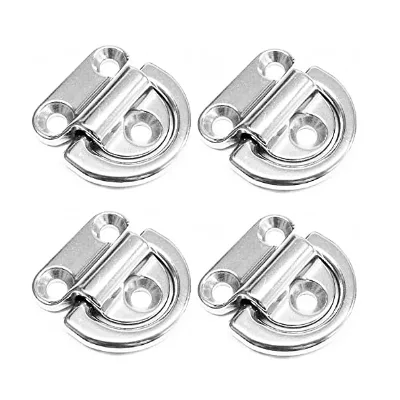
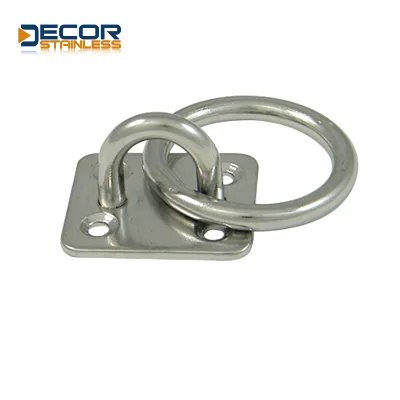
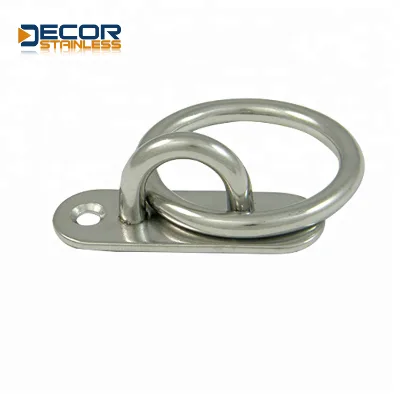
The physical dimensions of these components vary significantly based on the load requirements and installation context. Observed specifications include thickness ranges from 5mm to 12mm, with specific model numbers often denoting these thicknesses, such as 5mm, 6mm, 8mm, or 10mm variants. The shape of the pad eye is another critical differentiator; suppliers offer oblong, round, and square configurations. For instance, the "Stainless Steel Square Pad Eye" and "Stainless Steel Round Eye Plate with Ring" represent distinct geometric profiles that influence how the load is distributed across the mounting surface. Buyers should verify that the selected model number aligns with the specific thickness and shape required for their structural integrity calculations, as the "prod_model" field often contains these critical dimensional identifiers.
Surface treatment plays an equally vital role in the corrosion resistance and aesthetic finish of the product. The observed data lists "Polished," "High Polished," and "Polished+Painted" as common surface finishes. A high-polish finish not only enhances the visual appeal but also reduces surface roughness, which can minimize areas where corrosive agents might accumulate. In some cases, a painted finish is applied over the polished steel to provide an additional barrier against the elements. The presence of "Eco-Friendly Available" as a finish option suggests that some manufacturers may offer surface treatments that adhere to stricter environmental standards, though buyers must confirm the specific nature of these treatments during the inquiry phase.
Compliance, Standards, and Verification Protocols
Ensuring that purchased pad eyes meet relevant industry standards is a fundamental step in the procurement process. While specific certification marks like CE or DIN standards are often cited in broader market contexts, the supplied product facts do not explicitly confirm that every listed item carries these specific certifications. Therefore, buyers must adopt a verification-first approach rather than assuming compliance based on general market knowledge. The "prod_standard" field in the provided data frequently references thickness ranges (e.g., 5mm-12mm) rather than explicit international standards like DIN 580 or DIN 582. This indicates that the standardization in the current listings is often tied to dimensional tolerances rather than a specific code compliance statement.
To mitigate risk, procurement teams should request explicit documentation from suppliers regarding the material grade certification. For marine applications, verifying that the stainless steel 316 meets the specific chemical composition requirements for marine environments is essential. Buyers should ask for mill test reports that confirm the material grade and the absence of contaminants that could compromise corrosion resistance. Additionally, while "Ethylene Oxide Sterilization" is listed as an attribute in the data, this is typically associated with medical or hygiene products rather than heavy-duty hardware. It is crucial to distinguish between products intended for medical use, such as "Eye Pads" made of non-woven fabric for meditation or comfort, and the stainless steel hardware required for structural lifting or mooring. Confusing these categories can lead to catastrophic procurement errors.
When evaluating compliance, buyers should also look for evidence of surface treatment processes. The data mentions "Heattreatment" and "Polishing" as surface treatments. Heat treatment can significantly alter the mechanical properties of stainless steel, potentially increasing hardness or stress corrosion cracking resistance. Buyers must ensure that the heat treatment process described by the supplier is appropriate for the intended load and environmental conditions. Without explicit confirmation of standards like DIN 580 or DIN 582 in the product listings, the onus is on the buyer to define the required standard in the purchase order and verify that the supplier can meet it through third-party testing or internal quality assurance documentation.
Cost Drivers and Economic Factors in Procurement
The cost of corrosion-resistant pad eyes is influenced by a complex interplay of material costs, manufacturing complexity, and logistical factors. The primary cost driver is the material grade; Stainless Steel 316 is inherently more expensive than 304 due to the addition of molybdenum, which enhances corrosion resistance. Consequently, products explicitly labeled as "AISI 316 Heavy Duty" will command a higher price point than generic stainless steel options. The observed price range in the market spans from $0.01 to $160, a wide variance that reflects the difference between small, lightweight components and heavy-duty, large-scale industrial fittings.
Minimum Order Quantity (MOQ) is another significant economic factor. The data indicates an MOQ range of 10 to 10,000 units. For small projects or prototype development, buyers may find that the lower end of this range is accessible, but they must be prepared for a higher unit cost. Conversely, larger orders that meet the higher MOQ thresholds often benefit from economies of scale, reducing the per-unit price. However, buyers should be wary of suppliers who set high MOQs without offering flexibility for customization. The availability of "Customization" and "OEM" (Original Equipment Manufacturer) services adds value but can also increase costs. Custom logos, specific dimensions, or unique surface treatments require additional setup time and tooling, which suppliers often pass on to the buyer.
Packaging and shipping costs also contribute to the total landed cost. The observed packing methods include "Ppbags/Cartons+Plywood Pallets," "1PCS/Bag," and "Carton, Pallet." Heavy-duty steel components require robust packaging to prevent damage during transit, which adds to the material and labor costs. Furthermore, the origin of the products, primarily listed as "Qingdao China" or generally "China," implies that international shipping and import duties will be part of the cost structure. Buyers should factor in the "Delivery Time," which is noted as 20 days for some items, into their inventory planning to avoid stockouts that could halt production.
Typical Applications and Usage Scenarios
The versatility of corrosion-resistant pad eyes allows them to serve a wide array of applications, from heavy industrial lifting to marine mooring. The supplied data highlights "Yacht" and "Boat" as specific application areas, underscoring the importance of using Grade 316 stainless steel in these environments where exposure to saltwater is constant. In these scenarios, the "Ideal for Marine Environments" attribute is a key indicator of suitability. The pad eyes serve as critical attachment points for rigging, mooring lines, and safety equipment, where failure could result in significant safety hazards.
Beyond marine applications, these components are widely used in general industrial settings. The "Stainless Steel Pad Eye" and "Stainless Steel Square Pad Eye" are suitable for structural mounting, rigging, and load-bearing applications in construction, manufacturing, and logistics. The "Heavy Duty" designation suggests that these products are engineered to withstand significant tensile loads, making them ideal for crane operations, lifting machinery, and securing heavy equipment. The "Polished+Painted" finish options are particularly relevant for applications where aesthetics matter, such as in architectural installations or public spaces, where the hardware is visible and must maintain a clean appearance over time.
It is also important to note the distinction between hardware and other product categories that share similar naming conventions. The data includes entries for "Eye Pads" made of "Non-woven Fabric" with attributes like "Disposable" and "Usage: Meditation." These are clearly medical or wellness products and are entirely unrelated to the structural stainless steel pad eyes. Procurement teams must exercise extreme caution to ensure they are sourcing the correct product category. Misidentifying a fabric "Eye Pad" as a steel lifting eye would be a critical error. The context of the application—whether it involves structural load, marine mooring, or industrial rigging—should always dictate the material selection, with stainless steel being the default for any load-bearing or outdoor requirement.
Supplier Evaluation and Quality Assurance
Evaluating suppliers for corrosion-resistant pad eyes requires a rigorous assessment of their manufacturing capabilities and quality control processes. The "Brand Name" field in the data shows a mix of specific brands like "CHONGHONG" and "Yanfei," alongside "OEM" options. While brand recognition can be a factor, the primary focus should be on the supplier's ability to deliver consistent quality. Buyers should inquire about the supplier's experience with stainless steel fabrication, specifically their expertise in welding, forging, and machining to ensure the pad eyes meet the required dimensional tolerances.
Quality control measures are paramount. The presence of "High Polished" and "Eco-Friendly Available" finishes suggests that some suppliers have invested in advanced finishing technologies. Buyers should request samples to verify the surface finish quality, checking for scratches, pits, or uneven polishing that could compromise the corrosion resistance. Additionally, the "Customization" attribute indicates that suppliers are capable of tailoring products to specific needs. However, customization introduces variability, so buyers must establish clear quality benchmarks for custom orders. This includes defining acceptable tolerances for hole diameter, thickness, and surface roughness.
The "Delivery Time" of 20 days mentioned in the data provides a baseline for logistics planning, but buyers should verify if this is a standard lead time or subject to change based on order volume and customization requirements. Suppliers with a track record of meeting delivery schedules are preferable, as delays can disrupt project timelines. Furthermore, the "prod_packing" details, such as the use of plywood pallets and cartons, should be reviewed to ensure that the packaging is sufficient to protect the products during international shipping. Damaged goods upon arrival can lead to additional costs and delays, so verifying the supplier's packaging standards is a crucial part of the evaluation process.
Long-Term Procurement and Lifecycle Management
Sourcing corrosion-resistant pad eyes is not merely a transactional activity but a strategic decision that impacts long-term operational reliability. The investment in high-quality stainless steel, particularly Grade 316, pays dividends in reduced maintenance and replacement costs over the product's lifecycle. Buyers should consider the total cost of ownership, which includes the initial purchase price, installation costs, and the potential costs associated with premature failure. In marine and industrial environments, the cost of replacing a failed pad eye can far exceed the initial savings of choosing a lower-grade material.
Sustainability and environmental considerations are also becoming increasingly important in procurement. The "Eco-Friendly Available" finish option suggests that some manufacturers are aligning with green initiatives. Buyers interested in sustainable sourcing should inquire about the environmental impact of the surface treatment processes and the recyclability of the stainless steel products. Additionally, the "Customizable" nature of the packing and product design allows for optimized logistics, reducing waste and improving efficiency in the supply chain.
Finally, establishing a long-term relationship with a reliable supplier can provide significant advantages. Consistent suppliers are more likely to offer better pricing, priority production during high-demand periods, and more flexible customization options. Buyers should maintain open communication with their suppliers to stay informed about new material technologies or manufacturing improvements that could enhance the performance of their pad eyes. By focusing on quality, compliance, and long-term value, procurement teams can ensure that their corrosion-resistant pad eyes meet the rigorous demands of their specific applications while maintaining safety and reliability.
FAQs
Can I customize the logo on these stainless steel pad eyes?
Yes, logo printing is available for these products. Suppliers offer customization services for branding needs, allowing you to add your specific logo to the stainless steel 304 or 316 components for identification purposes.
What material grades are used for marine environment pad eyes?
The products are manufactured using Stainless Steel 304 and 316 grades. Grade 316 is specifically highlighted as ideal for marine environments like yachts and boats due to its superior resistance to saltwater corrosion.
What is the typical delivery time for these pad eye orders?
The standard delivery time is approximately 20 days for confirmed orders. This lead time applies to the manufacturing and packaging process before the goods are shipped from the origin location in Qingdao, China.
Which surface treatments are available for these stainless steel fittings?
Available surface treatments include polished, high polished, and polished plus painted finishes. Some options also feature heat treatment to enhance mechanical properties and ensure durability in heavy-duty industrial applications.
What are the standard thickness specifications for these pad eyes?
Standard thickness specifications range from 5mm to 12mm depending on the model. Specific models are available in 5mm, 6mm, and 8mm variants to suit different load requirements and structural mounting needs.
How are these stainless steel pad eyes packaged for shipping?
Products are packed in PP bags, cartons, and on plywood pallets for protection. Individual items may also be packed as one piece per bag, ensuring the heavy-duty steel components arrive safely without damage.