Source PVD Wall Mounted Towel Bar for Hotel, Home, Office
Compare 30 verified listings for the PVD Wall Mounted Towel Bar designed for bathrooms, hotels, and offices. Evaluate materials like zinc, stainless steel, and aluminum, along with finishes and customization options to find the right supplier.
Key considerations
Products List


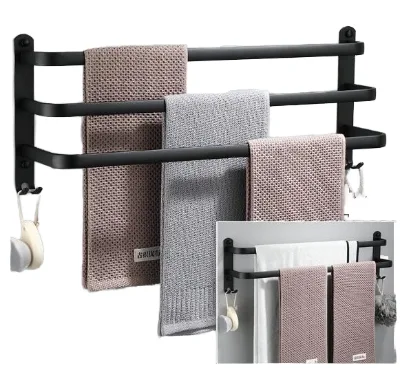


Towel Bars for Bathroom Wall Mounted Swivel Towel Rack Holder for Bathroom
$16.00 - $20.80
MOQ: 20 Pieces


Stainless Steel Towel Bar Surface Mount Installation Durable Single Rod Towel Bar
$9.68 - $10.48
MOQ: 100 Pieces


Modern Stainless Steel Bathroom Towel Bar Double Type for Hotel Applications
$17.08 - $19.07
MOQ: 100 Pieces
Comprehensive Sourcing Guide
Strategic Sourcing Guide for PVD Wall Mounted Towel Bars
The global demand for high-performance bathroom hardware continues to rise, driven by the need for durable, aesthetically pleasing, and hygienic fixtures in residential and commercial spaces. Among the various options available, the PVD (Physical Vapor Deposition) wall-mounted towel bar has emerged as a premium choice for procurement managers, interior designers, and e-commerce retailers. This guide provides a comprehensive, evidence-based framework for sourcing these specific products, focusing on technical specifications, material integrity, and supply chain reliability. By adhering to strict verification protocols, buyers can ensure that the products they source meet the rigorous demands of modern bathroom environments.
Understanding PVD Technology and Surface Integrity
The core differentiator for the products in this category is the surface finishing process. Unlike traditional electroplating, Physical Vapor Deposition (PVD) creates a molecular bond between the coating and the substrate, resulting in a finish that is significantly more resistant to corrosion, scratching, and fading. When sourcing a PVD wall-mounted towel bar, buyers must verify that the supplier explicitly lists "PVD" as the surface finishing method. This technology is particularly effective for achieving complex colors, such as matte black, gold, or rose gold, without compromising the structural integrity of the metal.
The durability of the PVD layer is critical for products intended for high-moisture environments like bathrooms. The process typically involves depositing a thin layer of metal, such as titanium nitride or chromium nitride, onto the substrate. This creates a finish that is non-porous and highly resistant to tarnishing. Buyers should look for product specifications that confirm the use of PVD on materials known for their strength, such as stainless steel or zinc alloy. While the supplied data indicates "Stainless Steel" and "Zinc" as primary materials, the PVD process is the key factor that enhances their longevity. It is essential to distinguish between products that merely claim a "matte black" finish and those that utilize the PVD process, as the latter offers superior adhesion and wear resistance.
Material Composition and Structural Specifications
The substrate material forms the backbone of the towel bar's performance. The sourcing data highlights a variety of materials, including Zinc, Stainless Steel, and Aluminum. Each material offers distinct advantages depending on the intended application and budget constraints. Stainless steel is often preferred for its inherent corrosion resistance and strength, making it ideal for heavy-duty usage in hotels and public facilities. Zinc, often referred to as zinc alloy in industry standards, provides excellent malleability and cost-effectiveness, suitable for a wide range of residential applications. Aluminum offers a lightweight alternative, though its structural rigidity must be carefully evaluated for wall-mounted applications.
When evaluating product models, buyers should cross-reference the material with the specific model number to ensure consistency. For instance, models such as YL40108, YL41008, and YL40408 are associated with zinc materials, while others may utilize stainless steel. The "Number of Bars" attribute is another critical specification; the data indicates a prevalence of "Single Towel Bars," which simplifies the installation process and reduces the material footprint. However, procurement teams must verify if the specific model supports multi-bar configurations if the design requires it. The "Disassemble" attribute, marked as "Yes" in some listings, suggests a modular design that can facilitate easier shipping and installation, a significant logistical advantage for international buyers.
Design Styles and Functional Versatility
The aesthetic and functional requirements of the towel bar must align with the target market's preferences. The sourcing data reveals a strong trend toward "Modern" design styles, which often feature clean lines and minimalist profiles. The "Eco-Friendly Storage Organizer Rack" attribute suggests that some manufacturers are integrating sustainability into their design philosophy, potentially using recyclable materials or energy-efficient production methods. The "Matte Black" finish type is a popular choice within the modern aesthetic, offering a sophisticated look that complements contemporary bathroom fixtures.
Functionality extends beyond simple towel hanging. The "Function" is explicitly listed as "Towel Hanger," but the design often supports additional uses, such as holding robes or bath accessories. The "Room Space" is consistently identified as "Bathroom," but the "Usage" attribute expands the potential application to "Hotel, Home, Office, and Bathroom." This versatility makes the product suitable for a diverse range of commercial and residential projects. The "Installation" method is a crucial decision point; while "Wall Mounted" is the standard, some listings indicate "Self-Adhesive" options. Buyers must carefully distinguish between these two methods, as wall-mounted units typically require drilling and provide a more permanent, secure hold, whereas self-adhesive units offer a non-invasive alternative but may have weight limitations.
Compliance, Standards, and Certification Verification
In the B2B procurement of bathroom hardware, compliance with international standards is non-negotiable. The supplied data mentions standards such as "zinc alloy, brass" and "Standard," but these are generic descriptors rather than specific regulatory certifications. Buyers must independently verify that the products comply with relevant safety and quality standards for the destination market. For example, in the European Union, products must meet REACH regulations regarding chemical content, while in the United States, compliance with ASTM standards for metal finishes may be required.
The "Customized Logo" and "Customized" attributes indicate that suppliers are willing to engage in OEM (Original Equipment Manufacturer) and ODM (Original Design Manufacturer) activities. However, customization introduces additional compliance risks. Buyers must ensure that any custom finishes, such as specific PVD colors or logos, do not introduce hazardous materials or violate local regulations. The "Standard Safety Packing" and "Standard Export Packing" attributes suggest that the suppliers are aware of basic shipping requirements, but buyers should request specific test reports for the PVD coating thickness and adhesion to ensure the product meets the claimed durability standards. Without explicit certification data in the source material, the buyer's responsibility is to demand third-party laboratory test results before finalizing any order.
Cost Drivers and Pricing Dynamics
The pricing of PVD wall-mounted towel bars is influenced by several factors, including material costs, the complexity of the PVD process, and the level of customization. The observed price range of $1.3 to $39.77 USD reflects the vast diversity in product specifications, from basic zinc alloy models to premium stainless steel units with advanced finishes. The lower end of the spectrum likely corresponds to simpler designs with standard finishes, while the higher end represents models with complex PVD coatings, custom branding, or specialized materials like high-grade stainless steel.
The Minimum Order Quantity (MOQ) range of 2 to 1000 units significantly impacts the unit cost. Smaller MOQs, such as 2 units, are ideal for sampling or small-scale e-commerce stores, but they often carry a higher per-unit price due to the setup costs of the PVD process. Conversely, larger orders of 1000 units can leverage economies of scale, reducing the cost per unit. Buyers should also consider the "Packing" costs, which vary from "Inner Box" and "Paper Box" to "Carton + Pallet" configurations. The choice of packaging affects the final landed cost, especially for international shipping. Additionally, the "Net Weight" of 187g for certain models provides a baseline for calculating shipping freight costs, which can be a substantial component of the total procurement expense.
Supplier Evaluation and Quality Control Protocols
Selecting the right supplier is paramount to ensuring product consistency and reliability. The sourcing data indicates that products originate from various locations in China, including Ningbo, Zhongshan, and Guangdong. These regions are known for their manufacturing capabilities, but buyers must conduct thorough due diligence. Key evaluation criteria should include the supplier's experience with PVD technology, their quality control processes, and their ability to meet customization requests.
Quality control should begin at the design stage and continue through to the final packaging. Buyers should request samples to verify the "Surface Finishing" quality, checking for uniformity in color and the absence of defects such as peeling or bubbling. The "Inner Box" and "Master Box" packaging details suggest a structured approach to product protection, but buyers should inspect the packaging for durability to prevent damage during transit. The "Customization" and "Logo" options require clear communication and proofing stages to ensure that the final product matches the design specifications. Furthermore, the "Commercial Buyer" attribute, specifically targeting "E-Commerce Stores," implies that the supplier should be capable of handling smaller, frequent orders with efficient logistics.
Long-Term Procurement and Supply Chain Resilience
For long-term success, buyers must consider the sustainability and scalability of their supply chain. The "Eco-Friendly" design style and the use of durable PVD finishes contribute to the product's lifecycle, reducing the need for frequent replacements. However, buyers should also evaluate the supplier's ability to maintain consistent quality over time, especially when scaling up production. The "Lead Time" and "Location" factors play a critical role in supply chain resilience. While the specific lead times are not provided in the data, buyers should negotiate clear timelines and contingency plans for potential disruptions.
The "By Sea" shipping option indicates that the products are suitable for bulk international transport, which is cost-effective for large orders. However, buyers must ensure that the "Standard Export Packing" is robust enough to withstand long sea voyages without compromising the product's finish. The "Disassemble" feature mentioned in the data can further enhance supply chain efficiency by reducing the volume of shipments and minimizing the risk of damage. Ultimately, a successful procurement strategy for PVD wall-mounted towel bars relies on a deep understanding of the technical specifications, a rigorous approach to quality control, and a strategic partnership with suppliers who can deliver consistent value over the long term.
FAQs
What materials are used for PVD wall mounted towel bars?
Common materials include zinc, stainless steel, and aluminum. The specific material depends on the model, such as YL40108 for zinc or TB-2630 for stainless steel, ensuring durability in bathroom environments.
How is the PVD finish applied to these towel bars?
The PVD process creates a molecular bond on the substrate for superior corrosion resistance. This method allows for finishes like matte black without compromising the structural integrity of the metal components.
Which installation methods are available for these towel bars?
Most units are wall mounted for a secure hold, while some options offer self-adhesive installation. Buyers must verify the specific model to ensure it supports the desired mounting style for their space.
Can I customize the logo on these towel bars?
Yes, customized logos are available for many models. Suppliers accept customization requests, allowing buyers to add branding to the product while maintaining the standard export packing for safe delivery.
What is the typical price range for these products?
The observed price range is between 1.3 and 39.77 USD per unit. Costs vary based on material, finish complexity, and order volume, with higher prices often reflecting premium stainless steel or PVD finishes.
What are the standard packing configurations for these items?
Packing options include inner boxes, master boxes, paper boxes, and carton plus pallet configurations. Standard safety packing is used to protect the finish during transit to destinations like Ningbo or Guangdong.
Are these towel bars suitable for commercial use?
Yes, they are designed for use in hotels, offices, and bathrooms. The durable construction supports heavy usage, making them suitable for both residential homes and commercial facilities requiring reliable towel hangers.