Source Crawler Composting Machine for Fertilizer Production
Source a Crawler Composting Machine from 30 verified listings to streamline organic fertilizer production. Compare specifications such as capacity, voltage, and certification to find the right equipment for turning and fermenting various organic waste materials efficiently; compare the available evidence and request quotations based on your requirements.
Key considerations
Products List


Crawler Type Animal Dung Compost Turner Compost Making Machine Fermenter
$10132.00 - $11000.00
MOQ: 1 Pieces
Henan Tongda Heavy Industry Science And Technology Co., Ltd.


Lane Compost Crawler Turner Crawler Walking Manure Compost Turner Machine
$4900.00 - $6400.00
MOQ: 1 Pieces


Compost Equipment Compost Turner Machine Organic Fertilizer Compost Machine
$3600.00 - $3800.00
MOQ: 1 Sets
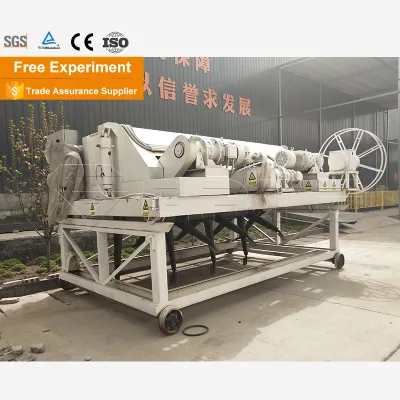


$8600.00 - $114200.00
MOQ: 1 Pieces

Compost Machine Compost Making Machines Composting Equipment Compost Fertilizer Machine
$162623.00 - $188479.00
MOQ: 1 Sets


Factory Direct Composter Automatic Composting Machine Food Waste Outdoor
$160000.00 - $188479.00
MOQ: 1 Sets

Organic Food Waste Composting Machine Composting Machine Making Organic Fertilizer
$130000.00 - $188479.00
MOQ: 1 Square Meters
Comprehensive Sourcing Guide
Crawler Composting Machine Sourcing Guide
Procuring a Crawler Composting Machine requires a strategic approach to align heavy machinery capabilities with specific organic waste processing goals. Buyers must first define the scale of their operation, as capacity ranges from 1 to 10 tons per hour depending on the model selected. Understanding the distinction between fermentation turners and granulation equipment is critical, as some units serve dual purposes in compost making and final product shaping.
The sourcing landscape features manufacturers primarily based in China, with specific hubs like Henan offering competitive manufacturing ecosystems. Buyers should evaluate suppliers based on their ability to provide customization, as many vendors offer tailored solutions for different raw materials such as chicken poop, cow dung, or general organic waste. Verifying the supplier’s production capacity and delivery timelines, which typically range from 15 to 20 days, ensures that project schedules remain on track without unnecessary delays.
Product Scope and Observed Listing Signals
The market for crawler composting equipment displays a wide price variance, observed between 3,600 and 188,479 USD, reflecting differences in motor power, volume, and automation levels. Minimum order quantities are consistently listed as one unit, indicating that suppliers cater to individual farm or facility needs rather than requiring bulk industrial purchases. This flexibility allows buyers to start with a single unit to test efficiency before scaling up their composting infrastructure.
Listing signals reveal that these machines are often marketed under various names, including organic fertilizer fermentation turners and compost fertilizer turning equipment. Key selling points frequently highlight wide usage applicability and the ability to handle various kinds of fertilizer materials. Buyers should note that while some listings emphasize granulation capabilities, others focus strictly on the fermentation and turning process, so careful review of the product name and function is essential to avoid purchasing mismatched equipment.
Technical Specifications to Verify
Technical verification must begin with the machine’s physical dimensions and operational speed, which typically range from 6 to 10 meters per minute for turning operations. Buyers should confirm the rotation speed, often between 8 and 24 revolutions per minute, to ensure it matches the aeration requirements of their specific compost pile. The volume capacity, ranging from 0.4 to 6.5 cubic meters, directly impacts the throughput and must be aligned with daily waste processing targets.
Motor power is a critical specification, varying from 2.2 to 22 kilowatts for standard turners, with some granulator models requiring up to 30 kilowatts. The voltage requirement is predominantly 380V, which necessitates checking site electrical infrastructure compatibility. Additionally, the side height and working speed parameters influence how the machine interacts with pile geometry, so buyers should verify these metrics against their existing facility layout to ensure smooth operational integration.
Compliance and Safety Documentation
Compliance verification is paramount, with CE certification being a standard requirement for machinery exported to many international markets. Buyers must request valid CE certificates to ensure the equipment meets European safety and health standards, which often serve as a baseline for global quality expectations. Some suppliers also provide ISO certification, indicating adherence to broader management and quality systems, which can be a valuable indicator of manufacturing consistency and reliability.
Safety documentation should include detailed operational manuals and electrical schematics that specify the machine’s voltage and power requirements clearly. Buyers should verify that the equipment includes necessary safety guards and emergency stop mechanisms, especially given the rotating components involved in compost turning. Ensuring that all electrical components are rated for the operating environment, including potential moisture and dust exposure, is essential for long-term safety and regulatory compliance.
Cost Drivers and Commercial Terms
Cost drivers for crawler composting machines include the motor power, raw material construction quality, and the level of customization offered. Higher capacity models with larger volumes and more powerful motors naturally command higher prices within the observed range. Buyers should also consider the packaging method, which varies from pallets to 20-foot or 40-foot containers, as this affects shipping costs and logistics planning significantly.
Commercial terms often include a delivery lead time of 15 to 20 days, which buyers must factor into their project timelines. It is crucial to clarify whether the quoted price includes installation guidance or training, as this can impact the total cost of ownership. Buyers should also verify the warranty terms and after-sales support availability, ensuring that any technical issues can be resolved promptly to minimize downtime in their composting operations.
Supplier Qualification and Quality Control
Supplier qualification should focus on verifying the manufacturer’s origin, with many reputable producers located in Henan, China. Buyers should assess the supplier’s ability to provide customization, as this indicates flexibility in meeting specific operational needs. Checking the supplier’s track record with similar raw materials, such as animal manure or food waste, can provide insights into their technical expertise and machine durability.
Quality control measures should include requests for factory audit reports or third-party inspection results if available. Buyers should verify the machine’s model numbers, such as FD2600 or SHH-400, against the supplier’s official product catalog to ensure authenticity. Establishing clear communication channels for technical support and spare parts availability is essential, as this ensures long-term operational stability and reduces the risk of prolonged equipment failure.
Long-Term Procurement Checks
Long-term procurement checks involve monitoring the machine’s performance in real-world conditions, particularly its ability to maintain consistent work speeds and turning efficiency. Buyers should track energy consumption relative to the motor power specifications to identify any deviations that might indicate mechanical issues or inefficiencies. Regular maintenance schedules should be established based on the manufacturer’s recommendations to extend the lifespan of the crawler and turning components.
Feedback loops with the supplier are crucial for addressing any recurring technical issues or performance gaps. Buyers should document operational challenges, such as difficulties with specific raw material types, and share this data with the supplier for potential machine adjustments. Continuous evaluation of the machine’s output quality, including the final product shape and fermentation efficiency, ensures that the investment continues to meet the facility’s organic fertilizer production goals.
FAQs
What is the typical capacity range for crawler composting machines?
The typical capacity ranges from 1 to 10 tons per hour. This range accommodates various production scales, allowing operators to select equipment that matches their specific throughput requirements for organic fertilizer fermentation processes efficiently.
Can these machines handle different types of raw materials?
Yes, these machines are designed to process various kinds of fertilizer materials. They effectively handle organic waste, food waste, mushroom residues, and animal manure such as chicken poop and cow dung for comprehensive composting operations.
What certifications are required for Crawler Composting Machine suppliers?
Suppliers typically provide CE and ISO certifications. These standards ensure the equipment meets international safety and quality requirements, providing buyers with confidence in the manufacturing standards and operational reliability of the composting machinery they purchase.
How long is the delivery time for these machines?
The standard delivery time is generally 15 to 20 days. This timeframe allows for manufacturing and preparation, ensuring that buyers receive their equipment promptly while maintaining quality control standards throughout the production process.
What is the minimum order quantity for these machines?
The minimum order quantity is typically one unit. This flexible policy allows businesses to purchase single machines for testing or small-scale operations without needing to commit to large bulk orders initially.
What is the voltage requirement for these composting machines?
The standard voltage requirement is 380V. This electrical specification ensures compatibility with industrial power supplies, allowing the machines to operate their motors effectively for compost turning and mixing tasks in fertilizer production facilities.