Source Paddy Fields Fertilizer Applicator for Corn, Rice, Wheat
Find 30 Paddy Fields Fertilizer Applicator options including seedling planting machines and backpack sprayers. Buyers can compare electric and battery-powered models for corn, rice, wheat, and other crops with adjustable nozzles and various tank capacities; compare the available evidence and request quotations based on your requirements.
Key considerations
Products List


High Quality Fertilizer Applicator 20L Electric Farmguard Fertilizer Applicator
$22.00 - $30.00
MOQ: 100 Pieces


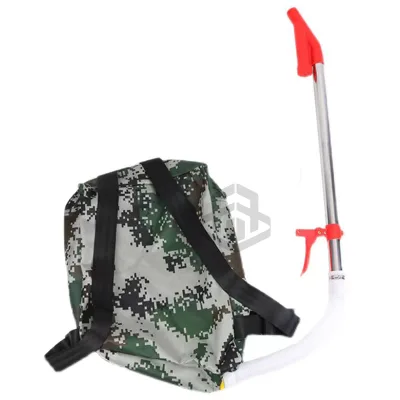


Side Fertilizer Machine Orchard Fertilizing Applicator Mounted with Tractor
$1400.00 - $1500.00
MOQ: 1 Pieces


New Type Orchard Manure Spreader with Ditching Plough and Granular Fertilizer Applicator
$5300.00 - $5500.00
MOQ: 1 Pieces


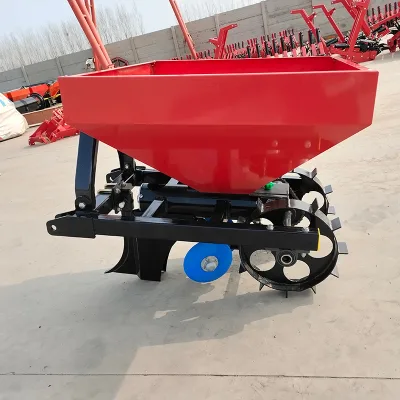
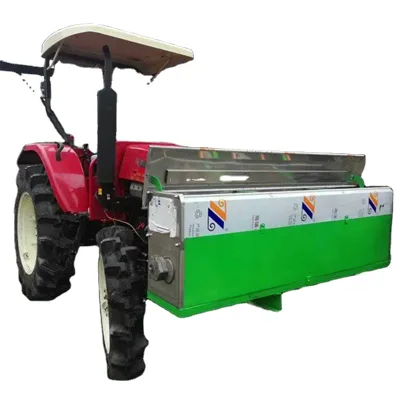
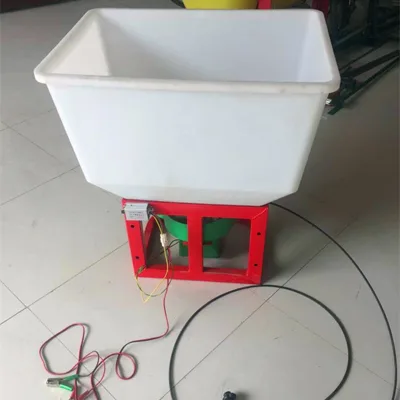


Comprehensive Sourcing Guide
Paddy Fields Fertilizer Applicator Sourcing Guide
Procuring a Paddy Fields Fertilizer Applicator requires balancing field-scale mechanization needs with the practical realities of wetland agriculture, where equipment must operate in muddy, waterlogged conditions that stress both mechanical components and power systems. Buyers sourcing from manufacturing hubs such as Taizhou in Zhejiang and Linyi in Shandong will encounter a wide spectrum of listings, from full-size fertilizer machines and seedling planting equipment to battery-powered backpack sprayers that support fertilization alongside irrigation and disinfection tasks. Understanding which product category actually matches your operation is the first sourcing decision, because listings under related keywords often mix seeding, ditching, and spraying equipment with true fertilizer applicators.
This guide walks through the full procurement cycle: scoping the product category, verifying technical specifications, demanding appropriate compliance documentation, understanding cost drivers, qualifying suppliers, and planning long-term quality checks. Observed listings show customization is available from some sellers, MOQs range from single units to several hundred, and listed prices span from under ten dollars for handheld tools to several thousand dollars for mechanized planting and fertilization systems. Treat these as observations of the marketplace rather than guarantees for any individual product, and always confirm terms directly with suppliers before committing.
Product Scope and Observed Listing Signals
Listings connected to this keyword cluster fall into several distinct equipment families. At the mechanized end are seedling planting machines with fertilization functions, continuous ditching capability, and broadcast seeding suited to corn, rice, wheat, tubers, fruit trees, beans, and peanut crops. These simple planting machines are electric-powered, CE and ISO9001-certified according to listing attributes, and customizable, with observed models such as the GF-20DV-01C-01 packed in carton boxes. At the manual end are backpack and handheld sprayers, including the 3wbd-20 model with a transparent tank, pressure relief valve, and adjustable shoulder straps.
Observed price signals range from roughly $5.89 for small handheld tools to $8,000 for full mechanized systems, with MOQs from 1 to 740 units depending on product type. Application fields center on agriculture, but several sprayer listings also target public lawn care, horticultural production, and home gardening. Buyers should filter listings carefully by intended use: a broadcast seeder with a fertilizer machine designation is not interchangeable with a pressurized sprayer, even when both appear under the same search term. Classify your requirement first, then evaluate listings within that category.
Technical Specifications to Verify
For mechanized fertilizer applicators, verify the sowing method (broadcast seeding is the observed standard), ditching mode, and whether the machine supports fertilization as a combined or standalone function. Confirm power source details, since observed listings describe electric power and battery operation using either lithium or lead-acid batteries. Ask how the machine performs in saturated paddy soil specifically, because traction, wheel design, and frame clearance determine whether fertilization proceeds evenly in wet fields. Request dimension and weight documentation; observed sprayer listings report weights between 6 and 8 kg and packaging dimensions such as 41cm × 21cm × 50cm or 58.42cm × 46.99cm × 26.92cm.
For sprayer-type equipment used to apply liquid fertilizer, verify tank capacity (observed at ≤20L), pressure class, and spray performance. Listings cite medium pressure, adjustable pressure control, spray distances of 8 meters or 15 feet, and both cone spray and adjustable nozzle types. Check the sprinkler mounting method, since observed options include clamping and external thread connections, which affect spare-part compatibility. Confirm whether the tank is genuinely transparent for level monitoring, and ask for the exact model designation, such as 3wbd-20 or 3WLM-20, in writing to avoid specification drift.
Compliance and Safety Documentation
Certification claims in this category include CE marking and ISO9001 quality management certification, but buyers must obtain the actual certificates rather than relying on listing attributes. Request the certificate number, issuing body, and validity period, then confirm the scope covers the specific model you intend to purchase. A certification covering a factory's general production line does not automatically extend to a customized fertilizer applicator variant, so tie documentation to the exact model number and any customization you request.
Safety documentation matters as much as formal certification. For battery-powered equipment, ask how lithium and lead-acid battery packs are tested, transported, and packaged, since carton-packed units weighing around 8 kg may still contain energy-dense cells subject to transport rules. For pressurized sprayers, confirm the presence and function of a pressure relief valve, and request instructions covering safe filling, nozzle adjustment, and disinfection or fertilization chemical compatibility with plastic tank materials. Ask whether operating manuals are available in English and whether safety warnings address wet-field electrical use. Keep all documentation on file, as it supports both regulatory compliance in your market and any future warranty claims.
Cost Drivers and Commercial Terms
The observed price range of $5.89 to $8,000 reflects fundamentally different product tiers: handheld and backpack sprayers occupy the low end, while mechanized planting and fertilization systems command the high end. Within each tier, cost drivers include battery chemistry (lium versus lead-acid), tank capacity, nozzle and valve quality, customization level, and material specifications. Customization is listed as available, which typically raises unit cost and minimum order quantities, so quantify the value of customized features before requesting them. Carton or cardboard packaging is standard in observed listings and generally keeps freight costs predictable.
MOQs in observed listings range from 1 to 740 units, suggesting sellers accommodate both sample orders and bulk contracts. Negotiate commercial terms explicitly: unit price at your target volume, sample availability and cost, payment structure, lead time, and Incoterms for shipping from Zhejiang or Shandong origins. Because packaging weight (around 8 kg for sprayers) and carton volume (observed at 0.06717 CBM for one model) directly affect landed cost, request dimensional weight calculations before comparing quotes. Confirm whether prices include spare nozzles, straps, or batteries, since accessory gaps can erode apparent savings at reorder time.
Supplier Qualification and Quality Control
Qualify suppliers by verifying their manufacturing capability against the equipment family you need. A factory producing battery-powered backpack sprayers in Taizhou may operate very differently from one assembling mechanized planting machines in Linyi, so confirm the supplier actually manufactures your product category rather than trading across categories. Request business licenses, production facility details, and references from agricultural-equipment buyers. Where customization is offered, assess whether the supplier can document design changes, material substitutions, and retesting rather than simply accepting the request.
Quality control should be anchored to the specifications you verified earlier. For sprayers, agree on inspection points covering tank welds and transparency, strap strength (thickened shoulder straps are an observed feature), nozzle spray pattern, pressure relief valve function, and battery charge retention. For mechanized applicators, inspect frame integrity, seeding and fertilization rate consistency, and ditching continuity. Commission pre-shipment inspections, either through third-party inspectors or your own team, with a written inspection protocol tied to the agreed specifications. Retain production samples from the approved batch so future reorders can be compared against a physical benchmark rather than listing photos alone.
Long-Term Procurement Checks
Plan for the full lifecycle of the equipment, not just the first order. Establish which wear parts—nozzles, shoulder straps, batteries, valve seals, and ditching components—will need replacement, and negotiate their availability, pricing, and shipping terms upfront. Battery-powered units raise the question of end-of-life battery replacement: confirm whether lithium or lead-acid packs can be sourced locally or must come from the original supplier, and factor this into total cost of ownership. Track field performance across seasons, recording spray distance degradation, pressure consistency, and mechanical failures in paddy conditions.
Maintain a structured supplier relationship over time. Reconfirm certifications periodically, since CE and ISO9001 certificates expire and factory conditions change. When reordering, verify that packaging dimensions, product weight, and model designations still match your original specifications, as observed listings already show multiple models and packing formats within this category. Document any quality deviations and resolution outcomes in a shared record, which strengthens your negotiating position and helps onboard backup suppliers. Finally, reassess whether your equipment mix—mechanized applicators versus sprayer-based fertilization—still matches your field scale as operations grow or diversify.
FAQs
How much liquid fertilizer can a Paddy Fields Fertilizer Applicator tank hold?
Tank capacity for the listed applicators is up to 20 liters. A full backpack tank covers a practical spraying session in paddy or field crops without frequent refilling, though actual coverage depends on walking speed, spray width, and application rate. Smaller handheld styles in the same range suit spot fertilization, while backpack models are preferred for continuous work across larger paddy plots.
What certification should buyers look for on a fertilizer applicator?
Listed applicators in this category carry CE and ISO9001 certification, which indicate conformity with safety and quality management requirements. Buyers in regulated markets typically verify certificates before ordering, and can request copies from suppliers during quotation. Certification status can vary between individual listings, so always confirm the specific documents applicable to the exact model and production batch you plan to purchase.
Which crops can a Paddy Fields Fertilizer Applicator be used on besides rice?
Besides paddy rice, listed applicators are applied to corn, wheat, beans, peanut, tubers, fruit crops, and trees. The broadcast and spray functions also support irrigation, fertilization, and disinfection tasks. This versatility matters for buyers serving mixed-farming customers, though nozzle type, spray distance, and tank style should be matched to each crop before committing to a specific model or configuration.
Can the fertilizer applicator be customized for different farming needs?
Customization is available on listed models, so buyers can request adjustments such as tank type, color, battery configuration, or nozzle setup. Options include backpack or handheld tank styles, lithium or lead-acid batteries, and adjustable nozzles. Lead time and minimum order quantities for customized units differ from standard listings, so clarify these terms with suppliers early when planning an order or a regional product line.
What power options are available for battery-powered fertilizer applicators?
Listed applicators run on electric power with battery operation, using either lithium batteries or lead-acid batteries. Lithium units are lighter and recharge faster, while lead-acid options are usually more affordable upfront. Battery-powered designs suit paddy fields where fuel handling is inconvenient, and adjustable pressure controls let operators tune output for fertilization, irrigation, or disinfection work across different crop conditions.
How is a Paddy Fields Fertilizer Applicator packed for shipping?
Listed units ship in carton or cardboard boxes, with packing weights around 8 kilograms and box dimensions near 41 by 21 by 50 centimeters for compact models. Packaging protects the plastic tank and fittings during container transport, but buyers should confirm export-grade packing, palletization, and labeling requirements before shipment. Shipping costs depend on carton volume, so request exact packed measurements for the model ordered.