Source Crawler Highway Concrete Screed Machine for paving
Find and compare 30 Crawler Highway Concrete Screed Machine options from Chinese manufacturers. Evaluate specifications like working width, engine power, and certification to select the right equipment for large-scale construction projects.
Key considerations
Products List


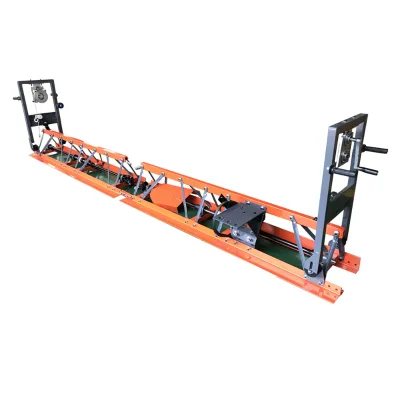


Four-Wheel Concrete Laser Screed Machine Road Construction Laser Screed Machine
$10000.00 - $11000.00
MOQ: 1 Pieces

Best Selling Concrete Laser Screed Machine Road Floor Leveling Machine
$50000.00 - $75000.00
MOQ: 1 Pieces


Road Paver Concrete Leveling Machine for Concrete Floor Screed Smoothing Working
$72.00 - $271.00
MOQ: 1 Pieces


Jining China CE Certified Roadway Laser Screed Machine 2500mm Width
$67500.00 - $82500.00
MOQ: 1 Pieces
Shandong Roadway Construction Machinery Manufacturing Co., Ltd.

Concrete Curb Paver machinery Roadside Sliding Form Machine
$4183.00 - $7768.00
MOQ: 1 Pieces
Shandong Roadway Construction Machinery Manufacturing Co., Ltd.

Road Concrete Crack Cleaning Machine Producer
$980.00 - $1270.00
MOQ: 1 Pieces
Tongling Longshun Environmental Protection Equipment Co., Ltd.
Comprehensive Sourcing Guide
Crawler Highway Concrete Screed Machine Sourcing Guide
Procuring heavy-duty concrete finishing equipment for large-scale infrastructure projects requires a disciplined approach to specification verification and supplier qualification. The market for concrete screeds, particularly those designed for highway and pavement applications, presents a wide variance in engineering quality, power systems, and operational capabilities. Buyers must navigate a landscape where terminology such as "vibrating beam," "oversize grader," and "screed machine" are often used interchangeably, yet refer to distinct mechanical configurations. This guide provides a structured framework for evaluating these machines, ensuring that the selected equipment aligns with the specific demands of high-volume concrete pouring and finishing operations.
The following sections detail the critical parameters for sourcing, from technical specifications and compliance documentation to commercial terms and long-term maintenance considerations. By focusing on observable listing signals and verifiable engineering data, procurement teams can mitigate the risks associated with equipment failure, non-compliance, and operational inefficiency. The goal is to establish a clear baseline for comparison, enabling data-driven decisions that prioritize reliability, safety, and total cost of ownership over initial price points alone.
Product Scope and Observed Listing Signals
The current market listing signals indicate a diverse range of concrete finishing equipment, with observed prices spanning from approximately $72 to $150,000 USD. This broad range reflects the disparity between simple manual or semi-automatic finishing tools and complex, high-power motorized screeds designed for heavy industrial use. Buyers should note that the minimum order quantity (MOQ) typically ranges from 1 to 5 units, suggesting that most suppliers operate on a direct-to-project or small-batch distribution model rather than mass retail. Understanding this price and volume structure is essential for budgeting, as the lowest-priced items often correspond to basic, non-motorized, or smaller-scale units, while the higher end of the spectrum accommodates powerful, multi-section machines with advanced features.
Listing attributes reveal specific engineering choices that directly impact performance, such as engine type, power output, and working dimensions. For instance, some listings specify Honda GX160 or GX270 engines, indicating a preference for reliable, commercially available power units that facilitate easier maintenance and parts replacement. Other attributes highlight working widths ranging from 405mm to 12 meters, and working depths up to 260mm, which are critical for determining the machine's suitability for different slab thicknesses and project scales. Additionally, the presence of certifications like RoHS, ISO9001:2000, and CE in some listings serves as an initial signal of manufacturing standards, though these must be verified against the specific unit being purchased.
Technical Specifications to Verify
Engine performance and transmission systems are primary determinants of a screed machine's efficiency and durability. Buyers must verify the exact engine model, horsepower, and power output in kilowatts, as these metrics dictate the machine's ability to maintain consistent vibration frequency under load. For example, a 5.5HP or 9.0HP engine paired with a power transmission system offers distinct advantages over manual winch drives in terms of speed and consistency. The walking speed, observed in some listings as 1-5m/min, and the frequency of vibration, noted at 70Hz in certain models, are critical parameters that affect the density and smoothness of the finished concrete surface. These specifications should be cross-referenced with the machine's weight and frame dimensions to ensure stability and effective compaction.
The physical configuration of the screed, including its working width, depth, and modular design, must align with the project's concrete pour requirements. Listings indicate working widths from 405mm up to 12 meters, with some models offering modular sections that can be configured in 1-meter or 2-meter segments. This modularity is crucial for adapting to varying slab widths without requiring multiple specialized machines. Furthermore, the material composition, such as stainless steel components, and the overall weight per segment, observed at 45kg/m in some cases, influence the machine's resistance to corrosion and its ease of handling. Buyers should also consider the walking mode, whether wheeled or crawler-based, as this affects traction and maneuverability on uneven or freshly poured concrete surfaces.
Compliance and Safety Documentation
Certification status is a non-negotiable aspect of procurement, particularly for equipment used in regulated environments like highway construction. Buyers must request and verify valid certification documents, such as CE marks for European compliance or ISO9001 quality management certifications, which indicate adherence to international manufacturing standards. The presence of RoHS certification in some listings suggests compliance with restrictions on hazardous substances, which is increasingly important for environmental and safety regulations. However, certifications should not be taken at face value; buyers must ensure that the specific model being purchased holds the current version of the certification and that the documentation is issued by an accredited body.
Safety features and operational controls are equally critical for protecting personnel and ensuring consistent performance. Machines should be equipped with clear operational controls, emergency stop mechanisms, and protective guards for moving parts. The condition of the equipment, whether new or refurbished, must be explicitly stated, and buyers should request video outgoing-inspections to verify the machine's operational status before shipment. Additionally, warranty terms, such as the 1-year warranty observed in some listings, provide a baseline for post-purchase support. Buyers should clarify the scope of the warranty, including coverage for core components like the engine, and understand the process for claiming repairs or replacements.
Cost Drivers and Commercial Terms
The total cost of ownership for a concrete screed machine extends beyond the initial purchase price, encompassing shipping, customs duties, and ongoing maintenance. The observed price range of $72 to $150,000 USD highlights the significant impact of specifications such as engine brand, power output, and working width on cost. High-power machines with specialized engines and large working widths command premium prices, while simpler, smaller units are more cost-effective for minor projects. Buyers should request detailed quotations that break down the cost of the machine, packaging, and shipping to avoid hidden fees. The packing method, whether carton, box, or wooden package, also influences shipping costs and the risk of damage during transit.
Commercial terms, including payment methods, lead times, and after-sales support, play a crucial role in the procurement process. Buyers should negotiate clear terms regarding payment milestones, such as deposits and balance payments upon shipment or inspection. Lead times can vary significantly based on the machine's configuration and the supplier's production schedule, so it is essential to establish a realistic timeline for delivery. After-sales support, including the availability of spare parts and technical assistance, should be evaluated as part of the cost analysis. Suppliers that offer comprehensive support packages may have higher upfront costs but can reduce downtime and maintenance expenses in the long run.
Supplier Qualification and Quality Control
Supplier qualification is the first line of defense against procurement risks, requiring a thorough assessment of the manufacturer's capabilities and reputation. Buyers should verify the supplier's location, with origins noted in Ningbo, Fujian, and Henan, China, as these regions have varying levels of industrial expertise and supply chain maturity. Requesting company profiles, production facility tours, and references from previous clients can provide insights into the supplier's reliability and quality control processes. Suppliers that provide video outgoing-inspections demonstrate a commitment to transparency and quality assurance, allowing buyers to verify the machine's condition before it leaves the factory.
Quality control measures should be integrated into the procurement process, from initial specification review to final delivery. Buyers should establish clear acceptance criteria based on the technical specifications and compliance documentation, and conduct pre-shipment inspections if possible. The use of standardized testing procedures, such as vibration frequency checks and engine performance tests, can help ensure that the machine meets the required performance standards. Additionally, buyers should evaluate the supplier's ability to provide customization options, as some listings indicate that customization is available. This flexibility can be valuable for adapting the machine to specific project requirements, such as unique working widths or engine configurations.
Long-Term Procurement Checks
Long-term procurement success depends on the machine's durability, ease of maintenance, and the supplier's ability to provide ongoing support. Buyers should prioritize machines with high-quality core components, such as reputable engine brands, and robust construction materials like stainless steel, which resist corrosion and wear. The warranty terms, including coverage for core components and the duration of support, should be clearly defined and legally binding. Regular maintenance schedules and the availability of spare parts are critical for minimizing downtime and extending the machine's lifespan. Buyers should establish a relationship with the supplier for ongoing technical support and parts supply.
Continuous evaluation of the machine's performance in the field is essential for identifying potential issues and optimizing operational efficiency. Buyers should track key performance indicators, such as vibration consistency, walking speed, and fuel consumption, to assess the machine's effectiveness. Feedback from operators and maintenance teams can provide valuable insights into the machine's usability and reliability. By maintaining detailed records of performance and maintenance activities, buyers can make informed decisions about future procurement, including the need for additional units or upgrades. This data-driven approach ensures that the procurement strategy evolves in response to changing project requirements and technological advancements.
FAQs
What engine powers the concrete screed machine?
The machine is powered by a Honda Gx160 or Gx270 engine depending on the specific model. This gasoline engine provides 5.5HP to 9.0HP of power to ensure reliable operation during highway construction projects.
Which working dimensions are available for this screed?
Available working widths include 405mm, and the working depth reaches 260mm. The model ZP55 offers a standard length of 3 meters, while other sections can be configured as 1 meter or 2 meters per segment.
Can I find suppliers offering customization for this equipment?
Yes, customization is available for this concrete screed machine to meet specific project requirements. Buyers can request tailored specifications while ensuring the core components like the engine remain high-quality and reliable.
What certifications do these concrete screed machines hold?
The products hold RoHS, ISO9001:2000, and CE certifications to ensure safety and quality compliance. These standards verify that the manufacturing process meets international requirements for industrial machinery used in highway applications.
How is the concrete screed machine transported and packed?
The machine is packed in cartons, boxes, or wooden packages depending on the order size. For larger shipments, container packing is utilized to ensure safe delivery from the origin in Ningbo or Fujian, China.
What is the warranty period for this walking mode screed?
A one-year warranty is provided for the new condition concrete screed machine. This coverage applies to the core components and ensures support for the wheeled walking mode used in highway grading operations.