Source Cross Design Locking Detent Pins with Key Ring for Automotive, Machinery, and Equipment
Compare 30 listings for Cross Design Locking Detent Pins with Key Ring featuring stainless steel and CNC machining. Buyers can evaluate specifications, certifications, and delivery times from verified manufacturers in Guangdong.
Key considerations
Products List


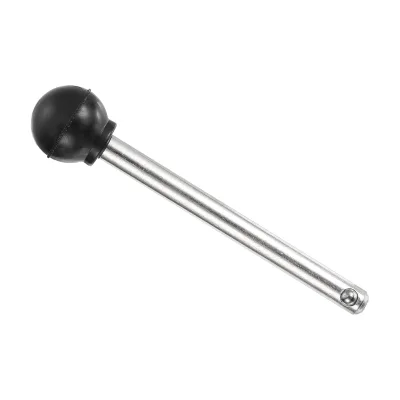


$0.15 - $1.50
MOQ: 50 Pieces


Comprehensive Sourcing Guide
Strategic Sourcing Guide for Cross Design Locking Detent Pins with Key Ring
Understanding the Product Architecture and Design Variations
When sourcing Cross Design Locking Detent Pins with Key Ring, buyers must first distinguish between the specific mechanical configurations and aesthetic finishes available in the current market. The core product category encompasses stainless steel components designed for secure fastening, often featuring a distinct cross-shaped head or design element that facilitates manual operation or tool engagement. These pins are frequently described in supplier catalogs as "Ball Lock Pins" or "Quick Release Pins," indicating a mechanism where a ball detent engages into a groove to lock the pin in place. The inclusion of a key ring suggests a specific application requirement where the pin must remain attached to the equipment or the operator to prevent loss during high-frequency cycling.
The design landscape for these components is diverse. While some listings specify a "Cross" design with an "Antique" style finish, others focus purely on functional geometry, such as "Irregular" shapes or "Headed" configurations. The material composition is predominantly stainless steel, chosen for its corrosion resistance and durability in demanding environments. However, surface finishing processes vary significantly; observed data indicates options ranging from "Nickel Plated" to "Zinc Plated," each offering different levels of protection against oxidation and wear. Buyers should recognize that a "Cross" design might be a specific aesthetic or functional variant, while other suppliers may offer standard cylindrical detent pins with similar locking mechanisms but without the cross-head feature. Understanding this distinction is critical, as the "Cross" element often implies a specific torque requirement for removal or a unique visual identification method for the assembly line.
Technical Specifications and Manufacturing Precision
The technical integrity of locking detent pins relies heavily on the manufacturing process and the precision of the final dimensions. The primary production method identified in the market is CNC Machining, which allows for high repeatability and tight tolerances. For applications requiring high precision, a tolerance of +/-0.05mm is a benchmark that buyers should verify with potential suppliers. This level of accuracy ensures that the pin fits snugly into the corresponding hole without excessive play, which could compromise the locking mechanism's reliability.
Material selection is another pivotal technical factor. Stainless steel is the standard material for these components, providing a balance of strength and resistance to environmental degradation. The specific grade of stainless steel is not always explicitly stated in general listings, but the presence of certifications like ISO and SGS often implies adherence to material standards that ensure the steel meets specific mechanical properties. Furthermore, the presence of "Micro Machining" capabilities suggests that suppliers can handle very small or intricate features, which is essential for pins with complex cross designs or small key ring attachments.
Dimensional specifications vary widely based on the application. Common size ranges observed include diameters of 4mm, 5mm, 6mm, and 8mm, though custom models like "HK AA-0048" or "AAA-49" indicate that non-standard sizes are readily available. The "Headed" nature of these pins is a crucial specification, as it provides the necessary surface area for the ball detent to engage and for the user to grip or attach the key ring. Buyers must ensure that the head diameter and the pin length are compatible with the mating components in their specific assembly.
Compliance, Certification, and Regulatory Alignment
Navigating the compliance landscape is essential for B2B procurement, particularly when sourcing components for international markets. The supply chain for these pins often cites a range of certifications, including ISO, GS, RoHS, and CE. These certifications indicate that the manufacturer adheres to specific quality management systems and environmental standards. For instance, RoHS compliance ensures that the materials used, including the plating and the steel itself, do not contain restricted hazardous substances, which is a mandatory requirement for electronics and automotive applications in many regions.
The standard or nonstandard nature of the product is a key compliance indicator. While many suppliers offer "Nonstandard" or "Custom Made" solutions, these must still align with broader industry standards if they are to be used in regulated environments. The presence of ISO9001-2008 and SGS IAF accreditation suggests that the manufacturing process is subject to rigorous quality control audits. Buyers should verify that the specific batch of pins they receive carries the relevant documentation, as the "Custom" designation often implies a deviation from standard catalog items that may require additional validation.
Furthermore, the "Customer" designation of "HP Supplier" in some listings hints at the supplier's experience with major technology or industrial clients, which often serves as an indirect validation of their ability to meet strict compliance and delivery requirements. However, buyers should not assume that a supplier's past work with a specific brand guarantees compliance for their own specific use case. Direct verification of the current production batch's certification status is necessary to ensure that the components meet the specific regulatory requirements of the buyer's industry.
Cost Drivers and Economic Considerations
The pricing structure for Cross Design Locking Detent Pins with Key Ring is influenced by several dynamic factors, primarily material costs, customization levels, and order volume. The observed price range in the market spans from $0.02 to $8.25 USD, a wide variance that reflects the difference between standard off-the-shelf items and highly customized, precision-machined components. The lower end of the spectrum typically corresponds to basic stainless steel pins with standard plating and minimal customization, while the higher end reflects complex designs, specialized surface finishes like nickel plating, and tight tolerance requirements.
Minimum Order Quantity (MOQ) is another significant cost driver. The market shows an MOQ range from 1 to 5000 units. For prototyping or low-volume production, suppliers with an MOQ of 1 are essential, though the unit cost will be higher. Conversely, bulk procurement can significantly reduce the per-unit cost, making it vital for buyers to balance their inventory needs against their cash flow. The "Customized" attribute is a major factor in pricing; while customization offers the perfect fit for specific applications, it often incurs setup costs and higher per-unit prices compared to standard "Non-Customized" items.
Lead time also impacts the total cost of ownership. Standard delivery times for samples range from 7 to 10 days, while batch goods typically require 20 to 35 days. However, some suppliers offer "Quick Delivery" options with a 7-day turnaround for specific items. These expedited services often come at a premium. Buyers must factor in the cost of potential production delays if they opt for longer lead times or if the supplier experiences capacity constraints. Additionally, packaging requirements, such as "Polybag+Carton" or "Standard Export Carton" with "PP Bubble Bag" protection, add to the overall cost but are necessary to prevent damage during shipping, especially for precision-machined parts.
Supplier Evaluation and Service Capabilities
Selecting the right supplier requires a thorough evaluation of their service capabilities and operational flexibility. The market offers suppliers with "OEM" and "ODM" services, indicating their ability to manufacture products based on the buyer's specific designs or to develop new products from scratch. This is particularly relevant for the "Cross Design" and "Key Ring" combinations, which may require unique tooling or assembly processes. Suppliers that offer "Custom Made" models demonstrate a higher level of engineering capability and are better suited for complex applications.
The location of the supplier is another critical factor. Many of the observed suppliers are based in Guangdong, China, a region known for its robust manufacturing ecosystem and expertise in metal machining. This concentration of suppliers often leads to competitive pricing and a wide variety of options. However, buyers should also consider the logistics implications of sourcing from this region, including shipping times and potential tariffs. The availability of shipping methods such as UPS, DHL, and Air freight provides flexibility in managing delivery schedules, but the cost and speed of these services must be weighed against the urgency of the procurement need.
Quality control capabilities are paramount. Suppliers that utilize "Projector" test equipment and adhere to strict tolerance standards demonstrate a commitment to quality. The ability to provide samples is a strong indicator of a supplier's confidence in their product; most suppliers listed offer samples, allowing buyers to physically inspect the cross design, the key ring attachment, and the surface finish before committing to a larger order. Buyers should also inquire about the supplier's track record with specific industries, as experience in sectors like automotive or aerospace often correlates with higher reliability and better quality control processes.
Quality Control Protocols and Long-Term Procurement Strategy
Ensuring the long-term reliability of cross design locking detent pins requires a robust quality control strategy. The manufacturing process, specifically CNC Machining, must be monitored to ensure that the tolerance of +/-0.05mm is consistently maintained. Visual inspections for surface finishing defects, such as uneven plating or rough edges, should be part of the incoming quality control process. The use of "Projector" equipment for dimensional verification is a best practice that buyers should expect from reputable suppliers.
For long-term procurement, establishing a clear communication channel regarding design changes and material updates is essential. Since many of these pins are "Custom Made" or "Nonstandard," any changes in the supplier's raw material supply or machining capabilities could impact the final product. Buyers should request a formal change management process to ensure that any modifications are documented and approved before implementation. Additionally, maintaining a relationship with a supplier that offers "OEM" and "ODM" services can provide a strategic advantage, as it allows for continuous improvement and adaptation of the pin design to evolving application requirements.
Inventory management is also a key consideration. Given the lead times of 20 to 35 days for batch goods, buyers should implement a just-in-time inventory strategy or maintain a safety stock to prevent production stoppages. The packaging standards, such as "25~30kgs/CTN" with pallet packing, should be aligned with the buyer's storage and handling capabilities to minimize damage and maximize efficiency. By focusing on these quality and logistical aspects, buyers can ensure a stable supply chain for these critical fastening components, securing the performance and reliability of their final products.
FAQs
What materials are used for Cross Design Locking Detent Pins with Key Ring?
Stainless steel is the primary material used for these pins to ensure durability and corrosion resistance. Some variants may feature nickel or zinc plating for enhanced surface protection, depending on the specific supplier and customization requirements.
Can suppliers provide custom made Cross Design Locking Detent Pins with Key Ring?
Yes, customization is available for Cross Design Locking Detent Pins with Key Ring to meet specific application needs. Suppliers offer OEM and ODM services with CNC machining capabilities to produce nonstandard models like HK AA-0048 or AAA-49.
How long is the lead time for batch goods of Cross Design Locking Detent Pins with Key Ring?
Batch goods typically require 20 to 35 days for delivery after order confirmation. Sample delivery is faster, usually taking 10 to 25 days, though some suppliers may offer a quick delivery option within 7 days for specific items.
Which certifications do Cross Design Locking Detent Pins with Key Ring manufacturers hold?
Manufacturers commonly hold ISO, GS, RoHS, and CE certifications for their products. Specific production standards often include ISO9001-2008 and SGS IAF accreditation to ensure quality management and compliance with international safety regulations.
What is the price range for Cross Design Locking Detent Pins with Key Ring?
The observed price range spans from 0.02 to 8.25 USD per unit. This variance depends on factors such as material grade, surface finishing, customization level, and the minimum order quantity required by the supplier.
What tolerances are achievable for Cross Design Locking Detent Pins with Key Ring?
High-precision CNC machining can achieve tolerances of plus or minus 0.05mm for these pins. Projector test equipment is often used to verify these dimensions and ensure the parts fit snugly without excessive play.