Source Cup Holder and Food Box Dispenser for Kitchen, Office, Supermarket
Find 30 verified listings for Cup Holder and Food Box Dispenser designed for kitchen, office, and supermarket use. Compare features like material, size, and customization options from suppliers in China to meet your specific storage needs.
Key considerations
Products List




Comprehensive Sourcing Guide
Strategic Sourcing Guide for Cup Holders and Food Box Dispensers
Procuring cup holders and food box dispensers requires a nuanced understanding of the intersection between material science, regulatory compliance, and operational utility. These items are not merely storage containers but functional components of kitchen workflows, retail environments, and public spaces. The market presents a diverse array of options ranging from simple plastic units to complex dispensing mechanisms with specific mounting styles. Buyers must navigate a landscape where product attributes like "Chinese Classical" design coexist with "Supermarket" applications, necessitating a rigorous vetting process to ensure the selected equipment meets specific operational demands without compromising on safety or durability.
Technical Specifications and Material Composition
The foundation of any successful procurement decision lies in the precise definition of technical specifications. In the current market, the predominant material observed for these dispensers is plastic, specifically noted as PP (Polypropylene) in several product listings. This material choice is critical for food contact applications due to its resistance to heat and chemical stability. Buyers should verify the specific grade of plastic used, as the standard "PP" designation implies suitability for food storage but requires confirmation of the exact polymer composition to ensure it meets the intended temperature range, such as "Cold & Hot" water temperatures.
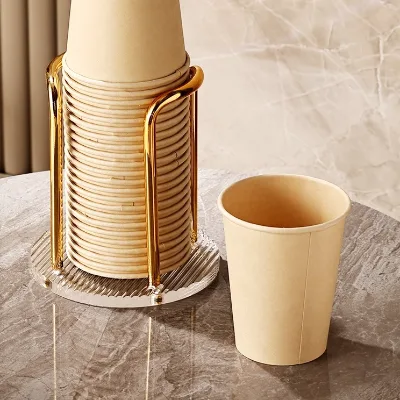
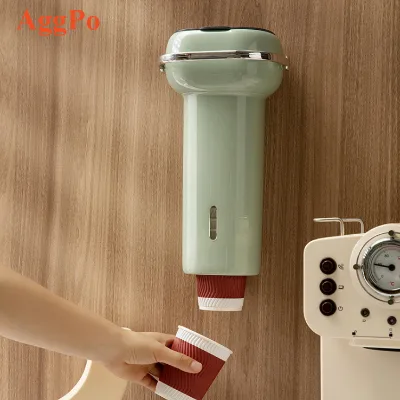
Physical dimensions and structural design vary significantly based on the intended application. Specifications indicate a range of sizes from "Small" to "Medium," with some units featuring a "One Layer" configuration while others may be part of a "Set" or "Carton" packaging system. The design of the cup holder often dictates the mounting mechanism, with options including "Magnet or Screw" styles. For retail environments, the "Gravity Bins" model suggests a specific mechanical operation where product movement is driven by gravity, requiring a "Fixed" rotary mechanism and "Single Sided" display capability. Conversely, units designed for "Home Decoration" or "Office" settings may prioritize aesthetic elements like "Chinese Classical" styles or specific colors such as "Blue" or "White."
The packaging standard is another technical variable that impacts logistics. While some units are shipped in "Paper Box" packaging, others utilize "Carton" systems, with specific configurations like "Carton 24/CTN" or "Air/Sea" shipping standards. Understanding these packaging constraints is essential for calculating freight costs and storage requirements. Furthermore, the "Transparent tube" standard mentioned in certain listings suggests a specific visibility requirement for the product, which is vital for inventory management in high-traffic areas.
Compliance and Certification Verification
Ensuring that cup holders and food box dispensers meet international safety and quality standards is non-negotiable, particularly when the products are intended for food contact or public use. The supply chain for these items often originates from China, with specific manufacturing hubs like Zhejiang identified as a place of origin. Buyers must demand evidence of compliance with recognized standards such as ROHS, CE, FDA, and ISO9001. These certifications are not merely marketing terms but indicate that the manufacturing process adheres to strict environmental, electrical safety, and quality management protocols.
The FDA certification is particularly relevant for items used in kitchen or food service environments, ensuring the materials do not leach harmful substances into food or beverages. Similarly, the ROHS directive confirms that the plastic components are free from restricted hazardous substances, which is crucial for environmental compliance in many global markets. The ISO9001 standard validates the supplier's quality management system, providing assurance that the production process is consistent and controlled.
While some background information mentions FSC certification, this should be treated with caution as it is not a high-confidence fact for all listed products. Buyers should explicitly verify if the packaging materials, such as the "Paper Box" or "Carton" options, carry FSC certification if sustainable sourcing is a corporate requirement. Additionally, the "SGS" standard is frequently cited, indicating third-party testing has been conducted. However, buyers must request specific test reports to confirm that the "Middle Weight" and structural integrity of the units have been validated against the claimed standards. Without direct verification of these documents, the compliance status remains an assumption rather than a fact.
Cost Drivers and Pricing Dynamics
The pricing structure for cup holders and food box dispensers is influenced by a complex interplay of factors, including material costs, customization levels, and order volume. The observed price range in the market spans from $0.9 to $130 USD, a wide disparity that reflects the difference between basic, single-use style units and more complex, branded dispensing systems. The "Blue Pluser" brand, for instance, may command a premium due to brand recognition or specific design features like the "Chinese Classical" style.
Customization is a primary driver of cost variance. Products marked as "Customized" or offering "Available" customization options typically incur higher unit costs due to the setup fees and lower economies of scale associated with bespoke production runs. Buyers should anticipate that requests for specific colors, such as "Blue" or "White," or unique designs like "Hanging Style" units, will impact the final price. The "MOQ" (Minimum Order Quantity) also plays a significant role, with observed ranges from 1 to 10,000 units. A lower MOQ, such as 50 units for "Gravity Bins," allows for smaller initial investments but results in a higher per-unit cost. Conversely, larger orders can leverage volume discounts but require significant upfront capital and storage capacity.
Packaging and logistics costs further influence the total landed cost. Units requiring "Safe Packing" or specific carton configurations like "Carton 24/CTN" may incur additional handling fees. The origin location, specifically "Zhejiang China," affects shipping timelines and freight rates, which must be factored into the total cost of ownership. Buyers should analyze the total cost per unit, including shipping, duties, and handling, rather than focusing solely on the base product price.
Typical Applications and Usage Scenarios
The versatility of cup holders and food box dispensers allows them to serve a wide array of applications, from domestic kitchens to large-scale commercial retail environments. In the "Kitchen" setting, these units function as essential tableware organizers, often featuring "Drawers" for storage and designed to hold items securely. The "Home Decoration" and "Office or Public" usage categories highlight the aesthetic importance of these products, where styles like "Chinese Classical" or colors like "Blue" are selected to match interior design schemes.
In commercial settings, the requirements shift towards durability and efficiency. The "Supermarket," "Shop," "Drug Store," and "Convenient Store" applications demand robust units capable of withstanding high traffic. "Gravity Bins" are particularly suited for these environments, offering a self-replenishing mechanism that reduces restocking frequency. The "Display Place" is typically "Indoor," requiring units that maintain their structural integrity and appearance under constant use. The "Style for Dispenser" being "All Kinds" suggests that suppliers offer modular solutions that can be adapted to various retail layouts.
For public spaces, the "Usage" extends to "Home Decoration" and "Office" environments, where the "Shape" of the unit, such as "Bowl," may be a design consideration. The "Water Temperature" capability of "Cold & Hot" indicates that these dispensers are often integrated into beverage stations, requiring materials that can withstand thermal stress without deforming. Understanding the specific environment where the unit will be deployed is crucial for selecting the right model, such as the "cup dispenser B" or "cup holder A," each designed for specific functional needs.
Supplier Evaluation and Selection Criteria
Evaluating suppliers for cup holders and food box dispensers requires a multi-faceted approach that goes beyond price comparisons. Buyers should prioritize suppliers who can provide transparent documentation regarding their production standards and material sourcing. The presence of specific product models like "CH-MB," "KCH-MB," and "VG-MMF03" indicates a structured product line, suggesting a supplier with established manufacturing capabilities. However, the existence of multiple models does not guarantee quality; buyers must verify the consistency of production across these lines.
The "Condition" of the product, listed as "New," is a basic requirement, but buyers should also assess the supplier's ability to maintain this condition during shipping. The "Packing" method, described as "Safe Packing," is a critical indicator of the supplier's attention to detail. Suppliers who utilize "Carton" or "Paper Box" packaging with clear labeling and protective measures are more likely to deliver products in pristine condition. Additionally, the "Customized" status of a product should be verified to ensure the supplier has the capacity to handle bespoke orders without compromising on quality or lead times.
Geographic origin is another factor in supplier evaluation. While "China" and specifically "Zhejiang" are identified as origins, buyers should verify the specific factory location and its proximity to logistics hubs. This can impact lead times and shipping costs. Furthermore, the "Brand" reputation, such as "Blue Pluser," should be investigated to understand the supplier's market standing and customer feedback. A supplier with a history of delivering "Common" features reliably is preferable to one with a history of inconsistent quality.
Quality Control and Long-Term Procurement Considerations
Implementing a robust quality control (QC) strategy is essential for mitigating risks associated with sourcing cup holders and food box dispensers. Buyers should establish clear acceptance criteria based on the observed specifications, such as the "Size" (Small, Medium), "Weight" (Middle Weight), and "Shape" (Bowl). Pre-shipment inspections should verify that the "Color" matches the agreed-upon standard, whether "Blue," "White," or a combination. The "Standard" of "Transparent tube" or "PP" material must be confirmed through visual inspection and, where possible, material testing.
Long-term procurement considerations involve assessing the supplier's ability to scale production and maintain consistency. The "MOQ" of 50 units for certain models suggests flexibility, but buyers should negotiate terms that allow for incremental ordering without significant price penalties. The "Lead time" and "Production capacity" should be discussed to ensure the supplier can meet demand spikes, particularly in retail environments where inventory turnover is high.
Sustainability is increasingly becoming a factor in procurement decisions. While the "FSC" certification is not a high-confidence fact for all products, buyers should inquire about the recyclability of the "Plastic" materials used. The "Packaging" should ideally be minimized and recyclable to align with corporate sustainability goals. Finally, maintaining a strong relationship with the supplier is crucial for long-term success. Regular communication regarding product updates, standard changes, and market trends will ensure that the procurement strategy remains aligned with evolving business needs. By focusing on these critical areas, buyers can secure a reliable supply of high-quality cup holders and food box dispensers that meet their operational and strategic objectives.
FAQs
What materials are used for cup holder and food box dispensers?
The primary material used is plastic, specifically PP (Polypropylene), which ensures food safety and durability. Some units also feature transparent tubes for visibility. This material choice supports both kitchen and commercial applications while resisting heat and chemicals.
Which certifications ensure safety for food contact applications?
Products often comply with ROHS, CE, FDA, and ISO9001 standards to guarantee safety and quality. FDA certification is critical for food contact, while ROHS confirms the absence of hazardous substances. Buyers should verify these documents to ensure compliance with international regulations.
How can I customize the color and design of the dispenser?
Customization is available for colors like Blue or White and styles such as Chinese Classical or Hanging Style. Buyers can request specific designs like Bowl shapes or Magnet or Screw mounting options. Custom orders may affect pricing and require verification of the supplier's capacity for bespoke production.
What is the typical minimum order quantity for these dispensers?
The minimum order quantity ranges from 1 to 10,000 units depending on the specific model and customization level. For example, Gravity Bins may have an MOQ of 50 units. Lower MOQs allow smaller investments but often result in higher per-unit costs compared to bulk orders.
Where are these cup holder and food box dispensers manufactured?
Most units originate from China, with specific manufacturing hubs identified in Zhejiang. The origin location impacts shipping timelines and freight costs. Buyers should verify the specific factory location to ensure reliable lead times and efficient logistics for their supply chain needs.
Can these dispensers handle both cold and hot water temperatures?
Yes, many models are designed to handle both cold and hot water temperatures effectively. This capability relies on the use of heat-resistant plastic materials like PP. It is essential to confirm the specific temperature range for each model to ensure it meets the intended beverage station requirements.