Source Custom PVC Pipe Fittings for Plumbing, Irrigation, and Drainage
Explore 30 listings for Custom PVC Pipe Fittings suitable for water supply, irrigation, and drainage systems. Compare options featuring hot-pressed and forged techniques, various certifications like GB and BS, and materials including PVC and plastic compounds to find the right solution for your project.
Key considerations
Products List


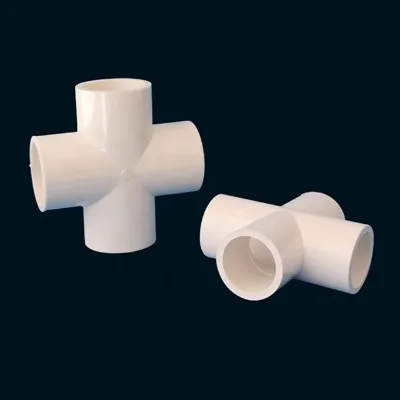

45 Degree Elbow PVC-U Pipe and Fittings
$0.78 - $0.90
MOQ: 1000 Pieces
Hebei Xiong'an Anzheng Engineering Materials Technology Co., Ltd.


$0.20 - $480.00
MOQ: 100 Meters


Comprehensive Sourcing Guide
Custom PVC Pipe Fittings Sourcing Guide
Procuring Custom PVC Pipe Fittings requires careful evaluation of material composition and manufacturing techniques to ensure compatibility with specific piping systems. Buyers must verify that the raw materials, such as PVC compound or PPH UPVC, meet the required purity levels and physical properties like whiteness and appearance. The selection process should prioritize suppliers who offer customization options, allowing for tailored solutions that fit unique project dimensions and functional requirements.
The manufacturing process significantly influences the final product's durability and performance characteristics. Options such as hot-pressed or forged techniques determine the structural integrity of the fittings, while surface treatments like nickel plating may be necessary for specific environmental conditions. Understanding these technical distinctions helps buyers avoid mismatches between the product's inherent capabilities and the operational demands of the intended application, ensuring long-term reliability in water pipe or general pipe fitting scenarios.
Product Scope and Observed Listing Signals
The market for Custom PVC Pipe Fittings displays a wide range of product models and specifications, from standard sizes like 1/2" to 3/4" up to larger diameters reaching 4" or 63mm. Listings often indicate specific model numbers such as BYEF-0116 or C04, which correspond to distinct design features like equal shapes, round heads, or 90-degree angles. Buyers should scrutinize these identifiers to confirm that the listed item matches the exact geometric and dimensional needs of their infrastructure projects.
Pricing and minimum order quantities vary considerably across different suppliers, with observed ranges spanning from nominal costs to substantial figures and MOQs from 5 to 5000 units. Packaging methods also differ, ranging from standard cartons to custom requests or 25kg bags, which impacts logistics and storage planning. Procurement teams must align their order volumes with supplier capabilities and budget constraints, ensuring that the selected commercial terms support efficient supply chain operations without unnecessary financial strain.
Technical Specifications to Verify
Dimensional accuracy and pressure ratings are critical parameters that must be validated before finalizing any purchase agreement. Specifications such as Sch40 wall thickness and working pressures up to Pn20 define the operational limits of the fittings, while thread distributions like socket connections dictate installation methods. Buyers should request detailed technical datasheets that explicitly confirm these metrics to prevent failures under stress or during high-pressure fluid transport scenarios.
Material properties and surface treatments further define the suitability of the fittings for specific environments. Attributes like non-conductive properties, fire resistance, and corrosion resistance are essential for safety and longevity, particularly in industrial or outdoor applications. Additionally, verifying the purity level of 99.9% and the whiteness of the compound ensures that the material meets high-quality standards. These technical details must be cross-referenced against project requirements to guarantee that the fittings will perform reliably over their intended service life.
Compliance and Safety Documentation
Certification status serves as a primary indicator of a supplier's adherence to international quality and safety standards. Listings frequently reference certifications such as GB, BS, CE, and ISO9001, which validate that the manufacturing processes and final products meet rigorous regulatory requirements. Buyers must verify the authenticity of these certificates and ensure they cover the specific product models being ordered, as compliance is often a prerequisite for legal installation and insurance coverage in many jurisdictions.
Safety documentation should also include detailed information on material composition and testing results to confirm the absence of hazardous substances. The presence of features like fire resistance and corrosion resistance must be backed by independent test reports or standardized compliance data. Procurement teams should require suppliers to provide these documents prior to shipment, ensuring that the fittings can be safely integrated into systems that handle potable water or other critical fluids without posing health or environmental risks.
Cost Drivers and Commercial Terms
The total cost of ownership for Custom PVC Pipe Fittings is influenced by multiple factors beyond the unit price, including material costs, customization complexity, and packaging requirements. The use of high-purity compounds and specialized manufacturing techniques like forging or hot-pressing can increase production expenses, while custom branding and specific packing requests add further logistical costs. Buyers should analyze the full cost structure to understand how these variables impact the final invoice and budget allocation.
Commercial terms such as minimum order quantities, lead times, and warranty provisions play a crucial role in the financial planning of procurement projects. While some suppliers offer flexible MOQs, others may require larger volumes to justify custom production runs. Additionally, warranty periods, such as the observed one-year coverage, provide a safety net against manufacturing defects. Negotiating clear terms regarding these aspects helps mitigate financial risks and ensures that the supplier remains accountable for the quality of the delivered goods.
Supplier Qualification and Quality Control
Supplier qualification involves a thorough assessment of their manufacturing capabilities, location, and track record in the industry. Many suppliers originate from regions like Huangyan, Taizhou, Zhejiang, China, which are known for their plastic processing expertise. Buyers should verify the supplier's production capacity and their ability to maintain consistent quality across different batches, especially when dealing with custom orders that require specific technical attributes like brand OEM services or customized dimensions.
Quality control processes must be robust and transparent to ensure that every batch of fittings meets the agreed-upon specifications. This includes rigorous inspection of raw materials, monitoring of the production process, and final testing of finished products against standards like BS4346. Buyers should request evidence of these quality control measures, such as inspection reports or third-party audit results, to confirm that the supplier consistently delivers products that meet the required performance and safety criteria.
Long-Term Procurement Checks
Establishing a long-term relationship with a reliable supplier requires ongoing monitoring of product performance and supplier responsiveness. Buyers should implement a system for tracking the durability and functionality of the fittings in real-world applications, noting any issues related to corrosion, pressure failure, or installation difficulties. This feedback loop allows for continuous improvement and helps identify potential suppliers who may not meet long-term expectations despite initial compliance.
Regular audits and re-evaluation of supplier certifications are essential to maintain high standards over time. As regulations evolve and new safety standards emerge, suppliers must demonstrate their ability to adapt and maintain compliance. Procurement teams should schedule periodic reviews of supplier performance, including their ability to meet delivery schedules and handle custom requests efficiently. This proactive approach ensures a stable supply chain and minimizes the risk of disruptions in critical infrastructure projects.
FAQs
How can I customize PVC pipe fittings for my project?
Customization is available for these PVC pipe fittings, covering sizes from 16mm to 32mm or 1/2 inch to 4 inch depending on the model. You can typically specify dimensions, colors, and packaging arrangements. Provide drawings or samples along with your target quantity, since customized orders usually carry higher minimum quantities than standard catalog items.
What materials and standards do these PVC pipe fittings follow?
The fittings are made from PVC or plastic raw materials, including UPVC variants, and some product lines follow BS standards from 1/2 inch to 2 inch. Wall thickness specifications such as Sch40 are also listed. Always confirm the exact standard and material grade with the supplier before placing an order, because specifications vary between models.
Which certifications apply to these PVC pipe fittings?
Listed certifications include GB and BS standards, and some models carry CE and ISO9001 certification. Certification coverage differs by product model, so request the applicable certificate documents for the specific fitting you intend to buy. This is especially important for water pipe applications where compliance documentation may be required by your local authorities.
What is the typical MOQ and packing for PVC pipe fittings?
Observed minimum order quantities range from 5 to 5000 pieces depending on the fitting type and size, so small trial orders are often possible. Packing options include cartons, polybag and carton combinations, or packaging arranged according to customer request. Confirm the exact MOQ for your chosen size and whether custom packaging affects the minimum quantity.
How should PVC fittings be joined in a plumbing system?
Many of these fittings use a female socket connection designed for solvent cement glue, while some models are forged with threaded designs. Socket connections are joined by cleaning, priming, and gluing the pipe into the fitting. Follow the adhesive manufacturer instructions and allow proper curing time before applying working pressure such as PN20.
What sizes and pressure ratings are available?
Sizes span 1/2 inch to 4 inch, equivalent to 20mm to 63mm, with some models covering 16mm to 32mm and others listed from 1/2 inch to 2 inch under BS4346. A working pressure of PN20 is listed for certain models. Verify size, wall thickness, and pressure rating together, because pressure capacity depends on the specific fitting design.
What features make PVC fittings suitable for water pipe applications?
These fittings offer corrosion resistance, fire resistance, and non-conductive properties, which suit water supply installations. PVC does not rust like metal fittings and resists chemical attack from typical water treatment compounds. For hot water lines, check temperature limits with the supplier, since standard PVC is generally intended for cold water service rather than continuous hot water.
Can I order PVC fittings with my own brand and packaging?
Yes, OEM branding is listed as available, and customization is offered across the product range. You can usually arrange your own logo, brand name, and carton or polybag packaging according to your requirements. Discuss artwork files, label specifications, and any additional branding costs with the supplier early, since OEM arrangements may extend lead times slightly.