Source Customized 360 Camera Booth for Weddings Events Parties
Compare 30 listings for Customized 360 Camera Booth options with aluminum alloy construction and remote control features. Buyers can evaluate pricing, delivery times, and customization capabilities for digital and video camera applications.
Key considerations
Products List


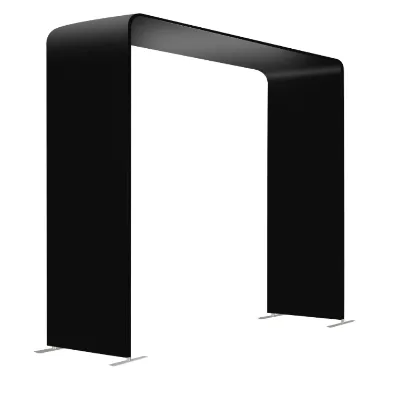
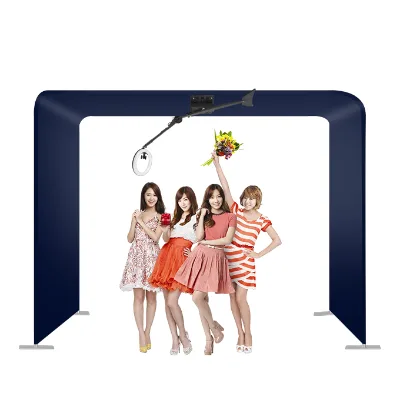
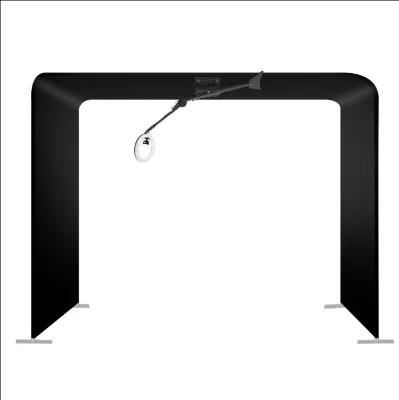
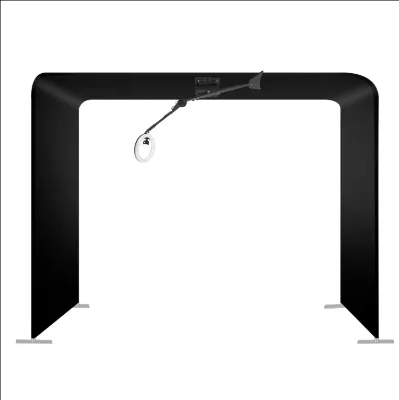
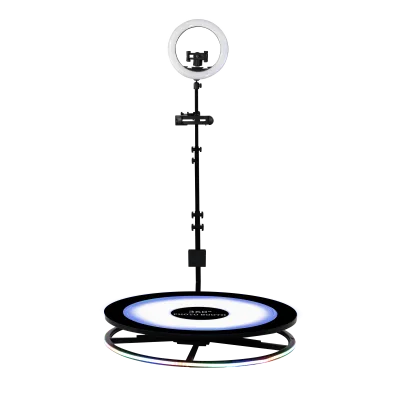
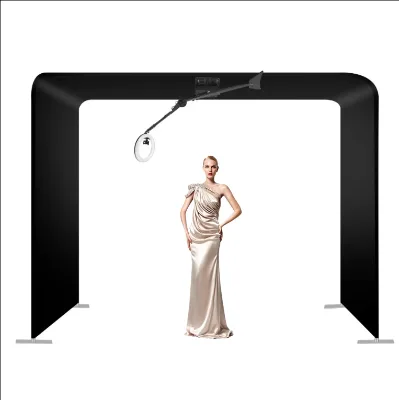


Photo Booth Automatic Photo Booth DSLR Touch Screen Receipt Photo Booth
$998.00 - $2698.00
MOQ: 1 Pieces


Programmable High Speed Smooth Motion Stabilized Camera Photo Robot Booth
$3200.00 - $3690.00
MOQ: 1 Pieces

High Speed Smooth Motion Waterproof Dustproof Shockproof Stabilized Camera Photo Robot Booth
$3200.00 - $3690.00
MOQ: 1 Pieces

Compatible Waterproof Easy Operation Durable Touch Screen Photo Robot Booth
$3200.00 - $3690.00
MOQ: 1 Pieces


Events Selfie Booth Digital Camera Photo Booth Machine Portable DSLR Photobooth Box
$390.00 - $780.00
MOQ: 1 Pieces
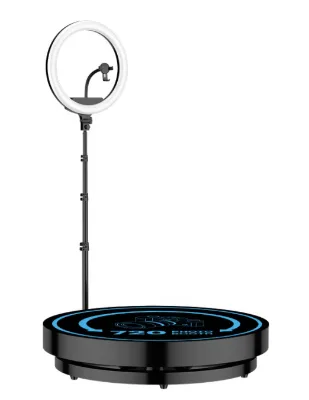
Comprehensive Sourcing Guide
Strategic Sourcing Guide for Customized 360 Camera Booths
The global demand for immersive visual experiences has elevated the Customized 360 Camera Booth from a niche novelty to a staple in event technology, marketing activations, and entertainment venues. For procurement professionals, navigating this market requires a disciplined approach that separates marketing rhetoric from verifiable operational data. The core keyword "Customized 360 Camera Booth" encompasses a diverse range of hardware configurations, from compact digital camera tripods to large-scale hanging photo booths. This guide provides a structured framework for evaluating suppliers, verifying technical specifications, and managing the total cost of ownership based on observed market data and standard industry practices.
Technical Specifications and Material Integrity
The foundational element of any 360 camera booth is its structural integrity and mechanical precision. The primary material observed in high-performance units is aluminum or aluminum alloy, chosen for its optimal balance of weight and load-bearing capacity. In the current market, specific models utilize aluminum alloy combined with other structural components to ensure stability during rapid rotation. Buyers must verify the exact material composition, as some listings indicate a mix of glass and iron, which may imply different weight distributions and durability profiles compared to pure aluminum constructions.
Weight is a critical specification that directly impacts logistics and installation. Observed data indicates a significant variance in unit weight, ranging from 38kg to as high as 71kg depending on the model and configuration. For instance, specific models are listed with weights of 41kg, 50kg, 63kg, and 71kg. This variance suggests that the "360" designation covers multiple product tiers, from portable units to heavy-duty industrial installations. Procurement teams must align the weight specification with their venue's floor load limits and transportation capabilities. A unit weighing 71kg requires different handling equipment and potentially reinforced flooring compared to a 38kg unit.
Dimensions are equally variable and must be matched to the intended physical space. While some specifications list a compact size of 50cm x 50cm x 19cm, others indicate a much larger operational footprint with sizes ranging from 60cm to 100cm. The "Single package size" is often listed as variable or customizable, which is a crucial detail for freight cost estimation. Buyers should request the exact cubic meterage (CBM) for the specific model they intend to purchase, as the difference between a 50cm cube and a 100cm cube exponentially increases shipping costs. Furthermore, the load-bearing capacity is a safety-critical metric; some units are rated for 200kg to 300kg, which is essential for ensuring the booth can safely support the camera rig and any additional accessories without structural failure.
Customization Capabilities and Brand Integration
The primary value proposition of these units is their ability to be customized to fit specific branding and operational needs. The market data confirms that customization is a standard feature, with "Customization: Available" being a high-confidence attribute. This extends to the physical dimensions, where product sizes are often listed as "Customizable" or "Sizes available." This flexibility allows buyers to tailor the booth to specific venue constraints or to create a unique aesthetic that aligns with corporate identity.
Visual customization is a key driver for marketing events. Suppliers typically offer "Logo customization" and "Custom color" options, allowing the exterior casing to match brand guidelines. The "Print Functionality" is also noted as customizable, which is vital for creating branded backdrops or interactive surfaces within the booth. However, buyers must clarify the scope of this customization. Does it include the structural frame, the interior lining, or just the exterior graphics? The "prod_packing" is also listed as customizable or "as Show," which implies that the packaging can be branded for retail or corporate gifting purposes.
It is important to distinguish between the hardware and the accessories. The data explicitly states that accessories are often "Excluding," meaning the base unit may not include the camera, tripod, or lighting unless specified. The "Compatible Brand" is listed as "All," suggesting the booth is designed to work with various camera models, but the specific mounting interface must be verified. Additionally, the "Control Method" is frequently remote control (auto), which simplifies operation for event staff. Connectivity options like USB are standard, but buyers should verify the specific ports and protocols to ensure compatibility with their existing IT infrastructure and software ecosystems.
Cost Drivers and Financial Parameters
Understanding the cost structure of a Customized 360 Camera Booth is essential for budgeting and ROI analysis. The observed price range in the market is substantial, spanning from $150 to $4,880 USD. This wide disparity is driven by several factors, including the complexity of the mechanical system, the quality of materials (e.g., aluminum alloy vs. mixed materials), the level of customization, and the included accessories. A unit at the lower end of the spectrum likely represents a basic tripod-based system, while the higher end may include a full hanging booth with advanced motorization and premium finishes.
Logistics and packaging represent a significant, often overlooked, cost driver. The "Flight Case Cost" is explicitly listed at $100 USD per set, which is a mandatory addition for units that require professional transport. This cost is separate from the unit price and must be factored into the total landed cost. Furthermore, the "Selling Units" are typically single items, meaning buyers cannot easily purchase in bulk to reduce per-unit shipping costs unless they negotiate a specific container load.
Payment terms are another critical financial parameter. The standard requirement observed is "Full Payment Before Shipping," which places the financial risk on the buyer until the goods are dispatched. Payment methods generally include T/T (Telegraphic Transfer), Paypal, and other options, but the reliance on T/T suggests a B2B context where trust and credit terms are established. Buyers should also consider the "MOQ" (Minimum Order Quantity), which is observed to range from 1 piece to 6 pieces. For smaller events, a single unit purchase is feasible, but larger deployments may benefit from negotiating volume discounts, although the data does not specify tiered pricing structures.
Compliance, Certification, and Safety Verification
While the product listings highlight features like "Warranty" (ranging from 1 to 2 years) and "Online Support," explicit certification data is often absent from the provided product attributes. In the B2B procurement of electronic and mechanical equipment, the absence of a specific certification claim requires the buyer to verify compliance independently. Buyers should not assume that a product meets international safety standards (such as CE, FCC, or UL) unless the supplier provides documented proof.
The "prod_standard" is listed as "As show," which is a non-specific descriptor that does not guarantee adherence to a recognized international standard. For events involving public interaction, particularly in regions with strict safety regulations, the load-bearing capacity of 200kg-300kg must be validated by third-party testing reports. The "place of origin" is identified as Henan, China, and the "prod_origin" as China. While China is a major manufacturing hub, buyers must verify that the specific factory adheres to the safety and environmental regulations of the destination country.
Safety is paramount when dealing with rotating machinery. The "load bearing" and "weight" specifications must be cross-referenced with the intended usage. If the booth is to be used in high-traffic areas like wedding parties, the stability of the base and the reliability of the motor system are critical. Buyers should request a risk assessment document or a safety manual that details the emergency stop procedures and maintenance requirements. The "Warranty" period is a good indicator of manufacturer confidence, but it should be clearly defined in terms of what is covered (e.g., motor failure vs. cosmetic damage) and the process for claiming it.
Supplier Evaluation and Operational Logistics
Evaluating a supplier for a Customized 360 Camera Booth requires looking beyond the product listing to the operational capabilities of the manufacturer. The "advantage" of "Factory Direct Delivery" suggests a supply chain that minimizes middlemen, potentially offering better pricing and faster communication. However, buyers must verify the actual "Delivery" times, which are listed as 57 days for samples and 2025 days for bulk orders. These lead times are critical for event planning; a delay of even a few days can render the equipment useless for a scheduled activation.
The "After-sale service" is listed as "Online Support," which is a baseline expectation. For complex mechanical systems, buyers should inquire about the availability of local technical support, spare parts inventory, and the response time for critical failures. The "Compatible devices" list includes cameras and iPads, but the integration process can be complex. A supplier that offers pre-installation configuration or on-site setup support adds significant value.
Logistics options include Sea, Express, Air, and Train, giving buyers flexibility based on urgency and budget. However, the "Single package size" and "Weight" variations mean that shipping costs can fluctuate wildly. A 71kg unit shipped via Air Express will cost significantly more than a 38kg unit shipped via Sea. Buyers should calculate the total landed cost, including freight, insurance, and customs duties, before committing to a purchase. The "Flight Case" is a standard accessory for protection, but its cost must be included in the logistics budget.
Typical Applications and Long-Term Procurement Strategy
The "Applicable scenarios" for these booths are diverse, ranging from wedding parties to corporate events and marketing activations. The "Features" are described as "Suitable for Everyone," indicating a user-friendly design that does not require specialized training to operate. This broad applicability makes the 360 camera booth a versatile asset for event planners and marketing agencies. However, the longevity of the investment depends on the durability of the materials and the quality of the after-sales support.
For long-term procurement, buyers should consider the "Customization" aspect as a strategic advantage. A booth that can be easily rebranded for different campaigns offers a higher return on investment than a static unit. The "Print Functionality" and "Custom color" options allow for frequent updates to the booth's appearance without replacing the hardware. Additionally, the "Warranty" period should be a key factor in supplier selection; a 2-year warranty is preferable to a 1-year warranty, assuming the terms are comparable.
Buyers must also plan for the lifecycle of the equipment. The "Material" composition (Aluminum Alloy, Glass, Iron) will determine the maintenance schedule. Aluminum alloys generally require less maintenance than iron, which may be prone to rust if not properly treated. The "Control Method" (remote control) should be evaluated for battery life and replacement costs. Finally, the "Connectivity" options (USB) should be future-proofed to ensure compatibility with upcoming camera and software technologies. By focusing on these long-term considerations, buyers can secure a reliable and versatile asset that delivers value over multiple event cycles.
Comparative Analysis of Key Product Attributes
To facilitate decision-making, the following table summarizes the critical attributes observed in the market for customized 360 camera booths. This comparison highlights the variance in specifications that buyers must navigate.
| Attribute | Low-End / Portable Range | High-End / Industrial Range | Procurement Verification Point |
|---|---|---|---|
| Material | Aluminum, Mixed (Glass/Iron) | Aluminum Alloy | Verify structural integrity and corrosion resistance. |
| Weight | 38kg - 41kg | 50kg - 71kg | Check venue floor load limits and transport requirements. |
| Size | 50cm x 50cm x 19cm | 60cm - 100cm (Customizable) | Confirm exact dimensions for venue fit and packaging. |
| Load Bearing | Not Specified | 200kg - 300kg | Request third-party load testing reports. |
| Warranty | 1 Year | 2 Years | Clarify coverage scope (parts, labor, motor). |
| Lead Time | 5-7 Days (Sample) | 20-25 Days (Bulk) | Align with event timeline and buffer for delays. |
| Payment | Full Payment Before Shipping | Full Payment Before Shipping | Assess cash flow impact and risk mitigation. |
| Customization | Logo, Color | Full Size, Print, Color | Define scope of customization in the contract. |
This structured approach ensures that buyers can make informed decisions based on verified data rather than marketing claims. By rigorously evaluating technical specifications, cost drivers, and supplier capabilities, procurement professionals can secure customized 360 camera booths that meet their specific operational needs while minimizing risk.
FAQs
How long does delivery take for bulk orders?
Bulk delivery typically requires 20 to 25 days from the supplier. This timeline applies to standard production runs and excludes potential customs delays or shipping method variations like sea or air transport.
What is the minimum order quantity for this product?
The minimum order quantity is one piece, though some listings show options for up to six pieces. Buyers can often negotiate based on the specific model and customization requirements.
Can the product size be customized for specific venues?
Yes, the product size is customizable to fit specific venue constraints. Dimensions vary from 50cm to 100cm, allowing buyers to tailor the footprint for different event spaces.
Which materials are used to construct the booth frame?
The primary materials include aluminum alloy, aluminum, and sometimes glass and iron combinations. These materials are selected to balance weight with the necessary load-bearing capacity for rotation.
How much does the flight case cost for shipping?
The flight case costs 100 USD per set and is a separate expense from the unit price. This case is essential for protecting the equipment during transport via sea, air, or train.
What warranty coverage is provided for the equipment?
Warranty periods range from one year to two years depending on the specific model. Buyers should verify the exact terms regarding motor failure versus cosmetic damage with the supplier.
Can the booth support heavy camera rigs up to 300kg?
Some models have a load-bearing capacity rated between 200kg and 300kg. This high capacity ensures stability for heavy camera setups, but the specific limit must be confirmed for each unit.
Is logo customization available for branding purposes?
Logo customization is accepted to allow for corporate branding on the booth exterior. Buyers can also request custom colors and print functionality to match specific event themes or marketing campaigns.