Source Customize Metal Acoustic Ceiling Panel for walls, roads, towers
Find 18 listings for Customize Metal Acoustic Ceiling Panel designed for external walls, curtain walls, and noise reduction in road or highway applications. Buyers can compare specifications including fire resistance, sound absorption, and installation methods to select the right solution.
Key considerations
Products List


Perforated Metal Acoustic Panel Sound Absorbing Decorative Metal Panel
$68.00 - $78.00
MOQ: 100 Square Meters


Stylish Ceiling Panel for Interior Decoration and Acoustic Control
$11.80 - $13.00
MOQ: 100 Square Meters


Curved Acoustic Ceiling Panels Flexible Wall Panel Curved Acoustic Wall Panel
$12.64 - $12.99
MOQ: 500 Meters
Comprehensive Sourcing Guide
Strategic Sourcing Guide for Customized Metal Acoustic Ceiling Panels
Understanding Product Variability and Core Specifications
When sourcing customized metal acoustic ceiling panels, buyers must first navigate a complex landscape of overlapping product attributes. The market offers distinct categories that often share the "metal" and "acoustic" descriptors but differ significantly in construction, application, and performance. Based on available market data, the core product category includes "Acoustic Panels" and "Decoration Aluminium Profiles," yet these are frequently conflated with "Metal Perforated Panels" and "Curtain Wall" systems. A critical observation is the variance in material composition; while some listings specify "Aluminum" or "Decoration Aluminium Profile," others explicitly list "Galvanized Steel, Aluminum, Stainless Steel." This distinction is vital because the acoustic performance and corrosion resistance of galvanized steel differ from pure aluminum or stainless steel variants.
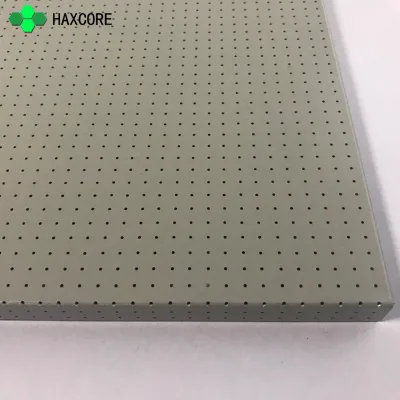
The physical dimensions of these panels are not standardized across the entire market. Observed specifications reveal a wide range of sizes, including "24x24 inches," "600*600mm," "1200X1200mm," and "1200X2400mm." Furthermore, thickness varies considerably, with recorded values ranging from "30 40 50 70mm." This thickness variation directly impacts the acoustic absorption capabilities and the structural rigidity required for different ceiling heights. Buyers must verify that the specific model number, such as "NCC-03" or generic "1200" series, aligns with the intended architectural load and acoustic requirements. The surface treatment is another critical variable, with options including "Patterned," "Textured," "Painting," and "Polyester Powder Coating." The choice between a "Reveal Edge" and a "Square Edge" or "Square" edge detail further influences the visual aesthetic and the installation method required.
Technical Performance and Certification Verification
The technical performance of metal acoustic panels is often defined by their fire resistance and sound absorption coefficients. In the observed data, fire safety is a paramount concern, with multiple entries citing "Class A" fire resistance and "A2" fireproof grades. These classifications indicate a high level of non-combustibility, which is essential for commercial and public buildings. However, buyers must distinguish between "Class A" and "A2" ratings, as they may refer to different testing standards or specific product lines. Additionally, environmental certifications such as "E0" and "EFire Rating:Class A" suggest low emission profiles, which are crucial for indoor air quality compliance.
Sound absorption is another key technical metric. The data indicates a Noise Reduction Coefficient (NRC) of "0.9" for specific wool acoustic panels, which represents excellent sound dampening. However, it is important to note that not all metal panels achieve this level of absorption; perforated metal panels often require a backing material, such as acoustic wool, to reach high NRC values. The "Wool Acoustic Panels" designation suggests a composite structure where the metal serves as a face or frame, while the core material provides the acoustic function. Buyers should verify if the "Sound Absorption" claim applies to the metal panel alone or the complete assembly. Furthermore, functional attributes like "Fireproof, Heat Insulation, Moisture-Proof, Sound-" indicate multi-functional capabilities, but the extent of these properties must be validated against project-specific environmental conditions.
Compliance, Standards, and Origin Considerations
Navigating the compliance landscape requires careful attention to the origin and standardization of the products. The supply chain for these items is concentrated in specific regions of China, with "Dongguan, Guangdong" and "Jiangsu" identified as primary production hubs. While "China" is a general origin listed, the specific province can influence logistics costs and the availability of specialized manufacturing capabilities. For instance, Dongguan is known for its advanced aluminum processing, while Jiangsu may have a stronger focus on steel and composite panel manufacturing.
Certification is a non-negotiable aspect of procurement for B2B projects. The data confirms the presence of "ISO" certification and "Environmental Certification" for various products. However, the specific ISO standard (e.g., ISO 9001 for quality management or ISO 14001 for environmental management) is not explicitly detailed in the general listings. Buyers must request specific certification documents to ensure the supplier meets international quality benchmarks. Similarly, while "Class A" and "A2" fire ratings are mentioned, the specific testing standard (such as ASTM E84, EN 13501, or GB 8624) should be confirmed. Relying solely on the label "Class A" without verifying the testing protocol can lead to compliance gaps in international markets.
| Attribute Category | Observed Variations | Verification Requirement |
|---|---|---|
| Material | Aluminum, Galvanized Steel, Stainless Steel | Confirm alloy grade and coating thickness. |
| Fire Rating | Class A, A2 | Request specific test reports and standard references. |
| Size | 600x600mm, 1200x1200mm, 24x24 inches | Verify tolerance and compatibility with grid systems. |
| Thickness | 30mm, 40mm, 50mm, 70mm | Ensure structural integrity for ceiling height. |
| Origin | Dongguan, Jiangsu, China | Assess logistics lead time and regional expertise. |
Cost Drivers and Procurement Economics
The cost of customized metal acoustic ceiling panels is influenced by several dynamic factors, including material composition, customization levels, and packaging requirements. The observed price range in the market spans from $0.68 to $78 per unit, a disparity that reflects the vast difference between basic perforated sheets and high-end, fully customized acoustic assemblies. The lower end of the spectrum likely corresponds to standard, non-customized metal panels with minimal processing, while the higher end encompasses complex shapes, specialized coatings, and high-performance acoustic cores.
Customization is a primary cost driver. The availability of "Customization" as a standard attribute means that buyers can request specific dimensions, colors (such as "White and Ral"), and surface patterns. However, each customization request adds to the production complexity and cost. The "prod_packing" also varies, with options like "in Carton," "4PCS in Box," or "Wooden Packing." Wooden packing is typically more expensive but offers superior protection for fragile or high-value items during transit. Additionally, the Minimum Order Quantity (MOQ) ranges from 1 to 500 units. For large-scale projects, an MOQ of 500 might be standard, whereas smaller renovation projects may benefit from suppliers offering lower MOQs, albeit at a higher unit cost. Buyers should calculate the total landed cost, including shipping and packaging, rather than focusing solely on the unit price.
Application Scenarios and Installation Methods
The versatility of metal acoustic panels allows them to be deployed in a wide array of environments. The data highlights usage in "External Wall, Curtain Wall, Interio" settings, indicating that these products are suitable for both interior and exterior applications. Specific applications include "Road/Highway & Cooling Tower Noise Reduction," suggesting that the panels are robust enough for industrial or outdoor noise control scenarios. In interior settings, the "Decoration Aluminium Profile" and "Acoustic Clound&Shape" suggest use in aesthetic-focused areas like lobbies, auditoriums, and open-plan offices.
Installation methods are equally diverse and must match the architectural design. Options include "Direct Mount," "Track System," and "Hanging Kits." The choice of installation method depends on the ceiling type and the weight of the panel. For instance, "Hanging Kits" are likely required for suspended ceiling systems, while "Direct Mount" may be suitable for flat, solid substrates. The "Frame Curtain Wall Kind" being "Exposed Frame" indicates a specific aesthetic for curtain wall applications. Buyers must ensure that the selected installation hardware is compatible with the panel's edge detail, whether "Reveal Edge," "Square Edge," or "Square." Mismatched installation systems can lead to structural failures or aesthetic inconsistencies.
Supplier Evaluation and Quality Assurance
Evaluating suppliers for metal acoustic ceiling panels requires a rigorous approach to quality assurance. Given the variability in materials and finishes, buyers should prioritize suppliers who demonstrate transparency in their manufacturing processes. The presence of "Surface Treatment" options like "Polyester Powder Coating" and "Painting" suggests that the supplier has the capability for high-quality finishing, but the durability of these coatings must be verified. Buyers should request samples to test for adhesion, color consistency, and resistance to environmental factors.
Quality control should extend beyond the final product to the supply chain itself. The "prod_standard" and "prod_model" fields indicate that suppliers have established product lines, but buyers must ensure that the specific batch ordered matches the agreed-upon specifications. The "Eco-Friendly" attribute, marked as "E0," is a significant selling point for green building projects, but it requires third-party verification. Suppliers should be able to provide documentation proving that their materials meet the stated environmental standards. Additionally, the "Function" attributes like "Moisture-Proof" and "Heat Insulation" should be validated through independent testing, especially for projects in humid or extreme temperature climates.
Long-Term Procurement and Maintenance Considerations
For long-term procurement success, buyers must consider the lifecycle of the metal acoustic panels. The "Galvanized Steel, Aluminum, Stainless Steel" materials offer varying degrees of longevity. Aluminum and stainless steel generally provide superior corrosion resistance compared to galvanized steel, making them more suitable for exterior or high-humidity environments. The "Polyester Powder Coating" is known for its durability, but the thickness and application method affect its lifespan. Buyers should inquire about the warranty period and the supplier's track record for after-sales support.
Maintenance is another critical factor. The "Textured" and "Patterned" surfaces may require different cleaning protocols compared to smooth, painted surfaces. Dust accumulation in textured areas can affect acoustic performance over time, so buyers should ensure that the design allows for easy cleaning without damaging the finish. Furthermore, the "Customization" aspect means that replacement parts may not be readily available off-the-shelf. Buyers should negotiate a long-term supply agreement or secure a buffer stock of custom panels to ensure continuity in case of damage or future expansion. By focusing on these long-term considerations, buyers can secure a sustainable solution that meets both immediate acoustic needs and future maintenance requirements.
FAQs
What fire resistance class do these panels have?
The panels achieve Class A fire resistance and A2 fireproof grades. This high level of non-combustibility ensures compliance for commercial and public building projects requiring strict safety standards.
Which installation methods are available for these panels?
Available methods include Direct Mount, Track System, and Hanging Kits. The specific choice depends on the ceiling type and panel weight, ensuring structural integrity for various architectural designs.
Can I customize the size and thickness of the panels?
Yes, customization is available for sizes like 600x600mm and 1200x1200mm with thicknesses ranging from 30 to 70mm. Buyers can request specific dimensions to match their architectural load requirements.
What materials are used to manufacture these acoustic panels?
Materials include Aluminum, Galvanized Steel, and Stainless Steel. The selection impacts corrosion resistance and acoustic performance, with aluminum often preferred for exterior applications.
How is the sound absorption performance measured?
Sound absorption is measured by the Noise Reduction Coefficient, with some wool acoustic panels reaching an NRC of 0.9. This indicates excellent dampening capabilities when combined with appropriate backing materials.
What certifications do the products hold?
Products hold ISO certification and Environmental Certification with E0 ratings. These confirm adherence to international quality benchmarks and low emission profiles suitable for green building projects.
Where are these panels manufactured?
Manufacturing originates from Dongguan, Guangdong, and Jiangsu in China. These regions offer specialized capabilities, with Dongguan known for aluminum processing and Jiangsu for steel and composite manufacturing.