Source Customized Art Paper Playing Cards for Home, Promotion, and Entertainment
Compare 30 listings for Customized Art Paper Playing Cards with options for poker and bridge sizes. Buyers can evaluate paper weights, coating finishes, and packaging types to find suitable sets for home use, promotional events, and entertainment venues; compare the available evidence and request quotations based on your requirements.
Key considerations
Products List


Paper Playing Cards Poker Wholesale Printing Customized Playing Cards with Logo
$0.50 - $1.50
MOQ: 500 Pieces


Wholesale Custom Playing Card Advertising Cards Game Playing Card for Fun
$0.40 - $1.00
MOQ: 1000 Sets


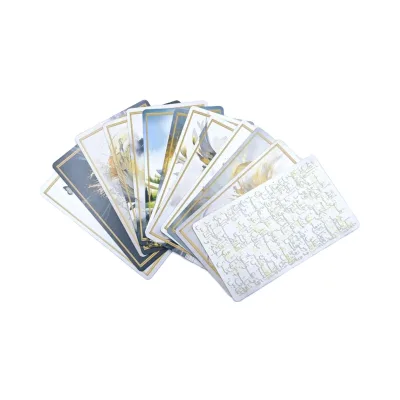

Wholesale Customized Printing Design Services Game Poker Paper Playing Cards
$0.42 - $0.65
MOQ: 200 Pieces

Factory Direct Personalized Gift Custom Printing Paper Game Playing Cards
$0.42 - $0.65
MOQ: 200 Pieces


Customized Own Logo Best Quality Card Game Playing Paper Cards Board Game
$0.15 - $0.75
MOQ: 1000 Pieces

Poker Card Printing Customized Playing Card Printing Paper Printing Services
$0.01 - $0.05
MOQ: 1000 Pieces

Comprehensive Sourcing Guide
Customized Art Paper Playing Cards Sourcing Guide
Sourcing Customized Art Paper Playing Cards requires a strategic approach that balances aesthetic precision with functional durability. Buyers must recognize that "art paper" in this context often refers to the visual finish and substrate quality rather than a single standardized material class. The primary decision involves selecting between standard poker sizes, bridge sizes, or mini formats, each serving distinct user preferences and packaging constraints. Understanding these dimensional variations is critical before engaging with suppliers, as it directly impacts printing costs, material waste, and final product feel.
The customization landscape for playing cards is extensive, ranging from simple logo placement to full artistic deck designs. Suppliers typically offer options for glossy or matte finishes, plastic coatings for water resistance, and various box types including tuck boxes, gift boxes, and tin containers. Buyers should evaluate how these customization elements interact with their brand identity and target audience. For instance, promotional decks may prioritize cost-effective paper boxes, while premium entertainment decks might require rigid gift boxes with custom printing to justify a higher price point.
Product Scope and Observed Listing Signals
Market listings for customized playing cards reveal a wide spectrum of product attributes that buyers must navigate carefully. Observed data indicates a price range from $0.01 to $2.04 per unit, reflecting significant variation in quality, quantity, and customization depth. Minimum order quantities (MOQs) typically span from 200 to 20,000 sets, allowing flexibility for both small promotional batches and large retail orders. These signals suggest that buyers can find suitable suppliers for diverse budget levels, provided they align their order volume with supplier capabilities.
Product specifications frequently cite paper weights between 280gsm and 410gms, with blue or black core paper providing opacity and stiffness. Standard sizes include 6388mm for poker and 5787mm for bridge, alongside mini sizes measuring 3.8*5.7cm. Some listings also mention specific models like WM-335 or cards-130, which may indicate proprietary designs or manufacturing lines. Buyers should verify these specifications against their actual needs, as generic listings may not reflect the exact material composition or finish quality required for high-end applications.
Technical Specifications to Verify
Verifying technical specifications is essential to ensure the playing cards meet functional and aesthetic expectations. Buyers should confirm the exact paper weight and core color, as these factors influence card stiffness and opacity during shuffling and dealing. The surface treatment, whether glossy or matte, affects both the visual appeal and the tactile experience. Additionally, the presence of a plastic coating is crucial for durability and water resistance, particularly for cards intended for frequent use or outdoor environments.
Dimensional accuracy is another critical verification point. Standard poker and bridge sizes must be strictly adhered to for compatibility with existing card games and shuffling machines. Buyers should also inquire about the thickness of the cards, with 0.35mm being a common specification, to ensure a consistent feel across the deck. Custom printing requirements, such as corner indices and back designs, must be clearly defined to avoid misprints or alignment issues. Clear communication of these technical details with the supplier prevents costly errors and ensures product consistency.
Compliance and Safety Documentation
Compliance and safety documentation are vital for playing cards, especially those marketed towards children or intended for international markets. Buyers should request evidence of relevant certifications, such as FSC for sustainable paper sourcing, to ensure environmental responsibility. While ISO 9001 is mentioned in some contexts, it is a quality management standard rather than a product safety certification, so buyers must distinguish between process certifications and product-specific safety approvals.
Safety standards for toys and games often require testing for harmful substances, such as heavy metals in inks and phthalates in coatings. Buyers should verify that the supplier conducts these tests and provides valid reports from accredited laboratories. For products aimed at children, age grading and choking hazard warnings must be accurately applied. Ensuring that all inks and materials are non-toxic and compliant with regional regulations, such as CPSIA in the US or EN71 in Europe, is essential to avoid legal liabilities and protect brand reputation.
Cost Drivers and Commercial Terms
Understanding the cost drivers for customized playing cards helps buyers negotiate better terms and forecast budgets accurately. Key factors include paper weight, surface finish, customization complexity, and order volume. Higher paper weights and special finishes like plastic coating increase material costs, while intricate custom designs may require additional setup fees. MOQs also play a significant role, with larger orders typically benefiting from economies of scale, reducing the per-unit cost.
Commercial terms such as payment methods and shipping options further influence the total cost of ownership. Suppliers often require 100% payment in advance for custom orders, which carries financial risk for buyers. Shipping costs vary significantly based on the chosen method, whether by air, sea, or express couriers like UPS, TNT, or FedEx. Buyers should evaluate the total landed cost, including duties and taxes, rather than focusing solely on the unit price. Clear communication of these terms upfront prevents unexpected expenses and ensures a smooth procurement process.
Supplier Qualification and Quality Control
Supplier qualification is a critical step in mitigating risks associated with customized playing card procurement. Buyers should assess the supplier’s manufacturing capabilities, including their printing technology and quality control processes. Experience in producing playing cards for reputable brands or in specific markets is a strong indicator of reliability. Requesting samples before placing a large order allows buyers to evaluate the physical quality, print accuracy, and durability of the cards.
Quality control measures should be clearly defined and agreed upon with the supplier. This includes specifications for acceptable defect rates, color consistency, and packaging integrity. Buyers may consider implementing third-party inspections during production or before shipment to ensure compliance with agreed standards. Establishing a clear communication channel for addressing quality issues and defining remedies for non-conforming products is essential. A robust quality control framework protects the buyer’s investment and ensures customer satisfaction.
Long-Term Procurement Checks
Long-term procurement checks involve establishing ongoing relationships and performance metrics with suppliers. Regular audits of supplier quality, delivery times, and responsiveness help maintain high standards and identify areas for improvement. Buyers should track key performance indicators such as defect rates, on-time delivery percentages, and customer feedback to assess supplier reliability over time. Continuous monitoring ensures that the supplier remains aligned with the buyer’s evolving needs and market demands.
Flexibility and scalability are also important considerations for long-term partnerships. Buyers should evaluate the supplier’s ability to handle volume fluctuations, introduce new designs, or adapt to changing market trends. Open communication and collaborative planning can foster a stronger partnership, leading to better pricing, priority production, and innovative solutions. By maintaining a proactive approach to supplier management, buyers can secure a stable supply chain and sustain competitive advantage in the customized playing card market.
FAQs
What paper weights are available for Customized Art Paper Playing Cards?
Customized Art Paper Playing Cards are commonly produced in 280, 290, 300, 310, 330, and 410gsm blue core or black core paper. Heavier weights give a firmer snap and longer play life, while lighter weights feel softer and cost less. Choose the gram weight based on expected usage frequency, shuffle style, and whether the deck is intended for home play, card rooms, or promotional giveaways.
What sizes can Customized Art Paper Playing Cards be made in?
The standard options are poker size at 63 by 88mm and bridge size at 57 by 87mm, with fully customized dimensions also available. Some compact decks come in mini sizes such as 3.8 by 5.7cm for child-oriented or travel products. Larger promotional formats exist too, so confirm the exact card size and corner radius with the factory before approving artwork.
Can Customized Art Paper Playing Cards be finished with plastic coating?
Yes, plastic coating is a standard treatment for art paper playing cards, usually combined with either a glossy or matte surface. Plastic coating improves water resistance, durability, and shuffle smoothness compared with uncoated paper. Glossy finishes make colors look brighter and wipe clean easily, while matte finishes reduce glare under card-room lighting. Request samples in both finishes to compare feel before placing a production order.
What packing options are offered for Customized Art Paper Playing Cards?
Decks can be packed in paper tuck boxes, boxes with lid and bottom, plastic cases, tin boxes, or gift boxes. Paper tuck boxes are the most economical for bulk promotion, while tin or gift boxes suit retail and gifting lines. Custom printing is available on the box, so you can match packaging artwork to the card design and brand before shipment.
How many decks is the minimum order for Customized Art Paper Playing Cards?
A common minimum order quantity is 500 sets, though listed offers range from 200 to 20,000 units depending on the product. Lower MOQs usually carry a higher unit price because setup costs are spread over fewer decks. If you need a small trial run, ask which models accept 200 to 500 sets, then scale up after checking print quality and packaging.
How are Customized Art Paper Playing Cards shipped internationally?
Shipping is typically arranged by courier services such as UPS, TNT, or FedEx, or by air or sea freight. Courier and air options are fastest for samples and small orders, while sea freight offers the lowest cost for large bulk quantities. Confirm whether freight charges are included in the quoted price and factor customs clearance time into your delivery schedule.
What customization details should I confirm before ordering art paper playing cards?
Confirm card size, paper gram weight and core color, surface finish, number of cards per deck, packaging type, and printed artwork files. Customization is available across these attributes, so provide print-ready artwork with bleed and specify any special features such as waterproof coating. Approving a physical pre-production sample is the safest way to verify colors, sizing, and finishing before mass production begins.
Which card size suits home play versus promotional giveaways?
Poker size at 63 by 88mm suits home games and card rooms because the larger face is easy to read during long sessions. Bridge size at 57 by 87mm works well for players with smaller hands or games requiring tight shuffles. Mini sizes around 3.8 by 5.7cm suit children's products, and larger custom formats stand out in promotional campaigns.