Source Ghost Bowling Game Machines for Arcades, Malls, and Events
Find 30 Ghost Bowling Game options for amusement centers, arcade malls, and private events. Compare models like YW-BOL004 and GS-98, noting features such as 1-player capacity, wood and metal materials, and various certifications including ISO and CE for reliable sourcing.
Key considerations
Products List
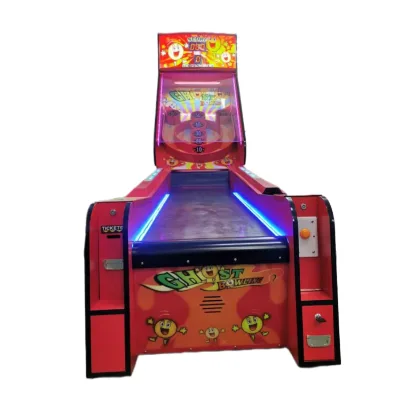


Arcade Game Electronic Game Amusement Park Equipment Amusement Machine
$1300.00 - $1400.00
MOQ: 1 Pieces


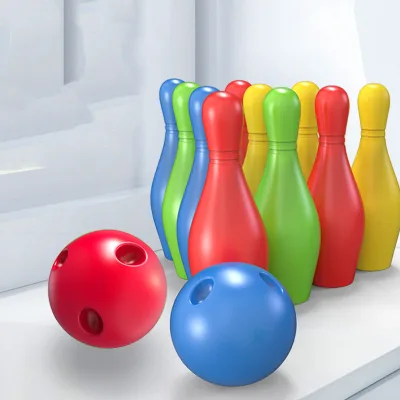


Adventure Bowling Redemption Arcade Game Machine+Arcade Game Tiger Bowling
$1200.00 - $1600.00
MOQ: 1 Pieces


Indoor Game New Mini Bowling Ball Entertainment Equipment Professional
$10800.00 - $12800.00
MOQ: 2 Sets


Comprehensive Sourcing Guide
Ghost Bowling Game Sourcing Guide
Sourcing a Ghost Bowling Game for an arcade or amusement venue requires separating themed bowling machines from generic bowling equipment and from unrelated redemption products that share keywords. Listings observed under this category include items named Ghost Bowling and Bowling shooting game machine, positioned for amusement game centers and arcade game malls, alongside bowling ball drilling machines and other bowling-adjacent hardware. Because the category spans coin-operated sport machines and accessory equipment, buyers should anchor each inquiry to the specific product name and model number rather than the keyword alone.
This guide walks through the full procurement cycle for a Ghost Bowling Game: defining product scope, verifying technical specifications, reviewing compliance documentation, understanding cost drivers, qualifying suppliers, and planning long-term checks. It draws only on signals visible in supplied listing data—such as model numbers YW-BOL004, GS-98, CP-R099, CP-G003, and CP-G001—and flags where buyers must request verification before committing to an order.
Product Scope and Observed Listing Signals
The supplied listings cluster around coin-operated bowling-style machines marketed for amusement game centers, arcade game malls, and general game usage. Observed product names include Ghost Bowling (model YW-BOL004) and GS-98 Bowling Machine, with type labels spanning Coin Pusher and Sport Machine. Player configurations vary noticeably: one listing states 1 Player, another 2, and another 1–50, which suggests the keyword covers single-cabinet shooting games as well as lane-style installations serving groups. Condition also differs—one machine is listed as Used while others are New—so buyers must confirm condition in writing before comparing quotations.
Model CP-R099 carries a stated standard of 181.06M, implying a long lane footprint, while CP-G003 is specified at 15095*150cm, a compact cabinet scale. This dimensional spread means "ghost bowling" can describe anything from a child-oriented cabinet to a multi-meter sport lane. Buyers should request dimensioned drawings early, since the intended placement area dictates which product family is actually viable.
| Model | Stated Standard | Player | Condition | Type |
|---|---|---|---|---|
| YW-BOL004 | Not stated | 1 | Not stated | Coin Pusher |
| GS-98 | Not stated | 1–50 | Used | Sport Machine |
| CP-R099 | 18*1.06M | Not stated | Not stated | Not stated |
| CP-G003 | 15095150cm | 2 | New | Not stated |
Technical Specifications to Verify
Dimensional fit is the first technical gate. An 181.06M lane standard occupies roughly nineteen meters of floor length, whereas a 15095*150cm cabinet fits into standard arcade rows. Buyers should confirm whether the quoted model's stated standard includes ball return tracks, overhead scoring housings, and rear clearance for maintenance access. Also verify material composition against the listed options: Wood+acrylic+plastic for themed cabinets versus Metal for structural sport machines, since durability expectations and refurbishment costs differ sharply between these constructions.
Electrical and operational parameters need equal scrutiny. One listing specifies US Plug type, so buyers outside North America must confirm plug and voltage adaptation before shipment. Coin capacity is described as "several thousand coins" on one machine, with currency detection supporting multiple currencies—critical for export markets using tokens or mixed coinage. Ask for clarified figures where listings show placeholders, such as single volume of 0 cm³ or single gross weight of 0.0 kg, which indicate incomplete packing data that affects freight quotations and container planning.
Compliance and Safety Documentation
Certification claims in the supplied data include ISO, CE, and CCC, but certification status is a listing attribute, not a guarantee for every product in the category. Buyers should request actual certificate copies matched to the exact model number being ordered, confirm the certificate holder's name matches the manufacturing entity, and check the certificate's validity period and scope. A CE mark on an arcade machine should be supported by a declaration of conformity and applicable test reports, not merely a logo in product imagery.
Age guidance also carries safety weight. Observed age attributes range from ">3 Years, >6 Years, >8 Years" on themed units to "15-50 Years Old" and "All Age" on other machines, indicating different intended user groups and potentially different safety designs. For machines serving younger children, verify guarding around moving parts, ball-launch mechanisms, and entrapment points. Request documentation showing which age rating applies to the purchased configuration, especially when customization changes cabinet geometry or play mechanics from the certified base model.
Cost Drivers and Commercial Terms
Observed listing prices span from 2.89 to 14,000 USD across the category, which reflects the enormous spread between accessory components and full-size lane installations. A ghost bowling cabinet's price will be driven chiefly by footprint, materials (metal versus wood/acrylic/plastic), player capacity, and degree of customization. Because one listing is explicitly marked Customized and another states Customization Available, buyers should expect quotations to vary with themed artwork, lighting, and scoring options, and should ask suppliers to itemize these elements separately.
Commercial terms beyond unit price deserve equal attention. MOQ observations range from 1 to 18, with at least one product stating MOQ of 1pcs and selling units of single item—favorable for trial orders—while bulk configurations may carry higher minimums. Confirm whether quoted prices are ex-works or include inland freight, since bowling lanes require significant packing materials; one listing details packing as Bubble Pack+Well Paper+Stretch Films+Wood, and wooden crating adds both cost and shipping weight. Clarify warranty duration as well: listings show both 12 Months and 15 Months, so lock the applicable period into the contract.
Supplier Qualification and Quality Control
Origin data in the supplied listings consistently points to Guangdong, China, with one listing specifying Guangzhou—a recognized manufacturing hub for amusement equipment. Buyers should treat origin as a starting point for due diligence, not a qualification in itself. Request business license information, factory photos or video audits, and evidence that the manufacturer actually produces bowling machines rather than trading them. For customized orders, confirm in-house tooling and design capability, since outsourced customization often causes delays and quality inconsistency on themed cabinets.
Quality control should be contractual, not assumed. Before production, approve a detailed specification sheet covering materials, dimensions per the stated standard, plug type, currency handling, and scoring behavior. Stage inspections at pre-production, mid-production, and pre-shipment, with the final inspection using AQL sampling agreed in writing. For a Used-condition listing such as the GS-98, demand a functional test report covering ball propulsion, sensor accuracy, and coin mechanism cycles, plus photographs of wear points. Record all accepted deviations in writing to prevent disputes at delivery.
Long-Term Procurement Checks
After commissioning, plan for the machine's service life rather than treating delivery as the endpoint. The stated warranties of 12 and 15 months establish a baseline, but buyers should negotiate a spare-parts package—sensors, coin mechanisms, launch components, and themed acrylic panels—at time of order, because customized cabinet parts may not be reproducible later. Confirm response-time commitments for technical support across time zones, and request English-version manuals and wiring diagrams; one listing notes Version: English, which suggests language of documentation is a variable worth confirming explicitly.
Longer-term operational value comes from data and serviceability. Track coin capacity utilization and currency-detection performance in the venue, since machines supporting multiple currencies adapt better to changing token policies. For multi-unit or lane installations such as the CP-R099 configuration, schedule periodic inspection of lane surfaces, ball returns, and structural fasteners, which bear heavy usage from players spanning 1–50 participants. Maintain a procurement file containing certificates, inspection records, and warranty terms so that repeat orders, expansion purchases, or resale can be executed without renegotiating from scratch.
FAQs
What is a Ghost Bowling Game machine and how does it work?
A Ghost Bowling Game machine is a coin-operated arcade attraction where players roll a ball at themed ghost pins and score based on how many they knock down. It is designed as a one-player unit for amusement game centers, combining bowling physics with spooky visual effects to attract repeat play from younger visitors.
How many players can use the machine at one time?
Listings for ghost bowling machines describe single-player operation, though related bowling models support two players or larger groups of one to fifty. Before ordering, confirm the player configuration of the exact model, since capacity affects floor space requirements, coin revenue potential, and how visitors queue around the machine in your arcade.
What materials are used to build these bowling machines?
Cabinets are commonly built from wood combined with acrylic and plastic panels, while some bowling equipment models use metal construction. Material choice influences durability in high-traffic amusement centers and shipping weight. Ask suppliers to specify the cabinet material for the exact model number you intend to purchase before confirming your order.
Can the machine be customized for my arcade or venue?
Yes, customization is available on listed Ghost Bowling Game machines. Suppliers indicate the product can be customized, so you can request branding, colors, or gameplay adjustments. Discuss customization scope, additional cost, and lead time directly with the supplier, and confirm details in writing before placing your purchase order.
Which certifications should I check before importing?
Listed bowling game machines reference ISO, CE, and CCC certification. As a buyer, request valid certificate copies for the specific unit rather than relying on the listing alone. Certification requirements vary by destination market, so verify which approvals your customs authority expects before shipment to avoid clearance delays or rework.
What is the minimum order quantity and warranty?
The listed ghost bowling machine has a minimum order quantity of one piece, which suits arcades testing demand before scaling up. Warranty terms shown range from twelve to fifteen months depending on the model. Confirm the warranty duration, coverage scope, and whether spare parts are included before finalizing your order with the supplier.
How are the machines packed for shipping?
Typical packing uses bubble pack, well paper, stretch films, and a wooden crate, which protects cabinets during long-distance transport. Selling units are single items, so freight cost depends on cabinet dimensions and weight. Ask the supplier for the packed volume and gross weight of your chosen model to obtain accurate shipping quotes.
Which age groups is the game suitable for?
Listed suitability spans children over three, six, or eight years old, and some bowling models target players aged fifteen to fifty. Suitability depends on the specific model's gameplay and physical design. Confirm the recommended age range with the supplier so the machine matches your venue's visitor profile and local safety expectations.