Source Customized Business Notebook and Pen Set for gifts, promotions, and schools
Find 30 options for a Customized Business Notebook and Pen Set suitable for gifts, promotions, and school use. Buyers can compare features like cover material, binding type, and page count across various models.
Key considerations
Products List

Practical and Creative A5 Notebook with Pen Customized Logo Business Gift Set
$5.55 - $6.99
MOQ: 100 pieces


Customized for Business Gift Box Pen Notebook Gift Set for Companies Staffs
$4.35 - $5.12
MOQ: 100 pieces


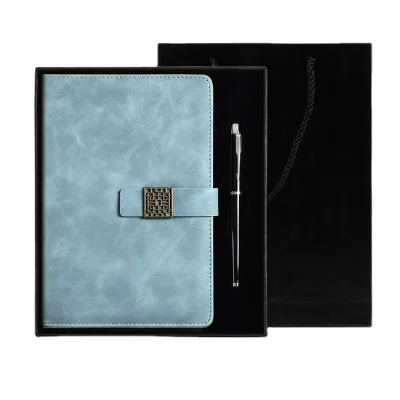


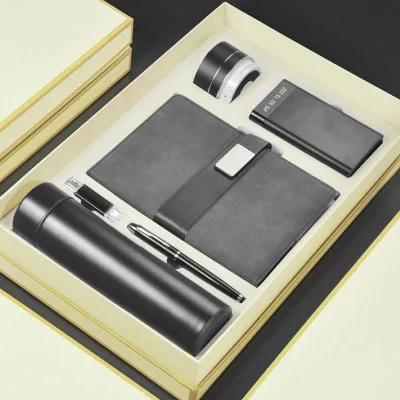
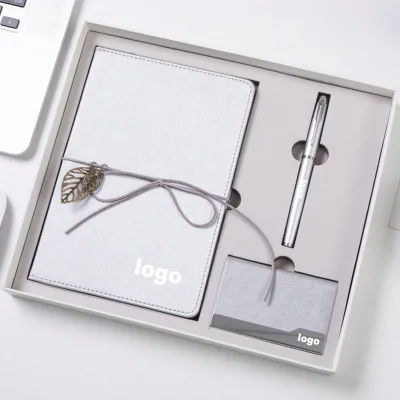
Teacher Gifts With Customized, Promotion Logo Pen and Notebook Gift Set/
$2.91 - $8.17
MOQ: 10 Minimum


Comprehensive Sourcing Guide
Strategic Sourcing Guide for Customized Business Notebook and Pen Sets
Navigating the global market for customized business notebook and pen sets requires a disciplined approach to specification, compliance, and supplier verification. For procurement professionals, the distinction between a generic stationery item and a branded corporate asset lies in the precision of the customization and the reliability of the supply chain. The following guide outlines the critical factors buyers must evaluate when sourcing these items, drawing strictly from observed market data and established procurement principles.
Technical Specifications and Material Composition
The foundation of a successful procurement order begins with a granular understanding of technical specifications. In the current market, the "notebook" category is not monolithic; it encompasses various sub-types including hardcover diaries, spiral-bound notepads, and leather-bound journals. Buyers must first define the intended format, as this dictates the binding method and paper quality.
Observed market data indicates a diverse range of binding options. Some products utilize a "Sewing Thread" binding, which offers superior durability and the ability to lay flat when open, a critical feature for business professionals. Others may employ "Spiral" binding for cost efficiency or "Glue Bound" construction for a sleeker, more traditional aesthetic. The choice of binding directly impacts the longevity of the product and the user experience.
Material selection is equally critical. The cover material often serves as the primary vehicle for branding. Common observations include "PU" (Polyurethane) leather, which provides a leather-like texture at a lower cost point, and genuine "Leather" options for premium tiers. For specialized applications, "Metal" covers are also available, offering a distinct industrial or high-tech aesthetic. The interior paper specifications vary significantly; standard offerings range from 80 to 120 sheets, with paper weights typically between 100 and 160 GSM. Buyers must verify if the inside pages are printed with "Horizontal Line" formats or left "Blank," as this affects the suitability for different business contexts.
Furthermore, the physical dimensions must align with the intended usage. While some products adhere to standard sizes like 23cm x 23cm x 23cm, others may be designed as pocket-sized items or specific models like the CYGFT1058 or CY1. The packaging standard is also a technical consideration; most units are shipped in "Carton Box" configurations, though some variations exist using paper bags or boxes.
Customization Capabilities and Branding Integration
The core value proposition of a "Customized Business Notebook and Pen Set" is the ability to imprint corporate identity. The market supports a wide array of customization techniques, each with distinct visual and tactile outcomes. Suppliers commonly offer "Screen Printing," "Laser" engraving, "Embossing," and "Hollow" cutouts. For textile-based covers or specific materials, "Embroider" services may be available.
When evaluating customization, buyers must consider the compatibility of the logo with the chosen material. For instance, laser engraving on metal or leather yields a permanent, high-contrast finish, whereas screen printing on PU leather may offer vibrant color options but requires specific ink formulations. The "Customized" attribute is prevalent, suggesting that dimensions, page counts, and cover styles can often be tailored to specific order requirements. However, the feasibility of these customizations depends on the supplier's equipment and the minimum order quantities (MOQ) they enforce.
It is essential to note that while "Customization" is listed as available, the specific implementation details—such as the maximum logo size or the number of colors allowed—must be confirmed during the negotiation phase. The "Logo" attribute often lists multiple methods, but a single product may not support all listed techniques simultaneously. Buyers should request samples to verify the quality of the branding before committing to a large volume order.
Cost Drivers and Pricing Structures
Understanding the cost structure of customized stationery sets is vital for budget management. The observed price range in the market spans from $0.60 to $23.25 USD, a variance that reflects differences in material quality, customization complexity, and order volume. Several key factors drive these costs:
- Material Quality: The transition from standard paper and basic PU covers to genuine leather, metal components, or high-GSM paper significantly increases the unit cost.
- Customization Complexity: Simple screen printing is generally less expensive than multi-step processes involving embossing, laser engraving, or complex die-cutting.
- Order Volume: The Minimum Order Quantity (MOQ) acts as a primary cost lever. Observed MOQs range from 10 units to 500 units. Lower MOQs, such as 20 or 300 pieces, often command a higher per-unit price due to the setup costs associated with smaller production runs.
- Packaging and Logistics: The choice between standard "Carton" packaging and custom-branded boxes adds to the overall cost. Additionally, the origin of the product, primarily "China" or specific regions like "Quanzhou City of Fujian Province," influences shipping costs and lead times.
Buyers should avoid assuming that a lower price point equates to a lower quality product, but they must also be wary of prices that seem abnormally low, as they may indicate compromised materials or hidden costs in customization.
Compliance, Certification, and Supplier Verification
In the B2B sector, compliance and supplier reliability are non-negotiable. While the provided data does not explicitly confirm specific certification statuses for every listed product, buyers must proactively verify these aspects. Common standards in the stationery industry include ISO9001 for quality management and ISO14001 for environmental management. Although these are mentioned in background contexts, they should not be assumed as guaranteed attributes of every supplier without direct confirmation.
When evaluating suppliers, buyers should request evidence of their production capabilities and quality control processes. Key verification steps include:
- Origin Verification: Confirming the production location, such as "Quanzhou City of Fujian Province," to assess logistics and potential trade barriers.
- Lead Time Confirmation: The observed lead time of "10-15 Days" is contingent on order quantity. Buyers must clarify if this timeline includes the customization setup or if it varies based on the complexity of the branding.
- Sample Validation: Before placing a bulk order, obtaining a physical sample is the most effective way to verify the "Inside Pages Printed" format, the "Binding" integrity, and the "Cover Material" quality.
Suppliers should also be evaluated on their ability to handle "Customized" orders reliably. This includes their capacity to manage variations in "prod_model" numbers and their responsiveness to changes in specifications.
Typical Applications and Usage Scenarios
The versatility of customized notebook and pen sets makes them suitable for a broad spectrum of applications. The observed "Usage" attributes highlight several primary use cases:
- Corporate Gifting: The "Gift" and "Promotion" tags indicate these items are frequently used as corporate gifts for clients, partners, or employees. The "Business" style aligns with professional environments.
- Educational and Institutional Use: The "School" usage tag suggests suitability for educational institutions, where durable, branded notebooks are required for students or staff.
- Event and Conference Swag: The "Pocket" size and "Fashionable" features make these items ideal for trade shows, conferences, and marketing events where portability and style are paramount.
- Personal and Professional Organization: The "Diary" and "Notepad" types cater to individuals seeking organized tools for daily planning and note-taking.
Buyers should match the product specifications to the specific event or audience. For example, a "Hardcover" notebook with "Sewing Thread" binding is more appropriate for a high-end executive gift, whereas a "Spiral" bound "Notepad" might be better suited for a large-scale conference giveaway.
Quality Control and Long-Term Procurement Considerations
Ensuring consistent quality across a large order requires a robust quality control (QC) strategy. Given the variability in "Inner Pages" (ranging from 70 to 120 sheets) and "Inside Pages Printed" formats, buyers must establish clear acceptance criteria. A comprehensive QC plan should include:
- Pre-Production Samples: Verifying the "Logo" application method and color accuracy.
- In-Process Inspection: Checking the "Binding" strength and "Cover Material" consistency during production.
- Final Inspection: Ensuring the "prod_packing" meets the agreed-upon standards and that the final product matches the "prod_standard" dimensions.
Long-term procurement considerations involve building a relationship with a supplier who can scale with your needs. The "Customized" nature of the product means that as your branding evolves, your supplier must be able to adapt quickly. Buyers should also consider the "Leadtime" of 10-15 days in the context of their inventory management. If the order quantity is large, the lead time may extend, requiring earlier planning.
Comparison of Notebook Specifications
To assist in decision-making, the following table summarizes the key technical variations observed in the market for customized business notebooks:
| Feature | Option A (Premium) | Option B (Standard) | Option C (Budget) |
|---|---|---|---|
| Binding | Sewing Thread | Glue Bound | Spiral |
| Cover Material | Leather / Metal | PU | Paper / Basic PU |
| Page Count | 100-120 Sheets | 80-100 Sheets | 70-80 Sheets |
| Paper Weight | 120-160 GSM | 100-120 GSM | 80-100 GSM |
| Page Layout | Horizontal Line / Blank | Horizontal Line | Blank |
| Customization | Laser, Emboss, Hollow | Screen Printing | Screen Printing |
| MOQ Range | 300+ Units | 100-300 Units | 10-50 Units |
| Typical Usage | Executive Gift | Corporate Promotion | Event Giveaway |
This comparison highlights the trade-offs between durability, aesthetics, and cost. Buyers should select the option that best aligns with their specific budget and the perceived value of the gift or tool for the end user.
Conclusion
Sourcing customized business notebook and pen sets is a multifaceted process that demands attention to detail in specifications, materials, and supplier capabilities. By rigorously evaluating the technical attributes such as binding types, cover materials, and paper quality, and by verifying compliance and customization options, buyers can secure high-quality products that meet their corporate needs. The observed market data provides a clear framework for understanding the range of options available, from pocket-sized promotional items to premium leather-bound diaries. Ultimately, success in this procurement category relies on clear communication of requirements, thorough sample validation, and a strategic approach to managing costs and lead times.
FAQs
What customization methods are available for the logo?
Suppliers offer screen printing, laser engraving, embossing, hollow cutouts, and embroidery. These methods apply to PU, leather, or metal covers depending on the specific product model selected.
Which binding types are commonly used for these notebooks?
Common binding options include sewing thread for durability, spiral binding for cost efficiency, and glue bound construction for a traditional look. The choice depends on the specific notebook style required.
Can the inner page count be customized to specific needs?
Yes, inner pages can be customized with options ranging from 70 to 120 sheets. Paper weights typically vary between 100 and 160 GSM to suit different printing or writing requirements.
What is the typical lead time for customized orders?
The standard lead time is 10 to 15 days, though this varies according to the order quantity. Larger orders may require additional time for production and quality checks.
How does the minimum order quantity affect pricing?
MOQs range from 10 to 500 units, with lower quantities often commanding higher per-unit prices. Prices observed in the market span from 0.60 to 23.25 USD based on material and volume.
Where are these products typically manufactured?
Most products originate from China, with specific manufacturing hubs like Quanzhou City in Fujian Province. This location influences shipping logistics and potential trade considerations for buyers.
What materials are used for the notebook covers?
Cover materials include PU leather, genuine leather, and metal options. These materials provide different aesthetic and durability profiles suitable for business gifts or promotional events.