Source Customized Bun Dough Rolling Machine for Bread, Pizza
Find and compare 30 Customized Bun Dough Rolling Machine options for bread, pizza, and dough processing. These automatic units feature 304 stainless steel construction, varying capacities up to 8000 pcs/h, and CE certification for efficient production; compare the available evidence and request quotations based on your requirements.
Key considerations
Products List

Automatic Baking Bread Dough Rolling Machine (dough conical rounder)
$6000.00 - $12000.00
MOQ: 1 Pieces


Dough Roller Machine Bread Dough Rolling Machine for Bakery Pie Dough Roller Machine
$600.00 - $750.00
MOQ: 1 Pieces


Hot Sale Dough Divider Rounder Machine/Dough Buns Making Machine in Bakery
$29115.20 - $87345.60
MOQ: 1 Pieces


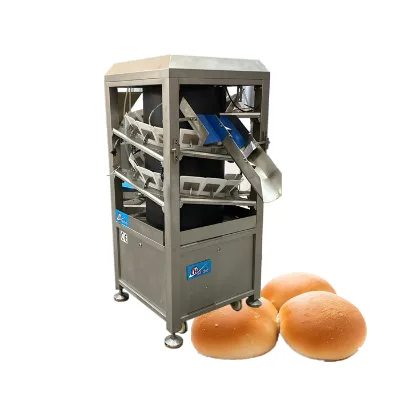


China Dough Rolling Machine /Dough Roll Machine/ Pita Dough Roller Machine with CE
$1045.00 - $1589.00
MOQ: 1 Pieces


Bakery Equipment Conical Dough Rounder Machine Bun Dough Ball Rounding Machine
$4242.42 - $6060.62
MOQ: 5 Pieces

Bakery Equipment Bun Dough Ball Rounding Machines Bread Conical Dough Rounder Machine
$4477.62 - $5970.15
MOQ: 1 Pieces


High Quality Dough Sheeter Automatic Commercial Dough Sheeter Rolling Machine
$1000.00 - $2000.00
MOQ: 1 Sets


Top-Rated Automatic Bread Pastry Dough Rolling Sheeter Baking Machine
$1900.00 - $2500.00
MOQ: 3 Pieces
Comprehensive Sourcing Guide
Customized Bun Dough Rolling Machine Sourcing Guide
Procuring a Customized Bun Dough Rolling Machine requires careful evaluation of production capacity against specific dough weight ranges. The market offers units capable of handling dough weights from 28 grams up to 1800 grams, allowing buyers to select machinery that matches their exact product line requirements. Buyers must verify if the observed output of 2400 to 8000 pieces per hour aligns with their current volume needs before committing to a purchase.
Customization availability is a critical factor when sourcing this equipment, as standard models may not fit unique facility layouts or specific dough processing workflows. Suppliers often provide options for automatic control systems and varying pathway lengths, such as the 3750mm configuration observed in listings. Buyers should explicitly confirm if the machine can be tailored to their specific dough roll width needs, which typically range between 350mm and 550mm, to ensure seamless integration into existing production lines.
Product Scope and Observed Listing Signals
The observed product listings indicate a clear focus on automatic dough processing with a primary application for bread and pizza production. These machines are designed to handle raw wheat flour dough, transforming it into press dough or finished buns through mild processing techniques. The presence of automatic grade features suggests that modern units prioritize high efficiency and easy operation, reducing the manual labor required for dough division and rounding tasks.
Buyers should note the variation in physical dimensions and weights across different models, which directly impacts floor space planning and installation logistics. Units have been observed with weights ranging from 800kg to 960kg and standard dimensions varying significantly, such as 10356501065mm versus 210012001800mm. This variance necessitates a thorough review of the specific model specifications to ensure the equipment fits the intended factory footprint without requiring costly structural modifications.
Technical Specifications to Verify
Power consumption is a vital technical parameter that varies significantly depending on the inclusion of auxiliary components like air blowers. Listings show power ratings ranging from 0.75kw for basic operation to 3.15kw or even 4.5kw when air blowers are integrated. Buyers must verify the exact voltage requirements, as observed units typically operate on 220V, to ensure compatibility with their local electrical infrastructure and to avoid the need for expensive transformers or rewiring.
The material composition of the machine is equally critical for food safety and long-term durability in a commercial kitchen environment. Most observed units are constructed from food-grade stainless steel, specifically 304 stainless steel, which resists corrosion and meets hygiene standards for food contact surfaces. Buyers should confirm that all contact parts are made of this specific grade and verify the final product output capabilities, ensuring the machine consistently produces the desired dough weight and shape without mechanical failure.
Compliance and Safety Documentation
Certification status is a non-negotiable aspect of sourcing industrial food machinery, with CE certification being a standard requirement for many observed units. This certification indicates that the machine meets essential health, safety, and environmental protection requirements for the European market, which often serves as a baseline for global safety standards. Buyers must request valid certification documents to ensure the equipment complies with local regulations in their destination country before finalizing any transaction.
Warranty periods and condition status provide additional layers of assurance regarding the reliability and support structure of the supplier. The market data indicates that new units typically come with a one-year warranty period, covering potential manufacturing defects or early operational failures. Buyers should explicitly clarify the scope of this warranty, including whether it covers labor costs for repairs and the availability of spare parts, to mitigate the financial risk associated with unexpected downtime during production.
Cost Drivers and Commercial Terms
The price range for these machines is substantial, reflecting the complexity of the machinery and the level of customization involved. Observed listings span from approximately 600 USD to over 87,000 USD, a disparity driven by factors such as output capacity, automation levels, and specific material grades. Buyers must align their budget with the specific performance metrics required, understanding that higher output capacities like 8000 pieces per hour will command a significantly higher price point than lower capacity models.
Minimum Order Quantity (MOQ) terms are generally flexible, with many suppliers offering a starting point of just one set or one unit. This low barrier to entry allows smaller bakeries or pilot production lines to acquire high-quality equipment without the need for bulk purchasing. However, buyers should verify if the quoted price includes all necessary accessories, such as the wooden or plywood packing cases observed in listings, and clarify if shipping and installation costs are included in the final commercial terms.
Supplier Qualification and Quality Control
Supplier origin and manufacturing location play a significant role in the supply chain reliability and after-sales support capabilities. The majority of observed products originate from China, with specific manufacturing hubs noted in regions like Guangdong. Buyers should assess the supplier's proximity to logistics hubs and their experience in exporting similar machinery to ensure they can handle international shipping, customs clearance, and provide timely technical support if issues arise post-delivery.
Quality control processes should be verified through the supplier's adherence to specific production standards and the condition of the machinery upon delivery. Listings indicate that units are supplied in new condition with specific standard dimensions and packing methods, such as wooden cases or plywood boxes, designed to protect the equipment during transit. Buyers should request a pre-shipment inspection report or video evidence to confirm that the machine matches the agreed specifications and is free from cosmetic or functional defects before accepting the delivery.
Long-Term Procurement Checks
Maintenance requirements and the availability of replacement parts are essential considerations for the long-term operational viability of the dough rolling machine. Since these machines operate continuously in high-volume environments, the durability of components like the dough rollers and automatic control systems is paramount. Buyers should inquire about the recommended maintenance schedule and the lead time for obtaining spare parts to prevent prolonged production stoppages due to minor component failures.
The marketing type and specific model designation can also influence the long-term value and upgrade path of the equipment. Some units are categorized as ordinary products, while others feature advanced automatic control systems that may offer better energy efficiency or precision over time. Buyers should evaluate whether the selected model allows for future upgrades or modifications to adapt to changing production needs, ensuring the investment remains relevant as the business scales or product lines evolve.
FAQs
What is the output capacity of a Customized Bun Dough Rolling Machine?
The output capacity varies by model, with some units producing 2400 pieces per hour and others reaching up to 8000 pieces per hour. These machines are designed for high-efficiency production, allowing bakeries to meet large-scale demand. The specific capacity depends on the selected model and configuration, ensuring flexibility for different production volumes.
Can the machine handle different dough weights and sizes?
Yes, the machine supports a wide dough weight range, including options from 28-200g up to 400-1800g. It accommodates various dough roll widths, such as 350mm or 550mm. This versatility allows for the production of diverse bun sizes and shapes, making it suitable for customized baking requirements and varied product lines.
What material is used for the machine construction?
The machine is constructed from food-grade stainless steel, specifically 304 stainless steel, ensuring durability and hygiene. This material meets CE certification standards for food safety. The robust construction prevents corrosion and facilitates easy cleaning, maintaining high sanitary standards essential for commercial bakery environments and consistent product quality.
Is the operation of the machine automatic?
Yes, the machine features automatic control for easy operation and high efficiency. It is classified as an automatic grade device, reducing manual labor and ensuring consistent processing. The automatic system manages the dough rolling process precisely, minimizing errors and maximizing throughput, which is ideal for continuous production lines in professional bakeries.
What are the power requirements for the machine?
The power consumption varies by model, with some units requiring 0.75kw and others up to 4.5kw. When equipped with an air blower, power usage may reach 3.15kw. These electric machines operate on standard voltages, ensuring compatibility with typical industrial power supplies while maintaining efficient performance during continuous dough processing operations.
What is the minimum order quantity for purchasing?
The minimum order quantity is typically one set, allowing buyers to start with a single unit. This low MOQ facilitates testing and integration into existing production lines. Buyers can customize their order based on specific needs, making it accessible for small to medium-sized bakeries looking to upgrade their dough processing capabilities without large initial commitments.