Source Customized Forged Alloy Rims for Cars, Trucks, and SUVs
Explore 30 options for Customized Forged Alloy Rims, featuring materials like aluminum and steel with finishes such as chrome and black. Compare specifications including wheel hub diameters from 16-20 inches, certifications like ISO and DOT, and OEM/ODM capabilities to find suitable auto parts for your needs.
Key considerations
Products List


Customized Wheel Rims Forged Aluminum Alloy Wheels Rims 17 18 19 20 21 22 Inches
$168.00 - $350.00
MOQ: 4 Pieces


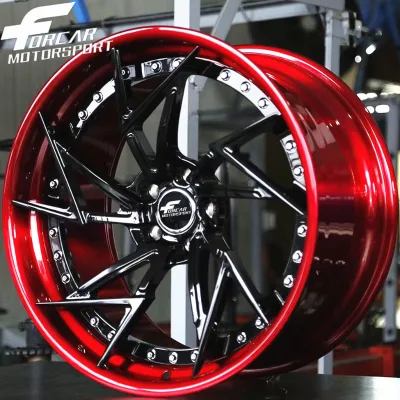

Forged Aluminum Alloy Wheel Rim Polished with Customizable Design Options
$140.00 - $145.00
MOQ: 50 Pieces

Forged Aluminum Alloy Wheel Rim Polished with Tailored Customization Options
$140.00 - $145.00
MOQ: 50 Pieces


Comprehensive Sourcing Guide
Customized Forged Alloy Rims Sourcing Guide
Buyers seeking Customized Forged Alloy Rims must first distinguish between specific product models and generic descriptions, as the market lists distinct identifiers like t85, w89, and bs82 alongside generic OEM/ODM labels. The observed product range spans from basic wheel covers to complete wheel hubs, with materials varying between aluminum, steel, and mixed alloys depending on the specific listing. This variation requires careful filtering to ensure the selected component matches the intended vehicle application, whether for standard passenger cars or specialized 4WD configurations.
Procurement decisions should also account for the diverse finishing options available, including chrome and black treatments, which directly impact both aesthetic appeal and corrosion resistance. While some listings specify a wheel hub diameter range of 16 to 20 inches, others focus on spoke types such as equal diameter or flat spokes, necessitating a precise match to the vehicle's existing suspension geometry. Buyers must verify that the chosen model supports the required drive wheel configuration, particularly for 4WD systems where torque distribution and structural integrity are critical for safety.
Product Scope and Observed Listing Signals
The market for these components reveals a wide spectrum of customization capabilities, with suppliers offering free forging, die forging, and roller ring processes to meet specific design requirements. The observed product attributes indicate that customization is widely available, allowing buyers to request specific drawing formats like Igs, Dwg, or Step files to ensure the final rim aligns with engineering specifications. This flexibility is essential for brands seeking unique designs that differentiate their vehicles in a competitive marketplace while maintaining structural performance.
Commercial signals in the listings suggest a highly variable pricing structure, with observed ranges extending from 1.8 to 580 USD, reflecting differences in material quality, finishing complexity, and order volume. Minimum order quantities also fluctuate significantly, ranging from a single unit to 500 pieces, which allows small startups to test designs while larger manufacturers can secure bulk rates. Buyers must carefully evaluate the trade-off between low MOQ flexibility and the potential economies of scale offered by larger production runs to optimize their total cost of ownership.
Technical Specifications to Verify
When evaluating technical specifications, the primary focus must be on the material composition and the specific forging method employed, as these factors dictate the mechanical properties of the final rim. The supply base offers products made from aluminum, steel, iron, brass, and copper, with processing methods including hot forging and cold forging to achieve superior strength-to-weight ratios. Buyers should explicitly confirm the material grade and the specific forging technique used, as these variables directly influence the rim's ability to withstand high-stress driving conditions without failure.
Dimensional accuracy and surface treatment are equally critical verification points, with listings indicating standard dimensions like 45x45x55cm for packaging and specific hub diameters ranging from 16 to 20 inches. Surface treatments such as passivation and various finishes like chrome or black are applied to enhance durability and appearance, but the underlying quality control measures must be scrutinized to ensure consistency. Buyers must verify that the supplier can maintain tight tolerances on size, hardness, and surface finish to prevent fitment issues and ensure long-term reliability in demanding automotive applications.
Compliance and Safety Documentation
Safety and regulatory compliance are non-negotiable for automotive components, and buyers must verify that suppliers possess valid certifications such as ISO, TUV, VIA, DOT, and CE before proceeding with any order. These certifications indicate that the manufacturing processes and final products have undergone rigorous testing to meet international safety standards, which is particularly important for rims that must withstand high loads and dynamic stresses. The presence of multiple certifications in the listings suggests a mature supply chain, but buyers should request specific test reports to confirm that the actual batch meets these standards.
In addition to general certifications, specific product standards like GB or custom drawing-based standards must be reviewed to ensure alignment with local regulations in the target market. The listings mention standards such as ALLOY and specific packing requirements, but the actual compliance documentation must cover the entire production lifecycle from raw material sourcing to final assembly. Buyers should insist on seeing the full compliance dossier, including material certificates and quality control records, to mitigate the risk of regulatory non-compliance and potential liability issues in the event of an accident.
Cost Drivers and Commercial Terms
Understanding the cost drivers for Customized Forged Alloy Rims requires an analysis of the production capability and the complexity of the customization requested. Suppliers with a monthly output of 150 tons or 2000 pieces per month can offer competitive pricing, but the cost will increase significantly if the order requires special forging methods or complex finishing processes. The observed advantage of saving cost through good mechanical properties suggests that investing in high-quality forging can reduce long-term warranty claims, making the initial unit price a secondary consideration to total lifecycle value.
Commercial terms and delivery timelines are also pivotal factors in the procurement decision, with lead times varying from one to two weeks for stock orders to 30-35 days for custom production. Buyers must clarify the Incoterms, such as FOB, CIR, or CFR, to understand their responsibility for shipping and insurance costs, as these terms can significantly impact the final landed cost. Additionally, the sample time of 15-20 days should be factored into the project schedule, ensuring that the timeline for design approval and mass production does not delay the vehicle launch or market entry.
Supplier Qualification and Quality Control
Supplier qualification extends beyond basic certifications to include a robust quality control system that covers material, size, hardness, and surface finish at every stage of production. The listings highlight a comprehensive approach to quality, with specific mentions of material verification and size checks, which are essential for ensuring that every rim meets the stringent requirements of the automotive industry. Buyers should request a detailed quality control plan that outlines how defects are identified and managed, ensuring that the supplier has the capability to maintain consistent quality across large production batches.
The production capability of the supplier, indicated by metrics like 150 tons per month or 2000 pieces per month, must be sufficient to meet the buyer's volume requirements without compromising quality. Suppliers offering advantages such as good mechanical properties and cost savings through efficient forging processes are preferable, but the buyer must verify these claims through third-party audits or on-site inspections. Establishing a long-term relationship with a supplier who demonstrates a commitment to quality control and has the capacity to scale production is crucial for maintaining a stable supply chain.
Long-Term Procurement Checks
Long-term procurement success depends on establishing clear communication channels and maintaining a rigorous review process for ongoing supplier performance. Buyers should regularly audit the supplier's adherence to the agreed-upon standards, such as GB or custom drawing specifications, and verify that the production process remains consistent over time. The ability to provide updated drawing formats and maintain the specified finishing quality is essential for ensuring that future orders match the initial prototypes and meet the evolving needs of the market.
Finally, buyers must monitor the supplier's ability to adapt to changes in demand and technology, as the automotive industry is constantly evolving with new safety and performance requirements. The observed order times and delivery capabilities should be reassessed periodically to ensure they remain aligned with the buyer's production schedule and market expectations. By maintaining a proactive approach to supplier management and continuously verifying compliance and quality, buyers can secure a reliable supply of Customized Forged Alloy Rims that support their brand's reputation for safety and performance.
FAQs
What certifications do the forged alloy rims have?
The rims carry ISO, TUV, VIA, DOT, and CE certifications. Some listings also include RoHS compliance. These standards ensure the products meet international safety and quality requirements for automotive applications.
Can I get Customized Forged Alloy Rims with specific finishes?
Yes, customization is available for these rims. Buyers can choose between Chrome or Black finishing options. The products are made from alloy or aluminum materials to suit various vehicle requirements.
What is the minimum order quantity for these rims?
The minimum order quantity starts at just one unit. However, some suppliers may require up to 500 units depending on the specific model. This flexibility allows buyers to test products before bulk purchasing.
How long does it take to receive stock orders?
Stock orders can be delivered within one to two weeks. For custom orders, the production time ranges from thirty to thirty-five days. Sample requests typically require fifteen to twenty days for preparation.
Which materials are used to manufacture these rims?
Manufacturers use alloy, aluminum, steel, iron, brass, copper, and bronze. The specific material depends on the chosen model and application. Forging processes like hot or cold forging enhance the mechanical properties of the final product.
What packaging options are available for shipping these rims?
Products are packed in standard cartons, cartons with pallets, or wooden cases. The packaging standard varies by supplier but ensures safe transport. Some listings specify dimensions like 45x45x55cm for standard packaging.
Can I find rims with a specific wheel hub diameter?
Yes, wheel hub diameters range from 16 to 20 inches. Buyers can select models like t85, w89, or bs82 to match their vehicle specifications. These dimensions ensure compatibility with various 4WD drive wheel systems.