Source Customized Foot Pedal Switch for Industrial Control
Explore 30 listings for the Customized Foot Pedal Switch, comparing models like BA-LA2 and LT4 with varying certifications and materials. Buyers can evaluate specifications such as contact resistance and electrical life to find the right unit for press brakes or sandblasters.
Key considerations
Products List


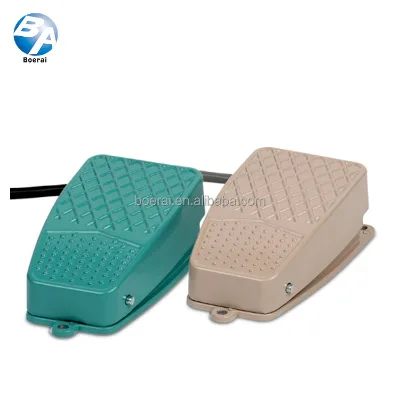


Aluminum IP65 Momentary Foot Pedal Control Switch Electric Foot Pedal Switch
$9.80 - $10.00
MOQ: 100 Pieces


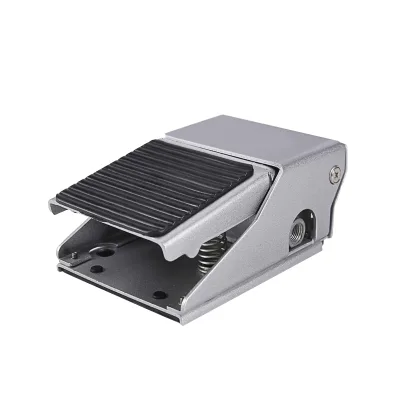


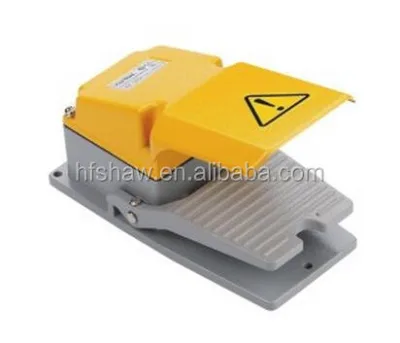

10A 110V/220V Electric Foot Pedal Switch Foot Control Switch Treadle Switch
$1.98 - $2.48
MOQ: 100 Pieces


Comprehensive Sourcing Guide
Strategic Sourcing Guide for Customized Foot Pedal Switches
The industrial landscape relies heavily on hands-free operational controls to enhance efficiency and safety. Among these, the Customized Foot Pedal Switch stands out as a critical component for machinery ranging from press brakes to sandblasting equipment. For procurement professionals, sourcing these devices requires a nuanced understanding of technical variability, material composition, and the specific customization capabilities of suppliers. This guide provides a structured approach to evaluating the market, ensuring that the selected components align with rigorous operational demands without relying on unverified claims.
Understanding Technical Specifications and Material Integrity
When evaluating a Customized Foot Pedal Switch, the primary focus must be on the electrical and mechanical specifications that define its performance. The core functionality often revolves around the contact form and the maximum current capacity. In the observed market data, specific models demonstrate a contact form of "1C" (One Change-over) or "Type b Contact," which dictates how the circuit is interrupted or completed. Buyers must verify that the contact resistance meets the necessary thresholds, with observed data indicating a standard of ≤25mΩ. This low resistance is vital for minimizing heat generation and ensuring signal integrity during high-frequency operations.
Material selection is equally critical, as the switch must withstand the physical rigors of industrial environments. The housing and internal components are frequently constructed from Aluminum or Alloy, providing a balance of durability and weight. The protective shell is often described as a "Steel shell," offering robust resistance against impact and debris. Furthermore, the insulation resistance is a key safety metric; verified data points to a requirement of ≥100MΩ at DC500V. This ensures that the device maintains electrical isolation even under stress. The electrical life, or the number of cycles the switch can endure, is another decisive factor, with high-performance units boasting a lifespan of ≥100,000 operations.
The wiring configuration also varies based on the application. Some units are designed for "Null Line and Live Line" configurations, while others may utilize different principles such as capacitive sensing. The power source is typically unitary, meaning the switch operates on a single power supply without complex external transformers. Understanding these specific attributes allows buyers to match the component to their machinery's electrical architecture, preventing compatibility issues that could lead to system failures.
Compliance, Certification, and Safety Standards
Navigating the compliance landscape is essential for international procurement. While specific certification statuses can vary by manufacturer, the market data highlights several recognized standards and attributes that buyers should look for. The presence of "CE" certification is a common indicator of compliance with European health, safety, and environmental protection standards. Additionally, some listings reference "ISOCE" or general ISO standards, which suggest adherence to international quality management systems.
However, buyers must exercise caution when interpreting these labels. The provided context includes a low-confidence background note regarding "ISO 9001," suggesting that while this standard is prevalent in the industry, it should not be assumed for every product without direct verification. Similarly, the term "ISONumber of Switch" appears in the data, which may be a specific internal coding or a misinterpretation of a standard; clarity on this point is necessary before finalizing a purchase.
Safety features are paramount in foot pedal applications. The switches often include protection mechanisms such as insulation, dust-proofing, and waterproofing. Some advanced models claim explosion-proof capabilities, which are crucial for hazardous environments. The warranty period is another compliance-related metric; observed data indicates a "0 years" warranty for certain generic models, which signals a need for buyers to negotiate service level agreements or extended warranties directly with the supplier. The "New" condition of the products ensures that buyers are receiving fresh inventory, but the lack of a standard warranty period underscores the importance of rigorous pre-shipment quality checks.
Cost Drivers and Pricing Dynamics
The pricing structure for customized foot pedal switches is influenced by a complex interplay of factors, including material costs, customization levels, and order volume. The observed price range in the market spans from $0.55 to $130 USD. This wide disparity reflects the difference between basic, off-the-shelf units and highly specialized, custom-engineered solutions. The lower end of the spectrum likely corresponds to standard models with minimal customization, while the upper end encompasses units with advanced features, specific alloy compositions, or complex packaging requirements.
Minimum Order Quantity (MOQ) is a significant driver of cost efficiency. The observed MOQ range is between 1 and 1000 units. For buyers requiring small batches for prototyping or maintenance, suppliers offering an MOQ of 1 provide flexibility, though the unit cost may be higher. Conversely, large-scale procurement can leverage the lower end of the price range by meeting higher MOQ thresholds. The "Selling Units" are typically listed as "Single item," which simplifies the ordering process but requires careful calculation of total volume to optimize shipping and handling costs.
Packaging also impacts the final cost. Options range from standard "Carton" packaging to "Standard Export Packing" and even "Plywood Case" for heavy-duty or sensitive equipment. The choice of packaging must align with the logistics requirements of the destination country to prevent damage during transit. Additionally, the "Single package size" of 17x12x8 cm and a "Single gross weight" of 1.000 kg are critical data points for calculating freight charges. Buyers should request detailed shipping quotes that include these packaging variables to avoid unexpected cost overruns.
Typical Applications and Operational Context
Customized foot pedal switches are versatile components designed for a wide array of industrial and commercial applications. The data indicates usage in heavy machinery such as "Press Brake/Bending Machines" and "Guillotine Shear," where precise, hands-free control is essential for operator safety and productivity. The "Application Material" field explicitly lists these industrial machines, confirming their role in metalworking and fabrication sectors.
Beyond heavy industry, these switches find application in "sandblaster" operations, where the operator needs to control the flow of abrasive material without using their hands. The "Usage" field further expands the scope to include "Control Switch," "Start Button," "Reset Button," and "Change-over Switch." This versatility allows the same component to serve multiple functions within a single machine, reducing the need for multiple control interfaces.
The application environment is equally diverse, ranging from "Home" and "Apartment/Villa" settings to "Commercial," "Hotel," and "Industrial" facilities. In lighting and electronics applications, the switch may serve as a "Playback Switch" or "Limit Button," controlling specific sequences or safety limits. The "Protection" attributes, such as "Dust-Proof" and "Waterproof," make these switches suitable for harsh environments where exposure to moisture or particulate matter is a concern. Understanding the specific operational context is crucial for selecting a switch with the appropriate durability and feature set.
Supplier Evaluation and Customization Capabilities
Selecting the right supplier is a critical step in the procurement process. The market data highlights that "Customization" is a key attribute, with many suppliers offering "Customized" support and "OEM" (Original Equipment Manufacturer) services. This means buyers can request specific modifications to the switch, such as altering the "Product name," adjusting the "Max.Current," or changing the "Protective cap" material. The "Standard" for these customizations is often "by custom," indicating that there is no one-size-fits-all solution and that the supplier must be willing to collaborate on the design.
Geographic location is another factor to consider. The "prod_origin" is listed as "China," with specific mentions of "Wenzhou" and "Guangdong." These regions are known for their manufacturing hubs, but buyers should verify the specific factory location to assess logistics and lead times. The "place of origin" can influence the quality of the raw materials and the expertise of the workforce.
When evaluating suppliers, buyers should look for a track record of delivering "New" condition products and adhering to the specified "prod_packing" standards. The "feature" of "expediency" suggests that some suppliers prioritize quick turnaround times, which can be beneficial for urgent orders. However, buyers must balance speed with quality, ensuring that the "Customized support" does not compromise the integrity of the electrical or mechanical specifications.
Quality Control and Long-Term Procurement Considerations
Ensuring consistent quality requires a robust quality control (QC) strategy. Buyers should verify that the "Contact resistance," "Withstand voltage," and "Electrical life" meet the specific requirements of their application. The observed "Withstand voltage" of 2000VAC is a critical safety benchmark that must be maintained. Regular testing of these parameters during the production process is essential to prevent defects from reaching the end-user.
Long-term procurement considerations involve building a sustainable relationship with the supplier. The "warranty" of "0 years" for some models indicates that buyers may need to negotiate service terms or rely on the supplier's reputation for quality. The "Brand name" "BA" appears in the data, suggesting that established brands may offer better consistency and support. However, buyers should not rely solely on brand recognition and should always request sample units for testing before committing to large orders.
The "Single gross weight" and "Single package size" data points are also relevant for long-term logistics planning. Consistent packaging dimensions and weights facilitate easier inventory management and shipping. Buyers should ensure that the supplier can maintain these specifications over time, especially when scaling up production.
Comparative Analysis of Product Attributes
To facilitate decision-making, the following table summarizes key attributes observed in the market for customized foot pedal switches. This comparison helps buyers quickly identify the features that align with their specific needs.
| Attribute | Observed Value/Range | Relevance to Procurement |
|---|---|---|
| Material | Aluminum/Alloy | Determines durability and weight |
| Contact Resistance | ≤25mΩ | Critical for electrical efficiency |
| Withstand Voltage | 2000VAC | Safety benchmark for insulation |
| Electrical Life | ≥100,000 cycles | Indicator of longevity |
| Certification | CE, ISOCE (Verify) | Compliance with safety standards |
| Customization | Available (OEM) | Flexibility for specific needs |
| Origin | China (Wenzhou, Guangdong) | Logistics and lead time factors |
| Packing | Carton, Plywood Case | Shipping and protection needs |
| Price Range | $0.55 - $130 USD | Budget planning and volume scaling |
| MOQ | 1 - 1000 units | Order quantity flexibility |
This table serves as a reference point for buyers to compare different offerings. It highlights the variability in the market and emphasizes the need for due diligence in verifying each attribute. By focusing on these core specifications, procurement professionals can make informed decisions that balance cost, quality, and performance.
In conclusion, sourcing customized foot pedal switches requires a meticulous approach that considers technical specifications, compliance, cost drivers, and supplier capabilities. By adhering to the guidelines outlined in this guide, buyers can navigate the complexities of the market and secure components that meet their operational requirements. The emphasis on verified data and the avoidance of unconfirmed claims ensures that the procurement process remains grounded in reality, leading to successful and sustainable business outcomes.
FAQs
What certifications are available for customized foot pedal switches?
Available certifications include CE and ISOCE for compliance with safety standards. Buyers should verify specific certification documents as some listings may reference general ISO standards without explicit 9001 confirmation.
Which materials are used to construct these industrial switches?
Housing and internal components are frequently constructed from Aluminum or Alloy for durability. The protective shell is often described as a Steel shell to resist impact and debris in harsh environments.
Can suppliers provide OEM customization for these foot switches?
Yes, suppliers offer customized support and OEM services for specific modifications. Buyers can request changes to product names, current ratings, or protective cap materials based on custom standards.
What is the typical electrical life of these foot pedal switches?
High-performance units boast an electrical life of at least 100,000 operations. This cycle count ensures reliability for frequent use in machinery like press brakes or sandblasters.
How do packaging options vary for these industrial components?
Packaging ranges from standard Carton to Standard Export Packing and Plywood Case for heavy items. The single package size is often 17x12x8 cm with a gross weight of 1.000 kg.
What is the price range for customized foot pedal switches?
The observed price range spans from 0.55 to 130 USD depending on customization. Lower costs typically apply to basic models, while specialized units with advanced features command higher prices.