Source ATV Solenoid for Can-Am, UTV, and Small Engines
Compare 30 verified ATV Solenoid options from Chinese manufacturers offering brushless and brush types in 6V and 12V. Buyers can review specifications, certifications, and lead times for models like 709200406 and 84-1132-12V to find the right fit for their vehicles.
Key considerations
Products List


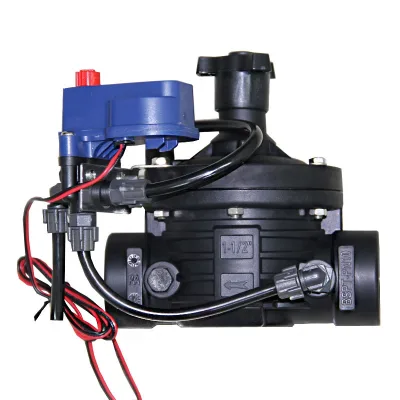


Replacement High Quality Thermostat 709200406 for Can-Am-ATV-UTV Models
$44.60 - $64.80
MOQ: 10 Pieces


Ss0028, 0001218157, 0001218757, 0001223001, 0001223014-for Starter Solenoid
$5.00 - $15.00
MOQ: 100 Pieces


Comprehensive Sourcing Guide
Strategic Sourcing Guide for ATV Solenoid Procurement
Understanding Technical Specifications and Voltage Requirements
When sourcing solenoids for All-Terrain Vehicles (ATVs) and Utility Task Vehicles (UTVs), the primary technical differentiator is the electrical operating voltage. The market data indicates a clear segmentation between 6-volt and 12-volt systems, which dictates the compatibility of the component with the vehicle's electrical architecture. Buyers must verify the specific voltage requirement of their target vehicle before initiating a purchase order, as substituting a 12-volt unit into a 6-volt system, or vice versa, will result in immediate failure or permanent damage to the starter motor and battery.
The observed product specifications reveal models explicitly labeled with "12V" designations, such as part numbers 84-1132-12V, 84-194-12V, and 84-101-12V. These units are designed for standard modern ATV electrical systems. Conversely, specific listings highlight a "6V" voltage rating alongside attributes like "W/ Insulated Base" and "1-Terminal" configurations. This distinction is critical for older vehicle models or specific agricultural utility applications that may still utilize lower voltage systems. The physical construction of these solenoids often includes an insulated base, which serves to prevent short circuits against the vehicle frame, a feature that should be confirmed in the product datasheet.
Furthermore, the power source classification for these components varies. While many units are described simply as "DC" or "Solenoid," specific entries link the power source to "Diesel" engines, indicating a specialized application for diesel-powered utility vehicles. The material composition also plays a vital role in performance. Listings show a prevalence of "Stainless Steel" and "Aluminium Alloy" bodies, which offer corrosion resistance essential for off-road environments where exposure to mud, water, and varying temperatures is constant. The standard dimensions for some units are noted as 806055MM, providing a baseline for physical fitment checks, though buyers must always verify the exact envelope of the replacement part against the original equipment manufacturer (OEM) specifications.
Compliance, Certification, and Quality Standards
Navigating the compliance landscape for ATV solenoids requires a rigorous review of the certifications provided by the supplier. The available data points to several key certifications, including CE, CCC, and ISO9001. The CE mark indicates conformity with health, safety, and environmental protection standards for products sold within the European Economic Area, while CCC (China Compulsory Certification) is mandatory for products sold within the People's Republic of China. The presence of ISO9001 certification suggests that the manufacturing facility adheres to a standardized quality management system, which is a strong indicator of process consistency.
However, buyers must exercise caution when interpreting these certifications. The data lists "ISO9001: Commutation: Brushless" and "ISO9001: Commutation: Brush" as separate entries. This suggests that the certification may be tied to specific product lines or manufacturing processes rather than being a blanket guarantee for every solenoid in a supplier's catalog. The distinction between brushless and brush commutation is significant; while the data mentions "Brush" in one context and "Brushless" in another, most traditional ATV starter solenoids rely on brush-type motor technology for the starter engagement. Buyers should explicitly request documentation confirming that the specific model they intend to purchase carries the relevant certification for its specific commutation type.
Quality claims in the product listings are frequently described as "High Performance" or "High Quality." While these are positive indicators, they are subjective attributes rather than objective test results. To validate these claims, procurement teams should request third-party test reports or failure rate data. The data also mentions a "Standard" product standard and "Standard Size" for certain items, implying that these components may be designed to meet generic industry dimensions rather than proprietary OEM tolerances. When sourcing non-OEM parts, verifying that the "Standard" dimensions align with the specific ATV model's mounting points is essential to avoid fitment issues.
Cost Drivers and Pricing Dynamics
The pricing structure for ATV solenoids exhibits a wide range, observed between 1 USD and 2500 USD. This vast disparity is not indicative of a single product category but rather reflects the diversity of the market, ranging from small, single-terminal 6-volt units to complex, high-performance diesel solenoid assemblies. The lower end of the price spectrum likely corresponds to basic replacement units with minimal customization, while the upper end may include specialized components with advanced materials, custom packaging, or high-volume industrial specifications.
Several factors drive the cost of these components. Material selection is a primary driver; units constructed from "Stainless Steel" or "Aluminium Alloy" generally command a higher price than those made from standard cast metals due to the enhanced durability and corrosion resistance required for off-road use. Customization is another significant cost factor. The data confirms that "Customization" and "Customized Packaging" are available options. Buyers opting for custom branding, specific packaging requirements, or modified electrical configurations will incur additional costs. The Minimum Order Quantity (MOQ) also influences the unit price. Listings show MOQs ranging from 1 piece to 500 pieces. Purchasing a single unit for a repair job will result in a higher per-unit cost compared to a bulk order of 500 pieces, which benefits from economies of scale.
Additionally, the shipping method selected impacts the final landed cost. The available shipping options include EMS, Sea, Air, DHL, UPS, FedEx, and TNT. Air freight and express couriers like DHL or FedEx offer speed but come at a premium, whereas sea freight is cost-effective for large orders but involves longer lead times. Buyers must balance the urgency of their procurement needs against the budget constraints, selecting the shipping method that optimizes the total cost of ownership.
Typical Applications and Vehicle Compatibility
ATV solenoids are critical components found in the starting and electrical systems of various off-road vehicles. The data explicitly identifies applications for "Can-Am-ATV-UTV Models," highlighting a specific market segment where these components are in high demand. The part number 709200406 is listed with the product name "Thermostat 709200406," which suggests a potential data entry discrepancy or a specific thermal management solenoid used in conjunction with the starting system. However, the primary function of the solenoids listed under models like 84-1132-12V is typically to act as a heavy-duty switch, engaging the starter motor when the ignition key is turned.
The versatility of these solenoids extends beyond standard ATVs. The mention of "Diesel" as a power source and "Solenoid" as the power type indicates applications in diesel-powered utility vehicles, which may include larger UTVs or specialized agricultural machinery. The "Explain" field noting "Starter Solenoid" confirms the primary use case for the majority of the listed models. Buyers must ensure that the part number matches the specific engine configuration of their vehicle. For instance, the model 3930233 is listed with a corresponding part number, suggesting a direct replacement for a specific OEM component.
Compatibility is further complicated by the variation in terminal configurations. The data notes a "1-Terminal" configuration for certain 6-volt units, while other models may have different terminal arrangements. The physical standard of 806055MM provides a reference for the housing size, but the internal wiring and terminal placement must match the vehicle's harness. When sourcing for a fleet of vehicles, it is advisable to categorize the inventory by voltage (6V vs. 12V) and terminal count to prevent cross-contamination of parts.
Supplier Evaluation and Operational Capabilities
Evaluating a supplier for ATV solenoids requires a focus on their operational capabilities, particularly regarding lead times and origin. The data indicates that the products originate from "China," with a specific mention of "Zhe Jiang, China" as a production hub. This region is known for its robust manufacturing ecosystem, but it also necessitates careful vetting of logistics and communication channels. The standard lead time is listed as "Normal 15-20 Working Days," which serves as a baseline for planning. However, the presence of "Fast Delivery" as an attribute for certain items suggests that expedited options may be available, potentially at a higher cost.
The Minimum Order Quantity (MOQ) is a critical factor in supplier selection. The observed MOQ range spans from 1 piece to 500 pieces. Suppliers offering an MOQ of 1 piece are ideal for repair shops or individual buyers needing immediate replacements, while those requiring 500 pieces are better suited for distributors or large fleet operators. The "Customized Packaging" option with a minimum order of 500 PCS indicates that suppliers are willing to accommodate branding needs for bulk buyers. Buyers should verify if the supplier can accommodate split shipments or mixed orders to mitigate the risk of overstocking.
Shipping flexibility is another key evaluation criterion. The listed shipping methods—EMS, Sea, Air, DHL, UPS, FedEx, TNT—demonstrate a supplier's ability to adapt to different logistical needs. A supplier that offers multiple shipping options provides greater flexibility in managing inventory levels and responding to urgent demands. Additionally, the "Neutral Packing" and "Paper Carton" packaging options suggest that the supplier is prepared to ship products without proprietary branding, which is often preferred by distributors who wish to apply their own labels.
Quality Control and Long-Term Procurement Considerations
Ensuring long-term success in sourcing ATV solenoids requires a robust quality control strategy. While the data lists "High Quality" and "High Performance" as attributes, these claims must be backed by tangible quality assurance processes. Buyers should request detailed quality control reports that cover material testing, electrical performance validation, and environmental durability checks. The use of "Stainless Steel" and "Aluminium Alloy" materials should be verified through material certificates to ensure they meet the specified corrosion resistance standards.
The "Standard" product standard mentioned in the data implies that the components are manufactured to meet general industry specifications. However, for critical applications, buyers should insist on adherence to specific OEM standards or international standards like ISO 9001. The distinction between "Brush" and "Brushless" commutation types should be clearly documented in the quality control process to ensure the correct technology is delivered.
Long-term procurement considerations also involve supply chain stability. The "Normal 15-20 Working Days" lead time should be factored into inventory planning to prevent stockouts. Suppliers who offer "Fast Delivery" options can serve as a contingency for urgent repairs. Furthermore, the availability of "Customization" allows buyers to adapt the product to specific market needs over time, such as custom packaging or specific voltage configurations.
To mitigate risks, buyers should establish a clear communication channel with suppliers regarding any changes in specifications or standards. Regular audits of the supplier's manufacturing facility, if feasible, can provide assurance that the "High Quality" claims are consistently met. Finally, maintaining a diverse supplier base can help mitigate the risks associated with single-source dependencies, ensuring continuity of supply even if one supplier faces production delays or logistical challenges. By adhering to these principles, buyers can secure a reliable supply of high-performance ATV solenoids that meet the rigorous demands of off-road applications.
FAQs
What certifications do ATV Solenoid suppliers typically hold?
Suppliers typically hold CE, CCC, and ISO9001 certifications for their ATV Solenoid products. These marks indicate compliance with safety standards and quality management systems, though buyers should verify that the specific commutation type matches the certification listed for that model.
How long is the standard lead time for ATV Solenoid orders?
The normal lead time for ATV Solenoid orders is 15 to 20 working days. Some listings offer fast delivery options, but the standard production window remains consistent across most manufacturers originating from China or Zhejiang.
Which voltage options are available for ATV Solenoid replacement parts?
Available voltage options for atv solenoids include 6V and 12V systems. Buyers must select the correct voltage to match their vehicle's electrical architecture, as using a 12V unit in a 6V system can cause immediate failure or damage to the starter motor.
Can I request customized packaging for ATV Solenoid bulk orders?
Customized packaging is available for ATV Solenoid orders, but it requires a minimum order quantity of 500 pieces. Standard neutral packing in paper cartons is provided for smaller orders without additional branding requirements.
What materials are used to construct durable ATV Solenoid bodies?
Durable ATV Solenoid bodies are commonly constructed from stainless steel or aluminum alloy. These materials provide essential corrosion resistance for off-road environments where exposure to mud, water, and varying temperatures is frequent.
What is the minimum order quantity for ATV Solenoid purchases?
The minimum order quantity for atv solenoids ranges from 1 piece to 500 pieces depending on the supplier. Single-unit purchases are available for immediate repairs, while bulk orders starting at 50 pieces or 500 pieces often unlock customization options.
Which shipping methods are available for ATV Solenoid deliveries?
Available shipping methods for ATV Solenoid deliveries include EMS, Sea, Air, DHL, UPS, FedEx, and TNT. Buyers can choose air freight for speed or sea freight for cost-effectiveness, balancing urgency against the total landed cost of the shipment.