Source Customized Forklift Sideshifter for warehouses, ports, and factories
Find 30 Customized Forklift Sideshifter options from Chinese manufacturers. Compare models like SS, LC, and GC with capacities from 1 to 7 tons and certifications including CE and ISO.
Key considerations
Products List


Forklift Attachment Sideshifters Side Shifter Side Shift Forklift Part
$200.00 - $250.00
MOQ: 1 Pieces


Forklift Attachment Side Shift Forkfocus Top Quality Forklift Side Shifter
$500.00 - $800.00
MOQ: 1 Pieces


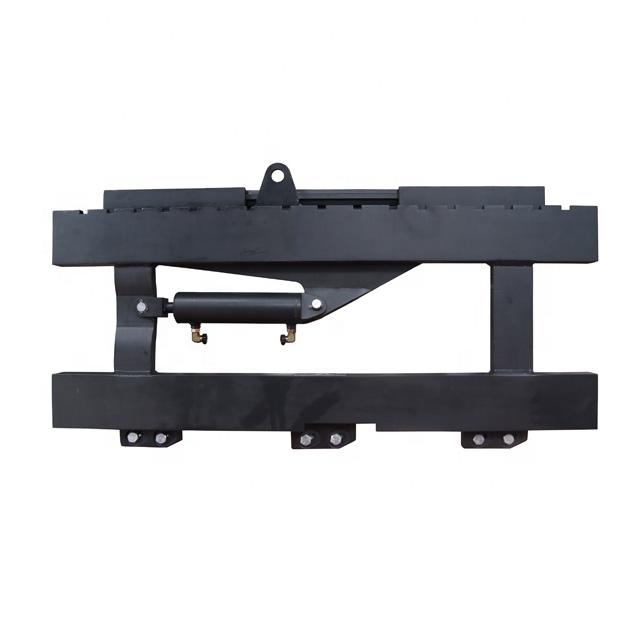


3 Ton Electric Forklift Equipped with Side Shift for Customized Height
$3280.00 - $3680.00
MOQ: 1 Pieces
Comprehensive Sourcing Guide
Strategic Sourcing Guide for Customized Forklift Sideshifters
Understanding Technical Specifications and Model Variability
When sourcing customized forklift sideshifters, buyers must first navigate a complex landscape of technical specifications that define compatibility and performance. The market offers a diverse array of models, ranging from standard configurations to highly specialized attachments. Evidence from current product listings indicates that specific model designations such as SS, LC, GC, SCD, ZC, and XZ are prevalent in the industry. These alphanumeric codes often correspond to distinct load capacities, hydraulic requirements, and structural designs tailored to specific operational needs.
A critical technical variable is the available forklift capacity range. Sourcing data reveals that sideshifters are engineered to operate within specific tonnage brackets, including ranges of 1-4.5 tons, 1-7 tons, and 3-4.5 tons. Selecting a unit that exceeds or falls short of the host forklift's capacity can lead to catastrophic failure or operational inefficiency. Furthermore, the structural integrity of the attachment is paramount. The "G Clamp" structure is a noted configuration, often associated with heavy-duty usage scenarios. Buyers should verify that the specific model selected matches the physical dimensions of their existing forks, particularly the fork brand compatibility, such as Shytger, which appears in specific product contexts.
Material composition also plays a decisive role in the longevity and safety of the sideshifter. Listings frequently cite Stainless Steel and general Metal as primary materials. Stainless Steel is often preferred for environments requiring corrosion resistance, while general metal constructions may be optimized for cost-efficiency in standard industrial settings. The hydraulic system is another vital component; high-performance units may integrate advanced systems like the Japan Shimadzu Hydraulic System, ensuring smooth operation and precise control during lateral movements. The load center, typically standardized at 500mm in many configurations, must be strictly adhered to when calculating the total moment load on the forklift.
Compliance, Certification, and Regulatory Standards
Navigating the regulatory landscape is essential for any procurement of industrial lifting equipment. Compliance is not merely a formality but a prerequisite for safe operation and legal liability management. The supply chain for customized sideshifters often references international standards such as CE and ISO. These certifications indicate that the product has undergone rigorous testing for safety, quality, and environmental compliance. Some listings further specify SGS certification alongside CE and ISO, suggesting a multi-layered verification process that buyers should prioritize.
However, buyers must exercise caution when interpreting certification claims. While "CE" is a common marker, the presence of this standard in a product listing does not automatically guarantee that every unit in a batch meets the exact same criteria. Certification status should be verified through official documentation provided by the manufacturer, rather than relying solely on marketing descriptions. The "Standard" classification mentioned in product attributes often refers to a baseline compliance level, but customized orders may require specific deviations from these norms.
In addition to product-level certifications, the origin of the goods influences regulatory acceptance. A significant portion of the market originates from China, with specific hubs like Shanghai noted as production centers. Products from these regions must meet the import regulations of the destination country. For instance, equipment entering the European Union must strictly adhere to CE marking requirements, while other markets may have different safety mandates. Buyers should request valid certification certificates that are traceable to the specific batch of goods being purchased. The "Export Standard" packing mentioned in product attributes is also a compliance indicator, suggesting that the packaging meets international shipping requirements to prevent damage during transit, which indirectly supports the integrity of the certified product.
Cost Drivers and Pricing Dynamics
The pricing structure for customized forklift sideshifters is highly variable, influenced by a multitude of factors including material costs, customization levels, and order volume. Observed market data indicates a price range spanning from 1 USD to 47,500 USD. This vast disparity underscores the importance of understanding the specific configuration required. A basic, non-customized unit may fall at the lower end of this spectrum, while a fully customized, heavy-duty attachment with advanced hydraulic systems and specialized materials will command a premium price.
Material selection is a primary cost driver. Stainless Steel components are generally more expensive than standard metal alternatives due to the raw material costs and the additional processing required to achieve corrosion resistance. Similarly, the inclusion of high-end hydraulic systems, such as those from Shimadzu, will increase the overall unit cost compared to generic hydraulic assemblies. The level of customization is another significant factor. While some products are listed as "Non-Customized," others offer "Customized" options, allowing for adjustments in length, capacity, or structural design. These bespoke modifications require additional engineering time and specialized manufacturing processes, which are reflected in the final price.
Order volume also impacts pricing, although current data suggests a minimum order quantity (MOQ) of 1 unit for many suppliers. This flexibility allows small businesses to procure single units without the burden of large inventory commitments. However, buyers should be aware that while the MOQ may be low, the unit price for a single custom order will likely be higher than the price per unit for a bulk purchase. The "Seaworthy Packing" and "Export Standard" requirements add to the logistical costs, which are often factored into the final FOB or CIF price. Buyers must balance the initial purchase price against the long-term value provided by durability and safety features.
Typical Applications and Operational Scenarios
Customized forklift sideshifters are designed to enhance operational efficiency in a wide range of industrial applications. The primary function of a sideshifter is to allow the lateral movement of the load without the need to reposition the entire forklift, thereby increasing productivity and reducing wear on the vehicle. The "Heavy Duty Clamp" usage category highlights the attachment's suitability for demanding environments where precise load handling is critical.
The versatility of these attachments is evident in their application across different forklift capacities. Units designed for 1-4.5 ton forklifts are ideal for warehouse environments, light manufacturing, and distribution centers where space is limited and maneuverability is key. In contrast, sideshifters rated for 1-7 ton capacities are suited for heavy industrial settings, such as steel mills, lumber yards, and construction sites, where larger loads and more robust equipment are required. The "3.5 Ton 3500kg Diesel Forklift with Side Shifter" configuration demonstrates the integration of these attachments with specific power sources, such as diesel engines, which are preferred for outdoor or high-intensity operations.
Specific applications also depend on the structural design. The "G Clamp" structure is particularly effective for handling irregularly shaped loads or pallets that require a secure grip. The "Forklift Rotators" mentioned in product attributes further expand the utility of these attachments, allowing for the rotation of loads to facilitate precise placement. The "Cascade Forklift Attachment Side Shifter" with a capacity of 22.5 tons represents the upper limit of this technology, designed for extreme heavy-lifting scenarios. Buyers should assess their specific operational needs, including the types of loads handled, the frequency of use, and the environmental conditions, to select the most appropriate sideshifter configuration.
Supplier Evaluation and Quality Assurance
Evaluating suppliers for customized forklift sideshifters requires a rigorous approach to ensure product reliability and service quality. Buyers should prioritize suppliers who demonstrate transparency in their manufacturing processes and provide clear documentation regarding product specifications. The "Condition: New" attribute is a basic requirement, but buyers must also verify the "Warrenty" terms, with 12 months being a common standard in the market. A robust warranty indicates the supplier's confidence in their product's durability and their commitment to after-sales support.
Quality control is another critical aspect of supplier evaluation. The "Export Standard" and "Seaworthy Packing" attributes suggest that the supplier adheres to international shipping protocols, which is essential for preventing damage during transit. Buyers should request detailed quality assurance reports, including test results and inspection certificates, to verify that the product meets the claimed specifications. The presence of certifications like CE, ISO, and SGS should be confirmed through official channels, and buyers should ensure that these certifications are valid for the specific model and batch being purchased.
Supplier location and logistics capabilities are also important considerations. With many suppliers originating from China, particularly Shanghai, buyers must evaluate the supplier's ability to manage international shipping and customs clearance efficiently. The "Load Capacity" and "Capacity: as Request" attributes highlight the need for clear communication regarding the specific requirements of the order. Buyers should establish a clear line of communication with the supplier to ensure that all customization requests are accurately understood and executed. Additionally, the "Fuel: Diesel" and "Power: Diesel Engine" specifications indicate that the supplier should have expertise in diesel-powered equipment, which is crucial for ensuring compatibility with existing fleet assets.
Long-Term Procurement and Maintenance Considerations
Sourcing a Customized Forklift Sideshifter is not a one-time transaction but the beginning of a long-term relationship that involves ongoing maintenance and support. Buyers should consider the availability of spare parts and the ease of maintenance when selecting a supplier. The "Hydraulic System" and "Transmission" components are subject to wear and tear, and the availability of replacement parts is essential for minimizing downtime. Suppliers who offer comprehensive support packages, including training and technical assistance, add significant value to the procurement process.
The "Luxury Suspension Seat" and "All LED Light" features mentioned in product listings reflect a focus on operator comfort and safety. These features contribute to long-term operational efficiency by reducing operator fatigue and improving visibility. Buyers should ensure that the sideshifter is compatible with these ergonomic enhancements and that the overall design promotes a safe working environment. The "Water Proof Overhead Guard" and "Triangle Wide Rearview Mirror" are additional safety features that should be considered in the context of the specific work environment.
Finally, buyers should plan for the lifecycle of the equipment. The "Standard" classification and "CE, ISO" certifications provide a baseline for the expected lifespan of the product, but actual performance will depend on usage patterns and maintenance practices. Regular inspections and adherence to manufacturer guidelines are crucial for extending the life of the sideshifter. By selecting a supplier with a strong reputation for quality and support, buyers can ensure that their investment in a Customized Forklift Sideshifter delivers maximum value over the long term.
FAQs
What customization options are available for sideshifters?
Customization is available for specific models, while non-customized options also exist. Buyers can request adjustments to length and capacity, with some units offering standard configurations based on the 1-7 ton range.
Which certifications do these products typically hold?
Products often hold CE, ISO, and SGS certifications to ensure safety and quality compliance. These standards indicate rigorous testing, though buyers should verify specific batch documentation rather than relying solely on listings.
Can I find sideshifters compatible with 3.5 ton forklifts?
Yes, specific models are designed for 3.5 to 4.5 ton forklifts. The available capacity ranges include 1-4.5 tons and 3-4.5 tons, ensuring compatibility with various industrial vehicle sizes.
What materials are used in heavy-duty clamp structures?
Stainless steel and general metal are the primary materials used for construction. Stainless steel offers corrosion resistance, while metal options provide cost-efficiency for standard industrial environments requiring heavy-duty usage.
How are these units packed for international shipping?
Packing methods include export standard, carton, pallet, and seaworthy packing options. These methods ensure the product integrity during transit and meet international shipping requirements for safe delivery.
What is the typical warranty period for these attachments?
A 12-month warranty is a common standard for new condition units. This coverage reflects supplier confidence in durability, though specific terms should be confirmed during the procurement process.
Which hydraulic systems are integrated into these models?
Some high-performance units integrate advanced systems like the Japan Shimadzu Hydraulic System. This ensures smooth operation and precise control, though generic assemblies may also be available depending on the model.