Source Corrosion-Resistant Cow Free Stall for Dairy Farms
Find and compare 30 corrosion-resistant cow free stall options from Qingdao manufacturers. These galvanized steel units offer comfort for dairy cows and are available with custom designs to meet specific ranch requirements.
Key considerations
Products List


Comprehensive Sourcing Guide
Strategic Sourcing Guide for Corrosion-Resistant Cow Free Stalls
Understanding the Technical Architecture of Dairy Stall Systems
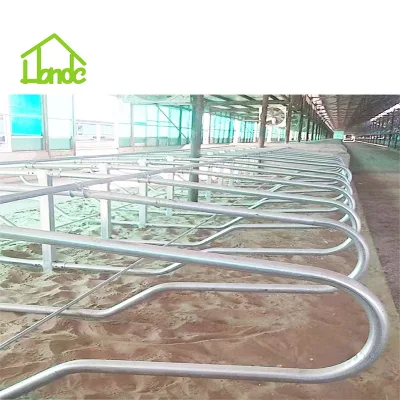
When sourcing corrosion-resistant cow free stalls, buyers must first establish a clear understanding of the fundamental technical architecture that defines product longevity and animal welfare. The core component of these systems is the structural material, which in the observed market data is predominantly steel pipe or general steel metal. The critical differentiator for corrosion resistance lies not merely in the base material but in the surface treatment process applied to it. High-confidence observations indicate that the preferred surface treatment for these units is Hot DIP Galvanized. This process involves immersing the steel components in molten zinc, creating a metallurgical bond that offers superior protection against the harsh, corrosive environment of a dairy barn, which is constantly exposed to moisture, ammonia, and manure acids.
The physical configuration of the stall is equally vital. The product category often includes diagonal barriers, free stalls, and loops, which are designed to maximize space efficiency while ensuring cow comfort. Specifications for these units vary, with observed models ranging from specific product codes like Xbf-C0001 to HLTCFS01. A key observation in the current market is the prevalence of "Custom Produced" sizing. While some standard dimensions exist, such as a noted standard of 84 inches, the ability to tailor the size to specific barn layouts is a primary feature. The assembly method is another technical consideration; the products are frequently described as "Easily Assembled" and are shipped on pallets or in containers to facilitate logistics. The functional design often incorporates features like waterproofing to prevent water accumulation, which can accelerate corrosion if left unchecked.
Compliance and Certification Verification Protocols
Navigating the regulatory landscape is a non-negotiable step in the procurement of agricultural equipment. Buyers must verify that the equipment meets international safety and quality standards. The market data confirms that CE certification and ISO9001 are the most frequently cited compliance markers for these products. Some listings specifically note "ISO9001:QS" or "ISO9001:Computerized:Non-Computerized," suggesting that the certification scope may vary based on the manufacturing process or the specific nature of the equipment being supplied. It is imperative for buyers to request current, valid certificates rather than relying on general claims. The presence of the CE mark indicates conformity with health, safety, and environmental protection standards for products sold within the European Economic Area, which is a strong proxy for general manufacturing quality.
Beyond the certifications themselves, the origin of the manufacturing plays a role in compliance verification. The observed data points to Qingdao, Shandong, China, as a primary production hub for these dairy equipment units. While this location is a known manufacturing center, it does not inherently guarantee quality. Buyers should treat the origin as a logistical fact and focus their verification efforts on the specific factory's adherence to the stated standards. The distinction between "Computerized" and "Non-Computerized" certifications in the data suggests that some suppliers may be offering equipment with integrated management systems, while others provide purely mechanical solutions. Procurement teams must clarify whether the certification applies to the mechanical structure, the electrical components (if any), or the entire system integration. Relying on a generic "CE" label without understanding the specific directive or standard number it references can lead to compliance gaps during international inspections.
Cost Drivers and Pricing Structure Analysis
The pricing structure for corrosion-resistant cow free stalls is highly variable and directly tied to the customization level and material specifications. The observed price range in the market spans from $10 to $350 USD, a significant spread that reflects the diversity of product offerings. This range likely encompasses everything from individual components, such as specific loops or barriers, to complete stall assemblies. The "Price: According to Specs" attribute found in the data reinforces that a single fixed price is rarely applicable for a custom project. Instead, costs are driven by the volume of steel used, the thickness of the galvanized coating, the complexity of the design, and the extent of customization required.
Minimum Order Quantity (MOQ) is another critical cost driver. The observed MOQ ranges from 1 to 840 units. A buyer seeking a single unit for a small pilot project may face a higher per-unit cost due to the low MOQ flexibility, whereas a large-scale ranch project can leverage the higher end of the MOQ range to negotiate better unit economics. The packaging method also influences cost; products shipped on pallets or in containers may incur different freight and handling charges compared to those shipped in bulk boxes. Furthermore, the "Advantage: Comfortable" attribute suggests that designs optimized for cow comfort may command a premium due to the engineering required to achieve ergonomic standards without compromising structural integrity. Buyers should analyze the total cost of ownership, including installation labor and long-term maintenance, rather than focusing solely on the initial purchase price.
Typical Applications and Operational Environments
The primary application for these corrosion-resistant free stalls is clearly defined as "Ranch Dairy Equipment" designed for "Dairy Cow Comfort." The specific usage targets the health and productivity of the herd, with the stalls serving as a critical interface between the animal and the barn environment. The "Function: Cow Feeding" attribute indicates that these systems are often integrated into feeding lanes or are part of a larger feeding management system. The design must accommodate the natural behavior of cows, allowing them to lie down, stand, and feed comfortably, which directly impacts milk production and herd health.
The environment in which these stalls operate is notoriously aggressive. Dairy barns are characterized by high humidity, constant exposure to cleaning chemicals, and the corrosive nature of animal waste. The "Hot DIP Galvanized" surface treatment is specifically chosen to withstand these conditions. The "Waterproof" feature mentioned in the product attributes is essential for preventing water ingress into the structural joints, which could lead to rust and structural failure over time. Additionally, the "Easily Assembled" nature of the products suggests they are designed for environments where maintenance and reconfiguration are frequent. Whether for a new construction project or a retrofit of an existing facility, the equipment must be robust enough to handle the physical stress of large animals while maintaining its aesthetic and functional integrity. The "Cow Cubicle" and "Cow Free Stall" terminology often refers to the same functional unit, designed to provide a dedicated resting space that minimizes competition and stress among the herd.
Supplier Evaluation and Manufacturing Capabilities
Evaluating suppliers for dairy equipment requires a deep dive into their manufacturing history and capability to deliver customized solutions. The data indicates that some manufacturers have been operating "Since 1993," which is a significant indicator of industry experience and stability. Longevity in the agricultural equipment sector often correlates with a refined understanding of the specific challenges faced by dairy farmers. Buyers should prioritize suppliers who demonstrate a clear track record of producing "Galvanized" metal products and who have the infrastructure to handle large-scale orders, given the observed high MOQs.
The ability to offer "Customization" and "ODM" (Original Design Manufacturing) services is a crucial differentiator. The data explicitly states that products can be "Designed as Your Need," and OEM (Original Equipment Manufacturing) is acceptable. This flexibility allows buyers to tailor the stall dimensions, barrier configurations, and surface treatments to their specific barn architecture. However, buyers must verify the supplier's capacity to maintain quality control during the customization process. A supplier that offers extensive customization but lacks rigorous quality assurance protocols may deliver units that fail to meet the required corrosion resistance standards. The "Manufacturer" attribute should be cross-referenced with the "Certification" data to ensure that the entity claiming the experience is the same entity holding the ISO9001 or CE credentials.
Quality Control and Long-Term Procurement Considerations
Ensuring the long-term viability of the investment requires a robust quality control strategy. The "Guarantee: 1 Year" attribute provides a baseline for warranty coverage, but buyers should investigate the specific terms of this guarantee. Does it cover the structural integrity of the galvanized coating? Does it cover the mechanical failure of the locking mechanisms or barriers? The "Condition: New" attribute confirms that the products are not refurbished, but buyers must verify the condition of the galvanized layer upon delivery. Visual inspection for consistent coating thickness and the absence of bare spots is essential.
Long-term procurement considerations also involve the supply chain reliability. The "prod_packing" methods, such as pallets or containers, must be evaluated for their ability to protect the product during transit. Damage during shipping can compromise the galvanized layer, leading to premature corrosion. The "Location" data points to Qingdao, a major port city, which suggests efficient logistics for international shipping, but buyers should still assess the supplier's lead times and ability to meet delivery schedules. The "Standard" of 84 inches and other model-specific standards should be treated as reference points rather than absolute rules; buyers must confirm that the delivered product matches the agreed-upon specifications.
Comparative Analysis of Product Specifications
To facilitate informed decision-making, buyers should compare the technical attributes of available options. The following table summarizes the key specifications observed in the market data, highlighting the variations in models, materials, and certifications.
| Feature Category | Observed Attribute | Variations & Notes |
|---|---|---|
| Material | Steel Pipe, Steel, Metal | Core structural component; must be galvanized. |
| Surface Treatment | Hot DIP Galvanized, Galvanized | Critical for corrosion resistance; verify coating thickness. |
| Certification | CE, ISO9001, ISO9001:QS | Verify validity and scope (Computerized vs. Non-Computerized). |
| Customization | Available, Offer, Designed as Need | Ranges from minor adjustments to full ODM design. |
| Standard Size | 84inch, Custom Produced | 84 inches is a noted standard; most are custom. |
| Origin | Qingdao, Shandong, China | Primary manufacturing hub; verify specific factory. |
| Packing | Pallet, Box, Container | Impacts shipping cost and product protection. |
| Application | Cow, Ranch Dairy Equipment, Farm Fence | Specific to dairy cow comfort and feeding. |
| Model Codes | Xbf-C0001, HLTCFS01, HLT-S003, NWC-1100 | Use these codes to request specific technical drawings. |
| Warranty | 1 Year | Standard term; verify specific coverage details. |
Final Procurement Recommendations
Sourcing corrosion-resistant cow free stalls is a complex process that demands a balance between technical specification, regulatory compliance, and cost efficiency. Buyers must move beyond generic marketing claims and focus on the tangible evidence provided in the product data. The emphasis on "Hot DIP Galvanized" steel, the prevalence of ISO9001 and CE certifications, and the availability of custom designs are the pillars of a successful procurement strategy. By rigorously verifying the manufacturer's history, understanding the specific cost drivers related to customization and volume, and implementing strict quality control measures upon delivery, buyers can secure equipment that ensures the long-term comfort and productivity of their dairy herds. The observed data provides a solid foundation for inquiry, but the ultimate success of the procurement depends on the buyer's diligence in validating these facts against their specific operational needs.
FAQs
What certifications do corrosion-resistant cow free stalls typically have?
Most units carry CE and ISO9001 certifications to ensure safety and quality. Some listings specify ISO9001:QS or distinguish between computerized and non-computerized systems. Buyers should verify the specific scope of these certificates before purchase.
How are these stalls protected against corrosion in dairy barns?
The primary protection method is hot dip galvanization applied to steel pipe or metal structures. This process creates a durable zinc layer that resists moisture, ammonia, and manure acids found in harsh barn environments. Waterproof features further prevent water accumulation.
Can buyers customize the size and design of the free stalls?
Yes, customization is available and products can be designed to meet specific needs. While an 84-inch standard exists, many models are custom produced to fit unique barn layouts. OEM and ODM services are often acceptable for tailored solutions.
Where are these dairy equipment units primarily manufactured?
The products originate mainly from Qingdao, Shandong, China, a major manufacturing hub for agricultural equipment. This location supports efficient logistics for international shipping, often utilizing pallets or containers for packaging. Buyers should confirm the specific factory location for each order.
What is the typical price range for these cow free stalls?
Prices vary significantly from 10 to 350 USD depending on specifications and customization levels. The cost is often determined by the volume of steel used and the complexity of the design. Buyers should expect pricing to be quoted according to specific specs rather than a fixed rate.
What are the minimum order quantities for purchasing these stalls?
Minimum order quantities range from 1 to 840 units depending on the supplier and product type. Small pilot projects may accommodate lower MOQs, while large ranch projects can leverage higher volumes. The specific MOQ will be defined by the manufacturer's production capacity.