Source Customized Logo Eye Bolts for Machinery, Building, Chemical
Compare 30 listings for Customized Logo Eye Bolts suitable for machinery, building, and chemical industry applications. Buyers can evaluate specifications, materials, and pricing from verified suppliers offering round and square head options.
Key considerations
Products List


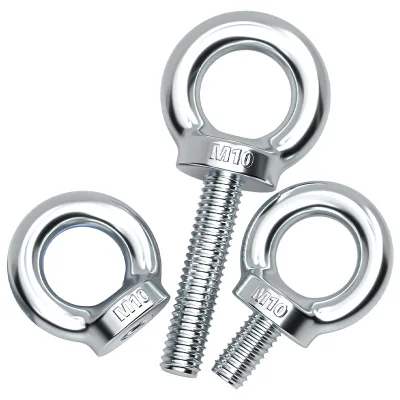


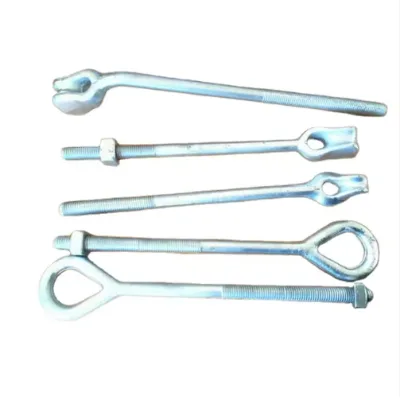
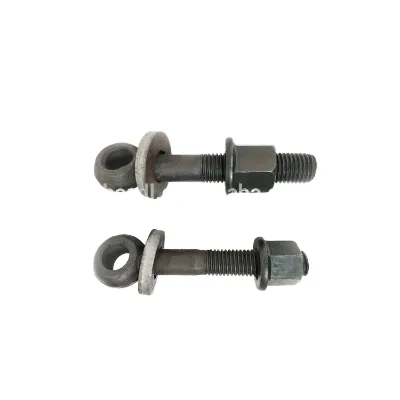
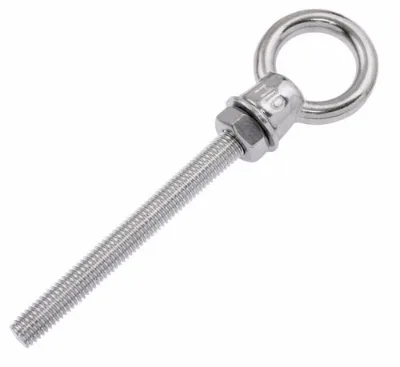


$0.80 - $1.20
MOQ: 1000 Pieces

Comprehensive Sourcing Guide
Strategic Sourcing Guide for Customized Logo Eye Bolts
Procuring Customized Logo Eye Bolts requires a disciplined approach that balances aesthetic customization with rigorous mechanical integrity. In the global fastener market, these components serve as critical lifting points and connection nodes in heavy machinery, construction, and industrial applications. The core keyword "Customized Logo Eye Bolts" implies a specific demand for branding on a functional hardware item. Buyers must navigate a complex landscape of material grades, manufacturing processes, and international standards to ensure that the added branding does not compromise the structural safety of the product. This guide outlines the essential technical, compliance, and logistical factors necessary for a successful procurement strategy.
Technical Specifications and Manufacturing Processes
The foundation of any eye bolt procurement lies in understanding the specific technical attributes that define the product's capability. Based on available market data, eye bolts are predominantly manufactured using forged technologies, specifically drop forging, which ensures a continuous grain flow that enhances tensile strength. The standard size range observed in the market spans from M6 to M64, with some suppliers offering extended ranges up to M100. This variation in size directly correlates with the working load limit (WLL), which can range from 0.14 tons to 16 tons depending on the specific diameter and design.
Head style is a critical differentiator. While the majority of the market focuses on round head designs, square head variants are also available. The choice between a round head and a square head often dictates the application environment; round heads are generally preferred for swiveling applications, whereas square heads provide a larger bearing surface for specific mounting scenarios. The connection type is typically a common bolt configuration, designed to thread securely into a mating hole.
Surface treatment is another vital technical consideration. The market offers finishes such as color zinc plating, electric galvanizing, and black finishes. These treatments are not merely aesthetic; they are essential for corrosion resistance, particularly in chemical industries or outdoor environmental applications. The material composition is predominantly carbon steel, with specific grades like C15 cited for certain applications. Buyers must verify that the material grade matches the intended load requirements, as the mechanical properties of the steel determine the safety factor of the lifting point.
Compliance, Standards, and Certification Verification
When sourcing customized hardware, adherence to international standards is non-negotiable. The eye bolt market is governed by several key standards, including DIN 580, which is frequently referenced as the primary specification for eye bolts. Other relevant standards include GB, ANSI, BSW, JIS, and GOST. The specific standard applicable to a purchase order depends on the region of the buyer and the regulatory requirements of the end-user's industry. For instance, a product labeled as a "DIN 580 Eye Bolt" must strictly adhere to the dimensional and mechanical tolerances defined in that specific standard.
Certification plays a pivotal role in validating the quality of the supply chain. Reputable suppliers in this sector often hold ISO 9001:2015 for quality management and ISO 14001:2015 for environmental management. These certifications indicate that the manufacturer operates under a systematic framework for quality control and environmental responsibility. Additionally, third-party certifications such as SGS or CE may be required for specific export markets or heavy industrial projects. Buyers should not assume that a supplier's claim of compliance is sufficient; they must request valid, up-to-date certificates that cover the specific production batch or model number.
The following table summarizes the key standards and certifications relevant to eye bolt procurement:
| Category | Standard / Certification | Relevance to Procurement |
|---|---|---|
| Design Standard | DIN 580 | Primary reference for eye bolt geometry and load ratings. |
| Regional Standards | ANSI, GB, BSW, JIS, GOST | Ensures compatibility with local machinery and regulatory bodies. |
| Quality Management | ISO 9001:2015 | Verifies the manufacturer's consistency in production quality. |
| Environmental | ISO 14001:2015 | Confirms adherence to environmental management protocols. |
| Third-Party | SGS, CE | Often required for export compliance and heavy industrial safety. |
Cost Drivers and Pricing Dynamics
The pricing of customized eye bolts is influenced by a combination of material costs, manufacturing complexity, and customization requirements. The observed price range in the market is broad, extending from $0.01 to $1399 per unit, reflecting the vast difference between small, standard M6 bolts and large, heavy-duty M100 lifting points. Several factors drive these costs. First, the raw material price of carbon steel fluctuates with global commodity markets. Second, the forging process, particularly drop forging, is more energy-intensive and capital-heavy than machining, adding to the base cost.
Customization adds a significant layer to the pricing structure. Adding a logo to an eye bolt requires additional tooling for stamping or laser etching, as well as potential secondary processing steps to ensure the branding does not interfere with the surface treatment. The MOQ (Minimum Order Quantity) is another major cost driver. While some suppliers list an MOQ as low as 1 piece, others require orders of 500 pieces or more, with some reaching up to 10,000 units. Higher volume orders typically reduce the unit cost due to economies of scale in material purchasing and production line efficiency.
Lead times also impact the final landed cost. A standard delivery window of 15 to 20 days is common, but expedited shipping or rush orders for custom branding can incur premium charges. Buyers should be aware that the "price for the Zie" or specific model configurations, such as M16x100 with a black surface, may vary significantly from the base price of a standard M6 bolt. It is essential to request a detailed breakdown of costs, separating the base hardware price from the customization and logistics fees.
Typical Applications and Industry Suitability
Eye bolts are versatile components found across a wide spectrum of industries. The primary application is in machinery, where they serve as attachment points for lifting, securing, or tensioning components. However, their utility extends far beyond general manufacturing. The chemical industry utilizes these bolts for securing equipment in corrosive environments, necessitating high-grade surface treatments like electric galvanizing. Similarly, the environmental sector relies on eye bolts for infrastructure maintenance and heavy equipment handling.
In the building and construction sector, eye bolts are critical for structural rigging and temporary anchoring. The working load limit of the bolt must be carefully matched to the load being lifted to prevent catastrophic failure. For example, a bolt with a WLL of 0.14 tons is suitable for light-duty tasks, while a 16-ton capacity bolt is required for heavy industrial lifting. The choice of head style also influences application; round head bolts are often used where rotation is required, while square head bolts provide stability in static loads.
The industry classification for these products is broadly "Fastener," but the specific end-use dictates the required specifications. Buyers must ensure that the selected eye bolt meets the specific safety regulations of their industry. For instance, lifting applications in the construction industry often require bolts that meet specific safety factors defined by local occupational health and safety authorities.
Supplier Evaluation and Selection Criteria
Selecting the right supplier for customized eye bolts involves a multi-faceted evaluation process. The supplier's origin is a key factor, with many manufacturers based in China, specifically in regions like Qingdao, which is a major hub for fastener production. The supply ability of the supplier is another critical metric; a capacity of 1000 tons per month indicates a robust production capability capable of handling large orders.
Buyers should verify the supplier's customization capabilities. The availability of customization is a standard feature in this market, but the quality of the execution varies. Suppliers should be able to demonstrate their ability to apply logos without compromising the structural integrity of the bolt. This includes verifying that the stamping or etching process does not create stress concentrations that could lead to failure under load.
Packaging is another area where supplier quality can be assessed. Standard packaging often involves cartons on iron or wooden pallets, with options for custom requests. Proper packaging is essential to prevent damage during transit, especially for heavy-duty bolts that can deform if stacked improperly. The supplier's ability to provide "Carton + Pallet" or "Outer Carton + Wooden Pallet / Case" options should be confirmed based on the buyer's shipping requirements.
Quality Control and Inspection Protocols
Quality control is paramount when dealing with lifting hardware. The manufacturing process, whether drop forging or standard forging, must be strictly monitored to ensure consistency. Buyers should implement a quality control protocol that includes material verification, dimensional inspection, and surface finish checks. The material grade, such as C15 carbon steel, must be verified through mill test reports or third-party testing.
Surface treatments like color zinc plating or electric galvanizing must be inspected for thickness and adhesion. A common failure point in eye bolts is corrosion, which can be mitigated by proper surface treatment but exacerbated by poor quality control. Buyers should request evidence of surface testing, such as salt spray test results, to validate the corrosion resistance claims.
For customized products, the logo application must be inspected for clarity, depth, and position. The branding should be legible and permanent, surviving the intended service life of the component. In high-stakes applications, a sample batch should be subjected to destructive testing to verify the WLL and ensure that the customization process has not weakened the component.
Long-Term Procurement Considerations
Sourcing customized eye bolts is not a one-time transaction but part of a long-term supply chain strategy. Buyers should consider the scalability of the supplier's operations. A supplier with a high supply ability and flexible MOQ options can better accommodate fluctuating demand. The lead time of 15-20 days should be factored into inventory planning to prevent stockouts.
Sustainability is increasingly becoming a procurement factor. Suppliers with ISO 14001:2015 certification demonstrate a commitment to environmental management, which can be a requirement for buyers with corporate sustainability goals. Additionally, the availability of different standards (DIN, ANSI, BSW, etc.) ensures that the supply chain can adapt to changing regulatory environments or market expansions.
Finally, the relationship with the supplier should be built on transparency and clear communication regarding specifications. Customization requires precise drawings and clear instructions. Suppliers that offer "According to the drawing" flexibility can better meet unique design requirements. By maintaining a focus on technical compliance, quality assurance, and logistical reliability, buyers can secure a steady supply of high-performance customized eye bolts that meet the rigorous demands of modern industrial applications.
FAQs
Can I add a custom logo to these eye bolts?
Yes, customization is available for these eye bolts to include your specific logo. The process involves stamping or etching the branding onto the surface without compromising the structural integrity of the forged carbon steel component.
What standards do these eye bolts comply with?
These eye bolts comply with major international standards including DIN 580, ANSI, GB, BSW, JIS, and GOST. The specific standard depends on the regional requirements of your machinery or construction application.
What is the working load limit for these bolts?
The working load limit ranges from 0.14 tons to 16 tons depending on the specific size and design. This capacity varies based on the diameter, which spans from M6 to M100 in the available product range.
Which surface finishes are available for corrosion resistance?
Available surface finishes include color zinc plating, electric galvanizing, and black finishes to ensure corrosion resistance. These treatments are essential for applications in chemical industries, environmental sectors, and outdoor building projects.
What is the minimum order quantity for custom orders?
The minimum order quantity is typically 500 pieces, though some suppliers may accept orders as low as one unit. Higher volume orders often reduce the unit cost due to economies of scale in the forging process.
How long does delivery take for these products?
The standard delivery time is 15 to 20 days from the order date. This lead time applies to standard configurations, while expedited shipping for custom branding may require additional coordination with the manufacturer.