Source Customized Logo Golf Balls for Racing, Entertainment, and Gift
Compare 30 listings for Customized Logo Golf Balls with varying MOQs, materials like urethane, and standard certifications. Buyers can evaluate options for racing, entertainment, and gifting purposes with different packing and printing methods.
Key considerations
Products List


High Quality 2/3/4 Piece Layer Golf Balls Custom Logo Tournament Golf Ball
$0.39 - $0.52
MOQ: 600 Pieces

High Quality 2 3 4 Piece Custom Printing Logo Colored Wholesale Golf Ball
$0.39 - $0.52
MOQ: 600 Pieces


Manufacturers Customized Logo Golf Balls High Quality Urethane Golf Balls
$0.70 - $0.90
MOQ: 1000 Pieces


OEM Custom Golf Balls Printing Logo Golf Balls 3 Layers Quality Golfball
$0.41 - $0.49
MOQ: 3000 Pieces


Pink Plated Color Golf Ball Good Quality for Promotional Gift Golf Ball
$0.62 - $0.67
MOQ: 1200 Pieces


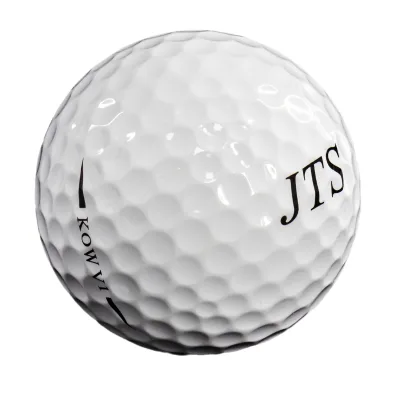


Professional Golf Ball High Quality 2/3/4 Pieces Golf Ball for Game Match
$0.99 - $1.19
MOQ: 500 Pieces

Comprehensive Sourcing Guide
Strategic Sourcing Guide for Customized Logo Golf Balls
Understanding Product Variability and Core Specifications
When sourcing Customized Logo Golf Balls, buyers must first navigate the significant variability inherent in the product category. The market offers a wide spectrum of options ranging from promotional novelties to performance-oriented equipment, each defined by distinct technical parameters. Based on observed market data, the physical dimensions of these balls typically adhere to a diameter range of 42.6mm to 42.8mm, with some specifications noting a tolerance of plus or minus 0.2mm. This dimensional consistency is critical for ensuring the balls meet general playability standards, even if they are intended primarily for promotional use rather than professional competition.
The construction of the golf ball is another primary differentiator. Sourcing guides must account for the prevalence of "Two Piece Ball" constructions, which are often favored for their durability and cost-effectiveness in bulk orders. These balls frequently feature a core designed for high elasticity, a property explicitly noted in product attributes as a key feature. The hardness of these units generally falls within the 80-90 range, a metric that influences the feel and flight characteristics of the ball. Furthermore, the surface texture, specifically the dimple count, varies across suppliers, with 332 dimples being a documented specification for certain models. Buyers should verify if the specific model they are considering matches the desired aerodynamic profile, as the dimple pattern directly affects lift and drag during flight.
Material composition is equally vital for determining the ball's longevity and performance. While some entry-level promotional balls may utilize standard synthetic rubbers, higher-tier options often specify Urethane as the cover material. Urethane covers are generally associated with better spin control and a softer feel, making them suitable for gifts intended for serious golf enthusiasts. However, the presence of Urethane in the supply chain does not guarantee that every listed product possesses this trait; it is an attribute found in specific high-end models. Therefore, procurement teams must explicitly request material certificates or detailed product data sheets to confirm the composition before placing a large order.
Compliance, Certification, and Regulatory Standards
Navigating the regulatory landscape for customized golf balls requires a careful review of the certifications and standards claimed by potential suppliers. In the observed market data, the CE mark appears as a stated standard for certain products, indicating compliance with European health, safety, and environmental protection standards. However, the presence of a CE claim in a listing does not automatically validate the entire batch; it serves as an initial indicator that the supplier claims adherence to specific directives. Buyers must treat such claims as observations that require independent verification through third-party testing reports.
Beyond the CE mark, other standards are referenced in the context of product specifications, particularly regarding weight and packaging. For instance, weight standards are listed with specific ranges such as 45.6g to 45.9g and 45.6g to 46.5g. These figures align with the general weight limits for golf balls, but the variance suggests that different models or production batches may target different weight classes. A procurement strategy should include a requirement for the supplier to provide batch-specific weight verification to ensure consistency. If the order is destined for a market with strict toy safety regulations, buyers must also verify if the balls are classified as sports equipment or toys, as this distinction impacts the necessary compliance documentation.
The origin of the product is another factor influencing compliance. Data indicates production origins in regions such as Zhejiang, Fujian, and Xiamen in China. While these are established manufacturing hubs, the specific factory location does not inherently guarantee a specific quality level or certification status. Buyers should request the full address of the manufacturing facility and cross-reference it with any known compliance databases or industry audits. Additionally, packaging standards, such as the requirement for bulk or custom boxes, must be evaluated for environmental compliance, especially if the client market has strict regulations on plastic waste and packaging materials.
Cost Drivers and Pricing Dynamics
The pricing structure for customized golf balls is influenced by a complex interplay of factors, including material costs, customization complexity, and order volume. The observed price range in the market spans from $0.01 to $19.00 USD, a wide disparity that reflects the difference between basic promotional items and premium performance balls. The lower end of this spectrum typically corresponds to balls with standard construction, basic silk screen printing, and minimal packaging customization. Conversely, the higher price points are associated with advanced materials like Urethane, complex dimple patterns, and high-end custom packaging solutions.
Minimum Order Quantity (MOQ) is a significant driver of unit cost. The market data shows MOQs ranging from 1,000 to 10,000 pieces, with specific listings citing 1,000 PCS, 3,000 PCS, and higher thresholds. Suppliers often structure their pricing to reward larger volumes, meaning the unit cost decreases as the order quantity increases. However, buyers must balance the desire for lower unit costs against the risk of inventory overstock. For companies testing a new promotional campaign, an MOQ of 1,000 pieces may be the entry point, whereas established brands might opt for the 3,000 to 10,000 range to maximize economies of scale.
Customization is another major cost component. The availability of logo customization via silk screen printing or other methods is a standard feature, but the complexity of the logo design can impact the setup fees and per-unit cost. Complex multi-color logos may require additional printing plates or more sophisticated application techniques, increasing the overall price. Furthermore, the choice of packaging—whether simple OPP bags, color boxes, or custom-designed cartons—adds to the final cost. Buyers should request a detailed breakdown of costs, separating the base ball price, the customization setup fee, and the packaging costs, to ensure transparency and accurate budgeting.
Typical Applications and Usage Scenarios
Customized Logo Golf Balls serve a diverse range of applications, extending far beyond the fairway. The primary usage categories identified in the market include entertainment, racing events, and gifting. In the context of entertainment, these balls are often used at corporate retreats, charity golf tournaments, and promotional events where the goal is brand visibility rather than professional performance. The "Entertainment" tag suggests a focus on fun and engagement, making these balls suitable for casual play or as party favors.
The "Racing" application is a unique category that may refer to golf-related competitions, driving range challenges, or specific branded events where speed and distance are highlighted. In these scenarios, the performance characteristics of the ball, such as high elasticity and specific dimple counts, become more relevant. Buyers targeting this segment should prioritize balls with verified flight performance metrics, even if the primary purpose is promotional.
Gifting is perhaps the most common application, with products explicitly labeled as "Golf Gift." In this context, the aesthetic appeal and perceived value of the ball are paramount. Custom packaging, such as boxes containing 1, 2, 3, 4, 6, 12, 16, 18, 24, or 27 pieces, allows for tailored gifting solutions. The "Fashionable" style attribute mentioned in product data suggests that some suppliers offer designs that appeal to modern trends, making them suitable for high-end corporate gifts. Buyers should align the product selection with the intended recipient; for example, a high-end client might receive a Urethane-covered ball in a premium color box, while a general attendee at a large event might receive a standard two-piece ball in a simple OPP bag.
Supplier Evaluation and Production Capabilities
Evaluating suppliers for customized golf balls requires a multi-faceted approach that goes beyond price comparison. Buyers should assess the supplier's production capacity, customization capabilities, and track record. The availability of customization is a standard feature, but the quality of the execution varies. Key attributes to verify include the precision of the logo application, with silk screen printing being a common method. Buyers should request samples to evaluate the clarity, durability, and alignment of the printed logo.
The production origin, noted as Zhejiang, Fujian, or Xiamen, provides insight into the supply chain dynamics. These regions are known for their manufacturing expertise, but buyers should still conduct due diligence on the specific factory. Questions regarding the supplier's quality control processes, lead times, and ability to handle rush orders are essential. The sample time, observed to be 5-7 working days, is a critical metric for planning procurement timelines. Buyers must ensure that this sample time aligns with their project schedule, allowing sufficient time for review and approval before mass production begins.
Additionally, the supplier's flexibility in packaging and logistics is crucial. The market offers options ranging from bulk packing to custom boxes, and the ability to accommodate specific packing requirements can be a deciding factor. Suppliers should be able to provide clear information on their packing standards, such as 100 pieces per carton or 10 pieces per box, to ensure efficient shipping and storage. Buyers should also inquire about the supplier's experience with international shipping and their ability to handle customs documentation, especially when sourcing from China.
Quality Control and Long-Term Procurement Considerations
Maintaining consistent quality is paramount when sourcing customized golf balls, as defects in the printing or construction can severely impact brand reputation. A robust quality control (QC) strategy should be implemented at multiple stages of the procurement process. This includes pre-production sample approval, in-process quality checks during manufacturing, and final inspection before shipment. Buyers should specify clear acceptance criteria for defects, such as misaligned logos, surface imperfections, or weight deviations outside the specified ranges.
Long-term procurement considerations involve building a sustainable relationship with suppliers who can deliver consistent quality over time. This requires establishing clear communication channels and agreeing on standard operating procedures for future orders. Buyers should also consider the environmental impact of their procurement choices, such as the recyclability of packaging materials and the durability of the balls to reduce waste. The "Durable" advantage noted in product attributes suggests that some suppliers prioritize longevity, which can be a key selling point for eco-conscious brands.
Finally, buyers must plan for scalability. As the demand for customized golf balls grows, the supplier must be able to ramp up production without compromising quality. This involves assessing the supplier's capacity to handle increased order volumes and their ability to maintain lead times. By focusing on these long-term factors, buyers can ensure a reliable supply chain that supports their branding and marketing objectives effectively.
| Feature Category | Observation from Market Data | Buyer Verification Requirement |
|---|---|---|
| Diameter | 42.6-42.8mm (±0.2mm) | Verify batch-specific measurements against standard. |
| Weight | 45.6-45.9g or 45.6-46.5g | Request weight certificates for specific batches. |
| Material | Urethane (High-end), Standard Rubber | Confirm material composition via test reports. |
| Construction | Two Piece Ball | Confirm core and cover structure details. |
| Dimple Count | 332 dimples (specific model) | Verify dimple pattern and count for aerodynamics. |
| Customization | Silk Screen Printing, Custom Logo | Review logo proof and sample for print quality. |
| Packaging | OPP Bag, Color Box, Bulk, Custom | Confirm packaging specs match branding needs. |
| MOQ | 1,000 to 10,000 PCS | Negotiate MOQ based on budget and inventory needs. |
| Origin | Zhejiang, Fujian, Xiamen, China | Verify factory location and audit status. |
| Certification | CE (claimed) | Request third-party CE test reports. |
FAQs
What customization options are available for logo golf balls?
Customization is available with options for silk screen printing or custom logos. Buyers can choose from various packing styles including bulk, OPP bags, or custom boxes containing 1 to 27 pieces per unit.
Which minimum order quantities apply to these golf balls?
Minimum order quantities typically range from 1,000 to 3,000 pieces depending on the specific model and supplier. Some listings specify 1,000 PCS while others require 3,000 PCS for custom orders.
How are the physical dimensions of the golf balls specified?
The diameter generally falls between 42.6mm and 42.8mm with a tolerance of plus or minus 0.2mm. Some specifications also note a weight range of 45.6g to 46.5g for standard models.
Can buyers find golf balls made with urethane material?
Yes, some high-end models are constructed with urethane material for better durability and spin control. This material is often paired with features like high elasticity and a hardness rating of 80-90.
What certifications are claimed for these golf ball products?
Certain products list CE as a compliance standard, indicating adherence to European safety directives. Buyers should verify these claims with third-party testing reports before placing large orders.
How long does it take to receive samples for these balls?
Sample preparation typically requires 5 to 7 working days before shipment. This lead time allows for quality review and approval before proceeding with mass production of the customized order.