Source Customized Precision CNC Aerospace and Automotive Parts for machinery, hardware, and auto accessories
Find 30 verified suppliers offering Customized Precision CNC Aerospace and Automotive Parts for machinery, hardware, and auto accessories. Compare specifications including materials like steel and aluminum, tolerances, and surface treatments to match your project needs.
Key considerations
Products List


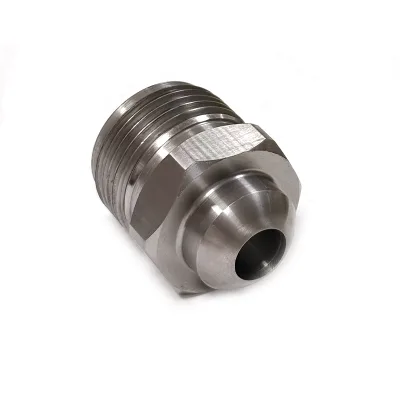
High-Precision CNC Machining Parts for Automotive and Aerospace Industries
$1.10 - $1.30
MOQ: 500 Pieces




Comprehensive Sourcing Guide
Strategic Sourcing Guide for Customized Precision CNC Aerospace and Automotive Parts
Procuring customized precision CNC components for aerospace and automotive sectors demands a rigorous approach that balances technical capability with supply chain reliability. The market for these high-tolerance parts is vast, yet the margin for error is non-existent. Buyers must navigate a landscape where material integrity, dimensional accuracy, and process consistency are paramount. This guide synthesizes available product attributes and industry standards to provide a framework for evaluating potential suppliers and defining procurement requirements without relying on unverified claims.
Technical Specifications and Machining Capabilities
The foundation of any successful procurement for aerospace and automotive parts lies in the precise definition of technical specifications. When sourcing customized CNC components, buyers must verify that the supplier possesses the specific machining methods required for the part geometry. The available data indicates that CNC Machining, CNC Turning, and CNC Milling are standard capabilities, often supplemented by specialized processes such as Grinding and EDM Wire Cutting. These processes are critical for achieving the complex geometries often required in engine components, transmission systems, and structural aerospace fittings.
Dimensional tolerance is a primary differentiator in this sector. For high-precision applications, a tolerance of +/-0.01mm is a benchmark that should be actively sought and verified. This level of precision ensures that parts fit seamlessly into assemblies where even microscopic deviations can lead to system failure. Buyers should confirm that the supplier's equipment and calibration protocols consistently meet this threshold. Furthermore, surface roughness is a critical finish parameter. A surface roughness value of 0.8 Ra is observed in high-quality listings, which is often necessary for reducing friction in moving parts or ensuring proper sealing in hydraulic systems.
Material selection is equally vital. The supply chain for these parts must accommodate a diverse range of materials, including Iron, Aluminum, Copper, various Alloys, Brass, Plastic, Steel, and Nylon. Specific applications may require Stainless Steel or Titanium, particularly for aerospace components where weight-to-strength ratios are critical. The supplier must demonstrate proficiency in machining these varied materials without compromising the structural integrity of the final product. The ability to handle "Non-Standard Processing" and "OEM ODM" services indicates a flexibility that is essential for custom designs that deviate from standard catalog items.
Compliance, Standards, and Certification Verification
In the aerospace and automotive industries, compliance is not merely a regulatory formality but a prerequisite for market entry. Buyers must rigorously audit the standards to which a supplier adheres. The observed product data references several international and national standards, including ASME, JIS Code, EN, and GB. These standards govern everything from material properties to dimensional tolerances and safety requirements. A supplier claiming compliance with these standards must provide verifiable documentation, such as material test reports or process audit certificates.
Certification status is another critical area of verification. While some listings mention ISO conditions, buyers should not assume a blanket ISO certification without specific evidence. The procurement strategy must include a request for valid, current certificates relevant to the specific industry, such as AS9100 for aerospace or IATF 16949 for automotive. The presence of "ISOCondition:New" in product descriptions suggests a focus on quality, but it does not replace the need for a formal audit. Buyers should verify that the supplier's quality management system covers the entire production lifecycle, from raw material intake to final shipment.
The "prod_standard" field often lists "customized," which implies that the supplier can adapt to specific client requirements. However, this customization must still align with the overarching regulatory framework of the target market. For instance, if a part is destined for the European market, EN standards must be strictly followed, regardless of the supplier's ability to produce to other specifications. The buyer's responsibility is to ensure that the "customized" nature of the order does not bypass necessary safety and compliance checks.
Cost Drivers and Pricing Structures
Understanding the cost drivers for customized CNC parts is essential for budgeting and negotiation. The price range observed in the market spans from $0.05 to $1000, a wide spectrum that reflects the variability in part complexity, material cost, and order volume. Several factors influence where a specific part falls within this range. Material selection is a primary driver; exotic alloys like Titanium or high-grade Stainless Steel will inherently cost more than standard Aluminum or Steel. Additionally, the machining method plays a significant role. Parts requiring EDM Wire Cutting or complex multi-axis CNC milling will incur higher labor and machine time costs compared to standard turning operations.
Order volume is another critical cost determinant. The Minimum Order Quantity (MOQ) varies significantly, with observed ranges from 1 to 1000 units. Suppliers offering an MOQ of 1 PCS are typically catering to prototyping or low-volume production, which often carries a higher unit cost due to setup fees and lower economies of scale. Conversely, bulk orders of 1000 units may benefit from optimized production runs, reducing the per-unit price. Buyers must balance the need for immediate inventory against the cost benefits of larger batches.
Packaging and logistics also contribute to the total cost. The data indicates options such as "Container Bulk Cargo" and "Wooden Box." While bulk cargo is cost-effective for large shipments, specialized packaging like wooden boxes may be required for high-value aerospace components to prevent damage during transit. These packaging requirements, along with the "Production Type" which can be either "Mass Production" or "Batch Production," must be factored into the total landed cost. Buyers should request a detailed breakdown of costs to understand the proportion of material, machining, and overhead expenses.
Typical Applications and Industry Requirements
The versatility of customized CNC parts allows them to serve a broad array of applications within the aerospace and automotive sectors. The observed application data highlights usage in "Hardware Tool," "Machinery Accessory," and specifically "Auto and Motorcycle Accessory." Beyond these general categories, the parts are frequently utilized in specialized machinery such as Metal Casting, Metal Drawing, Metal Engraving, Metal Forging, and Metal Spinning machinery. This indicates that the supply chain supports not just the end-user vehicles or aircraft, but also the manufacturing equipment that produces them.
In the automotive sector, these parts are often integral to engine assemblies, transmission systems, and suspension components. The requirement for "Metal Processing Machinery Parts" suggests a role in the maintenance and operation of the factory floor itself. For aerospace, the precision required for "Metal Cutting Machine" and "Metal Recycling Machine" components underscores the need for durability and high performance under extreme conditions. The ability to produce "Spline bushing" and "CNC Machined Components" points to applications involving rotational motion and power transmission, which are fundamental to vehicle and aircraft operation.
The "Service" attribute, listing "OEM ODM Customized," confirms that these parts are often designed to fit specific proprietary systems. This means that a single supplier might serve multiple clients with unique design requirements, necessitating a robust intellectual property protection strategy. Buyers must ensure that the supplier understands the specific performance demands of their application, whether it involves high-speed rotation, extreme temperatures, or heavy loads.
Supplier Evaluation and Quality Control Protocols
Evaluating a supplier for high-stakes applications requires a deep dive into their quality control (QC) systems. The most critical observation in the provided data is the "100% Inspection Before Shipment" and "100% Inspection" protocols. This level of scrutiny is essential for aerospace and automotive parts, where a single defective component can lead to catastrophic failure. Buyers should verify that this inspection is not just a visual check but involves precise measurement tools capable of validating the +/-0.01mm tolerance.
The "QC System" should be documented and integrated into the production workflow. Suppliers offering "Professional Team Provides Solutions" for customized services should be able to demonstrate how their engineering team collaborates with the buyer to resolve design challenges. The "Drawing Format" capability, supporting 2D (Pdf/CAD) and 3D (Iges/Step) files, is a technical indicator of the supplier's ability to interpret complex designs accurately. Buyers should test the supplier's ability to handle these file formats and ensure that the digital models translate perfectly into physical parts.
Furthermore, the "Surface Treatment" options, including Anodizing, Laser Engraving, Silk Printing, Polishing, and Passivating, are vital for the final product's performance and longevity. The choice of treatment depends on the application environment; for example, passivation is crucial for stainless steel to prevent corrosion, while anodizing is common for aluminum to enhance wear resistance. A supplier's ability to offer these treatments in-house or through trusted partners adds value to the procurement process. Buyers must ensure that the surface treatment process does not introduce dimensional changes that exceed the specified tolerances.
Long-Term Procurement and Supply Chain Resilience
Sourcing for aerospace and automotive sectors is a long-term commitment that extends beyond the initial transaction. The "Production Type" of "Mass Production" or "Batch Production" indicates the supplier's capacity to scale. Buyers must assess whether the supplier can maintain consistent quality and lead times as order volumes increase. The "Small Orders: Accepted" attribute suggests flexibility, but the ability to handle "Container Bulk Cargo" is necessary for large-scale deployments.
Lead times and location are also factors in long-term planning. While specific lead times are not provided in the data, the origin is noted as "China." Buyers should consider the implications of this location on shipping times, import duties, and supply chain visibility. Establishing a clear communication channel for updates on production status is essential to mitigate risks associated with delays. The "Customized" nature of the parts means that any changes in design or material requirements will require a re-evaluation of the entire production process, making a responsive supplier critical.
Finally, the "Service" aspect of "OEM ODM" implies a partnership rather than a simple vendor relationship. Buyers should look for suppliers who offer continuous support, including troubleshooting, design optimization, and after-sales service. The ability to provide "Professional Team Provides Solutions" suggests that the supplier can act as an extension of the buyer's engineering department. This level of engagement is necessary for navigating the complex regulatory and technical landscapes of the aerospace and automotive industries. By prioritizing suppliers with robust QC systems, verified standards compliance, and a track record of handling complex customizations, buyers can build a resilient and efficient supply chain for their precision component needs.
FAQs
What customization options are available for these parts?
Customization is available for these parts, allowing for non-standard processing and tailored designs. Suppliers offer OEM and ODM services to meet specific client requirements, ensuring the final product aligns with unique engineering drawings and specifications.
Which machining methods are used for production?
Production utilizes CNC Machining, CNC Turning, and CNC Milling alongside specialized processes like Grinding and EDM Wire Cutting. These methods ensure high precision and are suitable for complex geometries required in aerospace and automotive applications.
Can I order small quantities for prototyping?
Small orders are accepted, with Minimum Order Quantities ranging from 1 to 1000 units depending on the supplier. This flexibility supports prototyping needs and low-volume production runs without requiring large initial inventory commitments.
What quality control systems are in place?
A 100% inspection protocol is implemented before shipment to ensure every component meets strict standards. This rigorous quality control verifies dimensional accuracy and surface finish, guaranteeing reliability for critical aerospace and automotive assemblies.
Which materials can be used for manufacturing?
Manufacturing supports a wide range of materials including Iron, Aluminum, Copper, Steel, Stainless Steel, and various Alloys. Suppliers can select specific materials like Titanium or Nylon based on the performance requirements of the final application.
What standards do the parts comply with?
Parts comply with international and national standards such as ASME, JIS Code, EN, and GB. These standards ensure dimensional accuracy and material integrity, providing a reliable framework for safety and performance in regulated industries.