Source Customized Portable Paper Bag for Shopping, Gifts, and Packing
Explore 30 options for Customized Portable Paper Bag solutions suitable for retail, promotional events, and household storage. Compare features like kraft paper construction, logo printing, and eco-friendly materials to find the right supplier for your needs; compare the available evidence and request quotations based on your requirements.
Key considerations
Products List


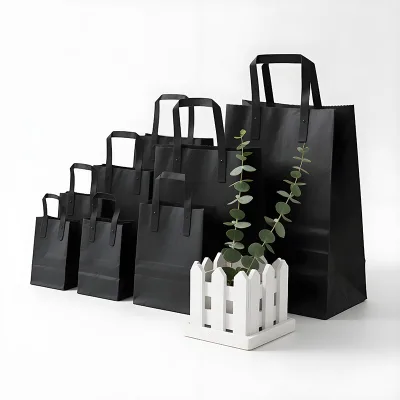
Flat Fold Paper Bag Can Be Customized for Travel Portable Souvenir Packing
$0.23 - $0.40
MOQ: 1000 Pieces

Soft Surface Paper Bag Comfortable to Carry for Shopping and Small Gift Packing
$0.22 - $0.38
MOQ: 1000 Pieces




Comprehensive Sourcing Guide
Customized Portable Paper Bag Sourcing Guide
Buyers seeking customized portable paper bags must first align their product requirements with the observed market signals, which indicate a strong availability of eco-friendly kraft paper options. The data confirms that suppliers frequently offer medium-soft hardness profiles suitable for carrying groceries, gifts, and promotional items, while maintaining a natural brown color that appeals to sustainability-conscious consumers. This specific material profile suggests that the primary value proposition for these bags lies in their recyclability and economical production costs, making them ideal for high-volume retail and event distribution.
When evaluating listings, procurement teams should note the wide range of customization capabilities, including flexo and offset printing methods that support logo application and branding. The observed product models range from small square shapes to larger rectangular configurations, with dimensions often customized to specific client needs rather than adhering to rigid standard sizes. This flexibility allows buyers to tailor the bag's structural integrity and visual appeal to distinct use cases, from cosmetic packaging to garment and shoe retail, ensuring the final product meets both functional and aesthetic expectations.
Product Scope and Observed Listing Signals
The market for customized portable paper bags demonstrates a clear segmentation based on paper type and intended industrial use, with kraft paper and cardboard being the dominant materials observed. Buyers will find that these products are frequently marketed with advantages such as being disposable, recyclable, and economical, which are critical factors for brands aiming to reduce their environmental footprint while maintaining cost efficiency. The versatility of these bags is further evidenced by their application across diverse sectors, including health care, electronics, food service, and arts and crafts, indicating a broad utility that transcends single-industry limitations.
Procurement strategies should account for the variety of surface handling and finishing options available, such as UV coating, gold stamping, embossing, and lamination in either matte or glossy finishes. These finishing processes allow for significant differentiation in the final product, enabling brands to create premium packaging experiences that justify higher price points or enhance brand perception. The presence of free sample availability, with lead times ranging from three to seven days, provides a practical mechanism for buyers to validate the quality of these finishes and the structural integrity of the handles before committing to larger orders.
Technical Specifications to Verify
Buyers must rigorously verify the physical dimensions and structural specifications of the paper bags, as the observed data indicates a mix of standardized and fully customized size options. While some listings specify exact dimensions like 13 by 7 by 14 inches, others offer fully customized sizing to fit unique product requirements, necessitating clear communication of length, width, and height parameters during the ordering process. The shape of the bags is typically rectangular or square, and the weight of the finished product generally falls below 0.5 kg or within the 0.5 to 1 kg range, depending on the thickness of the paper and the inclusion of additional features like reinforced handles.
It is essential to confirm the specific printing capabilities and surface treatments that will be applied to the bags, as the observed listings support both flexo and offset printing techniques. Buyers should ensure that the chosen printing method aligns with their design complexity and volume requirements, noting that surface handling can include advanced finishes like laser engraving or debossing. Additionally, the verification of the paper type, whether kraft or cardboard, is critical for determining the bag's load-bearing capacity and durability, ensuring it can safely transport items ranging from greeting cards to heavy cosmetic products without tearing.
Compliance and Safety Documentation
Sourcing teams should prioritize the verification of ISO9001 certification as a baseline indicator of a supplier's commitment to quality management systems and consistent production standards. While the observed data explicitly lists ISO9001, buyers must request current certificates to confirm that the manufacturing facility maintains these standards throughout the production cycle, particularly for bags intended for food contact or sensitive retail environments. This documentation serves as a foundational check for operational reliability, ensuring that the supplier has established protocols for quality control that minimize the risk of defects in the final portable paper bags.
Beyond general quality certifications, buyers should investigate specific material safety and environmental compliance claims, such as the eco-friendly and recyclable attributes frequently highlighted in product listings. Although FSC certification is mentioned in background notes, it should not be assumed as a standard feature without explicit confirmation from the supplier. Procurement professionals must request test reports or material safety data sheets to validate that the inks, adhesives, and paper fibers used in the production process meet relevant safety regulations for the intended market, ensuring the product is safe for consumers and compliant with local environmental laws.
Cost Drivers and Commercial Terms
The commercial landscape for customized portable paper bags is influenced by several key cost drivers, including the complexity of customization, the volume of the order, and the specific finishing processes selected. The observed minimum order quantities (MOQ) range significantly from 100 to 30,000 units, allowing flexibility for both small startups and large enterprises, but buyers must be prepared for higher per-unit costs when ordering near the lower end of this spectrum. Additionally, the choice of paper type, such as premium kraft versus standard cardboard, and the inclusion of advanced surface treatments like gold stamping or UV lamination will directly impact the final price per unit.
Buyers should also factor in the logistical costs associated with packaging and shipping, as the observed data indicates that products are typically packed in carton boxes or master cartons. The lead time for samples is generally short, ranging from three to seven working days, which facilitates rapid prototyping, but bulk production lead times may vary based on the supplier's capacity and the complexity of the custom order. Understanding these commercial terms, including the availability of OEM services and the specific packing requirements, is crucial for accurate budgeting and ensuring that the total cost of ownership aligns with the project's financial constraints.
Supplier Qualification and Quality Control
Establishing a robust supplier qualification process is vital when sourcing customized portable paper bags, given the high degree of customization involved in the product. Buyers should verify that the supplier accepts custom orders and offers OEM services, as these capabilities indicate a willingness to adapt their production lines to meet specific design and branding requirements. The observation of free sample availability, including stocked options, provides an excellent opportunity to assess the supplier's responsiveness and the quality of their initial output before scaling up to full production runs.
Quality control measures must be integrated into the procurement workflow to ensure that the final products meet the agreed-upon specifications for hardness, shape, and printing quality. Buyers should request a detailed quality assurance plan that covers the inspection of raw materials, the monitoring of the printing and finishing processes, and the final product inspection before packing. Given the variability in observed product models and sizes, it is essential to establish clear acceptance criteria for dimensions and structural integrity, ensuring that the portable paper bags perform reliably in their intended applications without failure.
Long-Term Procurement Checks
For long-term procurement success, buyers must establish a framework for continuous performance monitoring that tracks the supplier's ability to maintain consistent quality and delivery timelines. The observed data suggests that suppliers offer a range of product models and customization options, but maintaining this level of flexibility over time requires a stable and well-managed supply chain. Regular audits of the supplier's production capabilities and quality control processes will help ensure that the eco-friendly and recyclable attributes of the bags remain consistent, preserving the brand's commitment to sustainability.
Procurement teams should also plan for periodic re-evaluation of the product specifications and market trends to ensure the customized portable paper bags remain competitive and relevant. As consumer preferences shift towards more sustainable packaging solutions, buyers must stay informed about new materials and finishing techniques that could enhance the product's appeal. By maintaining open communication with suppliers and regularly reviewing the commercial terms, buyers can adapt their sourcing strategies to optimize costs and quality, ensuring a reliable supply of high-performance paper bags for their ongoing business needs.
FAQs
Can I get free samples for customized portable paper bags?
Yes, free samples are available for stock items or custom orders. Stocked samples are provided at no cost, while custom samples may require a fee that is often refundable upon bulk ordering. The sample preparation time typically ranges from 3 to 7 working days, allowing you to verify quality and design before committing to a large production run.
What paper types are used for these portable paper bags?
The primary materials used are Kraft Paper and Cardboard. Kraft Paper offers a natural brown color and is noted for being eco-friendly, recyclable, and economical. Cardboard options provide a sturdier structure suitable for heavier items. Both materials support various surface handling techniques, including flexo and offset printing, ensuring your branding stands out on the final product.
What customization options are available for logo printing?
Custom logo printing is fully supported with OEM services welcome. You can choose from surface handling methods like flexo printing, offset printing, or advanced finishes such as UV coating, gold stamping, embossing, debossing, and laser effects. The surface can also be finished with matt or glossy lamination. These options allow for precise branding on the natural brown or other colored bags.
What are the typical sizes and shapes for these bags?
Sizes are fully customized to meet your specific needs, ranging from small to middle dimensions. Common specifications include models like 13x7x14 inches or 15x10x3 cm. Shapes are primarily rectangular or square, designed to accommodate various products such as jewelry, cosmetics, food, and garments. The weight capacity is generally under 1 kg, making them ideal for lightweight portable items.
What certifications do these paper bags hold?
The manufacturing process adheres to ISO9001 certification standards, ensuring consistent quality management. While FSC certification is mentioned in background contexts, the primary documented standard is ISO9001. The bags are also described as eco-friendly and recyclable, appealing to sustainable sourcing requirements. These certifications help verify the reliability of the production facility and the environmental responsibility of the materials used in the bags.
What is the minimum order quantity for these bags?
The minimum order quantity typically ranges from 100 to 30,000 units, depending on the specific customization and material requirements. This flexible MOQ allows both small businesses and large enterprises to place orders. The pricing structure is economical, with observed ranges between 0.02 and 1 USD per unit. Lower MOQs may be suitable for sampling or small promotional runs, while higher volumes offer better economies of scale.