Source Dehp-Free Condom Infusion Set for Clinical, Veterinary, Hospital
Find 30 Dehp-Free Condom Infusion Set options with customizable tube lengths and sterilization methods. Buyers can compare specifications for clinical, veterinary, and hospital applications from verified Chinese manufacturers.
Key considerations
Products List


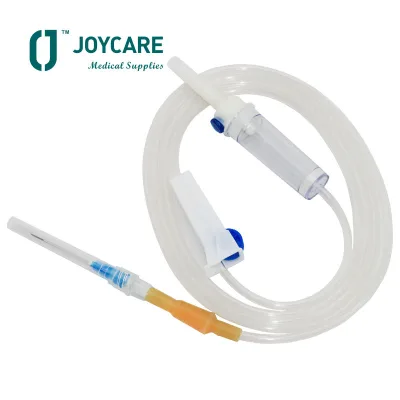


Dehp-Free Latex-Free IV Infusion Set with Y-Site Injection Port and Luer Lock
$0.05 - $0.06
MOQ: 50000 Pieces


High Quality Giving Set Medical Disposable IV Infusion Set for Single Use
$0.02 - $0.05
MOQ: 10000 Pieces
Comprehensive Sourcing Guide
Dehp-Free Condom Infusion Set Sourcing Guide
Procuring medical infusion sets requires a rigorous understanding of material safety, regulatory compliance, and supply chain reliability. The term "Dehp-Free Condom Infusion Set" often appears in global B2B marketplaces, yet it combines distinct product categories that require careful disambiguation. In the context of the provided product data, the core keyword likely refers to disposable infusion sets that are free of Di(2-ethylhexyl) phthalate (DEHP), a plasticizer commonly used in PVC medical devices. The word "condom" in this search query may be a mistranslation or a misclassification by listing platforms, as the supplied facts describe "Disposable Infusion Sets," "IV sets," and "Syringes" rather than barrier protection products. Therefore, this guide focuses on the procurement of DEHP-free plastic infusion systems, verifying their technical specifications, compliance documentation, and commercial terms to ensure patient safety and operational efficiency.
Buyers must distinguish between the physical attributes of the infusion set and the marketing terminology used by suppliers. The observed product listings indicate a range of models, including V-SM001, V-SM003, and HXSY-2, all originating from China, specifically Jiangsu and Shandong provinces. These products are characterized by their material composition, primarily plastic, with stainless steel needles and customizable tube lengths. The critical safety feature highlighted in the data is the "Free Dehp" attribute, which addresses growing regulatory and clinical concerns regarding phthalate exposure. This guide provides a structured approach to evaluating these products, ensuring that procurement decisions are based on verified technical data rather than ambiguous listing titles.
Product Scope and Observed Listing Signals
The product scope for DEHP-free infusion sets encompasses a variety of disposable medical devices designed for clinical infusion and intramuscular injection. The observed listings reveal a diverse range of configurations, including infusion sets with tube lengths of 150cm, 180cm, 1.5m, or 2m, and syringes with volumes of 10ml. These products are intended for adult use in hospital settings by nursing staff, indicating a focus on standard clinical applications. The presence of features such as "Anti-Kink" tubes, "Luer Lock or Luer Slip" options, and "Airvent" choices suggests that buyers can select specific configurations tailored to their institutional protocols. Understanding this scope is essential for aligning procurement with clinical needs, ensuring that the selected devices meet the functional requirements of infusion therapy.
Listing signals also provide insight into the packaging and customization options available to buyers. The products are typically packed in blister packs, PE bags, or carton packing, with some listings offering individual blister/PE packing for enhanced sterility and handling. Customization is explicitly marked as available, allowing buyers to request specific tube lengths, logo printing, or other modifications. The "Free Sample" attribute indicates that suppliers are willing to provide product samples for evaluation, a crucial step in the sourcing process. However, buyers should be cautious of inconsistent terminology, such as the mention of "condom" in the keyword, and verify that the actual product delivered matches the technical specifications of an infusion set, not a barrier product.
Technical Specifications to Verify
Verifying technical specifications is paramount to ensuring the functionality and safety of infusion sets. Key attributes to confirm include the tube material, needle composition, and sterilization method. The supplied facts indicate that the tubes are made of plastic, with stainless steel needles, and are sterilized using Ethylene Oxide Sterilization. Buyers should verify that the "Free Dehp" claim is substantiated by material safety data sheets, ensuring that the plastic components do not contain harmful phthalates. Additionally, the drop factor, specified as 1ml=20drops or 1ml=60drops, must be confirmed to match the precision requirements of the clinical setting. These specifications directly impact the accuracy of fluid delivery and patient safety.
Other technical details, such as the option for Luer Lock or Luer Slip connections, and the presence or absence of an air vent, should be carefully reviewed. The "Anti-Kink" feature is a critical quality indicator, ensuring uninterrupted flow during infusion. Buyers should also verify the model numbers, such as V-SM001, V-SM003, or HXSY-2, to ensure consistency across orders. The standard of 604035CM for carton packing dimensions is relevant for logistics planning, but the individual product dimensions and weight should be confirmed to optimize storage and handling. By meticulously verifying these technical parameters, buyers can avoid discrepancies between ordered and delivered goods.
Compliance and Safety Documentation
Compliance with international standards is non-negotiable for medical device procurement. The observed listings mention certifications such as CE, FDA, ISO, and SGS, which are critical indicators of regulatory adherence. Buyers must verify the validity of these certifications, ensuring that they apply to the specific product models being purchased. The standard ISO13485-2003 is referenced, which relates to quality management systems for medical devices, while CE0197 indicates conformity with European health, safety, and environmental protection standards. These certifications provide assurance that the manufacturing processes meet rigorous quality and safety requirements.
In addition to certifications, buyers should request documentation related to the "Free Dehp" claim. This may include material test reports or declarations of conformity that confirm the absence of DEHP in the plastic components. The Ethylene Oxide Sterilization method should be validated through sterilization certificates, ensuring that the devices are free from harmful residues. The Medical Device Regulatory Type is listed as "Infusion Set," which should be cross-referenced with local regulatory requirements in the buyer's country. By thoroughly reviewing these compliance documents, buyers can mitigate regulatory risks and ensure that the products are suitable for clinical use.
Cost Drivers and Commercial Terms
Understanding the cost drivers and commercial terms is essential for effective procurement planning. The observed price range of 0.01-1 USD suggests a competitive market, but buyers should be aware that prices can vary based on customization, volume, and certification requirements. The Minimum Order Quantity (MOQ) ranges from 5 to 180,000 units, offering flexibility for both small-scale trials and large-scale contracts. Buyers should negotiate terms that align with their inventory management strategies, considering the lead time of 20-30 days for delivery. Early planning and clear communication of requirements can help secure favorable pricing and delivery schedules.
Commercial terms also include packaging and shipping considerations. The products are packed in cartons, with individual blister or PE bag packaging, which affects the number of units per shipment. Buyers should clarify who bears the cost of shipping and insurance, and whether Incoterms such as FOB or CIF are applicable. The availability of free samples is a valuable commercial term that allows for quality assessment before committing to a large order. By understanding these cost drivers and terms, buyers can optimize their procurement budget and ensure a smooth supply chain operation.
Supplier Qualification and Quality Control
Supplier qualification is a critical step in mitigating supply chain risks. Buyers should conduct due diligence on suppliers, verifying their business licenses, manufacturing capabilities, and quality management systems. The origin of the products, specifically Jiangsu and Shandong provinces in China, should be confirmed, and suppliers should be evaluated based on their track record and reputation. Requesting references or case studies from other clients can provide additional insight into the supplier's reliability and product quality. A thorough supplier qualification process helps ensure that the procurement partner is capable of meeting the buyer's requirements.
Quality control measures should be established to monitor the consistency of the products. Buyers should implement incoming inspection protocols to verify that the delivered goods match the agreed-upon specifications, including the "Free Dehp" attribute, sterilization status, and physical dimensions. Random sampling and testing can help identify any defects or deviations from the standard. Establishing a clear quality agreement with the supplier, outlining responsibilities for defect resolution and corrective actions, is essential for maintaining product integrity. By prioritizing supplier qualification and quality control, buyers can ensure a steady supply of high-quality infusion sets.
Long-Term Procurement Checks
Long-term procurement success depends on continuous monitoring and evaluation of the supply chain. Buyers should regularly review supplier performance metrics, such as on-time delivery rates, product quality, and responsiveness to issues. Establishing a periodic review process allows for the identification of trends and potential areas for improvement. Feedback from clinical staff on the usability and performance of the infusion sets can also provide valuable insights for future procurement decisions. By maintaining an active engagement with suppliers, buyers can foster a collaborative relationship that supports continuous improvement.
Additionally, buyers should stay informed about changes in regulatory requirements and industry standards. The medical device landscape is dynamic, with evolving regulations regarding material safety and environmental impact. Regularly updating compliance documentation and verifying that suppliers adhere to the latest standards is crucial for long-term risk management. Buyers should also consider diversifying their supplier base to mitigate the risk of supply disruptions. By implementing robust long-term procurement checks, buyers can ensure the sustainability and reliability of their medical device supply chain.
FAQs
What certifications do the infusion sets have?
The infusion sets hold FDA and CE certifications, ensuring compliance with international medical device standards. Some models also feature ISO SGS and CE0197 approvals. These credentials verify that the products meet rigorous safety and quality requirements for clinical use in hospitals and veterinary settings.
Are these infusion sets free of DEHP?
Yes, the infusion sets are explicitly DEHP-free. This feature ensures safer patient care by avoiding harmful plasticizers. The products are made from PVC material that adheres to strict safety guidelines, making them suitable for sensitive clinical applications where chemical exposure must be minimized for both patients and medical staff.
Can the tube length be customized?
Yes, customization is available for tube lengths. Standard options include 150cm, 180cm, 1.5m, or 2m. Buyers can request specific lengths to suit particular medical procedures or equipment setups. This flexibility allows healthcare providers to optimize workflow and ensure compatibility with various infusion pumps and delivery systems.
What is the typical lead time for orders?
The typical delivery time is 20-30 days. This timeframe applies to standard production runs for disposable infusion sets. Buyers should account for this duration when planning inventory for hospitals or clinics. Expedited options may vary, so confirming specific schedules with suppliers is recommended for urgent clinical supply needs.
How are the infusion sets packaged?
The infusion sets are packaged in blister packs, PE bags, or carton packing. Individual units often come in sterile blister or PE packaging to maintain hygiene. Bulk shipments are secured in cartons. This multi-layered packaging ensures product integrity during transit and storage, meeting clinical standards for sterile medical device distribution.
Are free samples available for testing?
Yes, free samples are available for evaluation. Buyers can request samples to verify product quality, sterility, and functionality before placing bulk orders. This allows medical procurement teams to assess compatibility with existing hospital infrastructure. Sample availability supports informed decision-making for large-scale clinical procurement contracts.