Source Diamond Honing Stone for Precision Parts, Instruments, and Polishing
Compare 30 Diamond Honing Stone options from Chinese manufacturers offering metal and resin bonds with grit sizes from 80 to 1200#. Buyers can evaluate standard oilstones and custom mandrels for instrument industry and precision parts applications with MOQs starting at one set.
Key considerations
Products List




Comprehensive Sourcing Guide
Strategic Sourcing Guide for Diamond Honing Stones
Understanding Product Categories and Technical Specifications
When sourcing diamond honing stones, buyers must first distinguish between the various configurations available in the global market. The core keyword "Diamond Honing Stone" encompasses a diverse range of abrasive tools designed for precision finishing, yet the specific attributes vary significantly based on the intended application. Based on current market observations, these products are frequently categorized by their bond type, grit size, and physical geometry. The bond is a critical determinant of the stone's performance; observed data indicates the availability of both metal bonds and resin bonds. Metal bonds are often associated with high durability and specific grinding applications, while resin bonds may be selected for different finishing characteristics.
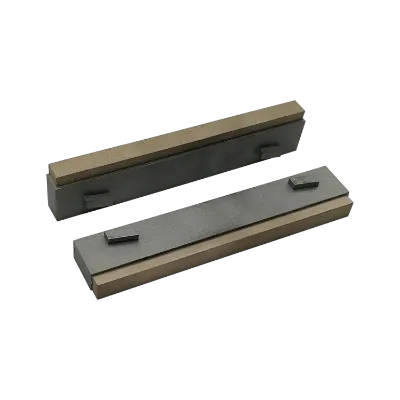
The grit size represents another fundamental specification that dictates the surface finish quality. Market listings show a wide spectrum of abrasive grain sizes, ranging from coarse 80# to ultra-fine 1200#. Specific product models have been observed with grit ranges such as 80-600#, 80-1200#, and specific combinations like 80, 100/120, 120/140, 140/170, 170/200, and 200/230. Buyers must align these grit specifications with their desired surface roughness targets. Furthermore, the physical shape of the stone is essential for tool compatibility. Observed configurations include flat-shaped stones, mandrels, and specific dimensional models such as 76x7.9x7.9 mm or 10043.5 mm. The manufacturing process, often sintered, ensures the structural integrity of the abrasive grains within the bond matrix.
Compliance, Standards, and Certification Verification
In the B2B procurement of precision abrasive tools, verifying compliance with industry standards is paramount to ensuring product reliability and safety. While specific certification bodies may vary by region, buyers should rigorously check for adherence to recognized manufacturing standards. Observed product data references specific standard codes such as M27J55, GH233, GH236, and GH258. Additionally, some listings reference standards based on requested customizations or specific dimensional tolerances like 10043.5. It is crucial for procurement teams to understand that the presence of a standard code on a product listing does not automatically guarantee compliance with the buyer's local regulatory requirements; rather, it indicates the manufacturer's internal or regional benchmark.
Buyers must also verify the origin of the product, as this can influence the applicable quality control frameworks. Sourcing data indicates origins from specific regions in China, including Shanxi and Changzhi. While these locations are known manufacturing hubs, the "China" origin designation alone does not define the quality level. Procurement teams should request documentation that confirms the product meets the specific standard codes listed, such as verifying that a stone labeled with the GH236 standard actually conforms to the dimensional and material properties defined by that code. Furthermore, for applications in the instrument industry or precision parts manufacturing, buyers should ensure that the supplier can provide traceability for the diamond or CBN abrasives used, as these are high-value components that require strict quality assurance.
Cost Drivers and Pricing Structure Analysis
The pricing structure for diamond honing stones is influenced by a complex interplay of material costs, manufacturing complexity, and order volume. The observed price range in the market spans from 1 USD to 1700 USD, reflecting the vast difference between standard, off-the-shelf items and highly customized, precision-engineered solutions. Several factors drive these costs. First, the type of abrasive material is a primary cost driver; stones utilizing diamond or CBN (Cubic Boron Nitride) abrasives are inherently more expensive than those using conventional abrasives due to the raw material cost. Second, the bond type and manufacturing process impact the price; sintered metal bonds or specialized resin bonds require precise engineering and energy-intensive processes.
Order volume and customization are significant secondary drivers. While the Minimum Order Quantity (MOQ) for many standard items is observed to be as low as 1 set or 1 unit, allowing for small-batch procurement, larger orders often yield better unit economics. Customization is a major cost variable; products offering OEM support, customized sizes, or specific grit combinations typically command a premium over standard models like the DH2S-8 or T20J55. Additionally, the packaging requirements, such as carton boxes or paper cartons, and the logistical costs associated with delivery times, which can range from 15 working days to 45 days, must be factored into the total landed cost. Buyers should analyze the total cost of ownership rather than just the unit price, considering that a higher-priced stone with a longer service life may offer better value over time.
Typical Applications and Industry Use Cases
Diamond honing stones are engineered for high-precision applications where surface finish and dimensional accuracy are critical. The observed data highlights several key industry sectors that rely on these tools. The instrument industry is a primary user, requiring stones with fine grit sizes and consistent performance for delicate components. Similarly, the precision parts sector utilizes these stones for honing and polishing operations where tight tolerances are non-negotiable. The specific effects observed, such as polishing and grinding, indicate that these stones are versatile tools capable of both material removal and surface refinement.
The versatility of these stones is further demonstrated by their use in honing mandrels and flat-shaped configurations. For instance, models like the Honing mandrel are specifically designed for internal honing operations, while flat-shaped stones are ideal for surface grinding and lapping tasks. The application of these stones often involves the processing of hard materials, necessitating the use of diamond or CBN abrasives. Buyers should match the stone's grit size and bond type to the specific material being processed; for example, a metal bond might be preferred for high-volume grinding, while a resin bond might be selected for finer finishing in the instrument industry. Understanding these application nuances ensures that the selected stone delivers the intended "Long Life" and "Polishing" effects without premature wear or damage to the workpiece.
Supplier Evaluation and Operational Capabilities
Evaluating potential suppliers requires a focus on their operational capabilities, customization support, and logistical reliability. A robust supplier should offer customization support, including OEM services, allowing buyers to tailor the product to their specific machinery and process requirements. The availability of customization is a key differentiator, as seen in the market where many suppliers offer "as requested" standards and customized sizes. Buyers should assess the supplier's ability to deliver specific models, such as the N37, N37j55, or GH233 series, and verify their capacity to meet the required grit sizes and bond types.
Logistical performance is another critical evaluation metric. Delivery times observed in the market vary significantly, ranging from 15 working days to 45 days. This variance suggests that buyers must clarify lead times early in the procurement process to avoid production delays. A reliable supplier should provide clear communication regarding production schedules and shipping timelines. Additionally, the packaging method, whether carton boxes or paper cartons, should be evaluated to ensure the product arrives in pristine condition, especially for precision tools that are sensitive to impact and environmental factors. Buyers should also inquire about the supplier's quality control processes to ensure that the "Long Life" and "Grinding" claims are backed by consistent manufacturing practices.
Quality Control and Long-Term Procurement Strategy
Implementing a rigorous quality control (QC) strategy is essential for maintaining the performance and reliability of diamond honing stones. Buyers should establish clear acceptance criteria based on the product specifications, including grit size consistency, bond integrity, and dimensional accuracy. For example, verifying that a stone labeled with a grain size of Gmg37 or Rmg005 actually matches the specified range is a fundamental QC step. Additionally, buyers should request test results or performance data that validate the stone's effectiveness in the intended application, such as its ability to achieve the desired polishing effect without excessive wear.
Long-term procurement considerations involve building a sustainable supply chain that balances cost, quality, and reliability. Given the wide range of MOQs and lead times, buyers should develop a flexible sourcing strategy that accommodates both immediate needs and long-term production schedules. Establishing a relationship with a supplier who offers consistent quality and reliable delivery times, such as those with a 15-day delivery window, can streamline operations. Furthermore, buyers should monitor the supplier's ability to adapt to changing requirements, such as new grit sizes or custom dimensions, to ensure continuity of supply. By focusing on these strategic elements, organizations can secure a steady flow of high-quality diamond honing stones that support their precision manufacturing goals.
Comparative Analysis of Product Attributes
To facilitate informed decision-making, buyers can compare key product attributes across different models. The following table summarizes the observed variations in specifications, standards, and origins to highlight the diversity within the Diamond Honing Stone category.
| Attribute Category | Observed Variations |
|---|---|
| Bond Type | Metal Bond, Resin Bond |
| Grit Size Range | 80-600#, 80-1200#, 80-230# (specific combos) |
| Abrasive Material | Diamond, CBN, Silicon |
| Standard Codes | M27J55, GH233, GH236, GH258, 10043.5 |
| Product Origin | Shanxi, China; Changzhi, China; General China |
| Delivery Time | 15 Working Days, 45 Days |
| MOQ | 1 Set, 1 Unit |
| Customization | OEM Available, Size Customized, As Requested |
| Shape | Flat-Shaped, Honing Mandrel |
| Application | Precision Parts, Instrument Industry, Honing Polishing |
This comparison underscores the importance of selecting the right product based on specific project requirements rather than relying on a single standard specification. Buyers should use this data to narrow down their search to suppliers who can meet their exact technical and logistical needs.
FAQs
What bond types are available for diamond honing stones?
Diamond honing stones are available with both metal and resin bonds. Metal bonds offer high durability for grinding, while resin bonds are often used for finer finishing applications in the instrument industry.
Which grit sizes can be found in these abrasive tools?
The grit sizes range widely from coarse 80# to ultra-fine 1200#. Specific models offer ranges like 80-600# or 80-1200#, with some featuring specific combinations like 170/200 for precise surface finishing.
Can I order custom sizes for these honing stones?
Yes, customization is available with OEM support and customized sizes. Buyers can request specific dimensions or standards, such as 100*4*3.5 mm, to match their machinery requirements exactly.
What is the minimum order quantity for these products?
The minimum order quantity is typically 1 set or 1 unit. This low MOQ allows buyers to procure small batches or single units for testing and precision applications without large inventory commitments.
How long does delivery take for these abrasive stones?
Delivery times vary between 15 working days and 45 days depending on the order. Buyers should confirm the specific lead time with the supplier to ensure it aligns with their production schedule.
Which industries use these diamond honing stones?
These stones are primarily used in the instrument industry and for precision parts manufacturing. They are designed for honing and polishing operations where high dimensional accuracy and surface finish are critical.
What standards do these products typically meet?
Products may meet standards such as M27J55, GH233, GH236, or GH258. Some listings also reference custom standards based on specific requests or dimensional tolerances provided by the buyer.