Source Digital Timer Industrial Ultrasonic Cleaner for Parts Engines Tools
Compare 30 listings of Digital Timer Industrial Ultrasonic Cleaner units featuring PLC control, stainless steel tanks, and heating options. Buyers can evaluate specifications like ultrasonic power, frequency, and tank dimensions to find suitable solutions for industrial parts, engine components, and precision tools.
Key considerations
Products List


$1000.00 - $30000.00
MOQ: 1 Pieces

High Quality Industrial Digital Control Ultrasonic Cleaner with Filter System
$3500.00 - $3700.00
MOQ: 1 Pieces


Large Volume Customized Industrial Ultrasonic Cleaner Cleaning Equipment
$2600.00 - $3000.00
MOQ: 1 Pieces


$1050.00 - $1290.00
MOQ: 1 Sets

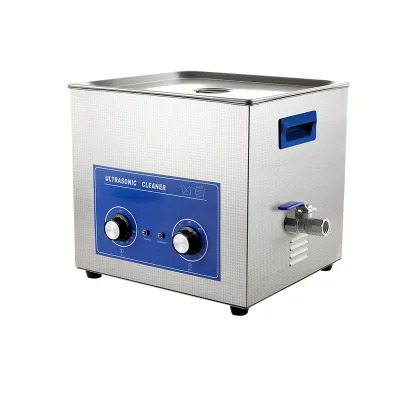

Ultrasonic Cleaner for Industrial Applications
$4100.00 - $12000.00
MOQ: 1 Pieces
Linyi City Lanshan District Wenbo Power Supply Equipment Factory

1.3L Industrial Desktop Digital Ultrasonic Cleaner
$59.99 - $199.99
MOQ: 199 Pieces
Ningbo Eastar Electromechanical Industrial Trading Co., Ltd.

2 Liter Digital Ultrasonic Part Washer Cleaner
$1.99 - $199.99
MOQ: 999 Pieces
Ningbo Eastar Electromechanical Industrial Trading Co., Ltd.


Comprehensive Sourcing Guide
Digital Timer Industrial Ultrasonic Cleaner Sourcing Guide
Procuring industrial ultrasonic cleaners equipped with digital timers requires a strategic approach that balances technical precision with commercial viability. These machines are essential for sectors ranging from automotive engine maintenance to general industrial parts processing, where consistent cleaning performance is non-negotiable. The presence of a digital timer allows for precise control over cleaning cycles, ensuring that delicate components are not subjected to excessive ultrasonic exposure while ensuring that heavily soiled parts receive adequate treatment. Buyers must navigate a market where specifications vary significantly, from semi-automatic to fully automatic systems, and from fixed tank capacities to customized dimensions.
The sourcing landscape for these devices is characterized by a wide range of price points and minimum order quantities (MOQs), reflecting the diversity of manufacturing capabilities among suppliers. Observed listings indicate prices ranging from affordable entry-level units to high-end industrial systems, with MOQs starting as low as a single unit for testing purposes. This variability necessitates a rigorous verification process to ensure that the quoted specifications, such as ultrasonic power and frequency, align with the actual performance capabilities of the machine. Understanding these market signals is the first step in developing a procurement strategy that mitigates risk and ensures value for money.
Product Scope and Observed Listing Signals
The product scope for digital timer industrial ultrasonic cleaners encompasses a variety of configurations, including semi-automatic and fully automatic models. Listings frequently highlight features such as PLC control systems, which offer enhanced precision and repeatability for industrial environments. The cleaning principle is predominantly physical, utilizing ultrasonic cavitation to remove contaminants from surfaces. Buyers should note that while many units are described as "new" and "eco-friendly," the actual environmental impact depends on the cleaning media used, which is often wet cleaning solutions. The automation level can range from basic manual operation to advanced automatic grades, influencing both the initial cost and the long-term operational efficiency.
Observed listing signals reveal specific technical attributes that buyers must verify against their operational needs. For instance, tank capacities vary, with some models offering 30L or 38L volumes, while others allow for customized tank sizes. Ultrasonic power outputs are similarly diverse, with common specifications including 600W and 720W units, though customized power options are available for specialized applications. The frequency of the ultrasonic waves is another critical variable, with listings showing options for 28 kHz, 40 kHz, and even 80 kHz. These frequencies determine the intensity and penetration depth of the cleaning action, making it essential to match the frequency to the type of parts being cleaned.
Technical Specifications to Verify
When evaluating technical specifications, buyers must prioritize the verification of ultrasonic power and frequency parameters. The listed ultrasonic power, such as 600W or 720W, indicates the energy input into the cleaning tank, but it is crucial to confirm whether this is the total power consumption or the actual ultrasonic output. Similarly, the frequency, whether 28 kHz, 40 kHz, or 80 kHz, dictates the size of the cavitation bubbles and the resulting cleaning intensity. Lower frequencies like 28 kHz are suitable for heavy-duty cleaning of large parts, while higher frequencies like 80 kHz provide finer cleaning for delicate components. Buyers should request detailed technical datasheets that specify these parameters clearly to avoid mismatches between expected and actual performance.
Heating capabilities and tank dimensions are also critical technical factors that require careful verification. Many industrial units include electrical heating elements with power ratings such as 500W or 1000W, allowing for temperature-controlled cleaning which can enhance the effectiveness of certain cleaning agents. The temperature range, often specified as room temperature to 80 degrees Celsius, should be confirmed to ensure it meets the requirements of the cleaning process. Additionally, the physical dimensions of the cleaning tank, such as 500300200mm or 500300250mm, must be checked against the size of the parts to be cleaned. Buyers should also consider the overall outline dimensions of the machine to ensure it fits within their available workspace.
Compliance and Safety Documentation
Compliance with international standards is a fundamental requirement for industrial equipment, and buyers must verify the certification status of the ultrasonic cleaners. Common certifications observed in the market include CE and RoHS, which indicate conformity with health, safety, and environmental protection standards for products sold within the European Economic Area. Additionally, ISO9001:2000 certification is frequently cited, suggesting that the manufacturer adheres to specific quality management principles. However, buyers should not assume that all listed products possess these certifications; it is essential to request valid certification documents and verify their authenticity with the issuing bodies.
Safety documentation should also include detailed information on electrical specifications and operational safeguards. The power supply requirements for these machines can vary, with options for 220V, 380V, or 415V, which must match the facility's electrical infrastructure. Buyers should ensure that the equipment includes appropriate safety features, such as overheat protection and emergency stop buttons, especially for automatic models. The material construction, typically stainless steel, should be verified for corrosion resistance and durability, particularly if the cleaning process involves aggressive chemicals. Proper documentation of these safety and compliance aspects is crucial for risk management and regulatory adherence.
Cost Drivers and Commercial Terms
The cost of digital timer industrial ultrasonic cleaners is influenced by several key drivers, including the level of automation, ultrasonic power, and customization options. Semi-automatic models with standard specifications are generally more affordable, while fully automatic systems with PLC controls and customized tank dimensions command higher prices. The inclusion of additional features, such as heating elements and digital timers, also adds to the cost. Buyers should be aware that while some listings advertise "cheap" or "competitive" prices, the actual value should be assessed based on the total cost of ownership, including energy consumption and maintenance requirements.
Commercial terms, such as minimum order quantities (MOQs) and packaging, play a significant role in the procurement process. MOQs can range from a single unit to hundreds, depending on the supplier's production capacity and business model. Packaging is typically done in wooden boxes or cases to protect the equipment during transit, which can impact shipping costs and handling requirements. Buyers should negotiate clear terms regarding payment methods, delivery schedules, and warranty coverage. It is also important to clarify whether the quoted price includes installation, training, and after-sales support, as these services can significantly affect the overall value of the purchase.
Supplier Qualification and Quality Control
Supplier qualification is a critical step in ensuring the reliability and quality of the purchased ultrasonic cleaners. Buyers should assess the manufacturer's production capabilities, quality control processes, and track record in the industry. Suppliers originating from regions like Xi'an or other industrial hubs in China may offer competitive pricing, but buyers must verify their ability to maintain consistent quality across batches. Requesting references from previous clients and conducting site visits, if possible, can provide valuable insights into the supplier's operational standards and commitment to quality.
Quality control measures should be explicitly defined in the procurement agreement. This includes pre-shipment inspections, testing of key performance indicators such as ultrasonic power output and heating efficiency, and verification of material specifications. Buyers should insist on a comprehensive inspection report that details the results of these tests. Additionally, establishing a clear protocol for handling defects or non-conformities is essential. This may include provisions for replacement parts, technical support, and return policies. A robust quality control framework helps mitigate the risk of receiving substandard equipment and ensures that the purchased machines meet the specified requirements.
Long-Term Procurement Checks
Long-term procurement success depends on establishing a sustainable relationship with suppliers and implementing ongoing performance monitoring. Buyers should regularly review the performance of the ultrasonic cleaners in their operations, tracking metrics such as cleaning efficiency, energy consumption, and maintenance frequency. This data can inform future purchasing decisions and help identify potential issues with specific models or suppliers. Maintaining open communication with suppliers regarding any operational challenges or feedback can lead to continuous improvement and better product offerings.
It is also important to stay informed about technological advancements and industry trends in ultrasonic cleaning. New features, such as improved frequency modulation or enhanced energy efficiency, may become available, offering opportunities to upgrade existing equipment or optimize cleaning processes. Buyers should periodically reassess their procurement strategy to ensure it aligns with evolving business needs and regulatory requirements. By adopting a proactive approach to supplier management and technology adoption, organizations can maximize the value of their investment in digital timer industrial ultrasonic cleaners and maintain a competitive edge in their respective industries.
FAQs
What automation levels are available for these cleaners?
Both semi-automatic and automatic models are available for industrial ultrasonic cleaning. The semi-automatic units feature PLC control for precise operation, while automatic grades offer enhanced efficiency for continuous production lines requiring minimal manual intervention.
Which certifications do these industrial cleaners typically hold?
Most units carry CE and RoHS certifications to ensure safety and environmental compliance. Some manufacturers also adhere to ISO9001:2000 standards, providing verified quality management systems for industrial parts and engine component cleaning applications.
How does the heating system function in these machines?
The machines utilize electrical heating methods to raise water temperature from room temperature up to 80 degrees Celsius. This feature allows for effective wet cleaning processes, with timing capabilities ranging from one to thirty minutes for optimal results.
Can the tank capacity be customized for specific needs?
Yes, customization is available for tank dimensions and capacity to suit various industrial requirements. Standard models offer capacities like 30 liters or 38 liters, but manufacturers can provide tailored solutions with specific cleaning tank sizes for unique production environments.
What ultrasonic frequencies are commonly used in these devices?
Common operating frequencies include 40 kHz, 28 kHz, and 80 kHz depending on the specific model. Higher power options like 600W or 720W are available, ensuring precision industrial cleaning for diverse materials and complex geometries.
What material is used to construct the cleaning tank?
The cleaning tanks are constructed from stainless steel to ensure durability and resistance to corrosion. This material choice supports the wet cleaning principle and maintains hygiene standards required for industrial parts and engine component processing applications.