Find Digital Transmission Electron Microscope for research, teaching, and analysis
Source 30 Digital Transmission Electron Microscope models for research, teaching, and analysis. Compare specifications including resolution, acceleration voltage, and detector options from verified suppliers to find the right equipment for your laboratory needs.
Key considerations
Products List


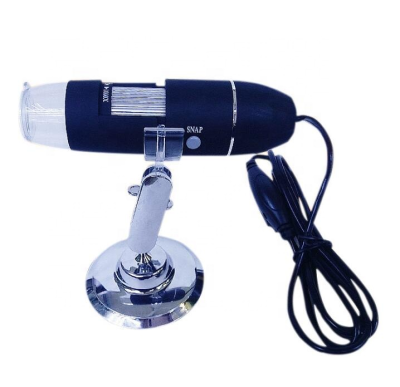
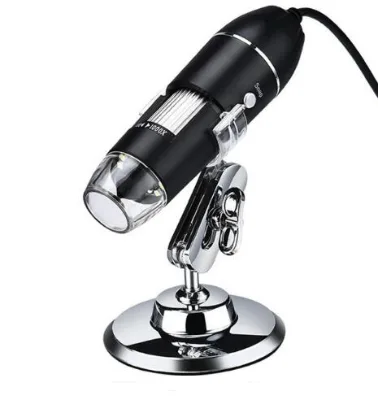


Microscope Hospital Operating Microscope Electron Operation Microscope
$1500.00 - $2500.00
MOQ: 1 Pieces


Comprehensive Sourcing Guide
Strategic Sourcing Guide for Digital Transmission Electron Microscope Acquisition
The procurement of advanced microscopy equipment, specifically targeting the Digital Transmission Electron Microscope (TEM) and related high-resolution imaging systems, requires a rigorous, evidence-based approach. Buyers in the research and educational sectors must navigate a complex landscape of technical specifications, optical principles, and operational requirements. This guide synthesizes available product data and industry standards to provide a structured framework for evaluating potential suppliers and ensuring the selected instrumentation aligns with specific laboratory needs. The focus remains on verifying observed attributes against the intended application, whether for nanoscale research, biological analysis, or educational instruction.
Technical Specifications and Optical Principles
When evaluating digital transmission electron microscopes and their related optical counterparts, the primary differentiator lies in the underlying imaging principle and the resulting resolution capabilities. The core technology for high-resolution imaging often relies on electron beams rather than visible light, allowing for magnifications exceeding 1000X and resolutions down to the nanometer scale. For instance, specific scanning electron microscope models demonstrate a resolution of 5nm at 30kV using a Secondary Electron (Se) detector. The acceleration voltage is a critical parameter, typically ranging from 1kV to 30kV, with specific step increments such as 1kV, 5kV, 10kV, 15kV, 20kV, and 30kV. This range allows for the optimization of contrast and penetration depth depending on the sample material.
In contrast, optical microscopy systems, such as biological and fluorescent microscopes, utilize ordinary light sources or specific illumination technologies like 3W LED or 100W Mercury lamps. These systems often feature a stereoscopic effect or a lack thereof, depending on the lens configuration. For example, some models utilize a drum-shaped lens to achieve a stereoscopic effect, while others with cylindrical shaped lenses and a minimum of three cylinders are designed for different optical paths. The numerical aperture (N.A.) of the condenser, such as Abbe N.A. 1.25 or Swing-out Condenser N.A. 0.9/0.13, dictates the light-gathering ability and resolution of optical systems. Buyers must distinguish between the high-vacuum environment required for electron microscopy and the ambient conditions suitable for biological observation.
The detector configuration is another vital technical specification. Advanced systems may include Se Detectors, with optional BSE (Backscattered Electron) Detectors and Energy Dispersive Spectroscopy (EDS) capabilities. For optical systems, the nosepiece configuration, such as Quadplex or Quintuple, determines the number of objectives available for immediate switching. The stage traverse system, whether a 5-Axis System or an Automatic Control mechanism, significantly impacts the precision of sample positioning. Image shift capabilities, such as ±150um in X and Y, are essential for maintaining alignment during high-magnification imaging.
Compliance, Certification, and Physical Standards
Ensuring that procurement specifications align with international and local standards is a non-negotiable aspect of the sourcing process. While specific certification statuses must be verified directly with the supplier, buyers should look for adherence to established manufacturing and safety standards. Physical dimensions and packaging are often standardized to facilitate logistics and facility planning. For example, specific microscope models have defined standard dimensions, such as 460(W)*600(L)*950(H)mm or 542x265x355(mm). These dimensions dictate the required laboratory footprint and structural support.
Packaging standards are equally critical for protecting sensitive instrumentation during transit. Observed data indicates that heavy-duty equipment like electron microscopes may be shipped in wooden cases, whereas optical systems might utilize standard cartons. The origin of the product, such as Jiangsu Wuxi or Chongqing, can provide context regarding the manufacturing ecosystem and potential supply chain dynamics, though it does not inherently guarantee quality without further verification. Buyers should request documentation confirming that the equipment meets relevant electrical safety standards and electromagnetic compatibility (EMC) regulations for the destination country.
Furthermore, the "prod_standard" attribute often refers to the physical footprint or design standard of the unit. When evaluating a supplier, procurement teams must verify that the listed dimensions match the actual delivered unit, as discrepancies can lead to installation failures. The presence of specific features, such as a rackless mechanical stage with dimensions of 182mmx140mm or a mechanical stage of 185mmx145mm, must be cross-referenced with the laboratory's slide holder requirements. Ensuring that the product origin and standard specifications are clearly documented in the purchase order is essential for customs clearance and warranty validation.
Cost Drivers and Pricing Dynamics
The pricing of electron microscopes and advanced optical systems is influenced by a multitude of factors, including the complexity of the optical system, the resolution capabilities, and the inclusion of optional accessories. The observed price range for such equipment can vary significantly, spanning from approximately $4.07 to $80,000. This wide disparity reflects the difference between basic educational models and high-end research-grade instruments. The Minimum Order Quantity (MOQ) is another cost driver, typically ranging from 1 to 100 units, which impacts the per-unit cost for bulk procurement.
Key cost drivers include the type of light source or electron gun, the sophistication of the detector system, and the level of automation. For example, a system equipped with a 100W Mercury Lamp for fluorescence attachment or an EDS detector will command a higher price point than a basic model with a halogen lamp and a standard Se detector. The inclusion of customizations, such as specific objective lenses (e.g., Eplan 4X/10X/40X/100X) or specialized stages, also adds to the overall cost. Buyers should analyze the total cost of ownership, which includes not only the purchase price but also the cost of consumables, maintenance, and potential upgrades.
It is crucial to note that the observed price range represents a market observation and does not imply that every listed product falls within this bracket. Specific configurations, such as those with independent phase contrast units or coaxial focusing knobs, may push the price toward the higher end of the spectrum. Procurement teams must request detailed quotations that break down the cost of the base unit, optional accessories, and any associated software licenses. Understanding the value proposition of each component helps in making informed decisions that balance budget constraints with performance requirements.
Typical Applications and Usage Scenarios
The intended application of the microscope dictates the necessary technical specifications and operational features. Research-grade instruments, such as the DJ-Sem150 Scanning Electron Microscope, are designed for high-resolution imaging where a resolution of 5nm is required. These systems are typically used in materials science, nanotechnology, and advanced physics research. The ability to operate at various acceleration voltages and the inclusion of multiple detectors make them versatile for analyzing diverse sample types.
In contrast, biological and teaching microscopes, such as the BK6000TR or BK 5000-FL2T, are optimized for educational environments and routine biological analysis. These systems often feature ordinary light sources, fluorescence attachments, and phase contrast units to visualize living cells and stained specimens. The usage categories explicitly include "Teaching" and "Research," indicating that some models are dual-purpose. For teaching applications, the ease of use, durability, and safety features are paramount. The presence of a rackless mechanical stage and a robust base with a halogen lamp supports long-term educational use.
The choice between a stereoscopic effect and a non-stereoscopic design also influences the application. Stereoscopic microscopes are ideal for 3D visualization of surface structures, while non-stereoscopic models are better suited for flat sample analysis. Buyers must align the product's "Kind of Light Source" and "Type" with their specific workflow. For instance, a fluorescent microscope with an Epi Fluorescence Unit is essential for immunofluorescence studies, whereas a scanning electron microscope is required for surface topology analysis.
Supplier Evaluation and Quality Assurance
Evaluating suppliers requires a focus on transparency, technical support, and the ability to provide verifiable product data. Buyers should assess the supplier's history of delivering equipment that matches the described specifications, such as the prod_model and prod_standard attributes. The origin of the product, whether from Jiangsu Wuxi or Chongqing, should be verified to ensure it aligns with the buyer's geopolitical and logistical preferences. However, the location alone is not a quality indicator; it is the manufacturing process and quality control measures that matter.
Quality assurance protocols should include pre-shipment inspections and post-delivery validation. Buyers must verify that the delivered unit matches the listed specifications, including the resolution, magnification, and stage dimensions. The presence of optional features, such as a BSE detector or a specific nosepiece configuration, must be confirmed before final acceptance. Supplier support capabilities, including training, maintenance services, and spare parts availability, are critical for long-term operational success.
When comparing suppliers, buyers should create a matrix that evaluates each vendor against the key technical and commercial criteria. This matrix should include the accuracy of the provided specifications, the responsiveness of the technical team, and the clarity of the warranty terms. It is essential to avoid relying on marketing claims without supporting documentation. The "Customization: Available" attribute suggests that suppliers may offer tailored solutions, but these must be clearly defined in the contract to avoid scope creep or unmet expectations.
Long-Term Procurement and Operational Considerations
Sourcing advanced microscopy equipment is a long-term investment that requires careful planning for maintenance, upgrades, and lifecycle management. The "prod_packing" method, such as wooden cases or cartons, affects the initial setup and potential for damage during installation. Buyers should plan for the long-term storage and handling of the equipment, ensuring that the laboratory environment meets the humidity, temperature, and vibration requirements specified by the manufacturer.
The availability of spare parts and the ease of upgrading the system are vital for extending the operational life of the microscope. For example, the ability to switch between different detectors or add new objective lenses can future-proof the investment. The "Coaxial Coarse and Fine Focusing Knobs" with a travel range of 25mm indicate a robust mechanical design that should withstand frequent use in a teaching or research setting. Buyers should also consider the software ecosystem, as digital transmission electron microscopes often rely on specialized imaging software that requires regular updates and compatibility with existing laboratory IT infrastructure.
Finally, the procurement strategy should include a plan for training and knowledge transfer. Whether the equipment is for teaching or research, the end-users must be proficient in operating the system to maximize its utility. This includes understanding the nuances of the acceleration voltage settings, detector selection, and stage control. By prioritizing these long-term considerations, buyers can ensure that the acquired equipment delivers sustained value and supports the institution's scientific objectives for years to come.
FAQs
What resolution can a Digital Transmission Electron Microscope achieve?
Some scanning electron microscope models achieve a resolution of 5nm at 30kV using a Secondary Electron detector. This high resolution depends on the specific acceleration voltage settings and the detector configuration selected for the instrument.
Which acceleration voltage ranges are available for these microscopes?
The acceleration voltage typically ranges from 1kV to 30kV with specific steps at 1kV, 5kV, 10kV, 15kV, 20kV, and 30kV. This six-step range allows users to optimize contrast and penetration depth for various sample materials.
Can these microscopes be customized for specific research needs?
Yes, customization is available for these microscopy systems to meet specific laboratory requirements. Buyers should verify the exact customization options, such as detector types or stage configurations, directly with the supplier before finalizing the order.
What are the standard physical dimensions for these units?
Standard dimensions vary by model, with some units measuring 460mm by 600mm by 950mm and others at 542mm by 265mm by 355mm. These physical standards dictate the required laboratory footprint and structural support needed for installation.
How does the stage traverse system function in these microscopes?
The stage traverse system often features a 5-Axis System or Automatic Control for precise sample positioning. Image shift capabilities of ±150um in X and Y are also available to maintain alignment during high-magnification imaging sessions.
What is the minimum order quantity for purchasing these instruments?
The minimum order quantity ranges from 1 to 100 units depending on the specific supplier and configuration. This range impacts the per-unit cost for bulk procurement and should be considered during the initial budgeting phase.
Where are these microscopes typically manufactured?
Products originate from locations such as Jiangsu Wuxi and Chongqing in China. Buyers should verify the origin to ensure it aligns with logistical preferences and to understand the manufacturing ecosystem involved in the production process.