Source DIN Grade 8 Anchor Bolt for Building, Machinery, Chemical
Compare 30 listings for DIN Grade 8 Anchor Bolt options from verified suppliers. Buyers can evaluate stainless steel and steel variants, custom sizes, and packaging details for building, machinery, and chemical industry applications; compare the available evidence and request quotations based on your requirements.
Key considerations
Products List


Grade 8.8 Carbon Steel Sleeve Extension Anchor Bolt with Hex Nuts Washer
$0.12 - $0.15
MOQ: 1000 Pieces


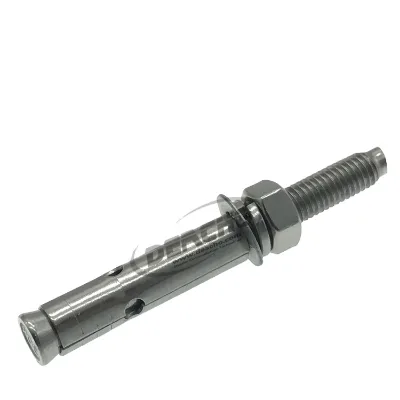


Fastener/Anchor/Drop in Anchor/Anchor Bolt/Brass/Carbon Steel/Zinc Plated
$0.00 - $1.00
MOQ: 100000 Pieces


Comprehensive Sourcing Guide
DIN Grade 8 Anchor Bolt Sourcing Guide
Procuring high-strength fasteners requires precise alignment between mechanical performance and project specifications. Buyers must distinguish between general stainless steel anchors and those meeting specific grade requirements for structural integrity. The market offers various models, including wedge anchors and eye bolts, each serving distinct load-bearing functions. Understanding these differences prevents specification errors that could compromise structural safety.
This guide focuses on verifying critical attributes such as material grade, surface treatment, and dimensional tolerances. It provides a framework for evaluating supplier capabilities and ensuring compliance with international standards. By following these steps, procurement teams can mitigate risks associated with substandard components and ensure long-term reliability in demanding environments.
Product Scope and Observed Listing Signals
The current market landscape includes a diverse range of anchor bolts, primarily constructed from stainless steel or carbon steel. Listings frequently highlight models such as AISI 304, A2 316L, and A4 stainless steel wedge anchors, alongside eye anchor bolts and general-purpose anchor bolts. These products are often marketed with customization options, allowing buyers to specify thread types, lengths, and head styles to match their unique engineering requirements.
Observed listing signals indicate a wide variation in packaging and origin. Products are commonly packed in 25kg cartons or pallets, with origins spanning Shanghai, Qingdao, and Ningbo in China. Some suppliers offer bulk packaging, while others provide plastic bags and cartons for smaller quantities. Buyers should carefully review these logistical details to ensure they align with their storage capabilities and shipping constraints, avoiding unexpected handling costs or delays.
Technical Specifications to Verify
Dimensional accuracy and thread quality are paramount for successful installation. Buyers must verify that the anchor bolts meet the specified size ranges, such as M6-M30 or 1/4"-3/4", and confirm the thread type, which may include UNC threads. Tolerance levels, often cited as +/-0.01-0.005mm, are critical for ensuring proper fit within pre-drilled holes. Misalignment due to poor tolerances can lead to installation failures or reduced load-bearing capacity.
Surface treatment and finish also play a significant role in performance. Options include polishing, self-color, or hot-dip galvanizing (HDG), depending on the environmental conditions. Stainless steel variants offer superior corrosion resistance, making them suitable for chemical or marine applications. Buyers should request material certificates to confirm the grade and ensure the surface treatment meets the required durability standards for their specific project environment.
Compliance and Safety Documentation
Adherence to international standards is essential for structural safety and legal compliance. Commonly referenced standards include DIN, GB, ANSI, BSW, JIS, and GOST, which dictate manufacturing processes and performance criteria. Buyers must ensure that the supplied anchor bolts comply with the relevant standard for their region, such as DIN for European projects or ANSI for American ones. Non-compliant products may fail inspection or pose safety risks.
Certification documents, such as ISO certification, provide additional assurance of quality management systems. While specific test results like ASTM F1554 or ISO 898 are not always listed, buyers should request mill test reports and third-party inspection certificates. These documents verify the mechanical properties, such as tensile strength and yield point, ensuring that the fasteners meet the required grade specifications for critical structural applications.
Cost Drivers and Commercial Terms
Pricing for anchor bolts is influenced by material costs, manufacturing complexity, and order volume. The observed price range varies significantly, reflecting differences in material grade, surface treatment, and customization levels. Buyers should consider the total cost of ownership, including shipping, handling, and potential rework costs, rather than focusing solely on the unit price. Bulk orders often benefit from economies of scale, reducing the per-unit cost.
Minimum Order Quantities (MOQs) typically range from 10 to 100,000 units, depending on the supplier and product type. Flexible MOQs are available for customized orders, but may incur higher setup costs. Delivery times are usually based on quantity, so buyers should plan their procurement schedule accordingly. Clear communication regarding payment terms, shipping methods, and lead times is essential to avoid disruptions in the supply chain.
Supplier Qualification and Quality Control
Evaluating supplier reliability is crucial for consistent quality. Buyers should assess the supplier’s production capabilities, including their ability to handle custom drawings and specific design styles. Suppliers offering free samples when in stock allow for preliminary testing and verification before committing to large orders. This step helps identify potential issues with thread quality, surface finish, or dimensional accuracy early in the process.
Quality control processes, such as 100% inspection after manufacturing, are vital for ensuring product consistency. Buyers should inquire about the supplier’s quality management system and their approach to handling defects. Requesting detailed inspection reports and verifying the supplier’s track record in similar industries can provide confidence in their ability to deliver high-quality anchor bolts that meet strict engineering specifications.
Long-Term Procurement Checks
Establishing a robust supplier relationship involves regular performance reviews and continuous improvement initiatives. Buyers should monitor key performance indicators such as delivery punctuality, defect rates, and responsiveness to issues. Regular audits of the supplier’s quality control processes can help identify areas for improvement and ensure ongoing compliance with standards. This proactive approach minimizes the risk of supply chain disruptions.
Long-term contracts may offer benefits such as price stability and priority production scheduling. However, buyers should remain flexible to adapt to market changes and technological advancements. Periodic re-evaluation of specifications and standards ensures that the procured anchor bolts remain suitable for evolving project requirements. Maintaining open communication with suppliers fosters collaboration and drives mutual success in the long run.
FAQs
What materials are used for din grade 8 anchor bolts?
These anchor bolts are primarily manufactured from stainless steel, including grades like AISI 304 and 316L. Some variants also utilize standard steel with surface treatments such as self-color or hot-dip galvanizing. The material choice ensures durability and resistance to corrosion, making them suitable for demanding construction and machinery applications where structural integrity is critical.
Which standards apply to these anchor bolts?
The products comply with multiple international standards including DIN, GB, ANSI, BSW, JIS, and GOST. Specific models may adhere to DIN 976 or ISO 898 for thread specifications. This multi-standard compliance allows buyers to select bolts that match their local regulatory requirements or specific project engineering drawings, ensuring global compatibility and safety.
Can I request custom sizes for these bolts?
Yes, customization is available for these anchor bolts. Buyers can request specific sizes ranging from M6 to M72, with tolerances as tight as plus or minus 0.01 to 0.005mm. The manufacturer accepts custom drawings and can produce bolts in inch or metric measurement systems, allowing for precise integration into specialized machinery or building structures.
What are the packaging and shipping options?
Standard packaging typically involves 25kg cartons placed on pallets, or plastic bags within cartons. Bulk shipping in 25kg cartons on pallets is also common. Custom packaging requests are accepted to meet specific logistical needs. This flexible packaging approach helps protect the bolts during transit and simplifies inventory management for large-scale construction or industrial projects.
Where are these anchor bolts manufactured?
These products originate from major manufacturing hubs in China, including Shanghai, Qingdao, and Ningbo in Zhejiang province. These locations are known for their robust industrial infrastructure and supply chain efficiency. Sourcing from these regions provides access to a wide variety of anchor bolt types, from wedge anchors to eye bolts, with competitive lead times.
Are samples available for quality verification?
Samples are available for quality verification before placing large orders. In many cases, free samples are provided when items are in stock. This allows buyers to inspect the thread quality, surface treatment, and dimensional accuracy firsthand. It is a practical step to ensure the product meets the required specifications and tolerance levels for your specific application.