Find Direct Operated Solenoid Poppet Valves for Machinery, Automation, and Pneumatic Systems
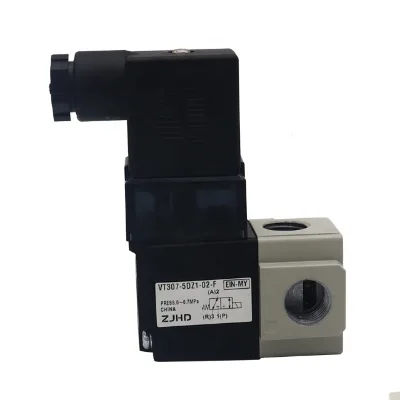
Browse 30 listings of Direct Operated Solenoid Poppet Valves and compare port sizes, working pressure ranges, body materials, and temperature limits across models like VT307, VT317, and VG342. Filter listings by certification, packaging, and warranty to shortlist valves suited to your machinery or pneumatic air circuits.
Key considerations
Products List




Comprehensive Sourcing Guide
Direct Operated Solenoid Poppet Valves Sourcing Guide
Sourcing Direct Operated Solenoid Poppet Valves requires a careful balance between technical precision and commercial viability, as these components serve as critical control elements in pneumatic and hydraulic systems. Buyers must navigate a market where product attributes vary significantly based on material composition, actuation type, and environmental resistance. The observed market data indicates a diverse range of offerings, with prices spanning from $2 to $350 USD and minimum order quantities (MOQs) typically ranging from 1 to 8 units. This wide variance suggests that buyers are not limited to a single tier of suppliers but can access both high-volume industrial components and specialized, low-volume custom solutions. Understanding these baseline signals is essential for defining a realistic procurement strategy that aligns with budget constraints and production volume requirements.
The core keyword, Direct Operated Solenoid Poppet Valves, refers to a specific class of valves where the solenoid force directly lifts the poppet to open or close the flow path, eliminating the need for pilot pressure. This mechanism is particularly advantageous for low-pressure applications and rapid response times, making it suitable for machinery and automated equipment. The supplied facts highlight that these valves are often constructed from materials such as brass and aluminum alloy, with some units featuring plastic components for the body. Buyers should recognize that material selection directly impacts durability, weight, and compatibility with the working medium, whether it be clean air or other pneumatic fluids. Consequently, the initial sourcing phase must focus on verifying material specifications against the intended operational environment to prevent premature failure or corrosion.
Product Scope and Observed Listing Signals
The product scope for Direct Operated Solenoid Poppet Valves encompasses a variety of configurations, including 2-position 3-port designs and single solenoid actuation types. Observed listings reveal specific models such as the VT317-5G-02, VT307-5D1-01F, and VG342 series, each tailored to different pressure and temperature ranges. For instance, some units are rated for working pressures between 0.2 to 0.9 MPa, while others operate within a 0 to 0.9 MPa range, indicating that buyers must match the valve’s pressure rating to their system’s actual operating conditions. The presence of features like cold-resistant, heat-resistant, and flame-resistant properties suggests that these valves are designed for environments with thermal fluctuations, requiring buyers to verify the specific temperature limits, such as -10 to 50°C or -5 to 50°C, to ensure reliable performance under extreme conditions.
Customization availability is a significant signal in the current market, with some suppliers offering tailored solutions while others provide non-customized, standard units. The observed data shows that customization is available for certain products, allowing buyers to modify thread types, such as RCG or NPT/NPTF, and port sizes like 1/2, 3/4, or 1 inch. This flexibility is crucial for integrating valves into existing machinery where standard fittings may not align with current piping infrastructure. Additionally, the working medium is specified as clean air for some models, which implies that these valves are optimized for pneumatic systems free from contaminants. Buyers should carefully review the working medium specifications to ensure compatibility with their fluid type, as using a valve rated for clean air in a contaminated environment could lead to clogging or mechanical failure.
Technical Specifications to Verify
When evaluating technical specifications, the type of actuation and manual override mechanisms are primary considerations for operational flexibility. The observed listings indicate that these valves are often direct operated types with single solenoid actuation, and some feature a push-type, non-locking manual override. This manual override capability is essential for maintenance and emergency shutdown procedures, allowing operators to manually control the valve even when power is lost. Buyers should verify the maximum operating frequency, which is listed as 10 Hz for some models, to ensure the valve can handle the required switching cycles without overheating or wear. Additionally, the mounting orientation is noted as unrestricted for certain units, providing installation flexibility, but buyers must confirm this for their specific model to avoid improper installation that could affect performance.
Pressure ratings and working temperature ranges are critical technical parameters that must be cross-referenced with the application’s demands. The data shows a distinction between medium pressure and low pressure classifications, with specific working pressures ranging from 0.2 to 0.9 MPa. Buyers must ensure that the selected valve’s pressure rating exceeds the system’s maximum operating pressure to prevent blowouts or leaks. Furthermore, the working temperature range, such as -5 to 50°C with no freezing, defines the environmental limits within which the valve can operate safely. It is also important to check for impact and vibration resistance, with some models rated at 300/50 m/s², which is vital for machinery subject to high mechanical stress. Lubrication requirements are noted as not required for some units, simplifying maintenance, but buyers should verify this to avoid unnecessary upkeep or potential damage from improper lubrication.
Compliance and Safety Documentation
Compliance with international standards is a non-negotiable aspect of sourcing industrial components, and the observed listings highlight certifications such as ISO, CE, RoHS, and GS. These certifications indicate that the products meet specific safety, environmental, and quality management standards, which is crucial for buyers operating in regulated markets. The presence of ISO and CE certifications suggests adherence to European and international quality norms, while RoHS compliance ensures that the materials used are free from hazardous substances. Buyers should request copies of these certification documents to verify their validity and scope, as counterfeit or expired certificates can pose significant legal and safety risks. Additionally, the mention of IEC 61508, although low-confidence, points to potential functional safety standards that may be relevant for applications requiring high reliability.
Safety documentation also includes machinery test reports and warranty information, which provide assurance of product reliability and manufacturer support. The observed data indicates that machinery test reports are provided for some models, offering evidence of performance under specific conditions. Buyers should review these reports to understand the testing parameters and results, ensuring they align with their operational requirements. A one-year warranty is commonly offered, which serves as a baseline guarantee against manufacturing defects. However, buyers should clarify the terms of the warranty, including coverage for wear and tear, and the process for claiming replacements or repairs. This documentation is essential for risk mitigation and ensuring that the procurement process is backed by robust manufacturer support.
Cost Drivers and Commercial Terms
Cost drivers for Direct Operated Solenoid Poppet Valves include material composition, certification levels, and customization options. The observed price range of $2 to $350 USD reflects the diversity in product quality and specifications, with higher-priced units likely offering advanced features such as broader temperature ranges or specialized materials like brass. Buyers should analyze the cost-benefit ratio of different materials, recognizing that aluminum alloy and plastic combinations may offer cost savings without compromising performance in non-corrosive environments. Customization, while available, may incur additional costs and longer lead times, so buyers should assess whether standard models can meet their needs to optimize budget and delivery schedules. Understanding these cost drivers helps in making informed decisions that balance performance requirements with financial constraints.
Commercial terms, including minimum order quantities (MOQs) and packaging, significantly impact the total cost of ownership. The observed MOQ range of 1 to 8 units suggests flexibility for small-scale procurement, but buyers should negotiate for volume discounts if their requirements exceed these thresholds. Packaging details, such as inner boxes, outer cartons, and pallets, are important for protecting the valves during transit and storage. Buyers should verify the packaging standards to ensure that the products arrive in pristine condition, minimizing the risk of damage and associated replacement costs. Additionally, the weight of the products, listed as 1 KG or 2 KG for some models, affects shipping costs, so buyers should consider logistics expenses when evaluating the overall cost of procurement. Clear communication of these terms with suppliers is essential to avoid unexpected charges and ensure smooth transaction processes.
Supplier Qualification and Quality Control
Supplier qualification is a critical step in ensuring the reliability and consistency of Direct Operated Solenoid Poppet Valves. Buyers should verify the supplier’s production capabilities, quality management systems, and track record in the industry. The observed data indicates that products originate from China, a major manufacturing hub for industrial components, but buyers must conduct due diligence to identify reputable suppliers with proven expertise. Requesting references or case studies from previous clients can provide insights into the supplier’s reliability and customer service quality. Additionally, buyers should assess the supplier’s ability to provide consistent product quality, as variations in manufacturing processes can lead to performance inconsistencies that affect downstream operations.
Quality control measures, including inspection protocols and testing procedures, are essential for maintaining product integrity. Buyers should inquire about the supplier’s quality control processes, such as incoming material inspections, in-process checks, and final product testing. The provision of machinery test reports is a positive indicator, but buyers should also verify the frequency and rigor of these tests. Implementing a robust quality control plan, including random sampling and acceptance criteria, can help mitigate the risk of receiving defective products. Furthermore, buyers should establish clear communication channels with suppliers to address any quality issues promptly, ensuring that corrective actions are taken to prevent recurrence. This proactive approach to quality control is vital for maintaining operational efficiency and minimizing downtime.
Long-Term Procurement Checks
Long-term procurement checks involve monitoring supplier performance and product reliability over time to ensure sustained value. Buyers should establish key performance indicators (KPIs) such as delivery times, defect rates, and response to issues to evaluate supplier consistency. Regular audits or reviews of supplier performance can help identify areas for improvement and strengthen the partnership. Additionally, buyers should track the performance of the valves in their applications, collecting data on failure rates and maintenance needs to inform future procurement decisions. This data-driven approach allows for continuous improvement and optimization of the supply chain, ensuring that the selected valves meet evolving operational requirements.
Adaptability to market changes and technological advancements is another critical aspect of long-term procurement. Buyers should stay informed about industry trends and new product developments that may offer improved performance or cost savings. Engaging with suppliers to discuss potential upgrades or alternative solutions can help maintain a competitive edge. Furthermore, buyers should review contractual terms periodically to ensure they remain favorable and aligned with current market conditions. This includes negotiating better pricing, adjusting MOQs, or enhancing warranty terms as needed. By maintaining a proactive and strategic approach to procurement, buyers can secure a reliable supply of Direct Operated Solenoid Poppet Valves that support their long-term business objectives.
FAQs
What is a direct operated solenoid poppet valve and how does it work?
A direct operated solenoid poppet valve uses the solenoid force alone to lift the poppet off its seat, with no pilot pressure required. This makes it reliable at low pressures and in applications where the working medium is air. Models listed in this category are direct acting, 2 position types rated for working pressures from 0 to 0.9 MPa at normal ambient temperatures.
Which working pressure range do these solenoid poppet valves support?
Listed pneumatic models support working pressures from 0 to 0.9 MPa, with some variants specified from 0.2 to 0.9 MPa. Always confirm the exact rating on the product page for your chosen model, such as VT317 or VT307 series. Operating below the stated range is fine, but sustained overpressure can affect sealing and valve life.
What working temperature range can these valves handle?
Typical models operate from about -5 to 50 degrees Celsius, or -10 to 50 degrees Celsius depending on the series, with no freezing conditions. Listed products are also described as cold-resistant, heat-resistant, and wear-resistant. If your installation faces temperature extremes or condensation, verify the specific model rating before ordering.
Can these solenoid valves be customized for my machinery application?
Yes, customization is listed as available for products in this category, which are applied to machinery. Contact the supplier with your port size, voltage, and medium requirements to confirm feasible options. Standard models remain non-customized stock items, so lead times and minimum order quantities may differ between standard and customized versions.
What certifications do the listed Direct Operated Solenoid Poppet Valves carry?
Products in this category list certifications including CE, ISO, RoHS, GS, and ISOCE. Certification coverage can vary by model and listing, so confirm which certificates apply to the specific series you select. Requesting the machinery test report is possible, as suppliers state a machinery test report is provided.
What is the maximum operating frequency of these pneumatic solenoid valves?
Listed models specify a maximum operating frequency of 10 Hz, meaning up to ten complete switching cycles per second. Impact and vibration resistance is stated as 300/50 m/s2 for one listed series. For duty cycles near the frequency limit, ensure adequate coil cooling and verify expected service life with the supplier.
Do these valves require air line lubrication and what medium do they use?
No, lubrication is not required, and the working medium is clean air. Direct operated poppet valves in this category operate pneumatically with a dustproof enclosure and unrestricted mounting orientation. Filtering the supply air to keep it clean and dry will help maintain seat sealing and consistent response over time.
Which port sizes and thread types are available for these valves?
Listed models show port sizes including 1/2, 3/4, and 1 inch, with thread types Rc and NPT available. Smaller series in this category are commonly used with standard pneumatic port fittings, so check the model page, for example VT307-5G-02 or VG342, for exact port specifications before ordering.