Source Variable Regulated DC Power Adapter for Laptops, Phones, and Cameras
Find and compare 30 Variable Regulated DC Power Adapter options from global suppliers. Evaluate specifications such as output types, plug configurations, and certifications to select the right adapter for laptops, mobile phones, and digital cameras.
Key considerations
Products List




Comprehensive Sourcing Guide
Variable Regulated DC Power Adapter Sourcing Guide
Sourcing variable regulated DC power adapters requires a nuanced understanding of both electrical performance and supply chain reliability. These components are critical for powering sensitive electronics where stable voltage and current are paramount. Buyers must navigate a market that offers a wide spectrum of configurations, from simple linear models to more complex switching types, each with distinct implications for efficiency, heat management, and cost. The decision to source these adapters often hinges on the specific power requirements of the end device, whether it is a consumer electronic, a medical device, or an industrial control system.
The procurement process is further complicated by the diversity of regulatory environments and regional plug standards. A single global sourcing strategy must account for variations in input voltage ranges, output polarity, and connector types. Furthermore, the physical form factor and internal construction of the adapter play a significant role in its suitability for different applications. Buyers need to establish clear technical parameters early in the sourcing process to avoid mismatches between the power supply and the load, ensuring that the final product meets both performance expectations and safety regulations.
Product Scope and Observed Listing Signals
The market for variable regulated DC power adapters presents a diverse array of products, as evidenced by the wide range of observed specifications and attributes. Listings indicate the presence of various internal structures, including linear models and on-off types, which suggest that buyers may encounter different technologies depending on the supplier. The output types observed range from DC to AC, and even combinations of AC or DC, highlighting the importance of verifying the exact output requirement for the intended application. This variability underscores the need for precise communication with suppliers to ensure that the selected adapter matches the device's power needs.
Observed product attributes also reveal significant diversity in connectivity and usage scenarios. Adapters are listed with plug-in connections and interchangeable features, catering to devices such as laptops, mobile phones, digital cameras, and game players. The color options are predominantly black, but customized colors are available, allowing for brand alignment or aesthetic integration into end products. Additionally, the observed packing methods vary from PE bags and white boxes to cartons, indicating that suppliers offer different levels of packaging protection and branding options. Buyers should carefully review these listing signals to identify suppliers who can meet their specific logistical and aesthetic requirements.
Technical Specifications to Verify
When evaluating technical specifications, the power source and output type are primary considerations. The observed use of half-bridge type power sources suggests a focus on efficiency and reliability in certain adapter designs. Buyers must verify whether the adapter provides a pure DC output or if it supports AC or DC outputs, as this directly impacts compatibility with the target device. The rated input voltage range is another critical parameter, with observed specifications indicating compatibility with 100-240V AC at 50/60Hz, which is suitable for global use. However, buyers should confirm the exact input range for each supplier to ensure compatibility with local power grids.
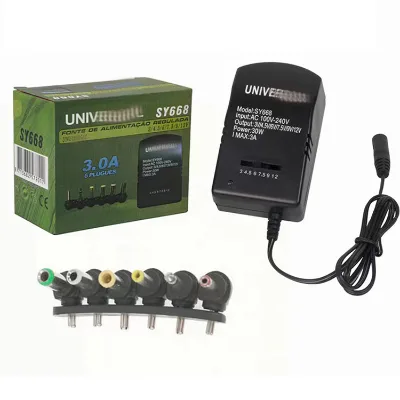
Connector types and physical dimensions are equally important for practical integration. The observed plug types include EU, AU, UK, and US configurations, allowing for regional customization. Buyers should verify the specific plug type required for their target market and ensure that the adapter's output connector matches the device's input port. The adapter size, with observed dimensions such as 602836mm, provides insight into the form factor, which may be constrained by the end product's design. Additionally, the material composition, often plastic or ABS, and the wire core material, such as copper or copper-clad aluminum, should be verified to assess durability and conductivity.
Compliance and Safety Documentation
Compliance with international safety standards is non-negotiable for DC power adapters, given their direct connection to mains electricity and sensitive electronics. The observed certifications, including CCC, ISOUL, RoHS, and TUV, indicate that some suppliers adhere to rigorous safety and environmental standards. Buyers must verify that the adapters they source carry the necessary certifications for their target markets, such as CE for Europe or UL for the United States. These certifications ensure that the adapters have undergone testing for electrical safety, electromagnetic compatibility, and hazardous substance restrictions.
In addition to certifications, buyers should request detailed test reports and compliance documentation from suppliers. These documents provide evidence that the adapters meet specific regulatory requirements and have been tested by accredited laboratories. Buyers should also verify the origin of the products, as observed locations include Ningbo, China, and Cambodia, which may have different regulatory frameworks. Ensuring that the supplier can provide up-to-date compliance documentation is essential for avoiding customs delays and ensuring that the products can be legally sold in the target market.
Cost Drivers and Commercial Terms
The cost of variable regulated DC power adapters is influenced by several factors, including the internal structure, materials used, and certification requirements. Linear models may be less expensive than switching types, but they may also be less efficient and generate more heat. The use of high-quality materials, such as pure copper wire cores and robust ABS plastic casings, can increase the cost but also enhance durability and performance. Buyers should consider the total cost of ownership, including potential savings from improved efficiency and reduced failure rates, rather than focusing solely on the unit price.
Commercial terms, such as minimum order quantities (MOQ) and payment terms, also play a significant role in the sourcing decision. The observed MOQ range of 1-3000 units suggests that suppliers offer flexibility for both small and large orders. Buyers should negotiate terms that align with their production schedule and inventory management strategy. Additionally, the availability of small orders and private mold options can provide greater customization and flexibility, although these may come at a premium. Clear communication regarding lead times and shipping terms is essential to ensure timely delivery and avoid production disruptions.
Supplier Qualification and Quality Control
Supplier qualification is a critical step in ensuring the reliability and consistency of variable regulated DC power adapters. Buyers should assess the supplier's manufacturing capabilities, quality control processes, and track record in the industry. The observed industry types, such as automotive wiring harnesses and electronic components, indicate that some suppliers have experience in high-reliability applications. Buyers should verify the supplier's ability to maintain consistent quality across batches and their capacity to scale production as needed.
Quality control measures, such as incoming material inspections, in-process testing, and final product verification, are essential for minimizing defects and ensuring product performance. Buyers should request information about the supplier's quality management system and their approach to handling non-conforming products. Additionally, the observed use of standardized packing methods, such as cartons and white boxes, suggests that suppliers have established logistics processes. Buyers should verify that the supplier's quality control practices align with their own requirements and that they are willing to accommodate third-party inspections if necessary.
Long-Term Procurement Checks
Long-term procurement success depends on the ability to maintain a stable and reliable supply chain for variable regulated DC power adapters. Buyers should establish regular communication channels with suppliers to monitor production schedules, inventory levels, and any potential disruptions. The observed customization options, such as private molds and customized lengths, suggest that suppliers are willing to adapt to changing requirements. Buyers should leverage these options to maintain product differentiation and meet evolving market demands.
Continuous improvement and feedback loops are essential for optimizing the sourcing process over time. Buyers should collect data on product performance, customer feedback, and supplier responsiveness to identify areas for improvement. Regular audits and performance reviews can help ensure that suppliers continue to meet quality and delivery expectations. Additionally, buyers should stay informed about changes in regulatory requirements and technological advancements in the power adapter industry to ensure that their sourcing strategy remains relevant and competitive.
FAQs
What certifications do the power adapters have?
The adapters carry CCC, ISOUL, RoHS, and TUV certifications. Some models also meet CE and RoHS standards. These certifications ensure safety and compliance for international markets.
Can I request custom packaging for these adapters?
Yes, customization is available for packaging options. Products are typically packed in PE bags, white boxes, or cartons. Buyers can specify unique requirements to match their branding needs.
Which output types are supported by these adapters?
The adapters support DC output, AC output, or both AC and DC configurations. This versatility allows them to power various devices like laptops, phones, and digital cameras effectively.
What is the maximum output power for the KSA model?
The KSA-12W-#5413 model has a maximum output power of 12W. This capacity is suitable for low-power electronic devices and ensures stable performance during operation.
How can I find suppliers with low minimum order quantities?
Suppliers accept small orders with MOQs ranging from 1 to 3000 units. This flexibility allows buyers to test products or fulfill small batch requirements without high initial inventory costs.
Where are these power adapters manufactured?
Manufacturing locations include Ningbo, China, and Guangdong, China. Some products originate from Cambodia. These locations provide access to established supply chains and manufacturing capabilities.
What input voltage range do these adapters support?
The adapters operate within a rated input range of 100-240V AC at 50/60Hz. The operating range extends from 90-264V AC at 47-63Hz, ensuring compatibility with global power grids.