Source Disposable Paint Gun Liners with Cover for Paint, Chemical, and Milk
Find 30 options for Disposable Paint Gun Liners with Cover designed for paint, chemical, and milk applications. Buyers can compare specifications, materials, and customization features to select the right packaging barrels for industrial needs.
Key considerations
Products List


50-Pack Disposable Spray Gun Cup Liner and Cover System for Spray Guns, Paint Cups
$12.00 - $15.00
MOQ: 100 Boxes

Paint System Disposable Paint Gun Liners and Cover Systems Spray Paint Cups
$12.00 - $15.00
MOQ: 100 Boxes


Disposable Paint Sprayer Mixing Cup Liners and Lid System for Spray Gun
$10.17 - $10.60
MOQ: 100 Boxes


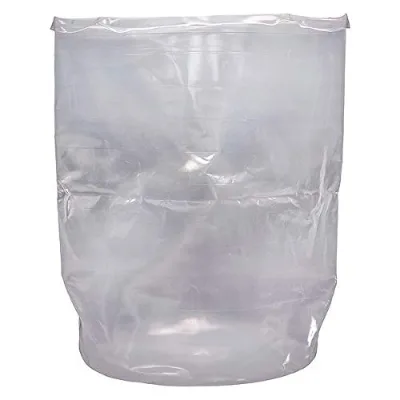

Disposable Plastic Paint Tray Liner for Easy Clean and Mess Free Painting Job
$0.25 - $4.00
MOQ: 3000 Pieces


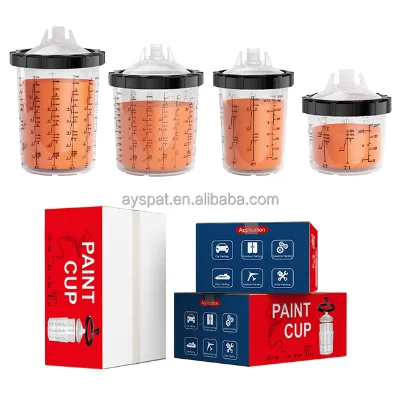


Paint Spray Gun Cup Lids and Liners Kit 125-Micron Filter Use Paint Gun for Cars
$13.99 - $22.99
MOQ: 1 Carton/Cartons


Comprehensive Sourcing Guide
Strategic Sourcing Guide for Disposable Paint Gun Liners with Cover
Understanding Product Classification and Core Specifications
When sourcing Disposable Paint Gun Liners with Cover, buyers must first distinguish between the broad category of industrial packaging and the specific sub-category of mixing and application tools. The supplied product data indicates a diverse range of items labeled under "Paint Packing Barrel," "Dye Packaging Barrels," and "Disposable Paint Drum Liners." However, for the specific keyword of "Disposable Paint Gun Liners with Cover," the relevant attributes shift from large-scale storage to precision mixing and application. The data explicitly lists "Disposable" as a key attribute, alongside "Cup Accessories: With cover" and "Feature: Mix&Paint 2 in 1." This confirms that the target product is not merely a container for bulk storage but a functional unit designed for the immediate mixing of paints and the subsequent application via a gun.
The technical specifications for these liners vary significantly based on the intended volume and material thickness. The provided facts list multiple model numbers and capacity standards, including "200L," "200~220L," and smaller volumes such as "200cc, 400cc, 600cc, 800cc." For paint gun liners, the smaller capacity models are the primary focus. Specific model identifiers such as "S4080," "S4125," and "S4190" are associated with thickness measurements of "125 Micron," "80 Micron," and "190 Micron" respectively. These micron ratings are critical indicators of durability and chemical resistance. A liner with 190 microns will offer superior resistance to tearing and chemical permeation compared to an 80-micron variant, making the selection of the correct thickness dependent on the viscosity of the paint and the duration of the project. The material is consistently identified as "Plastic," with some listings noting "Nature Color" or "Transparent" options, which allows users to monitor the paint level and color mixing process.
Compliance, Certification, and Material Safety Standards
In the B2B procurement of products intended for chemical and paint handling, verifying compliance with international standards is a non-negotiable step. The supplied data explicitly mentions "ISO" as a certification attribute for certain products in this category. While the data also lists "BSCI" and "FSC" under low-confidence background information, buyers should treat these as potential but unverified attributes until confirmed by the supplier. The primary verification step involves requesting current ISO certification documents that specifically cover the manufacturing of plastic packaging and liners.
Material safety is equally paramount. Since these liners are used for "Peracetic Acid and Hydrogen Peroxide Packing," "Lubricating Oil," and "Paint," the plastic material must be chemically inert to the substances it contains. The data notes "Anti-Static" as a feature for some barrels, which is a crucial safety consideration when handling volatile organic compounds (VOCs) found in many paints and solvents. Static discharge can pose a fire hazard in environments where paint fumes are present. Buyers must verify if the specific "Disposable Paint Gun Liners with Cover" possess anti-static properties, especially if the application involves flammable solvents. The standard "200L" and "200~220L" mentioned in the data likely refer to large drums, but the smaller "800ml" or "400ml" standards apply to the gun liners. Ensuring the material meets the chemical resistance requirements for the specific paint type (e.g., water-based vs. solvent-based) is essential to prevent degradation, leakage, or contamination of the paint mixture.
Cost Drivers and Pricing Dynamics
The pricing for disposable paint gun liners is influenced by a complex interplay of material thickness, customization, and order volume. The observed price range in the supplied data spans from $0.25 to $118 USD. This wide variance suggests that the lower end of the spectrum likely corresponds to basic, thin-walled liners or small quantities of standard models, while the higher end may reflect specialized, thick-walled, or heavily customized units. The "MOQ range" of 1 to 3000 units further indicates that unit economics are highly sensitive to order size.
Material thickness is a primary cost driver. As noted in the specifications, models range from 80 microns to 190 microns. A liner with 190 microns (Model S4190) will inherently cost more per unit than an 80-micron version (Model S4080) due to the increased volume of raw plastic material required. Additionally, the "Customization" attribute is marked as "Available," which implies that custom branding, specific color requirements (e.g., "Colored" or "Fancy"), or unique dimensional adjustments will incur additional costs. The "Packaging" method also affects the final price; options like "Polybag and Carton" or "Carton/Pallet" suggest that bulk packaging efficiency plays a role in logistics costs. Buyers should expect that ordering the "100 Boxes" quantity mentioned in the data might yield a different per-unit price compared to a single-unit purchase, although specific volume discount tiers are not provided in the source text.
Typical Applications and Functional Use Cases
The functional versatility of Disposable Paint Gun Liners with Cover extends beyond simple storage. The data highlights applications such as "Milk, Paint, Chemical," "Paint Work," and "Edible Packaging." For the specific context of paint guns, the "Mix&Paint 2 in 1" feature is the most significant application driver. This functionality allows contractors and industrial painters to mix paint components directly within the liner, attach a lid, and then connect the liner to a paint gun for application. This eliminates the need for separate mixing buckets and transfer vessels, reducing cleanup time and material waste.
The "Cover" or "With cover" attribute is critical for maintaining the integrity of the paint mixture. Paints, particularly those containing solvents or reactive components like peracetic acid, can dry out or degrade if exposed to air. The lid ensures a seal that preserves the chemical properties of the paint during the workday. Furthermore, the "Disposable" nature of the product aligns with the "Paint Drum Liners" classification, suggesting a workflow where the liner is discarded after use, preventing cross-contamination between different paint colors or batches. The "Nature Color" and "Transparent" options facilitate visual inspection of the mix, ensuring the correct ratio of hardener to base paint before application. These liners are suitable for both professional industrial settings and smaller-scale "Paint Work" projects where efficiency and cleanliness are prioritized.
Supplier Evaluation and Operational Capabilities
When evaluating potential suppliers for disposable paint gun liners, buyers must look beyond the basic product listing and assess operational capabilities. The data indicates that the "prod_origin" is primarily "China," with a specific mention of "Shandong Qingdao" as a production hub. This geographic concentration suggests a mature supply chain for plastic packaging in that region. Buyers should verify the supplier's ability to handle "Air Freight" and "Sea Freight," as indicated in the "prod_packing" attributes, to ensure logistics align with project timelines.
The "ODM: Yes" attribute signals that suppliers are capable of Original Design Manufacturing, meaning they can produce custom specifications beyond standard models. This is valuable for buyers with unique requirements regarding size, thickness, or branding. However, the presence of "Manual" as a "Method Type" in the data requires clarification. While it may refer to the assembly of accessories like collars and stoppers, buyers should confirm the level of automation in the production line to ensure consistent quality control. The "Quantity: 100 Boxes" suggests that suppliers may have minimum batch requirements for custom orders. A robust supplier evaluation should include a request for samples to verify the "Mix&Paint 2 in 1" functionality and the fit of the "cover" with the specific paint gun models the buyer intends to use.
Quality Control and Inspection Protocols
Quality control for disposable paint gun liners must focus on dimensional accuracy, material integrity, and seal performance. The specific micron thicknesses listed (80, 125, 190) serve as the baseline for inspection. Buyers should implement a protocol to verify that the actual thickness of the received goods matches the ordered specification, as deviations can lead to leaks or premature tearing. The "Product Standard" of "800ml" or "400ml" must be cross-referenced with the physical capacity of the liner to ensure it holds the intended volume without bulging or bursting.
Inspection should also cover the "Cup Accessories," which include the "cover," "collar," and "stopper." The data lists a specific packing configuration: "1 out Cup +1 Collar+50inner Cups +50lids+20stopper." This implies a kit-based approach where all components must be present and functional. Quality checks should verify that the "cover" creates an airtight seal and that the "collar" fits securely to prevent accidental detachment during the mixing or pouring process. For products intended for "Anti-Static" applications, a simple visual inspection is insufficient; buyers may need to request test reports or conduct spot checks using static measurement devices to ensure the anti-static properties are active. Finally, the "Package" integrity, whether "Polybag and Carton" or "Carton/Pallet," must be inspected to prevent damage during transit, which could compromise the sterility or usability of the liners.
Long-Term Procurement and Sustainability Considerations
Long-term procurement strategies for disposable paint gun liners should balance cost efficiency with environmental and operational sustainability. While the "Disposable" nature of the product suggests a single-use lifecycle, the volume of waste generated can be significant in high-volume industrial settings. Buyers should inquire about the recyclability of the "Plastic" material used. Although the data does not explicitly confirm recyclability, the presence of "FSC" in the low-confidence background suggests that some suppliers may be exploring sustainable sourcing practices, even if not fully certified yet.
Standardization is another key consideration for long-term contracts. By selecting a specific model (e.g., S4125) and thickness (125 Micron) that meets all project requirements, buyers can streamline their inventory management and reduce the risk of using incompatible liners. The "Customization" availability allows for branding, which can be leveraged for corporate identity in large-scale projects. However, buyers must weigh the cost of customization against the operational benefits. Additionally, the "Lead time" and "MOQ" constraints, ranging from 1 to 3000 units, should be factored into inventory planning. Establishing a relationship with a supplier who can consistently deliver the required "ISO" certified products and maintain the specified "Thickness" and "Standard" over time will ensure a stable supply chain for critical painting operations.
FAQs
What thickness options are available for disposable paint gun liners?
Available thickness options include 80, 125, and 190 microns depending on the model. Thicker liners like the 190-micron variant offer superior resistance to tearing and chemical permeation for demanding paint applications.
Can these liners be customized for specific branding or colors?
Yes, customization is available for branding, colors, and unique dimensions. Buyers can request specific styles such as colored or fancy options while maintaining the core functionality of the disposable paint gun liner system.
Which certifications should I verify for chemical safety compliance?
ISO certification is explicitly listed for certain products in this category. While other certifications may exist, buyers must request current ISO documents to verify the manufacturing standards for plastic packaging and liner safety.
How do I determine the correct capacity for my paint gun?
Select a capacity based on your project volume, with options ranging from 400ml to 800ml. The 800ml standard is common for larger mixing needs, while smaller capacities suit precision work or smaller batches.
What is the minimum order quantity for these plastic liners?
The minimum order quantity ranges from 1 to 3000 units depending on the supplier and customization level. Standard orders often start at lower quantities, while custom runs may require higher volumes to be cost-effective.
Are anti-static properties available for flammable paint applications?
Anti-static features are available for specific barrels and liners to prevent fire hazards. This is crucial when handling volatile organic compounds found in many paints and solvents to ensure safe mixing and application.
Which packaging methods are used for shipping these liners?
Packaging options include polybag and carton or carton and pallet configurations. The specific method depends on the order size and logistics requirements, ensuring the liners arrive undamaged and ready for use.