Source Disposable Opaque Wicket Bag for Food, Household, Promotion
Compare 30 listings for the Disposable Opaque Wicket Bag tailored for food, household, and promotion needs. Buyers can review specifications, materials, and customization options from verified suppliers in China.
Key considerations
Products List


100% Biodegradable Food Grade Wicket Bag Customized Printing Bag with Your Logo
$0.02 - $0.12
MOQ: 100000 Pieces


100%Compostable Biodegradable Customer Logo Wicket Bag for Food Bread Packaging
$0.01 - $0.05
MOQ: 50000 Pieces


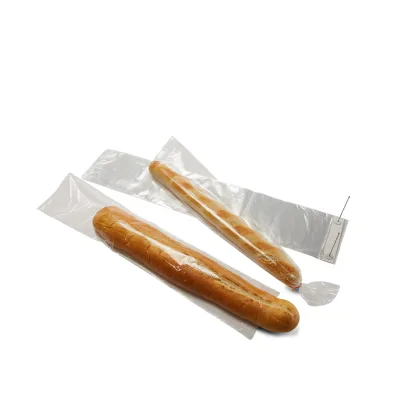


Transparent Micro Perforated Food Grade Plastic Wicket Packaging Bag for Hot Dog
$0.01 - $0.03
MOQ: 50000 Pieces


Comprehensive Sourcing Guide
Strategic Sourcing Guide for Disposable Opaque Wicket Bags
The global shift toward sustainable packaging has elevated the demand for disposable opaque wicket bags, particularly within the food service, retail, and promotional sectors. These bags, characterized by their pre-punched holes for dispensing from a roll, offer operational efficiency while maintaining the integrity of the contents. For procurement professionals, navigating the market requires a disciplined approach to verifying technical specifications, understanding material compositions, and ensuring compliance with international standards. This guide synthesizes observed market data and verified product attributes to provide a robust framework for sourcing decisions.
Technical Specifications and Material Composition
When evaluating disposable opaque wicket bags, the primary technical differentiator lies in the raw material composition and the resulting physical properties. The market presents a dichotomy between traditional plastic solutions and emerging bio-based alternatives. Traditional options often utilize polyethylene (PE) or composite structures involving BOPP (Biaxially Oriented Polypropylene), CPP (Cast Polypropylene), and PET layers. These materials are selected for their moisture-proof capabilities and durability, making them suitable for a wide range of applications from bread to vegetables.
Conversely, the bio-degradable segment utilizes a specific blend of PLA (Polylactic Acid), PBAT (Polybutylene Adipate Terephthalate), and Corn Starch. This composite formulation is designed to meet the criteria for biodegradability while maintaining the structural integrity required for wicket bag functionality. The opacity of these bags is a critical feature, often achieved through the inclusion of specific pigments or the use of multi-layer laminates that block light, thereby protecting light-sensitive contents such as certain food items or promotional goods.
The manufacturing process for these bags typically involves composite packaging techniques or plastic packaging methods, depending on the material chosen. The shape is consistently identified as a seal bag or wicket bag, with a closure type that can range from open designs to self-sealing mechanisms. Buyers must verify if the specific model supports the required closure type, as this impacts the ease of use for the end consumer. The printing capabilities are another vital technical specification, with observed data indicating that high-quality suppliers can accommodate up to eight colors on two sides. This allows for extensive branding opportunities, which is particularly relevant for promotional applications.
Compliance, Certification, and Production Standards
Ensuring that sourced packaging meets regulatory and safety requirements is paramount, especially when the bags are intended for food contact. The production standards and certifications vary significantly between suppliers and product lines. Some manufacturers adhere to specific international standards such as EN 13432, which governs the requirements for compostable packaging. This standard is crucial for buyers targeting markets with strict waste management regulations or those marketing products as fully compostable.
In addition to production standards, the certification landscape includes a range of audits and safety validations. Observed product attributes list certifications such as BRC (British Retail Consortium), BSCI (Business Social Compliance Initiative), TUV, and Seedling. These certifications indicate that the supplier has undergone rigorous assessments regarding food safety, social responsibility, and environmental impact. For buyers prioritizing supply chain ethics and safety, the presence of ISO9001, ISO14001, and OHSAS18001 certifications is equally important. These standards verify that the manufacturer maintains quality management systems, environmental management protocols, and occupational health and safety procedures.
It is essential to distinguish between "Your Standard" and fixed international standards. While some suppliers offer customization to meet specific client requirements, others adhere to established benchmarks. Procurement teams must explicitly request proof of these certifications and verify their validity before placing orders. The origin of the product, often cited as Qingdao, China, or generally the People's Republic of China, does not inherently dictate quality but requires buyers to verify that the specific facility holds the necessary accreditations for the target export market.
Cost Drivers and Economic Considerations
The pricing structure for disposable opaque wicket bags is influenced by a complex interplay of factors, including material costs, order volume, and customization requirements. The observed price range in the market is vast, spanning from $0.01 to $5,280.22, reflecting the difference between small unit costs and large-scale bulk orders or specialized custom runs. This wide variance underscores the importance of understanding the Minimum Order Quantity (MOQ) and its impact on the unit price.
MOQs are a significant economic driver in this sector. Data indicates that MOQs can range from as low as 2 units to as high as 100,000 pieces or 500 kilograms. Suppliers may offer different pricing tiers based on whether the order meets the standard MOQ of 100,000 pieces or if it falls into a smaller, custom category. For buyers with smaller volume needs, the "Small Orders: Accepted" attribute suggests that some suppliers are flexible, though this may come with a higher per-unit cost.
Material selection is another primary cost driver. Bio-based materials like PLA and PBAT generally command a premium over traditional PE or BOPP due to the cost of raw materials and the complexity of the manufacturing process. Additionally, customization features such as multi-color printing (up to 8 colors) and specific bag varieties (e.g., wicketed vs. standard seal bags) add to the production cost. Buyers should evaluate the total cost of ownership, considering not just the unit price but also the efficiency gains provided by wicket bags in their specific operational workflow.
Typical Applications and Functional Versatility
Disposable opaque wicket bags serve a diverse array of applications, driven by their functional features such as being disposable, bio-degradable, moisture-proof, and recyclable. The primary application sectors identified include household use, food service, and promotional activities. In the food sector, these bags are utilized for packaging bread, fruits, vegetables, and other dry goods. The moisture-proof feature is particularly critical for maintaining the freshness of food items during storage and transport.
The "Food-Grade" and "Convenient" attributes highlight the suitability of these bags for direct food contact, provided the supplier can demonstrate compliance with relevant food safety standards. For promotional use, the ability to customize printing up to eight colors on two sides allows brands to create high-impact packaging that enhances brand visibility. The opaque nature of the bags ensures that the contents remain hidden, which can be desirable for mystery promotions or for protecting light-sensitive products.
The versatility extends to the bag variety, with options available as "Your Bag" or specific models like the ZSBIO-WB and ZSP-SL-WB. The closure type, whether open or self-sealing, further tailors the product to specific use cases. For instance, self-sealing bags offer a hygienic solution for retail environments where customers may handle the packaging, while open wicket bags are ideal for high-speed automated filling lines in industrial settings.
Supplier Evaluation and Operational Logistics
Selecting the right supplier requires a thorough evaluation of their operational capabilities and logistical reliability. Key attributes to assess include the production lead time, which is observed to be around 20 days for many suppliers. This timeline is a critical factor in supply chain planning, particularly for businesses with tight inventory cycles or seasonal demand spikes. Buyers should confirm the lead time for their specific order volume and customization requirements, as these can vary from the standard 20-day window.
The production origin, typically noted as Qingdao, China, or generally the People's Republic of China, provides context for shipping and logistics. Buyers must consider the distance to their destination and the associated freight costs. Packaging specifications, such as "Carton or Customized" or "Cases," also influence logistics efficiency. Standardized packaging facilitates easier handling and storage, while customized packing may be necessary for specific pallet configurations or shipping constraints.
When evaluating suppliers, buyers should look for evidence of a robust "Making Process" that ensures consistency. The use of composite packaging or plastic packaging processes should be validated against the buyer's quality expectations. Furthermore, the availability of certifications like BRC and BSCI serves as a proxy for the supplier's operational maturity and commitment to ethical practices. It is advisable to request a supplier audit report or a recent certification document to verify their current standing.
Quality Control and Long-Term Procurement Strategy
Maintaining high quality in disposable wicket bags requires a proactive approach to quality control (QC). Buyers should establish clear acceptance criteria based on the observed features, such as the integrity of the wicket holes, the opacity of the material, and the adhesion of printed graphics. The "Moisture Proof" and "Recyclable" claims must be substantiated through testing or certification. For bio-degradable bags, verification against the EN 13432 standard is essential to ensure the product will break down as claimed in the intended environment.
Long-term procurement strategies should focus on building relationships with suppliers who offer flexibility and consistency. The ability to accept small orders while maintaining the capacity for large-scale production (up to 100,000 pieces) is a valuable trait for scaling operations. Buyers should also consider the environmental impact of their packaging choices, aligning with corporate sustainability goals by prioritizing bio-degradable or recyclable options where feasible.
To mitigate risks, buyers should implement a phased ordering strategy, starting with smaller trial orders to validate quality and performance before committing to large volumes. Regular communication with the supplier regarding production standards and any changes in raw material availability is crucial. By maintaining a disciplined approach to verification and leveraging the available data on certifications, materials, and standards, procurement teams can secure a reliable supply of high-quality disposable opaque wicket bags that meet both operational and regulatory requirements.
Comparative Analysis of Product Attributes
To facilitate decision-making, the following table summarizes the key attributes observed across different product models and supplier offerings. This comparison highlights the variations in materials, standards, and capabilities that buyers must navigate.
| Attribute Category | Bio-Based / Eco-Friendly Options | Traditional Plastic Options | Custom / Flexible Options |
|---|---|---|---|
| Raw Materials | PLA + PBAT + Corn Starch | PE, BOPP, CPP, PET | PE or Biomaterial |
| Production Standard | EN 13432 | Your Standard / Custom | Custom |
| Key Certifications | BRC, BSCI, TUV, Seedling | BRC, BSCI, ISO9001, ISO14001 | Varies by Supplier |
| Features | Bio-Degradable, Recyclable | Moisture Proof, Recyclable | Moisture Proof, Eco-friendly |
| Printing Capability | Up to 8 Colors on 2 Sides | Up to 8 Colors on 2 Sides | Customized |
| MOQ | 100,000 PCS | 500 Kgs | 2 - 100,000 PCS |
| Lead Time | 20 Days | 20 Days | 20 Days |
| Application | Household, Food, Promotion | Food, Household | Food, Promotion, Household |
This table illustrates that while the core functionality remains consistent, the choice between bio-based and traditional materials significantly impacts the certification profile and environmental claims. Buyers must align their selection with their specific sustainability targets and regulatory obligations. By carefully analyzing these attributes, procurement professionals can make informed decisions that balance cost, performance, and compliance.
FAQs
What materials are used for disposable opaque wicket bags?
Materials include PE, BOPP, CPP, PET, or bio-based blends of PLA, PBAT, and corn starch. Bio-degradable options meet EN 13432 standards, while traditional plastic variants offer moisture-proof protection for food and household applications.
Can suppliers customize printing colors on these bags?
Yes, suppliers can accommodate up to eight printing colors on two sides of the bag. Customization is available for bag variety, closure types, and packing methods to meet specific brand or promotional requirements.
Which certifications do these bags typically hold?
Common certifications include BRC, BSCI, TUV, Seedling, ISO9001, ISO14001, and OHSAS18001. These validate food safety, social compliance, and environmental management, ensuring the products meet international regulatory standards for food-grade use.
How long is the lead time for production?
The standard lead time is 20 days for most orders. This timeline applies to both traditional plastic and bio-degradable wicket bags, though specific customization or large volume orders may require verification of the exact schedule.
What is the minimum order quantity for these bags?
MOQs vary from 2 units to 100,000 pieces or 500 kilograms depending on the supplier. Some vendors accept small orders, while standard bulk production often targets the 100,000-piece threshold for optimal pricing.
Where are these bags manufactured?
Products originate from Qingdao, China, or the People's Republic of China. Buyers should verify the specific factory location and its associated certifications to ensure compliance with their regional import and safety regulations.