Source Double Rod Pneumatic Mini Cylinder for Automation, Robot, Print
Compare 30 Double Rod Pneumatic Mini Cylinder options from verified suppliers. Evaluate specifications like material, pressure, and stroke for automation, robot, and print applications.
Key considerations
Products List


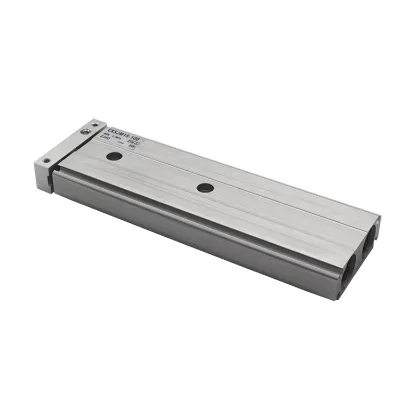


$15.00 - $150.00
MOQ: 1 Pieces

$15.00 - $150.00
MOQ: 1 Pieces


Comprehensive Sourcing Guide
Strategic Sourcing Guide for Double Rod Pneumatic Mini Cylinders
Procuring double rod pneumatic mini cylinders requires a disciplined approach that balances technical precision with supply chain reliability. These components are critical for applications demanding symmetrical force output, bidirectional movement, and compact integration within automation systems. The market presents a diverse array of options, ranging from standard aluminum alloy units to stainless steel variants designed for corrosive environments. Buyers must navigate a landscape where specifications like stroke length, pressure ratings, and mounting configurations vary significantly between manufacturers. This guide outlines the essential factors for sourcing these components effectively, ensuring that the selected products meet rigorous operational standards without relying on unverified claims.
Technical Specifications and Configuration Analysis
The fundamental distinction of a double rod cylinder lies in its dual-rod configuration, which extends from both ends of the piston. This design ensures that the effective area on both sides of the piston is identical, providing equal force and velocity in both extension and retraction directions. In the current market, observed product attributes indicate a prevalence of "General Cylinder" and "Piston Cylinder" structures, with specific models like the MA, SC, TN, and TSC series available. The "Double Rod Cylinder" category often includes "Compact type" variants, such as the Dual Rod Cylinder (Compact type), which are optimized for space-constrained environments.
Material selection is a primary technical consideration. The available data highlights two dominant material classes: Stainless Steel and Aluminum or Aluminum Alloy. Stainless steel units are typically selected for applications requiring high corrosion resistance, such as in food processing or chemical handling, whereas aluminum alloy cylinders offer a lighter weight profile, with specific listings noting a weight of approximately 1 kg for certain models. The pressure direction is a critical specification; while some listings reference "Single-acting Cylinder" attributes, the core keyword specifically targets "Double-acting Cylinder" types. Buyers must verify that the specific unit ordered is indeed double-acting, as this dictates the need for air supply to both sides of the piston for operation.
Pressure ratings also vary across the supply base. Observed specifications indicate a working pressure range of 0.1-0.9MPa for many standard pneumatic units. However, specialized variants, such as "Gas-Liquid Pressurized Cylinder" or "Pressurized Cylinder" types, may operate under different parameters. Stroke length is another variable; specific model numbers like CXSJM15-100 suggest a maximum stroke of 100 mm, while other models like MAL40X300 imply significantly longer travel distances. Buyers should cross-reference the model number with the manufacturer's datasheet to confirm the exact stroke and bore size, as these dimensions directly impact the force output and speed of the actuator.
Compliance, Certification, and Standard Verification
Navigating the compliance landscape for pneumatic components is essential for ensuring safety and interoperability. While the provided data does not explicitly confirm universal adherence to specific international standards like ISO 15552 or ISO 9001, these are widely recognized benchmarks in the industry. Buyers should treat such certifications as verification points rather than automatic inclusions. The observed data mentions "Standard" and "Nonstandard" options, indicating that while many products conform to standard dimensions, custom configurations are also available.
Certification status must be validated on a per-supplier basis. One observed listing explicitly mentions "CE" certification, which is a mandatory requirement for products sold within the European Economic Area. Other critical documentation includes "machinery test reports," which are noted as "Provided" in some listings. These reports are vital for verifying that the cylinder has undergone rigorous testing for pressure integrity and cycle life. Additionally, the "warranty" period is a key indicator of manufacturer confidence; a standard offering of 2 years is observed, but this should be confirmed in the commercial terms.
When evaluating compliance, buyers should look for specific model standards such as G1/4, G3/8, 1/4NPT, and 3/8NPT, which refer to thread standards for port connections. These standards ensure compatibility with existing pneumatic tubing and fittings. The "prod_standard" field in some listings refers to physical dimensions (e.g., 14.45.25.1cm), which can be used to verify fitment within existing machinery frames. It is crucial to distinguish between product standards (dimensions) and safety standards (certifications) to avoid procurement errors.
Cost Drivers and Pricing Dynamics
The pricing of double rod pneumatic mini cylinders is influenced by several variables, including material composition, customization levels, and order volume. The observed price range in the market spans from 1 to 300 USD, reflecting a wide spectrum of product complexity. Basic aluminum alloy cylinders with standard strokes and minimal customization will likely fall at the lower end of this spectrum. Conversely, stainless steel units, those with adjustable cushioning, or models requiring custom thread specifications will command higher prices.
Customization is a significant cost driver. The data confirms that "Customization: Available" is a standard attribute across many listings. This flexibility allows buyers to tailor stroke lengths, rod diameters, and mounting styles to specific needs, but it often incurs additional costs and longer lead times. The "prod_packing" method also affects the final landed cost. Options range from "1PC/Box" to "Cartons," "Inner Box, Outer Carton, Pallet," and "Standard Export Package." Bulk packaging on pallets is generally more cost-effective for large orders, while single-item packaging is typical for low-volume or sample purchases.
Minimum Order Quantity (MOQ) is another factor influencing unit economics. The observed MOQ range is 1 to 3 units, suggesting a high degree of flexibility for buyers who may only need small quantities for prototyping or maintenance. However, suppliers may offer tiered pricing for larger volumes. The "Selling Units" are listed as "Single item" in some cases, reinforcing the availability of low-volume procurement. Buyers should negotiate based on the total volume required over a fiscal year rather than just the initial order to secure better pricing tiers.
Typical Applications and Operational Context
Double rod pneumatic mini cylinders are versatile actuators used across a broad range of industrial sectors. The observed "Usage" attributes highlight applications in "Automation and Control," "Print," "Robot," and "Semiconductor" industries. In automation and control systems, these cylinders are often employed for clamping, positioning, and lifting tasks where symmetrical force is required. The compact nature of mini cylinders makes them ideal for robotic arms and automated assembly lines where space is at a premium.
The "Print" industry utilizes these cylinders for paper feeding, cutting, and registration mechanisms. The ability to provide consistent force in both directions is crucial for maintaining print quality and preventing material misalignment. In the semiconductor sector, the precision and cleanliness of stainless steel variants are particularly valuable, as they can withstand the strict environmental controls required in cleanroom environments. The "Bearing" is listed as a core component in some models, indicating that these cylinders are designed for high-speed, high-cycle applications where smooth operation and reduced friction are necessary.
Furthermore, the "Special Cylinder Type" attribute mentioning "Number of Cylinders" suggests that these units are often integrated into multi-cylinder systems for complex motion control. The "Adjustable Cushioning Cylinder" type is particularly useful in applications where the load must be decelerated gently at the end of the stroke to prevent impact damage. This feature is common in high-speed robotics and automated packaging machinery. Buyers should match the cylinder's pressure rating (0.1-0.9MPa) and stroke capabilities to the specific dynamic requirements of their application to ensure optimal performance.
Supplier Evaluation and Quality Assurance
Selecting the right supplier is as critical as selecting the right product. The data indicates that the "place of origin" for many of these cylinders is "Zhejiang, China," a region known for its manufacturing density in pneumatic components. However, origin alone is not a guarantee of quality. Buyers should prioritize suppliers who provide "machinery test reports" and offer a clear warranty period, such as the observed 2-year coverage. The availability of a "machinery test report" is a strong indicator that the supplier conducts internal quality control checks before shipment.
When evaluating suppliers, buyers should verify the consistency of their product attributes. For instance, if a supplier lists "Stainless Steel" as the material, they must be able to provide documentation confirming the grade and composition. Similarly, the "Color" attribute is listed as "Picture Color," which implies that visual representations should be treated as references rather than guarantees. Buyers should request physical samples to verify the actual finish and material quality.
The "prod_packing" details can also serve as a proxy for supplier professionalism. Suppliers offering "Standard Export Package" or "Inner Box, Outer Carton, Pallet" demonstrate a commitment to protecting the product during transit. In contrast, those offering only "1PC/Box" may be less experienced in handling bulk shipments. Additionally, the availability of "Customizable" standards suggests a supplier capable of adapting to specific client needs, which is a valuable trait for long-term partnerships.
Long-Term Procurement and Maintenance Considerations
Sourcing double rod pneumatic mini cylinders is not merely a transactional event but a strategic decision that impacts long-term operational efficiency. The "warranty" period is a key indicator of expected product lifespan, but buyers should also consider the availability of spare parts and maintenance support. The presence of "Bearing" as a core component suggests that these cylinders may require periodic lubrication or bearing replacement to maintain performance.
Buyers should also evaluate the "Standard" vs. "Nonstandard" availability. While standard models offer immediate availability and lower costs, nonstandard or custom models may be necessary for specialized applications. However, custom parts often have longer lead times and higher costs for replacements. Therefore, it is advisable to maintain a stock of standard components for critical applications while reserving custom orders for unique requirements.
The "Maximum stroke" and "Pressure" ratings should be reviewed regularly to ensure they remain adequate as operational demands change. Over time, wear and tear may necessitate a switch to higher-performance models or different materials. The "Color" and "Weight" attributes, while seemingly minor, can impact the overall system design and aesthetic integration. Finally, buyers should monitor the "Selling Units" and "MOQ" trends to optimize inventory levels, ensuring they have sufficient stock to meet production needs without tying up excessive capital in inventory.
Conclusion
Procuring double rod pneumatic mini cylinders requires a comprehensive understanding of technical specifications, compliance requirements, and supplier capabilities. By carefully analyzing attributes such as material, pressure ratings, and stroke length, buyers can select components that perfectly match their application needs. The market offers a wide range of options, from standard aluminum units to specialized stainless steel variants, each with distinct cost and performance profiles. Through rigorous supplier evaluation and a focus on quality assurance, buyers can secure reliable components that enhance the efficiency and safety of their automation systems. The key to successful procurement lies in balancing immediate operational requirements with long-term strategic goals, ensuring a sustainable supply chain for these critical pneumatic components.
FAQs
What materials are available for double rod pneumatic mini cylinders?
Available materials include stainless steel and aluminum alloy. Stainless steel offers high corrosion resistance for harsh environments, while aluminum alloy provides a lighter weight profile suitable for general automation tasks.
Can I find double rod pneumatic mini cylinders with CE certification?
Yes, some listings explicitly provide CE certification for these cylinders. Buyers should verify this specific documentation on a per-supplier basis to ensure compliance with European Economic Area safety requirements.
What is the typical pressure range for these pneumatic cylinders?
The standard working pressure range observed is 0.1 to 0.9 MPa. Specialized variants like gas-liquid pressurized types may operate under different parameters, so specific model datasheets should be consulted.
How does customization affect the procurement of these cylinders?
Customization is available for stroke lengths, rod diameters, and mounting styles. This flexibility often incurs additional costs and longer lead times compared to standard models with fixed dimensions.
Which industries commonly use double rod pneumatic mini cylinders?
These cylinders are widely used in automation, printing, robotics, and semiconductor industries. Their symmetrical force output makes them ideal for clamping, positioning, and high-precision assembly tasks.
What warranty periods are typically offered for these products?
A standard warranty period of 2 years is commonly observed in the market. Buyers should confirm the specific warranty terms in the commercial agreement to ensure adequate product protection.